Jean B. Russo - Böcker
Visar alla böcker från författaren Jean B. Russo. Handla med fri frakt och snabb leverans.
5 produkter
5 produkter
694 kr
Skickas inom 10-15 vardagar
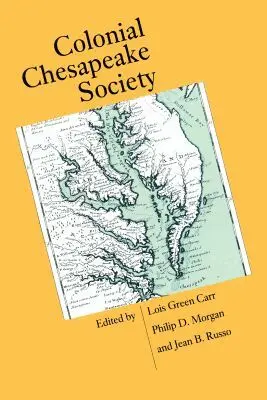
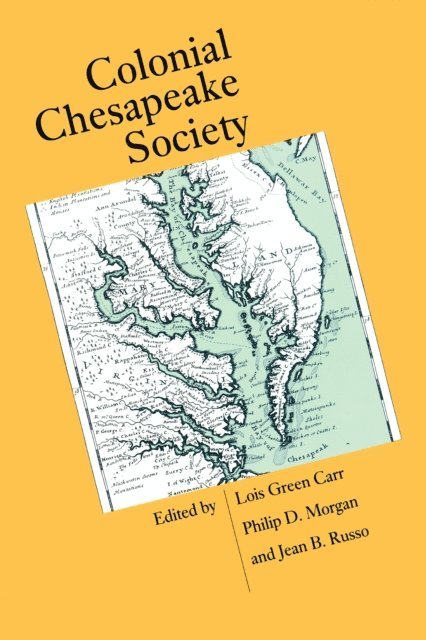
Proof that the renaissance in colonial Chesapeake studies is flourishing, this collection is the first to integrate the immigrant experience of the seventeenth century with the native-born society that characterized the Chesapeake by the eighteenth century. Younger historians and senior scholars here focus on the everyday lives of ordinary people: why they came to the Chesapeake; how they adapted to their new world; who prospered and why; how property was accumulated and by whom. At the same time, the essays encompass broader issues of early American history, including the transatlantic dimension of colonization, the establishment of communities, both religious and secular, the significance of regionalism, the causes and effects of social and economic diversification, and the participation of Indians and blacks in the formation of societies. Colonial Chesapeake Society consolidates current advances in social history and provokes new questions.
551 kr
Tillfälligt slut
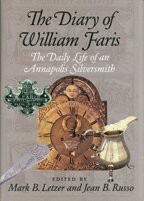
Lavishly designed with many full color illustrations, the Faris Diary offers a craftsman's view of early America with daily entries from 1792 to 1804, matched with extensive notes, that bring to life the "golden age" of Annapolis.
537 kr
Tillfälligt slut
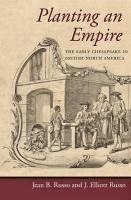
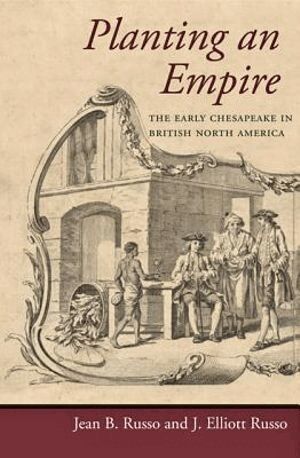
"Planting an Empire" explores the social and economic history of the Chesapeake region, revealing a story of two similar but distinct colonies in early America. Linked by the Chesapeake Bay, Virginia and Maryland formed a prosperous and politically important region in British North America before the American Revolution. Yet these "sister" colonies - alike in climate and soil, emphasis on tobacco farming, and use of enslaved labor - eventually followed divergent social and economic paths. Jean B. Russo and J. Elliott Russo review the shared history of these two colonies, examining not only their unsteady origins, the powerful role of tobacco, and the slow development of a settler society but also the economic disparities and political jealousies that divided them. Recounting the rich history of the Chesapeake Bay region over a 150-year period, the authors discuss in clear and accessible prose the key developments common to both colonies as well as important regional events, including Maryland's "plundering time", Bacon's Rebellion in Virginia, and the opening battles of the French and Indian War.They explain how the internal differences and regional discord of the seventeenth century gave way in the eighteenth century to a more coherent regional culture fostered by a shared commitment to slavery and increasing socio-economic maturity. Addressing an undergraduate audience, the Russos study not just wealthy plantation owners and government officials but all the people involved in planting an empire in the Chesapeake region - poor and middling planters, women, Native Americans, enslaved and free blacks, and non-English immigrants. No other book offers such a comprehensive brief history of the Maryland and Virginia colonies and their place within the emerging British Empire.
282 kr
Tillfälligt slut
"Planting an Empire" explores the social and economic history of the Chesapeake region, revealing a story of two similar but distinct colonies in early America. Linked by the Chesapeake Bay, Virginia and Maryland formed a prosperous and politically important region in British North America before the American Revolution. Yet these "sister" colonies-alike in climate and soil, emphasis on tobacco farming, and use of enslaved labor-eventually followed divergent social and economic paths. Jean B. Russo and J. Elliott Russo review the shared history of these two colonies, examining not only their unsteady origins, the powerful role of tobacco, and the slow development of a settler society but also the economic disparities and political jealousies that divided them. Recounting the rich history of the Chesapeake Bay region over a 150-year period, the authors discuss in clear and accessible prose the key developments common to both colonies as well as important regional events, including Maryland's "plundering time", Bacon's Rebellion in Virginia, and the opening battles of the French and Indian War.They explain how the internal differences and regional discord of the seventeenth century gave way in the eighteenth century to a more coherent regional culture fostered by a shared commitment to slavery and increasing socio-economic maturity. Addressing an undergraduate audience, the Russos study not just wealthy plantation owners and government officials but all the people involved in planting an empire in the Chesapeake region-poor and middling planters, women, Native Americans, enslaved and free blacks, and non-English immigrants. No other book offers such a comprehensive brief history of the Maryland and Virginia colonies and their place within the emerging British Empire.
457 kr
Tillfälligt slut
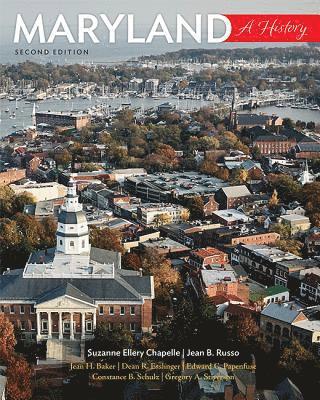
An engaging and accessible introductory history of the people, places, culture, and politics that shaped Maryland.In 1634, two ships carrying a small group of settlers sailed into the Chesapeake Bay looking for a suitable place to dwell in the new colony of Maryland. The landscape confronting the pioneers bore no resemblance to their native country. They found no houses, no stores or markets, churches, schools, or courts, only the challenge of providing food and shelter. As the population increased, colonists in search of greater opportunity moved on, slowly spreading and expanding the settlement across what is now the great state of Maryland.In Maryland, historians recount the stories of struggle and success of these early Marylanders and those who followed to reveal how people built modern Maryland. Originally published in 1986, this new edition has been thoroughly revised and updated. Spanning the years from the 1600s to the beginning of Governor Larry Hogan’s term of office in January 2015, the book more fully fleshes out Native American, African American, and immigrant history. It also includes completely new content on politics, arts and culture, business and industry, education, the natural environment, and the role of women as well as notable leaders in all these fields. Maryland is heavily illustrated, with nearly two hundred photographs and illustrations (more than half of them in full color), as well as related maps, charts, and graphs, many of which are new to this book. An extensive index and a comprehensive Further Reading section provide extremely useful tools for readers looking to engage more deeply with Maryland history. Touching on major figures from George Calvert to Frederick Douglass and Harriet Tubman to William Donald Schaefer, this book takes readers on an unforgettable journey through the history of the Free State. It should be in every library and classroom in Maryland.