Jean Hubert Martin – författare
Visar alla böcker från författaren Jean Hubert Martin. Handla med fri frakt och snabb leverans.
2 produkter
2 produkter
1 024 kr
Tillfälligt slut
In the years 1945-1963, Jean Dubuffet set about documenting his collection of Art Brut. He had the pieces photographed by recognised photographers on the Paris art scene, including Henry Bonhotal and Emile Savitry. But he also had pieces photographed that were not in his own collection, including works that interested him because, like Art Brut, they were marginal to the official art world. These notably include works of popular and naïve art, children's drawings, tattoos, graffiti photographed by Brassaï and graphic works from the Solomon Islands.Dubuffet arranged these photographs of artworks by over a hundred artists - including Gaston Chaissac, Aloïse Corbaz, Joseph Crépin, Auguste Forestier, Somuk and Adolf Wölfli as well as anonymous artists - in extraordinary sequences contained in 14 albums (755 pages in total). These have been preserved since 1976 in the archives of the Collection de l'Art Brut, Lausanne. Classified by artist, the images document paintings, drawings, embroideries, sculptures and collages. In assembling this image bank in the years 1945-1963, Dubuffet set up a dialogue between highly diverse forms of expression of his period, all of which flowered away from the more familiar terrains of art history and culture.This facsimile edition of the Photographic Albums of Jean Dubuffet is combined with a booklet of essays by specialists: preface by Sarah Lombardi, Director of the Collection de l'Art Brut and essays by Baptiste Brun, Nicolas Garnier, Karoline Lewandowska, Jean-Hubert Martin, Jérôme Pierrat and Michel Thévoz.Text in English and French.
388 kr
Skickas
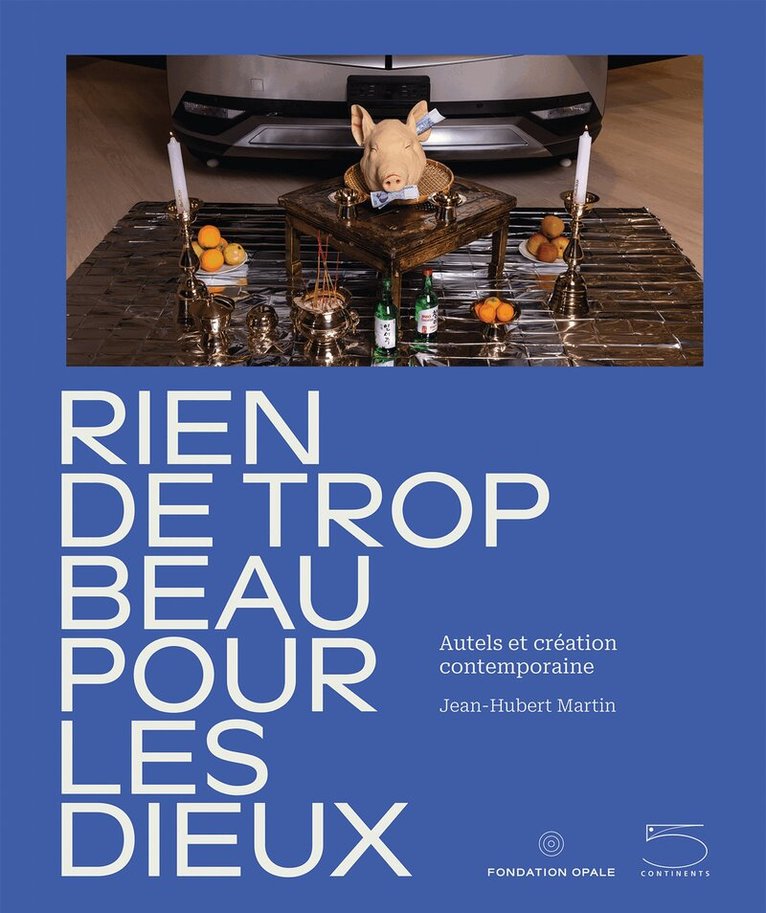
Globalisation has forced us to stop thinking that art only exists in the West. The very notion of art was invented by the West and refers to the learned version of its material culture. It was then projected onto other civilisations, particularly Asian ones, and finally onto the preliterate societies of Africa and Oceania.Whether or not these cultures possess the concept of art is of little importance, because when they honour their gods, they inevitably address what they consider to be the acme of beauty. For a long time, this openness to other aesthetics was based on the arts of the past, until it was finally accepted that there were living creators in these distant lands, and that today’s means of communication have brought them closer to us. These “others” who appeared in the 1980s are by no means a homogenous group. Without stretching this analysis too far, they can be regarded as falling into two categories: those who have opted for modernity and submit to the demands of the market and Western based institutions, and those who concentrate on giving visual expression to their communities and beliefs, ignoring the demands of the art market. Australian Aboriginal art represents an intermediate situation, since alongside art of a sacred nature, there are works deliberately produced for sale, initially encouraged by missionaries.Nothing Too Beautiful for the Gods aims to show the variety of works connected with the spiritual impulse, from those used in religious rites to contemporary artworks that refer to them. These hybrid works are often the result of accommodations with modernity. The exhibition and accompanying book bring together altars from Africa, the Caribbean and Asia, works by artists invested with religious responsibilities (Didi, Shiraga), works by religious artists (Ramoun) and others by artists who refer explicitly to religions and spirituality (Sooja Kim, El Anatsui, Vasquez de la Horra, Bedia, Boltanski, Viola).Text in English and French.