Jean-Loup Amselle - Böcker
Visar alla böcker från författaren Jean-Loup Amselle. Handla med fri frakt och snabb leverans.
5 produkter
5 produkter
1 548 kr
Skickas inom 10-15 vardagar
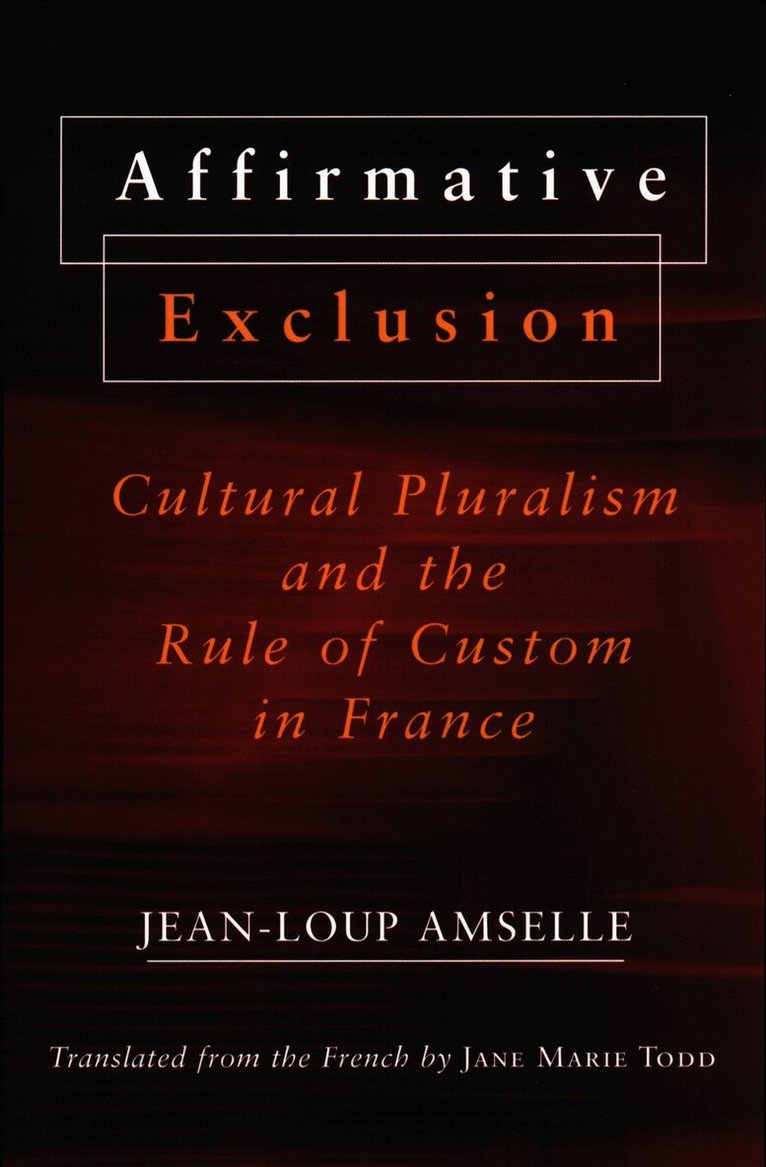
Jean-Loup Amselle explores the issue of multiculturalism by delving into the history of France's confrontation with ethnic difference. Amselle analyzes France's relationship to Egypt, Algeria, and Senegal to show how ideas about difference and assimilation played out in French colonial policies and how these same tensions continue to be problematic as France grapples with cultural pluralism.Amselle's book has timely and wide-ranging implications. Arguing against the "liberal communitarian state" as it exists in the United States, Amselle contends that an overemphasis on difference can lead to what he calls "affirmative exclusion"—the flip side of affirmative action. The recognition of a multiplicity of ethnic groups in France, he asserts, creates an environment that fosters racism. "Despite an outward appearance of generosity, supporters of French-style multiculturalism, by promoting 'affirmative action,' run the risk of creating as many difficulties as there are 'target groups,' which they have helped identify and hence produce."Calling on theories of racial difference devised by early anthropologists—most notably, Louis Faidherbe—and on the work of political philosophers such as Thomas Hobbes, John Locke, and Jean-Jacques Rousseau, Amselle makes historical and sociological sense of the debates over multiculturalism and the violence they engender. Toward a French Multiculturalism proposes directions for the future.
326 kr
Skickas inom 10-15 vardagar
Jean-Loup Amselle explores the issue of multiculturalism by delving into the history of France's confrontation with ethnic difference. Amselle analyzes France's relationship to Egypt, Algeria, and Senegal to show how ideas about difference and assimilation played out in French colonial policies and how these same tensions continue to be problematic as France grapples with cultural pluralism.Amselle's book has timely and wide-ranging implications. Arguing against the "liberal communitarian state" as it exists in the United States, Amselle contends that an overemphasis on difference can lead to what he calls "affirmative exclusion"—the flip side of affirmative action. The recognition of a multiplicity of ethnic groups in France, he asserts, creates an environment that fosters racism. "Despite an outward appearance of generosity, supporters of French-style multiculturalism, by promoting 'affirmative action,' run the risk of creating as many difficulties as there are 'target groups,' which they have helped identify and hence produce."Calling on theories of racial difference devised by early anthropologists—most notably, Louis Faidherbe—and on the work of political philosophers such as Thomas Hobbes, John Locke, and Jean-Jacques Rousseau, Amselle makes historical and sociological sense of the debates over multiculturalism and the violence they engender. Toward a French Multiculturalism proposes directions for the future.
686 kr
Skickas inom 7-10 vardagar
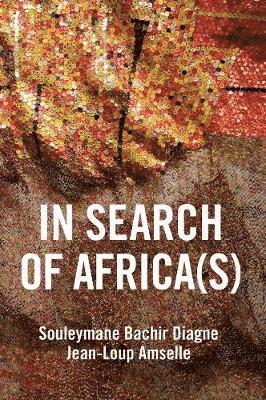
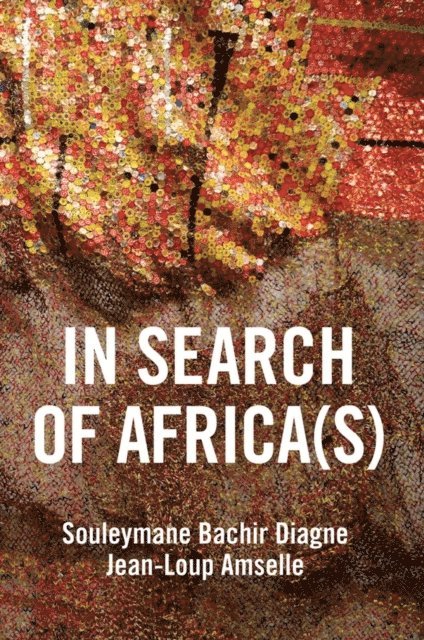
This important book by two leading scholars of Africa examines a series of issues that are central to the question of the postcolonial. The postcolonial paradigm, and the more recent decolonial paradigm, raise the issue of the universal: is the postcolonial the first phase of a new universalism, one which would be truly universal because it would be fully inclusive, or is it on the contrary the denial of all universalism, the triumph of the particular and of fragmentation? In addressing this issue Diagne and Amselle also tackle many related themes, such as the concepts of race, culture and identity, the role of languages in philosophy as practised in different cultural areas, the various conceptions of Islam, especially in West Africa, and the outlines of an Africa which can be thought of at the same time as singular and as plural. Each thinker looks back at his writings on these themes, comparing and contrasting them with those of his interlocutor. While Amselle seeks to expose the essentialist and culturalist logics that might underlie postcolonial and decolonial thought, Diagne consistently refuses to adopt the trappings of the Afrocentrist and particularist thinker. He argues instead for a total decentring of all thought, one that rejects all ‘centrisms’ and highlights instead branchings and connections, transfers, analogies and reciprocal influences between cultural places and intellectual fields that may be distant but are not distinct in space and time. This volume is a timely contribution to current debates on the postcolonial question and its new decolonial form. It will be of great interest to students and scholars in a variety of fields, from African studies and Black studies to philosophy, anthropology, sociology and cultural studies, as well as to anyone interested in the debates around postcolonial studies and decolonial thought
242 kr
Skickas inom 7-10 vardagar
This important book by two leading scholars of Africa examines a series of issues that are central to the question of the postcolonial. The postcolonial paradigm, and the more recent decolonial paradigm, raise the issue of the universal: is the postcolonial the first phase of a new universalism, one which would be truly universal because it would be fully inclusive, or is it on the contrary the denial of all universalism, the triumph of the particular and of fragmentation? In addressing this issue Diagne and Amselle also tackle many related themes, such as the concepts of race, culture and identity, the role of languages in philosophy as practised in different cultural areas, the various conceptions of Islam, especially in West Africa, and the outlines of an Africa which can be thought of at the same time as singular and as plural. Each thinker looks back at his writings on these themes, comparing and contrasting them with those of his interlocutor. While Amselle seeks to expose the essentialist and culturalist logics that might underlie postcolonial and decolonial thought, Diagne consistently refuses to adopt the trappings of the Afrocentrist and particularist thinker. He argues instead for a total decentring of all thought, one that rejects all ‘centrisms’ and highlights instead branchings and connections, transfers, analogies and reciprocal influences between cultural places and intellectual fields that may be distant but are not distinct in space and time. This volume is a timely contribution to current debates on the postcolonial question and its new decolonial form. It will be of great interest to students and scholars in a variety of fields, from African studies and Black studies to philosophy, anthropology, sociology and cultural studies, as well as to anyone interested in the debates around postcolonial studies and decolonial thought
554 kr
Skickas inom 3-6 vardagar