Jean-Pierre Briot – författare
Visar alla böcker från författaren Jean-Pierre Briot. Handla med fri frakt och snabb leverans.
5 produkter
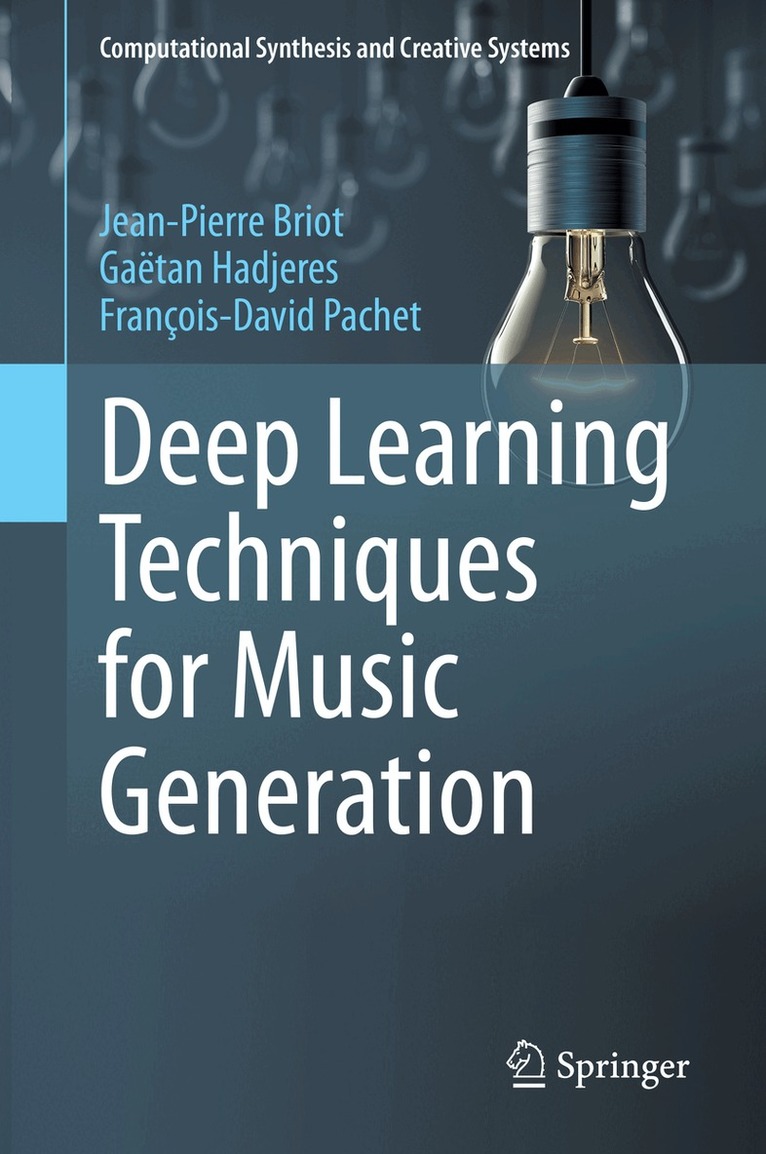
Deep Learning Techniques for Music Generation
Av Jean-Pierre Briot, Gaëtan Hadjeres m. fl.
Inbunden, 2019
1580 kr
Lägg i varukorg
This book is a survey and analysis of how deep learning can be used to generate musical content. The authors offer a comprehensive presentation of the foundations of deep learning techniques for music generation. They also develop a conceptual framework used to classify and analyze various types of …
Deep Learning Techniques for Music Generation
Av Francois-David Pachet, Gaetan Hadjeres m. fl.
E-bok, 2019
2006 kr
Lägg i varukorg
This book is a survey and analysis of how deep learning can be used to generate musical content. The authors offer a comprehensive presentation of the foundations of deep learning techniques for music generation. They also develop a conceptual framework used to classify and analyze various types of …
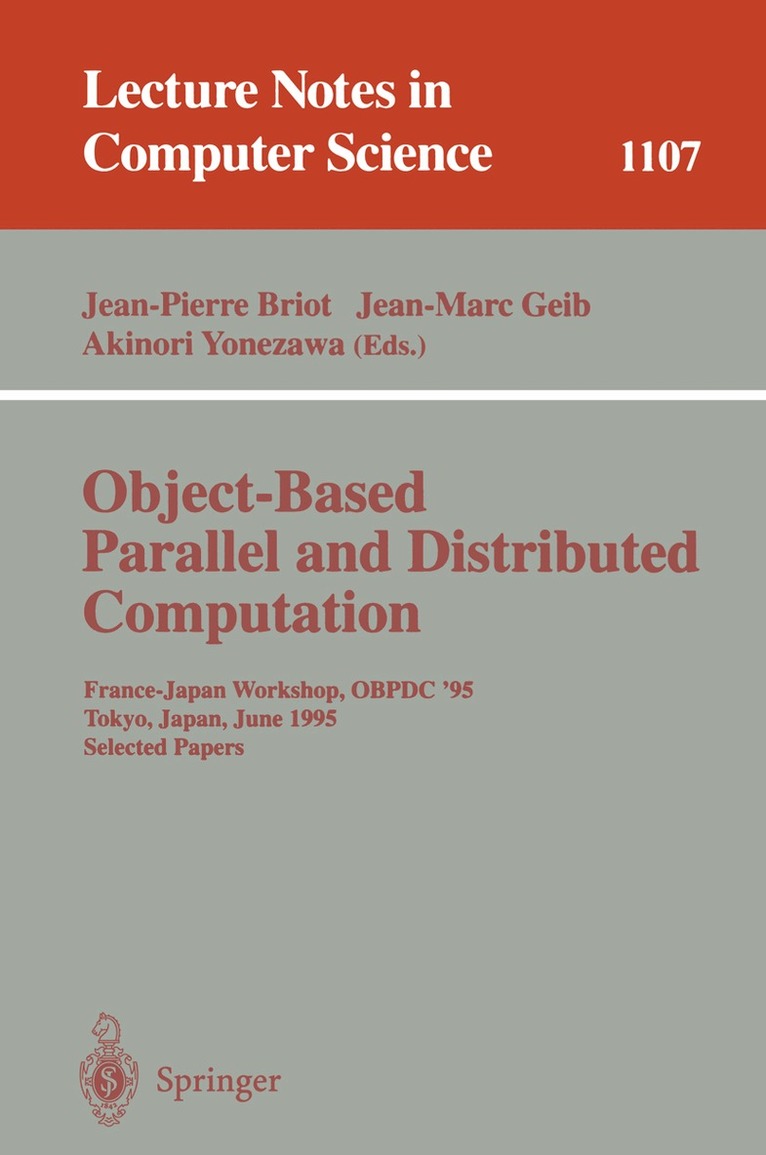
Object-Based Parallel and Distributed Computation
France-Japan Workshop, OBPDC'95, Tokyo, Japan, June 21 - 23, 1995, Selected Papers
Av Jean-Pierre Briot, Jean-Marc Geib m. fl.
Häftad, 1996
569 kr
Lägg i varukorg
This book contains a refereed collection of revised papers selected from the presentations at the France-Japan Workshop on Object-Based Parallel and Distributed Computation, OBPDC'95, held in Tokyo in June 1995.The 18 full papers included in the book constitute a representative, well-balanced set …
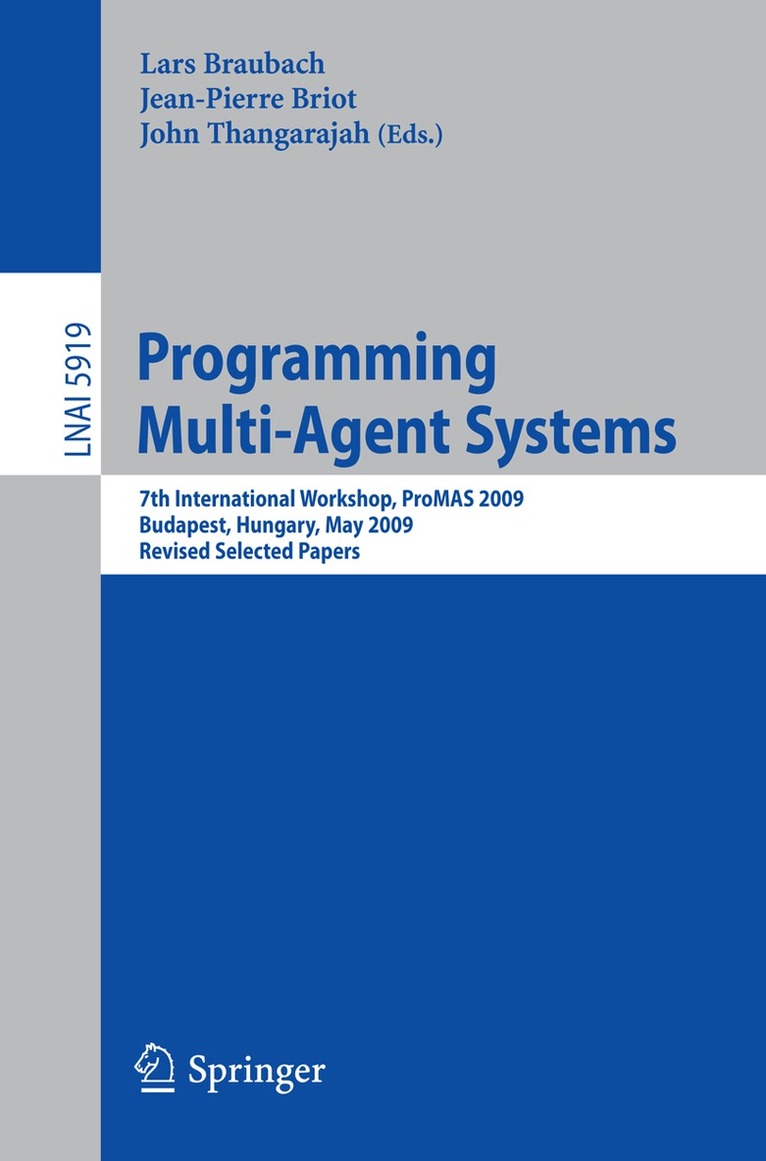
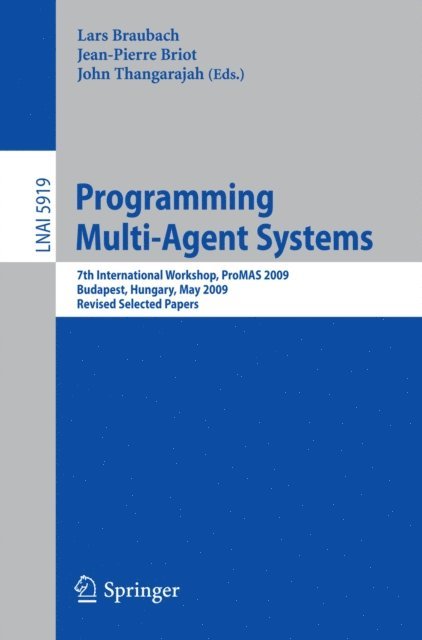
Programming Multi-Agent Systems
7th International Workshop, ProMAS 2009, Budapest, Hungary, May10-15, 2009.Revised Selected Papers
Av Lars Braubach, Jean-Pierre Briot m. fl.
Häftad, 2010
569 kr
Lägg i varukorg
The earliest work on agents may be traced at least to the ?rst conceptualization of the actor model by Carl Hewitt. In a paper in an AI conference in the early 1970s, Hewitt described actors as entities with knowledge and goals. Research on actors continued to focus on AI with the development of …
Programming Multi-Agent Systems
7th International Workshop, ProMAS 2009, Budapest, Hungary, May10-15, 2009.Revised Selected Papers
Av John Thangarajah, Jean-Pierre Briot m. fl.
E-bok, 2010
755 kr
Lägg i varukorg
The earliest work on agents may be traced at least to the ?rst conceptualization of the actor model by Carl Hewitt. In a paper in an AI conference in the early 1970s, Hewitt described actors as entities with knowledge and goals. Research on actors continued to focus on AI with the development of …