Jean Seaton - Böcker
Visar alla böcker från författaren Jean Seaton. Handla med fri frakt och snabb leverans.
8 produkter
8 produkter
2 581 kr
Tillfälligt slut
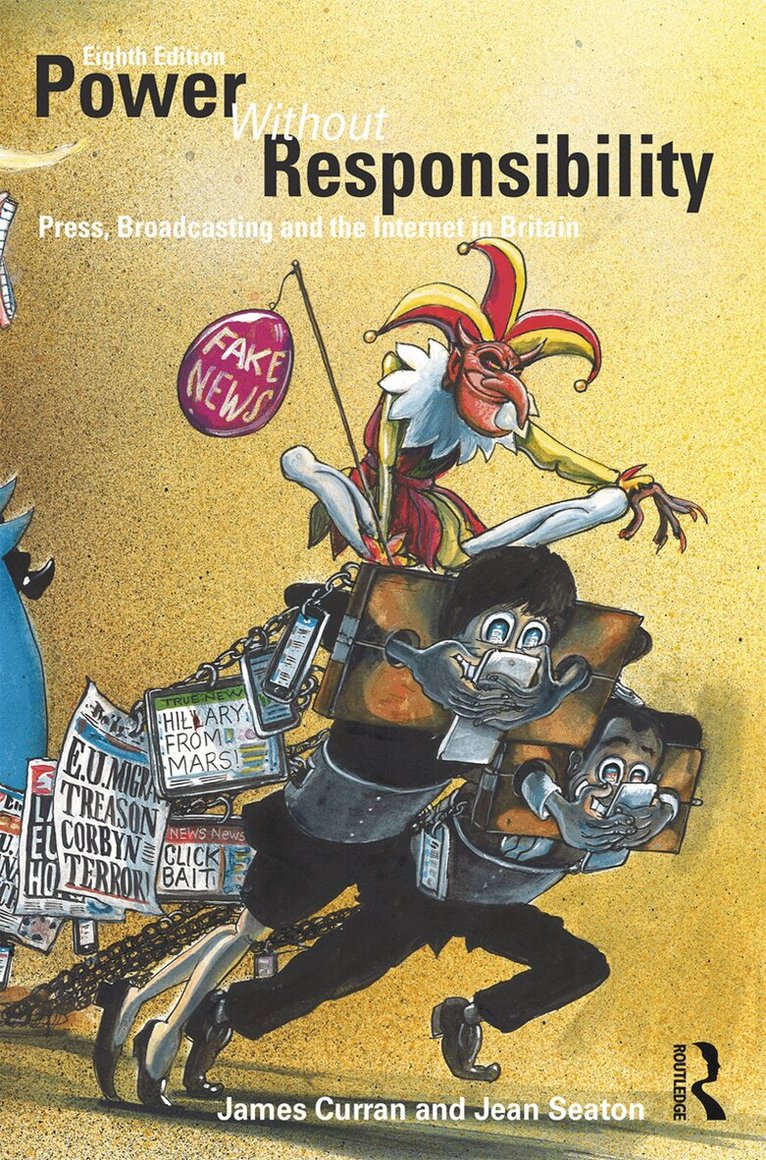
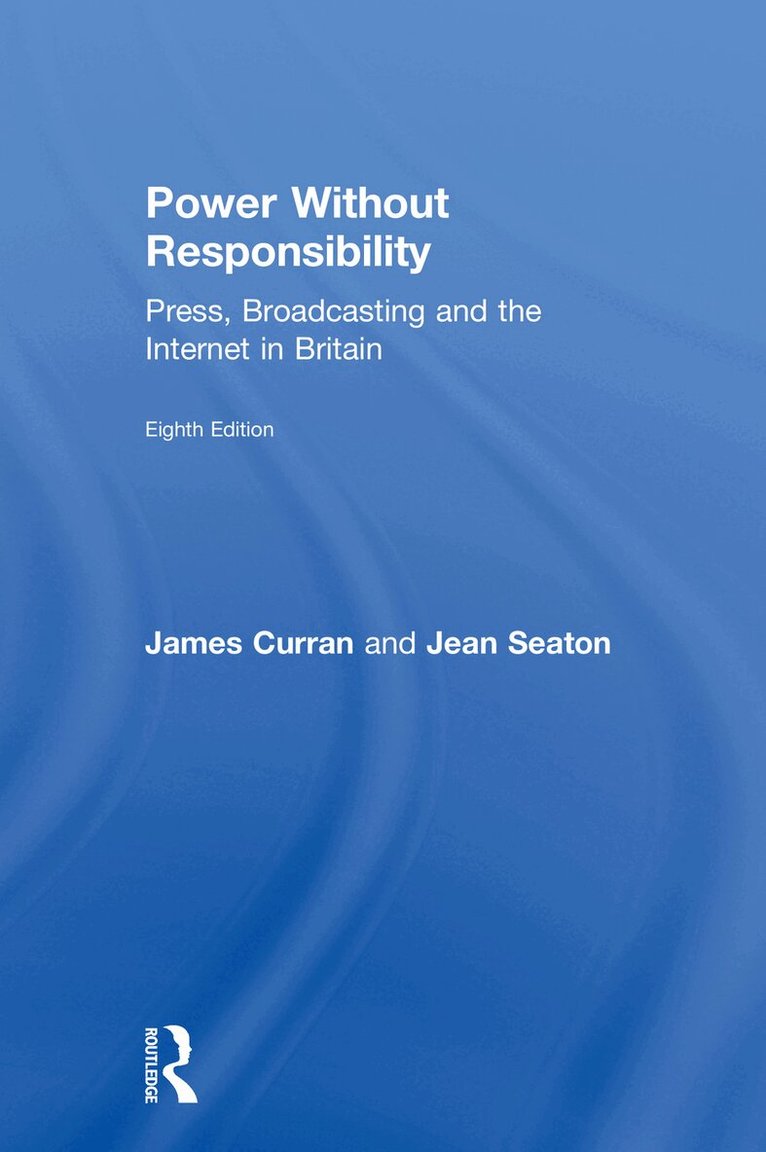
This book attacks the conventional history of the press as a story of progress; offers a critical defence and history of public service broadcasting; provides a myth-busting account of the internet; a subtle account of the impact of social media and explores key debates about the role and politics of the media.It has become a standard book on media and other courses: but it has also gone beyond an academic audience to reach a wider public. Hailed as ‘a classic of media history and analysis’ by the Irish Times and a book that has ‘cracked the canon’ by the Times Higher, it has been translated into five languages.This edition contains six new chapters. These include the press and the remaking of Britain, the rise of the neo-liberal Establishment, the moral decline of journalism, the impact of social media and a history of attempts to reform the press. It contains new research on the relationship between programmes, institutions and society. It places key UK institutions in the wider context of international affairs and their impact. The book has been updated to take account of new developments like Brexit and the rise of Jeremy Corbyn and the shift in authority and legitimacy prompted by social media. It does this with a clear explanation of how policy can shape media outcomes.
631 kr
Skickas
This book attacks the conventional history of the press as a story of progress; offers a critical defence and history of public service broadcasting; provides a myth-busting account of the internet; a subtle account of the impact of social media and explores key debates about the role and politics of the media.It has become a standard book on media and other courses: but it has also gone beyond an academic audience to reach a wider public. Hailed as ‘a classic of media history and analysis’ by the Irish Times and a book that has ‘cracked the canon’ by the Times Higher, it has been translated into five languages.This edition contains six new chapters. These include the press and the remaking of Britain, the rise of the neo-liberal Establishment, the moral decline of journalism, the impact of social media and a history of attempts to reform the press. It contains new research on the relationship between programmes, institutions and society. It places key UK institutions in the wider context of international affairs and their impact. The book has been updated to take account of new developments like Brexit and the rise of Jeremy Corbyn and the shift in authority and legitimacy prompted by social media. It does this with a clear explanation of how policy can shape media outcomes.
245 kr
Skickas inom 7-10 vardagar
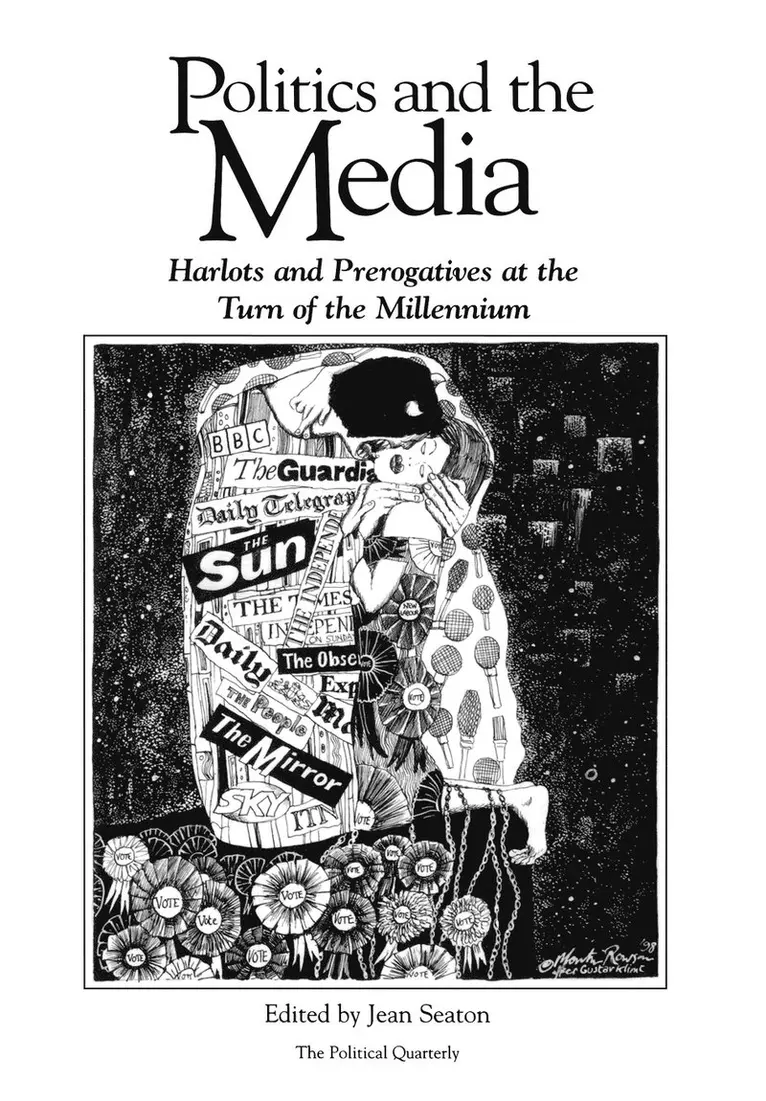
Spin doctor, soundbite, press secretary, digital, global village, cool Britannia. Politics today is saturated with the jargon and buzzwords of the mass media. How important are they for the way we are governed? How can the ever-expanding impact of the media be controlled? In this up-to-the-minute book, a group of Britain's best-known journalists and media analysts tackle one of the most testing issues facing the nation in the next century. Each essay focuses on the central role of newspapers, broadcasting and information technology in our political life.Peter Riddell shows how the demands of the press and broadcasting have drained Parliament of much of its democratic purpose. Tony Wright gives a fascinating insider's account of the politician-journalist nexus. Andrew Graham points to the monopolistic pressures of the new technology. Colin Seymour-Ure discusses the effects of the end of the party-political allegiances of newspapers. Philip Schlesinger considers the impact of the Scottish media as catalyst for a political micro-climate. Steve Barnett examines the concept of "tabloidization". Eric Barendt weighs up the law as a tool for guarding press impartiality. Ben Pimlott takes a post-Diana look at the monarchy's media dealings. Martin Rowson satiries the press-politician embrace. Finally, Jean Seaton reassesses J. S. Mill's concept of media freedom.Edited by Jean Seaton (co-author of the classic media study Power Without Responsibility) this thought-provoking, intensely readable and often witty collection applies expertise and common sense to complex problems, and shows how dated many assumptions about the mass media have become.The book is essential reading for students of the media and politics, as well as for journalists, politicians and all those concerned about the fast-changing role of mass communications in our democracy.
1 900 kr
Skickas inom 10-15 vardagar
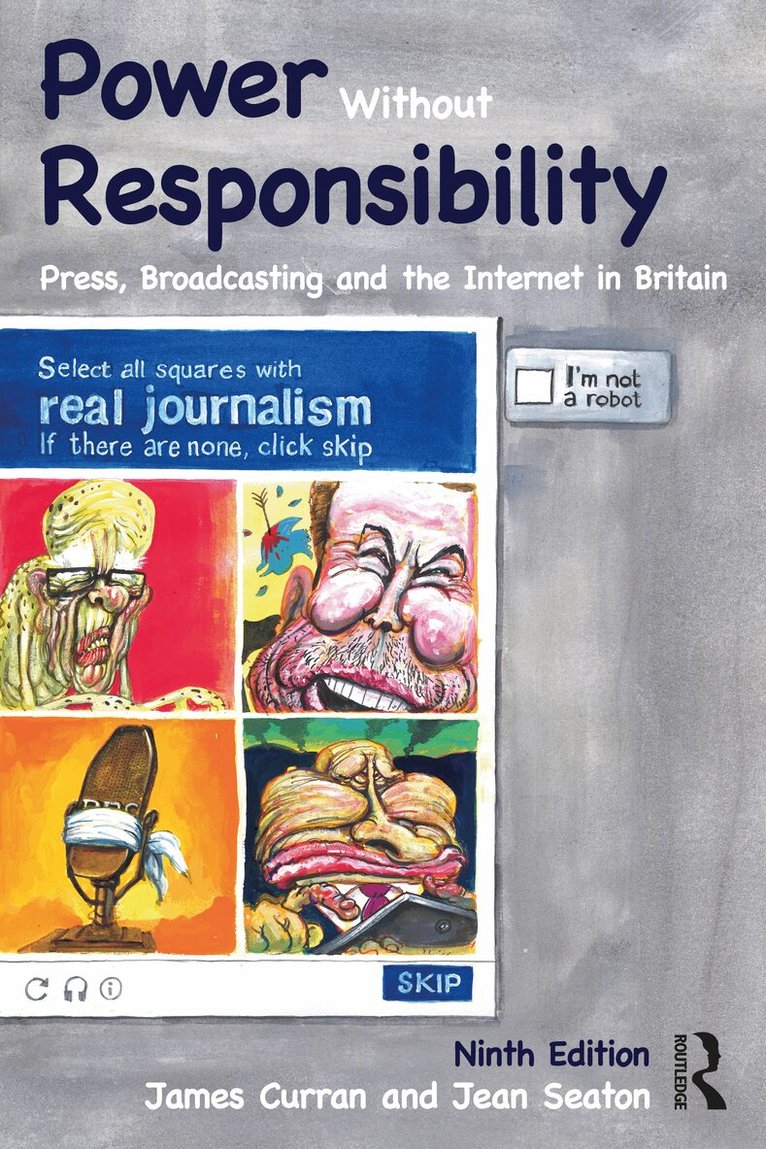
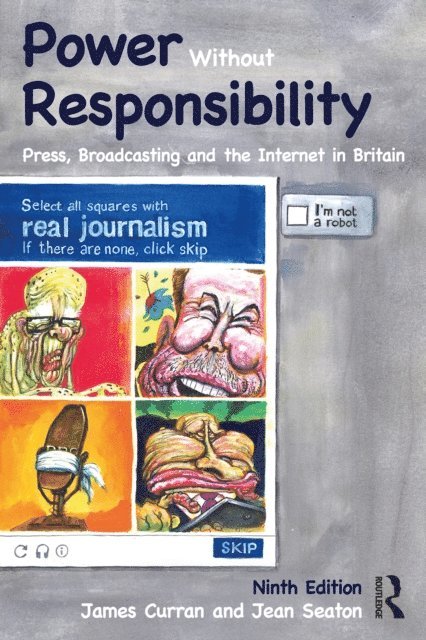
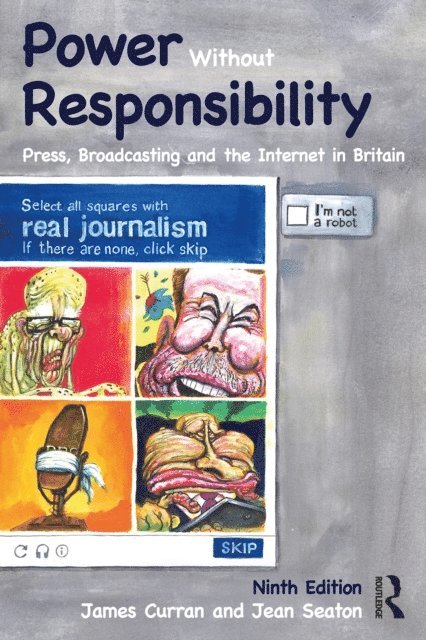
This book attacks the conventional history of the press as a story of progress; offers a critical defence and history of public service broadcasting; provides a myth-busting account of the internet; gives a subtle account of the impact of social media; and explores key debates about the role and politics of the media.Power Without Responsibility has become a standard textbook on media and other courses, but it has also gone beyond an academic audience to reach a wider public. Hailed as a book that has ‘cracked the canon’ by the Times Higher Educational Supplement, it has been translated into five languages. In 2019, it was awarded the International Communication Association's Fellows Book Award. This ninth edition is based on a major overhaul of its content to take account of new developments (such as generative AI) and new scholarship in the field. It also contains a new chapter on the transformed opportunity for a reformed and buccaneering public service broadcasting in the face of automated misinformation and social division, locally, nationally and internationally.This trailblazing text is essential reading for all students and scholars interested in British media and contemporary media and society.
580 kr
Skickas inom 10-15 vardagar
This book attacks the conventional history of the press as a story of progress; offers a critical defence and history of public service broadcasting; provides a myth-busting account of the internet; gives a subtle account of the impact of social media; and explores key debates about the role and politics of the media.Power Without Responsibility has become a standard textbook on media and other courses, but it has also gone beyond an academic audience to reach a wider public. Hailed as a book that has ‘cracked the canon’ by the Times Higher Educational Supplement, it has been translated into five languages. In 2019, it was awarded the International Communication Association's Fellows Book Award. This ninth edition is based on a major overhaul of its content to take account of new developments (such as generative AI) and new scholarship in the field. It also contains a new chapter on the transformed opportunity for a reformed and buccaneering public service broadcasting in the face of automated misinformation and social division, locally, nationally and internationally.This trailblazing text is essential reading for all students and scholars interested in British media and contemporary media and society.
157 kr
Skickas inom 7-10 vardagar
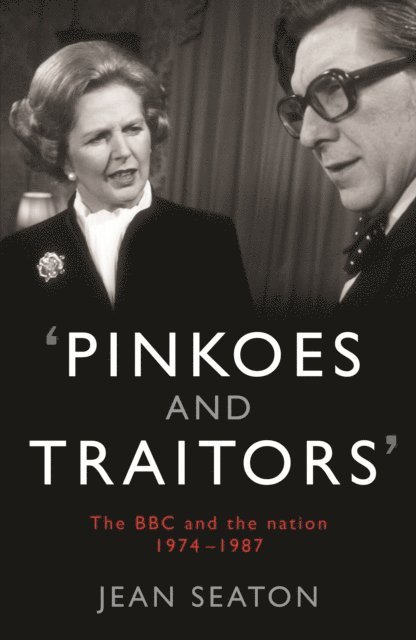
This compelling account of a turbulent period in the history of the BBC opens at a time of national decline under the Labour governments of Harold Wilson and James Callaghan, and ends during Margaret Thatcher's iconoclastic Conservative premiership. The intervening years saw mass unemployment, trade union strikes and war in Northern Ireland and the Falklands - as well as legendary BBC programmes such as Live Aid, Fawlty Towers and Dad's Army, The Singing Detective and Tinker Tailor Soldier Spy, and David Attenborough's Life on Earth.Comprehensively revised and expanded for this new edition, Jean Seaton's perceptive study presents an absorbing analysis of an institution that both reflects Britain and has helped to define it.
1 209 kr
Skickas inom 10-15 vardagar
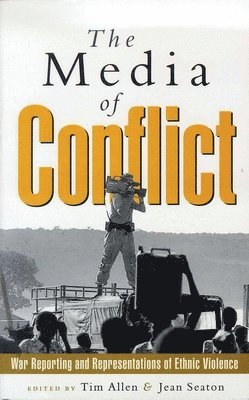
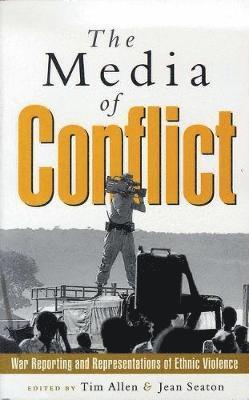
Savage wars in Bosnia, Rwanda, Liberia, Iraq and many other places continue to fill our television screens and newspapers with terrible images of conflict. Despite the optimism about world peace, brought about by the collapse of super-power hostilities in the early 1990s, we seem to be encountering more wars, or at least wars that are more socially traumatic. All too often, the media suggest that these conflicts are caused by the return of primordial loyalties and hatreds after the collapse of the Cold War, or that mass slaughter can be explained by reference to the inherently evil nature of individuals or groups.This book counters this kind of nonsense, and asks why such views have gained a currency. It examines the role of the media in inciting conflicts within nations, as well as the adverse impacts of news reporting on international perceptions - and on policy-making. But it also reveals how valuable informed journalism can be. Above all, it highlights the dangers of basing analysis on vague assertions about deep human motivation, or on mythologies of the past and the present promoted by the protagonists themselves.
488 kr
Skickas inom 10-15 vardagar
Savage wars in Bosnia, Rwanda, Liberia, Iraq and many other places continue to fill our television screens and newspapers with terrible images of conflict. Despite the optimism about world peace, brought about by the collapse of super-power hostilities in the early 1990s, we seem to be encountering more wars, or at least wars that are more socially traumatic. All too often, the media suggest that these conflicts are caused by the return of primordial loyalties and hatreds after the collapse of the Cold War, or that mass slaughter can be explained by reference to the inherently evil nature of individuals or groups.This book counters this kind of nonsense, and asks why such views have gained a currency. It examines the role of the media in inciting conflicts within nations, as well as the adverse impacts of news reporting on international perceptions - and on policy-making. But it also reveals how valuable informed journalism can be. Above all, it highlights the dangers of basing analysis on vague assertions about deep human motivation, or on mythologies of the past and the present promoted by the protagonists themselves.