Jeannine Cavender-Bares - Böcker
Visar alla böcker från författaren Jeannine Cavender-Bares. Handla med fri frakt och snabb leverans.
3 produkter
3 produkter
536 kr
Skickas inom 10-15 vardagar
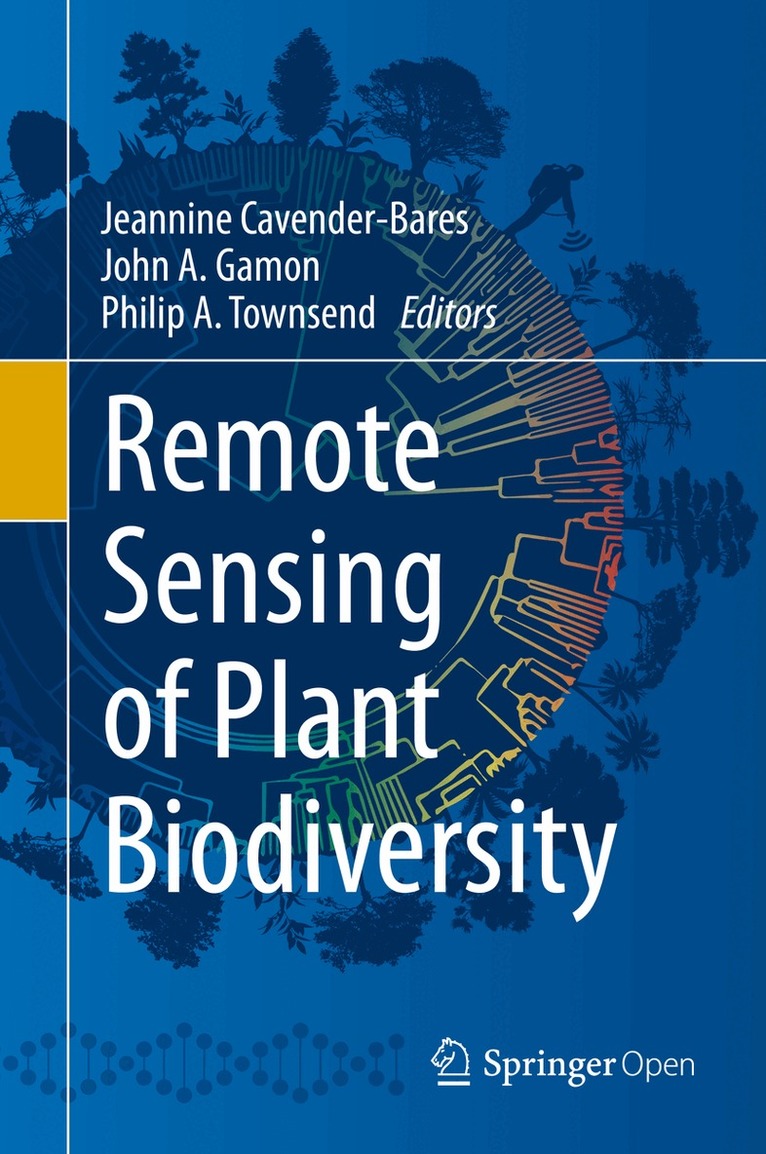
This Open Access volume aims to methodologically improve our understanding of biodiversity by linking disciplines that incorporate remote sensing, and uniting data and perspectives in the fields of biology, landscape ecology, and geography. The book provides a framework for how biodiversity can be detected and evaluated—focusing particularly on plants—using proximal and remotely sensed hyperspectral data and other tools such as LiDAR. The volume, whose chapters bring together a large cross-section of the biodiversity community engaged in these methods, attempts to establish a common language across disciplines for understanding and implementing remote sensing of biodiversity across scales.The first part of the book offers a potential basis for remote detection of biodiversity. An overview of the nature of biodiversity is described, along with ways for determining traits of plant biodiversity through spectral analyses across spatial scales and linking spectral data to the tree of life. The second part details what can be detected spectrally and remotely. Specific instrumentation and technologies are described, as well as the technical challenges of detection and data synthesis, collection and processing. The third part discusses spatial resolution and integration across scales and ends with a vision for developing a global biodiversity monitoring system. Topics include spectral and functional variation across habitats and biomes, biodiversity variables for global scale assessment, and the prospects and pitfalls in remote sensing of biodiversity at the global scale.
536 kr
Skickas inom 10-15 vardagar
This Open Access volume aims to methodologically improve our understanding of biodiversity by linking disciplines that incorporate remote sensing, and uniting data and perspectives in the fields of biology, landscape ecology, and geography. The book provides a framework for how biodiversity can be detected and evaluated—focusing particularly on plants—using proximal and remotely sensed hyperspectral data and other tools such as LiDAR. The volume, whose chapters bring together a large cross-section of the biodiversity community engaged in these methods, attempts to establish a common language across disciplines for understanding and implementing remote sensing of biodiversity across scales.The first part of the book offers a potential basis for remote detection of biodiversity. An overview of the nature of biodiversity is described, along with ways for determining traits of plant biodiversity through spectral analyses across spatial scales and linking spectral data to the tree of life. The second part details what can be detected spectrally and remotely. Specific instrumentation and technologies are described, as well as the technical challenges of detection and data synthesis, collection and processing. The third part discusses spatial resolution and integration across scales and ends with a vision for developing a global biodiversity monitoring system. Topics include spectral and functional variation across habitats and biomes, biodiversity variables for global scale assessment, and the prospects and pitfalls in remote sensing of biodiversity at the global scale.
2 712 kr
Kommande
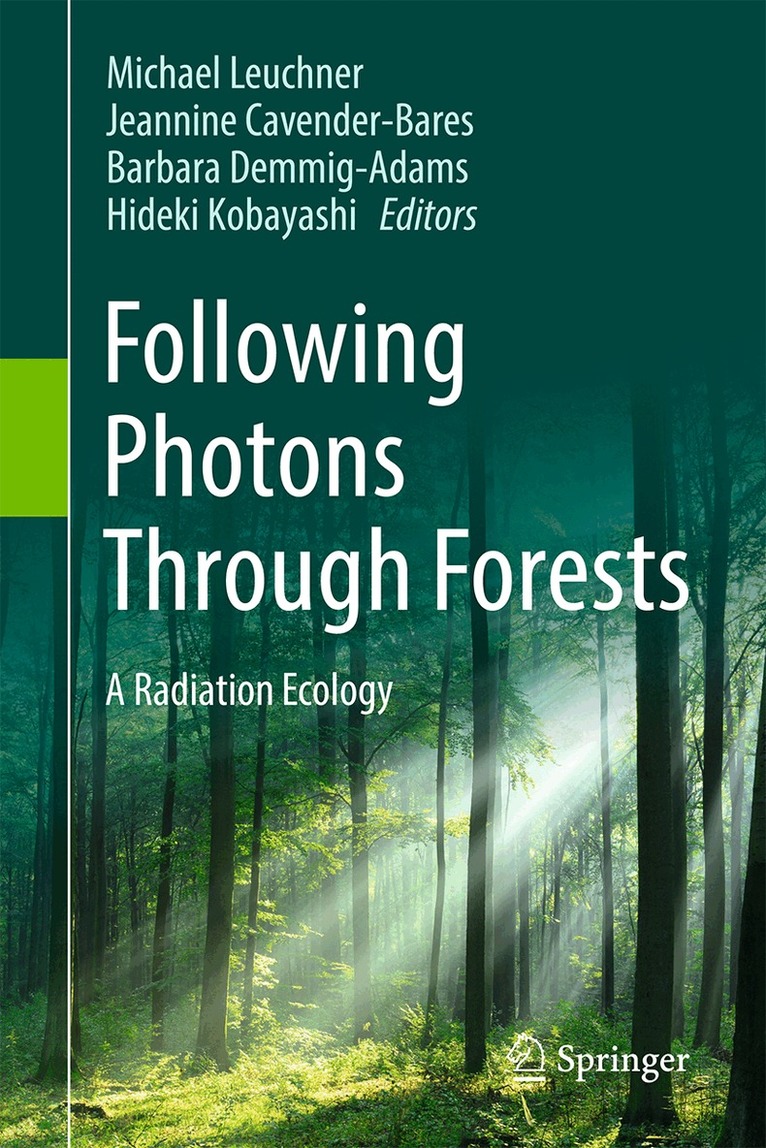
This volume offers a fresh, innovative perspective on plant-photon interactions. With its overarching theme of following photons through forests, the volume features clusters of chapters dedicated to: (i) tracking photons via measurement and modelling at the canopy scale, (ii) the harnessing of photons by plants and its temporal variation in relation to plant phenology, (iii) the utilization of photons as dependent on plant functional state, and (iv) future directions for studying radiation ecology and forest ecosystem services in the context of human health. This volume is thus unique by bridging photon physics with the ecological dimension of photon receipt and utilization in forests as well as illustrating emerging interactions among trees, photons, and people in the Anthropocene. Integrative review chapters provide a new lens for future photon research in forests. This ambitious volume will appeal to academics in diverse fields, including ecology, physics, biogeochemistry, geography, and plant sciences.