Jeff Dayton-Johnson – författare
Visar alla böcker från författaren Jeff Dayton-Johnson. Handla med fri frakt och snabb leverans.
3 produkter
3 produkter
2 617 kr
Skickas inom 5-8 vardagar
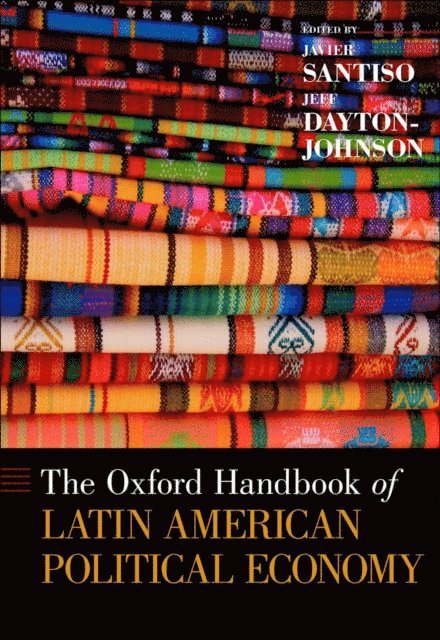
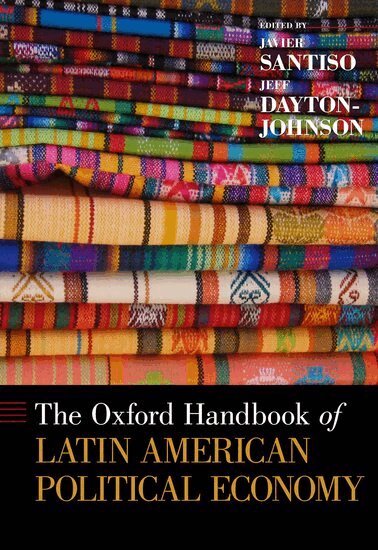
Latin America's recent development performance calls for a multidisciplinary analytical tool kit. This handbook accordingly adopts a political-economy perspective to understand Latin American economies. This perspective is not new to the region; indeed, this volume consciously follows the approach pioneered by political economist Albert O. Hirschman a half century ago. But the nature of the political and economic processes at work in Latin America has changed dramatically since Hirschman's critical contribution. Military dictatorships have given way to an uneven democratic consolidation; agricultural or primary-product producers have transformed into middle-income, diversified economies, some of which are leading examples of emerging markets. So, too, the tools of political-economy have developed by leaps and bounds. It is therefore worthwhile to take stock of, and considerably extend, the explosion of recent scholarship on the two-way interaction between political processes and economic performance. A unique feature of the book is that it begins with a group of chapters written by high-level academic experts on Latin American economics and policies who also happen to be current or past economic policy makers in the region, including Fernando Henrique Cardoso (former president of Brazil), Andrés Velasco (former Chilean finance minister), Luis Carranza (former Peruvian finance minister), Martín Redrado (former governor of the Argentina central bank) and Luciano Coutinho (president of Brazil's national development bank). These contributors draw upon their academic expertise to understand their experience in the trenches of policy making.
1 513 kr
Skickas inom 3-6 vardagar
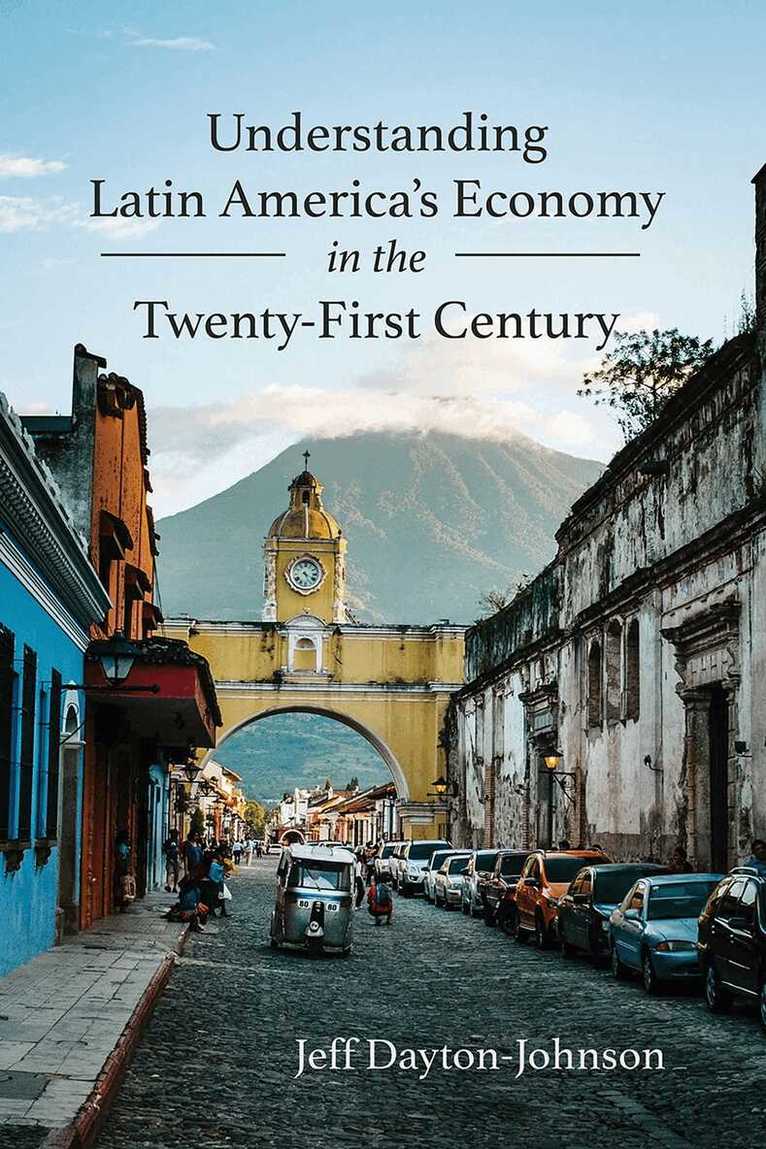
A comprehensive, comparative, and regionwide perspective on Latin American economic development spanning the last twenty-five years. Latin America’s economic performance is often depicted as a long sequence of repeated failures, including its contribution to global financial crises as well as its slow growth and intractable inequalities. Its experience in the twenty-first century, however, reveals considerable and underappreciated successes. Understanding those successes—as well as setbacks—is critical to understanding both the region’s prospects and the rapidly changing global economic order. Jeff Dayton-Johnson’s Understanding Latin America’s Economy in the Twenty-First Century provides a comprehensive, comparative, and region-wide perspective on Latin American economic development that spans the last quarter century. The book is organized in three parts. The first introduces and summarizes Latin America’s economic history over the long term (the past five centuries) and the immediate past (the last half of the twentieth century). The second analyzes economic growth during the twenty-first century, emphasizing the role of China’s roaring demand for Latin American commodity exports. The third part assesses three fundamental characteristics of Latin American economic development in this century: the pros and cons of the commodity boom, the reasons behind the surprising decline in economic inequality, and the emergence of left-leaning and center-right governments that opted for pragmatic and orthodox macro policies mixed with innovative antipoverty programs. This is an economics book for specialists and non-specialists alike, leaning heavily on economic concepts and models while introducing and explaining its subject for a broad readership. It is aimed at undergraduate and masters level students in Latin American studies, international relations, development studies, political science, economics, and other social sciences as well as readers beyond academia who are eager to understand Latin America and the global economy.
534 kr
Skickas inom 3-6 vardagar
A comprehensive, comparative, and regionwide perspective on Latin American economic development spanning the last twenty-five years. Latin America’s economic performance is often depicted as a long sequence of repeated failures, including its contribution to global financial crises as well as its slow growth and intractable inequalities. Its experience in the twenty-first century, however, reveals considerable and underappreciated successes. Understanding those successes—as well as setbacks—is critical to understanding both the region’s prospects and the rapidly changing global economic order. Jeff Dayton-Johnson’s Understanding Latin America’s Economy in the Twenty-First Century provides a comprehensive, comparative, and region-wide perspective on Latin American economic development that spans the last quarter century. The book is organized in three parts. The first introduces and summarizes Latin America’s economic history over the long term (the past five centuries) and the immediate past (the last half of the twentieth century). The second analyzes economic growth during the twenty-first century, emphasizing the role of China’s roaring demand for Latin American commodity exports. The third part assesses three fundamental characteristics of Latin American economic development in this century: the pros and cons of the commodity boom, the reasons behind the surprising decline in economic inequality, and the emergence of left-leaning and center-right governments that opted for pragmatic and orthodox macro policies mixed with innovative antipoverty programs. This is an economics book for specialists and non-specialists alike, leaning heavily on economic concepts and models while introducing and explaining its subject for a broad readership. It is aimed at undergraduate and masters level students in Latin American studies, international relations, development studies, political science, economics, and other social sciences as well as readers beyond academia who are eager to understand Latin America and the global economy.