Jeff Flygare – författare
369 kr
Läs direkt efter köp
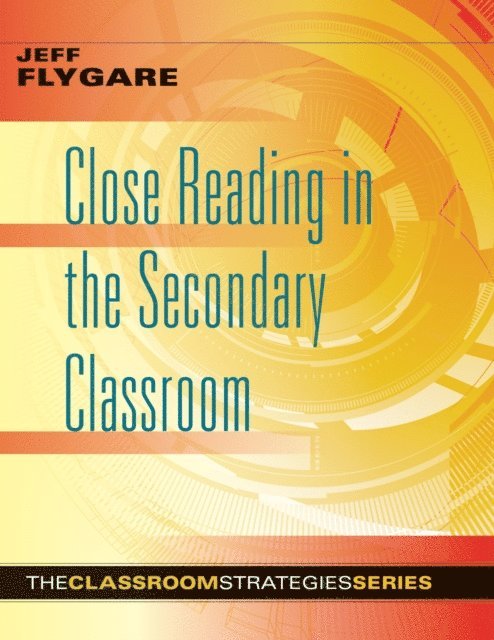
Close-reading strategies help students develop the literacy and critical-thinking skills essential for the rest of their lives. Close Reading in the Secondary Classroom offers high school and middle school educators extensive guidance on how to introduce close-reading strategies to students and help them improve their reading comprehension skills and critical thinking. Learn how to select close-reading examples and passages, elicit deeper question formation, facilitate positive classroom discussion, and assess your students'' reading comprehension skills and literacy progress.
Use research-based close-reading instruction strategies to increase student literacy and critical-thinking skills:
Understand the importance of close reading, prereading, and post-reading activities.Learn how to choose appropriate literary or informational texts for close reading.Pass on tools necessary for literary analysis and annotating text.Develop thought-provoking questions and discussion that deepen text analysis and reading comprehension skills.Assess students'' creative- and critical-thinking skills.Contents:IntroductionChapter 1: Research and TheoryChapter 2: PrereadingChapter 3: Reading Twice and AnnotatingChapter 4: Generating Questions and Reading AnalyticallyChapter 5: Discussing as a Class or Analyzing Individually, and Using Processing ActivitiesChapter 6: Planning and Assessing Close ReadingEpilogueAppendix A: Answers to Comprehension QuestionsAppendix B: Extended Examples of Close Reading
369 kr
Läs direkt efter köp
With foreword by Robert J. Marzano
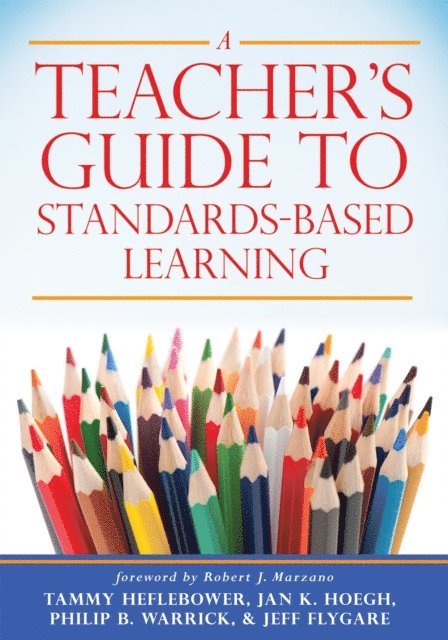
When teachers adopt standards-based learning, students take ownership of their education and achievement soars. Written specifically for K-12 teachers, this resource details a sequential approach for connecting curriculum, instruction, assessment methods, and feedback through standards-based education. The authors provide practical advice, real-world examples, and answers to frequently asked questions designed to support you through this important transition.
Implement standards-based grading, instruction, and curriculum in your classroom and school:
Explore the theories and benefits of a standards-based curriculum and become familiar with several significant paradigm shifts that will help you make a strong transition to a standards-based classroom.Explore ways to shift your thinking about teaching and lesson plans in order to better understand content as a vehicle for the achievement of standards.Learn how to develop proficiency scales that will offer guidance in teaching to standards and establishing informative classroom assessment for student learning.Discover new styles of instruction, educational assessment, feedback, and curriculum building that are well suited to standards-based education.Understand how to develop student ownership through the setting of goals, and access free downloadable reproducibles available with this book.Contents:About the AuthorsAbout Marzano ResearchForeword by Robert J. MarzanoIntroductionChapter 1: Planning Instruction With Proficiency ScalesChapter 2: Instructing With Proficiency ScalesChapter 3: Setting Goals and Tracking ProgressChapter 4: Administering Quality Classroom Assessments and Figuring GradesChapter 5: Teaching Exceptional StudentsChapter 6: Communicating GradesEpilogueAppendix A: Frequently Asked QuestionsAppendix B: Creation of an Elementary Unit PlanReferences and ResourcesIndex
365 kr
Läs direkt efter köp
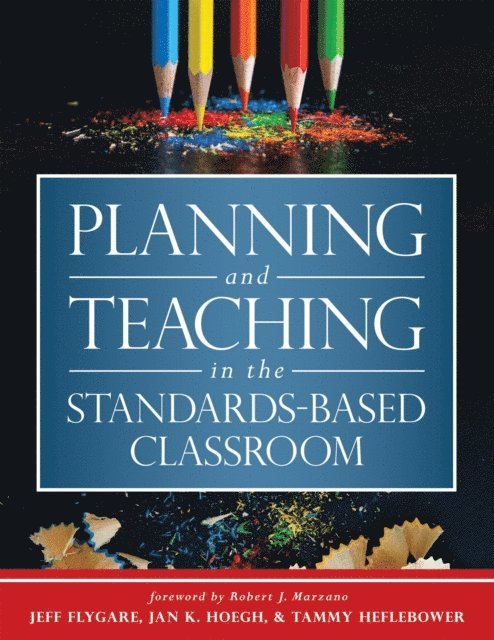
Shifting to standards-based learning is a big change. Rely on Planning and Teaching in the Standards-Based Classroom to help you move forward with clarity and confidence. Authors Jeff Flygare, Jan K. Hoegh, and Tammy Heflebower have created a must-have guide for teachers that delivers straightforward, practical tools and detailed instructions for everything from lesson planning to proficiency scales to parent communication.
Understand priority standards and proficiency scales.Develop curriculum maps to plan for the entire year or course.Follow the steps of the instructional cycle to create standards-based units and lessons.Help exceptional students continue to thrive and grow in a standards-based environment.Communicate objectively with students and families about learning.Contents:IntroductionChapter 1: Curriculum Based on Standards and ScalesChapter 2: Year-Long Planning With Curriculum MapsChapter 3: Unit Planning With the Instructional CycleChapter 4: Lesson Planning and Teaching Within the Instructional CycleChapter 5: Assessments and Progress TrackingChapter 6: Communication Using Proficiency ScalesEpilogue
365 kr
Läs direkt efter köp
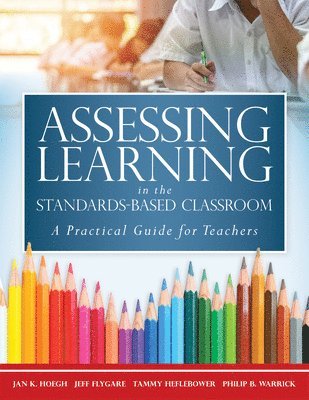
What do successful assessments look like? According to this team of authors, they provide meaningful assessment data that inform your instruction to help your students reach proficiency in priority standards. With the help of this practical guide, learn how to successfully integrate assessment with the standards-based teaching and learning process to improve student performance and evaluate instructional efficacy.
This book will help K–12 teachers and assessment coordinators: Gain clarity on the different roles of assessment throughout the instructional cycleDetermine the timing and format of assessments to best support student learningAddress test validity, reliability, and fairnessUnderstand collaborative techniques for assessment consistencyAccess numerous sample assessments from the fieldContents:IntroductionChapter 1: The Role and Purpose of Classroom AssessmentChapter 2: Assessment Throughout the Instructional CycleChapter 3: Assessment Practices for Consistency and CollaborationChapter 4: Technical QualityChapter 5: The Process of Scoring AssessmentsChapter 6: The Use of Data From AssessmentsChapter 7: Feedback to StudentsEpilogueReferences and ResourcesIndex