Philip B. Warrick – författare
369 kr
Läs direkt efter köp
With foreword by Robert J. Marzano
When teachers adopt standards-based learning, students take ownership of their education and achievement soars. Written specifically for K-12 teachers, this resource details a sequential approach for connecting curriculum, instruction, assessment methods, and feedback through standards-based education. The authors provide practical advice, real-world examples, and answers to frequently asked questions designed to support you through this important transition.
Implement standards-based grading, instruction, and curriculum in your classroom and school:
Explore the theories and benefits of a standards-based curriculum and become familiar with several significant paradigm shifts that will help you make a strong transition to a standards-based classroom.Explore ways to shift your thinking about teaching and lesson plans in order to better understand content as a vehicle for the achievement of standards.Learn how to develop proficiency scales that will offer guidance in teaching to standards and establishing informative classroom assessment for student learning.Discover new styles of instruction, educational assessment, feedback, and curriculum building that are well suited to standards-based education.Understand how to develop student ownership through the setting of goals, and access free downloadable reproducibles available with this book.Contents:About the AuthorsAbout Marzano ResearchForeword by Robert J. MarzanoIntroductionChapter 1: Planning Instruction With Proficiency ScalesChapter 2: Instructing With Proficiency ScalesChapter 3: Setting Goals and Tracking ProgressChapter 4: Administering Quality Classroom Assessments and Figuring GradesChapter 5: Teaching Exceptional StudentsChapter 6: Communicating GradesEpilogueAppendix A: Frequently Asked QuestionsAppendix B: Creation of an Elementary Unit PlanReferences and ResourcesIndex
400 kr
Läs direkt efter köp
Teachers cannot become great unless they are given the time, support, and tools to grow in their professional practice. Written for teachers, coaches, and educational leaders, this resource offers a paradigm-shifting approach to teacher development and evaluation. The authors share research-backed steps for improvement, outline the principles for successful observation, and offer extensive protocols designed to help readers fully implement the book''s recommendations.
Use this resource to support teacher growth and reliably evaluate educator performance
Recognize the failure of past teacher evaluation efforts and its relationship with stagnant teacher development.Understand why the professional growth of teachers is vital to the well-being of the educational system.Discover the beneficial influence of teacher self-reflection and self-rating on elements of effective instruction.Restructure systems of classroom observation and evaluation to improve their effectiveness and encourage teacher development.Contents:IntroductionPart I: Improving Teacher DevelopmentChapter 1: Understanding ExpertiseChapter 2: Reflecting on TeachingChapter 3: Coaching TeachingPart II: Improving Teacher EvaluationChapter 4: The Perils of Observing TeachingChapter 5: Principles for Successful Classroom ObservationsChapter 6: The New Paradigm for Teacher EvaluationAppendix A: Teacher Self-Rating Scales for the Forty-Three Elements of the NASOT ModelAppendix B: Design Area Observational ScalesAppendix C: Tracking Form for Teacher ReflectionAppendix D: Tracking Form for Design Areas, Observational Categories, and Elements
400 kr
Läs direkt efter köp
Standards-based learning is a great step forward for schools, but it must be implemented correctly to ensure the best educational experience possible. In this comprehensive implementation guide, the authors outline a research-backed, five-phase plan for leading transition to a standards-based grading system.
Use this book to take full advantage of academic standards and criterion-referenced forms of education:
Develop a strong standards-based curriculum.Align instruction and reliable assessments to the standards.Change outdated grading and reporting practices to promote student learning and growth.Share knowledge with and seek feedback from teachers, students, families, and other stakeholders.Achieve a sustainable standards-based learning system that benefits all students in a school or district.Study implementation examples from real teachers, leaders, and schools.Contents:IntroductionChapter 1: Phase 1--Curriculum, Assessment, and CommunicationChapter 2: Phase 2--Capacity BuildingChapter 3: Phase 3--ImplementationChapter 4: Phase 4--ImplementationChapter 5: Phase 5--MonitoringEpilogueAppendix A: Additional Resources for Chapter 1Appendix B: Additional Resources for Chapter 2Appendix C: Additional Resources for Chapter 3Appendix D: Additional Resources for Chapter 4Appendix E: Additional Resources for Chapter 5
365 kr
Läs direkt efter köp
Gain key insights on leading a High Reliability School from experts who have years of experience guiding schools and districts through the process. HRS success requires strong leaders who understand the five big ideas shared in this book. With data-driven approaches and research-backed strategies, the authors demonstrate not only how to help schools thrive but also why their methods succeed.
This book will help administrators of current or aspiring K–12 High Reliability Schools:Understand the roles of all educators in high reliability organizations Unpack the five big ideas of high reliability leadership and how these ideas relate to their own school or districtUtilize practical tools to better apply the HRS frameworkImprove school culture, student achievement, and organizational efficacySustain highly effective school systemsContents:Introduction: The High Reliability Schools FrameworkBig Idea 1: Becoming a High Reliability School Is a Measurement ProcessBig Idea 2: Certain Levels of the HRS Framework Have a More Direct Relationship to Student Achievement as Measured by External Tests Than OthersBig Idea 3: Schools Must Tailor Programs and Practices to Their Specific NeedsBig Idea 4: Without Adequate Focus and Energy, Even Effective Programs and Practices Will Start to DegradeBig Idea 5: Standards-Referenced Reporting and Competency-Based Education Are at the Top of the HRS Framework Because of Their Magnitude of Change and Their Focus on EquityEpilogueAppendix: HRS Measurement ToolsReferences and ResourcesIndex446 kr
Skickas inom 3-6 vardagar
400 kr
Läs direkt efter köp
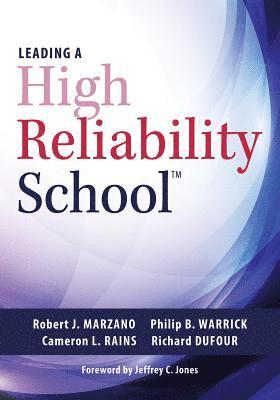
How do educators build High Reliability Schools (HRS) and boost academic achievement? By implementing interdependent systems of operation and performance assessment for student-centered learning. A critical commitment to becoming an HRS is the PLC at Work™ process of collaborative learning and teaching. This user-friendly teaching resource focuses on: (1) a safe and collaborative culture, (2) effective teaching in every classroom, (3) a guaranteed and viable curriculum, (4) standards-referenced reporting of student progress (standards-based grading), and (5) a competency-based system.
Marzano, Warrick, Rains, and DuFour will help you:
Increase school effectiveness through a focus on student-centered learning and the implementation of research-based leading indicators of operation.Monitor effective practices through the use of lagging indicators and quick data sources.Explore the three big ideas associated with the PLC at Work™ process to implement student-centered learning, collaborative teaching strategies, and data-driven instruction.Engage in periodic reflection on effective school leadership and instructional coaching practices.Understand how to balance and achieve school and district goals using data to improve students'' academic achievement and college- and career-readiness skills.Contents:ForewordIntroductionChapter 1: High Reliability Organizations and School LeadershipChapter 2: Safe and Collaborative CultureChapter 3: Effective Teaching in Every ClassroomChapter 4: Guaranteed and Viable CurriculumChapter 5: Standards-Referenced ReportingChapter 6: Competency-Based EducationChapter 7: District Leadership in High Reliability SchoolsAppendixReferences and ResourcesIndex