Jeff Jarvis – författare
Visar alla böcker från författaren Jeff Jarvis. Handla med fri frakt och snabb leverans.
18 produkter
Gutenberg Parenthesis
The Age of Print and Its Lessons for the Age of the Internet
Av Jeff Jarvis
Häftad, 2024
238 kr
Lägg i varukorg
A 2024 CHOICE OUTSTANDING ACADEMIC TITLEPROSE AWARDS MEDIA AND CULTURAL STUDIES FINALIST 2024The Gutenberg Parenthesis traces the epoch of print from its fateful beginnings to our digital present – and draws out lessons for the age to come.The age of print is a grand exception in history. For five …
Hot Type
The Magnificent Machine that Gave Birth to Mass Media and Drove Mark Twain Mad
Av Jeff Jarvis
Inbunden, 2026
223 kr
Lägg i varukorg
Hot Type is the epic story of the magnificent 19th-century machine that rendered Gutenberg’s movable type obsolete and opened the portal to the long century of mass media. The Linotype mechanized the 400-year-old process of setting type one laborious letter at a time, and thus ignited an explosion …
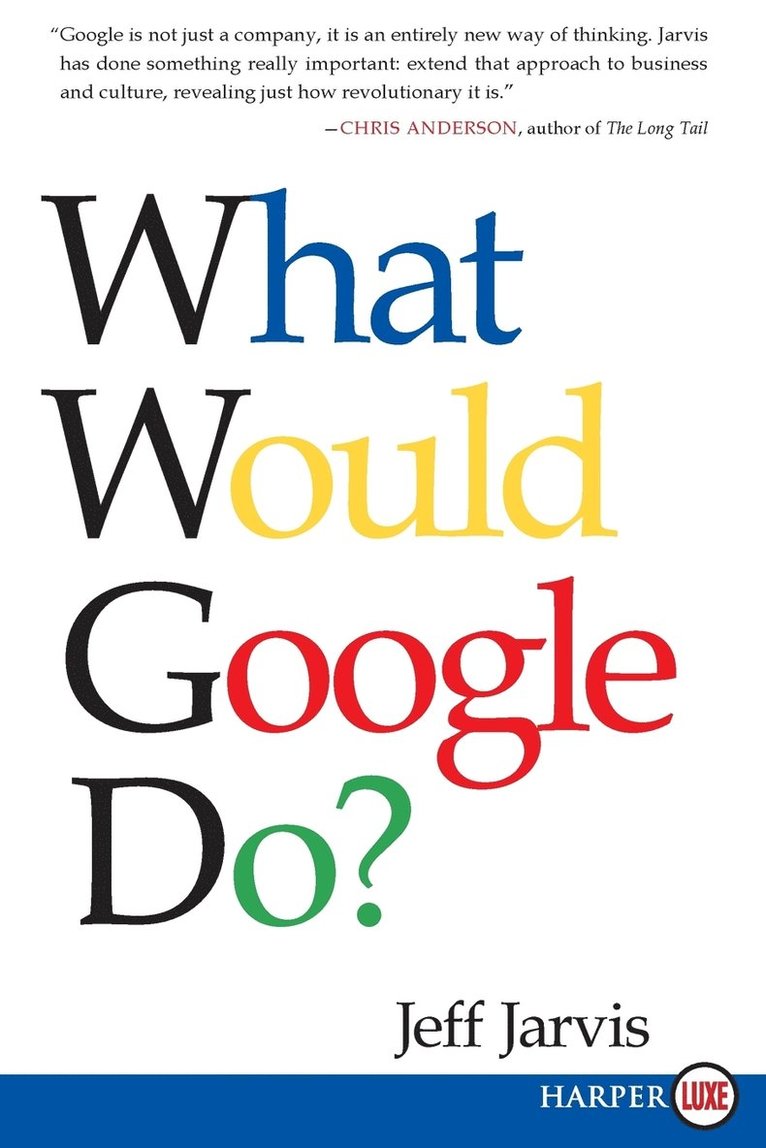
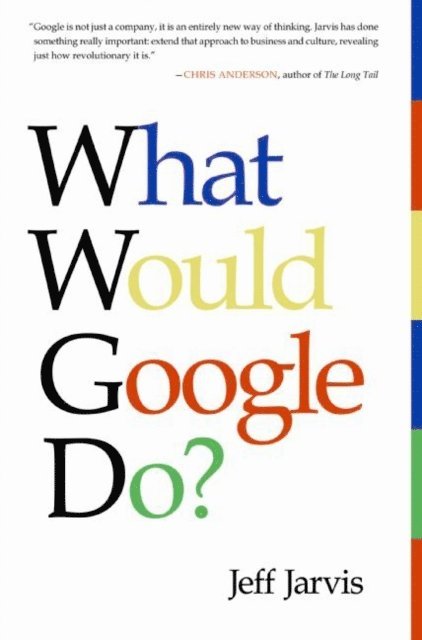
What Would Google Do?
Av Jeff Jarvis
Ljudbok, 2011
214 kr
Lägg i varukorg
What’s the question every business should be asking itself? According to Jeff Jarvis, it’s WHAT WOULD GOOGLE DO? If you’re not thinking or acting like Google – the fastest-growing company in the history of the world – then you’re not going to survive, let alone prosper, in the Internet age.An …
What Would Google Do?
Av Jeff Jarvis
Ljudbok, 2009
215 kr
Lägg i varukorg
“Eye-opening, thought-provoking, and enlightening.†— USA Today “An indispensable guide to the business logic of the networked era.†—Clay Shirky, author of Here Comes Everybody “A stimulating exercise in thinking really, really big.†— San Jose Mercury News What Would Google Do? …
What Would Google Do?
Av Jeff Jarvis
Ljudbok, 2009
149 kr
Lägg i varukorg
“Eye-opening, thought-provoking, and enlightening.” — USA Today “An indispensable guide to the business logic of the networked era.” —Clay Shirky, author of Here Comes Everybody “A stimulating exercise in thinking really, really big.” — San Jose Mercury News What Would Google Do? is an …
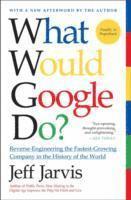
What Would Google Do?
Reverse-Engineering the Fastest Growing Company in the History of the World
Av Jeff Jarvis
E-bok, 2009
102 kr
Lägg i varukorg
“Eye-opening, thought-provoking, and enlightening.” — USA Today “An indispensable guide to the business logic of the networked era.” —Clay Shirky, author of Here Comes Everybody “A stimulating exercise in thinking really, really big.” — San Jose Mercury News What Would Google Do? is an …
Public Parts
How Sharing in the Digital Age Improves the Way We Work and Live
Av Jeff Jarvis
Ljudbok, 2011
357 kr
Lägg i varukorg
International bestselling author and optimistic internet thinker Jeff Jarvis examines the way the Internet has changed the way we form communities, create identities, engage in commerce, and live our lives. A visionary and optimistic thinker examines the tension between privacy and publicness that …
Public Parts
How Sharing in the Digital Age Improves the Way We Work and Live
Av Jeff Jarvis
Häftad, 2015
210 kr
Lägg i varukorg
A visionary and optimistic thinker examines the tension between privacy and publicness that is transforming how we form communities, create identities, do business, and live our lives.Thanks to the internet, we now live—more and more—in public. More than 750 million people (and half of all …
Public Parts
How Sharing in the Digital Age Improves the Way We Work and Live
Av Jeff Jarvis
E-bok, 2011
182 kr
Lägg i varukorg
A visionary and optimistic thinker examines the tension between privacy and publicness that is transforming how we form communities, create identities, do business, and live our lives. Thanks to the internet, we now live—more and more—in public. More than 750 million people (and half of all …
Gutenberg Parenthesis
The Age of Print and Its Lessons for the Age of the Internet
Av Jeff Jarvis
Inbunden, 2023
339 kr
Lägg i varukorg
A 2024 CHOICE OUTSTANDING ACADEMIC TITLEPROSE AWARDS MEDIA AND CULTURAL STUDIES FINALIST 2024The Gutenberg Parenthesis traces the epoch of print from its fateful beginnings to our digital present – and draws out lessons for the age to come.The age of print is a grand exception in history. For five …
Gutenberg Parenthesis
The Age of Print and its Lessons for the Age of the Internet
Av Jeff Jarvis
E-bok, 2023
269 kr
Lägg i varukorg
A 2024 CHOICE OUTSTANDING ACADEMIC TITLEPROSE AWARDS MEDIA AND CULTURAL STUDIES FINALIST 2024The Gutenberg Parenthesis traces the epoch of print from its fateful beginnings to our digital present – and draws out lessons for the age to come.The age of print is a grand exception in history. For five …
Gutenberg Parenthesis
The Age of Print and its Lessons for the Age of the Internet
Av Jeff Jarvis
E-bok, 2023
269 kr
Lägg i varukorg
A 2024 CHOICE OUTSTANDING ACADEMIC TITLEPROSE AWARDS MEDIA AND CULTURAL STUDIES FINALIST 2024The Gutenberg Parenthesis traces the epoch of print from its fateful beginnings to our digital present – and draws out lessons for the age to come.The age of print is a grand exception in history. For five …
Magazine
Av Jeff Jarvis, Ian Bogost m. fl.
Häftad, 2023
146 kr
Lägg i varukorg
Object Lessons is a series of short, beautifully designed books about the hidden lives of ordinary things.For a century, magazines were the authors of culture and taste, of intelligence and policy — until they were overthrown by the voices of the public themselves online. Here is a tribute to all …
Magazine
Av Jeff Jarvis
E-bok, 2023
176 kr
Lägg i varukorg
Object Lessons is a series of short, beautifully designed books about the hidden lives of ordinary things.For a century, magazines were the authors of culture and taste, of intelligence and policy - until they were overthrown by the voices of the public themselves online. Here is a tribute to all …
Magazine
Av Jeff Jarvis
E-bok, 2023
179 kr
Lägg i varukorg
Object Lessons is a series of short, beautifully designed books about the hidden lives of ordinary things.For a century, magazines were the authors of culture and taste, of intelligence and policy - until they were overthrown by the voices of the public themselves online. Here is a tribute to all …
The Web We Weave
Why We Must Reclaim the Internet from Moguls, Misanthropes, and Moral Panic
Av Jeff Jarvis
Inbunden, 2024
275 kr
Lägg i varukorg
A bold defense of the internet, arguing that attempts to fix and regulate it are often misguidedThe internet stands accused of dividing us, spying on us, making us stupid, and addicting our children. In response, the press and panicked politicians seek greater regulation and control, which could …