Jeff Kosseff – författare
Visar alla böcker från författaren Jeff Kosseff. Handla med fri frakt och snabb leverans.
6 produkter
6 produkter
976 kr
Tillfälligt slut
A definitive guide to cybersecurity law Expanding on the author s experience as a cybersecurity lawyer and law professor, Cybersecurity Law is the definitive guide to cybersecurity law, with an in-depth analysis of U.S. and international laws that apply to data security, data breaches, sensitive information safeguarding, law enforcement surveillance, cybercriminal combat, privacy, and many other cybersecurity issues. Written in an accessible manner, the book provides real-world examples and case studies to help readers understand the practical applications of the presented material. The book begins by outlining the legal requirements for data security, which synthesizes the Federal Trade Commission s cybersecurity cases in order to provide the background of the FTC s views on data security. The book also examines data security requirements imposed by a growing number of state legislatures and private litigation arising from data breaches. Anti-hacking laws, such as the federal Computer Fraud and Abuse Act, Economic Espionage Act, and the Digital Millennium Copyright Act, and how companies are able to fight cybercriminals while ensuring compliance with the U.S.Constitution and statutes are discussed thoroughly. Featuring an overview of the laws that allow coordination between the public and private sectors as well as the tools that regulators have developed to allow a limited amount of collaboration, this book also: Addresses current U.S. and international laws, regulations, and court opinions that define the field of cybersecurity including the security of sensitive information, such as financial data and health information Discusses the cybersecurity requirements of the largest U.S. trading partners in Europe, Asia, and Latin America, and specifically addresses how these requirements are similar to (and differ from) those in the U.S. Provides a compilation of many of the most important cybersecurity statutes and regulations Emphasizes the compliance obligations of companies with in-depth analysis of crucial U.S. and international laws that apply to cybersecurity issues Examines government surveillance laws and privacy laws that affect cybersecurity as well as each of the data breach notification laws in 47 states and the District of Columbia Includes numerous case studies and examples throughout to aid in classroom use and to help readers better understand the presented material Supplemented with a companion website that features in-class discussion questions and timely and recent updates on recent legislative developments as well as information on interesting cases on relevant and significant topics Cybersecurity Law is appropriate as a textbook for undergraduate and graduate-level courses in cybersecurity, cybersecurity law, cyber operations, management-oriented information technology (IT), and computer science.This book is also an ideal reference for lawyers, IT professionals, government personnel, business managers, IT management personnel, auditors, and cybersecurity insurance providers. JEFF KOSSEFF is Assistant Professor of Cybersecurity Law at the United States Naval Academy in Annapolis, Maryland. He frequently speaks and writes about cybersecurity and was a journalist covering technology and politics at The Oregonian, a finalist for the Pulitzer Prize, and a recipient of the George Polk Award for national reporting.
1 197 kr
Skickas inom 7-10 vardagar
Comprehensive textbook covering the latest developments in the field of cybersecurity law Cybersecurity Law offers an authoritative guide to the key statutes, regulations, and court rulings that pertain to cybersecurity, reflecting the latest legal developments for this constantly evolving subject since the previous edition was released in 2022. This comprehensive text deals with all aspects of cybersecurity law, including data security and enforcement actions, anti-hacking laws, surveillance and privacy laws, and national and international cybersecurity law. In this new edition, readers will find insights on revisions to regulations and guidance concerning cybersecurity from federal agencies, such as 2023 SEC cybersecurity regulations for all publicly traded companies, and the Cyber Incident Reporting for Critical Infrastructure Act and its impact on the obligations of companies across the United States. Other recent developments discussed in this book include litigation from customers against companies after data breaches and the resulting legal articulation of companies’ duties to secure personal information, the increased focus from lawmakers and regulators on the Internet of Things (IoT), and the FDA’s guidelines for medical device cyber security. Readers of Cybersecurity Law will also find new information on: Litigation cases where courts ruled on whether plaintiffs stated viable causes of action in data breach cases, including the Eleventh Circuit’s opinion in Ramirez v. Paradies ShopsFourth Amendment opinions involving geofence warrants and keyword search warrantsCourts’ applications of the Supreme Court’s first Computer Fraud and Abuse Act opinion, Van Buren v. United StatesNIST’s 2024 revisions to its popular Cybersecurity FrameworkVersion 2 of the Cybersecurity Maturity Model CertificationCybersecurity Law is an ideal textbook for undergraduate and graduate level courses in cybersecurity, cyber operations, management-oriented information technology (IT), and computer science. It is also a useful reference for IT professionals, government personnel, business managers, auditors, cybersecurity insurance agents, and academics in these fields.
300 kr
Skickas inom 7-10 vardagar
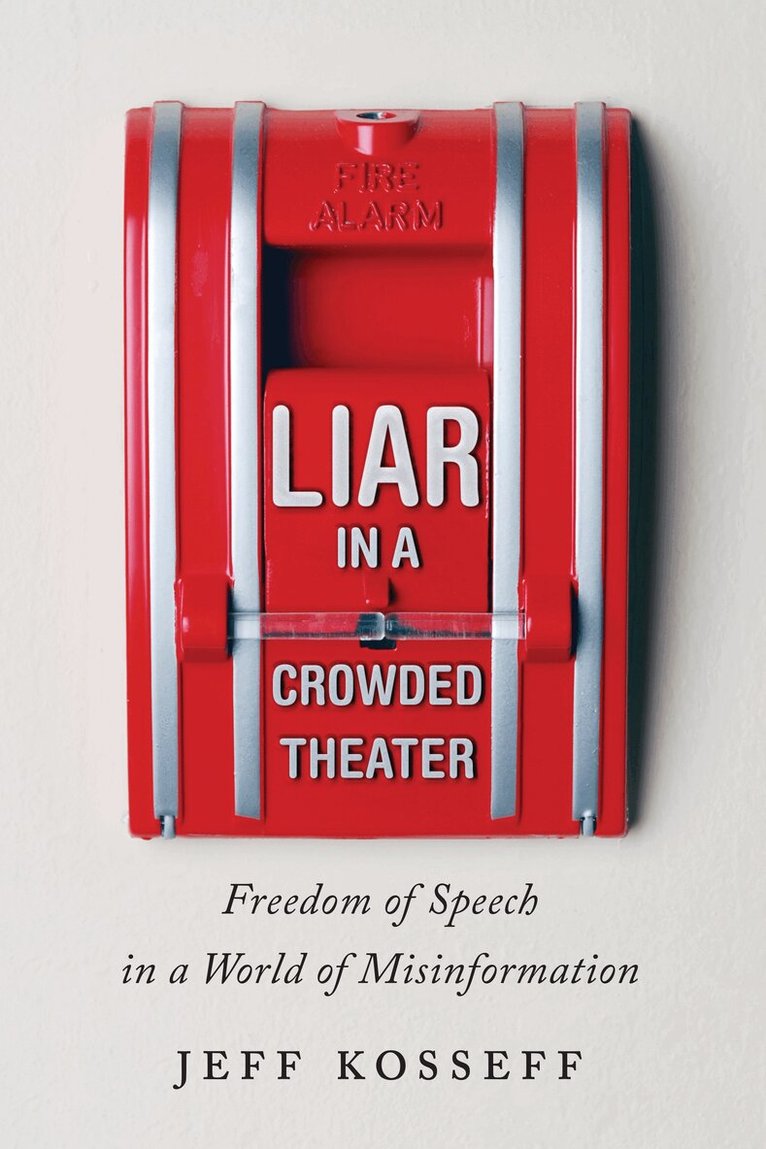
Thanks to the First Amendment, Americans enjoy a rare privilege: the constitutional right to lie. And although controversial, they should continue to enjoy this right.Finalist for the Silver Gavel Award by the American Bar AssociationWhen commentators and politicians discuss misinformation, they often repeat five words: "fire in a crowded theater." Though governments can, if they choose, attempt to ban harmful lies, propaganda, misinformation, and disinformation, how effective will their efforts really be? Can they punish someone for yelling "fire" in a crowded theater—and would those lies then have any less impact? How do governments around the world respond to the spread of misinformation, and when should the US government protect the free speech of liars?In Liar in a Crowded Theater, law professor Jeff Kosseff addresses the pervasiveness of lies, the legal protections they enjoy, the harm they cause, and how to combat them. From the COVID-19 pandemic to the 2016 and 2020 presidential elections and the January 6, 2021, insurrection on the Capitol building, Kosseff argues that even though lies can inflict huge damage, US law should continue to protect them. Liar in a Crowded Theater explores both the history of protected falsehoods and where to go from here.Drawing on years of research and thousands of pages of court documents in dozens of cases—from Alexander Hamilton's enduring defense of free speech to Eminem's victory in a lawsuit claiming that he stretched the truth in a 1999 song—Kosseff illustrates not only why courts are reluctant to be the arbiters of truth but also why they're uniquely unsuited to that role. Rather than resorting to regulating speech and fining or jailing speakers, he proposes solutions that focus on minimizing the harms of misinformation. If we want to seriously address concerns about misinformation and other false speech, we must finally exit the crowded theater.
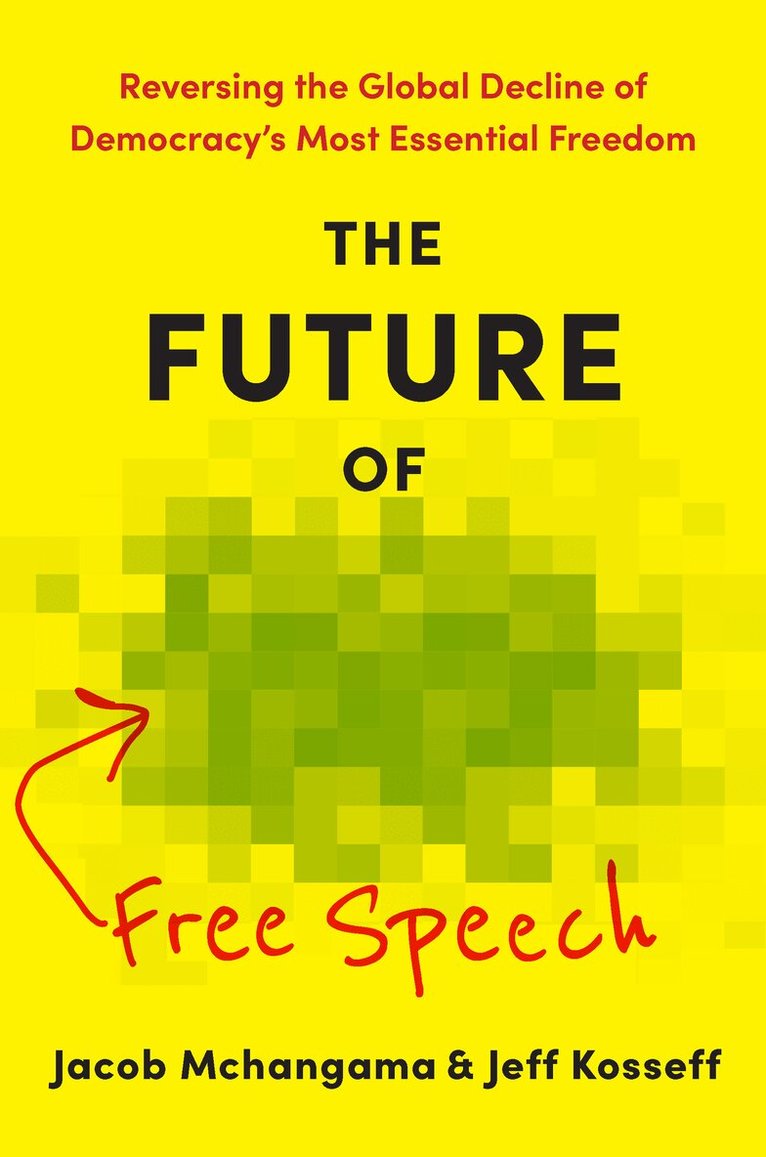
Future of Free Speech
Reversing the Global Decline of Democracy's Most Essential Freedom
Inbunden, Engelska, 2026
380 kr
Kommande
An incisive examination of free speech's global decline and a framework for preserving expression in democratic societies.The Future of Free Speech confronts a stark truth: the right to speak freely is under siege. Once celebrated as a cornerstone of democratic societies, free expression is now met with growing suspicion and retaliation across the globe. Jacob Mchangama and Jeff Kosseff present a panoramic view of how we arrived at this pivotal moment. The authors examine a century in which speech rights expanded dramatically—including postwar democratic revolutions and the sweeping protections of the First Amendment—only to find those rights unraveling in the face of new political, technological, and cultural pressures. Today, liberal democracies are imposing speech controls, authoritarian regimes are cloaking censorship in democratic language, and digital platforms wield unprecedented power over global discourse. This book examines the backlash against free speech from all sides: governments criminalizing dissent in the name of national security; lawmakers and activists demanding tighter controls on misinformation, hate speech, and offensive content; and AI systems removing speech at a scale and speed that dwarfs historical forms of censorship. At the same time, faith in free speech itself is waning, even in the very societies that once championed it. The Future of Free Speech argues for a reinvigorated, global commitment to open dialogue. Mchangama and Kosseff advocate nonpartisan, civic-minded solutions that resist both government overreach and corporate silencing. They offer a compelling case for how free speech can meet modern challenges without abandoning its foundational role in sustaining democracy, human rights, and shared understanding.
261 kr
Skickas inom 7-10 vardagar
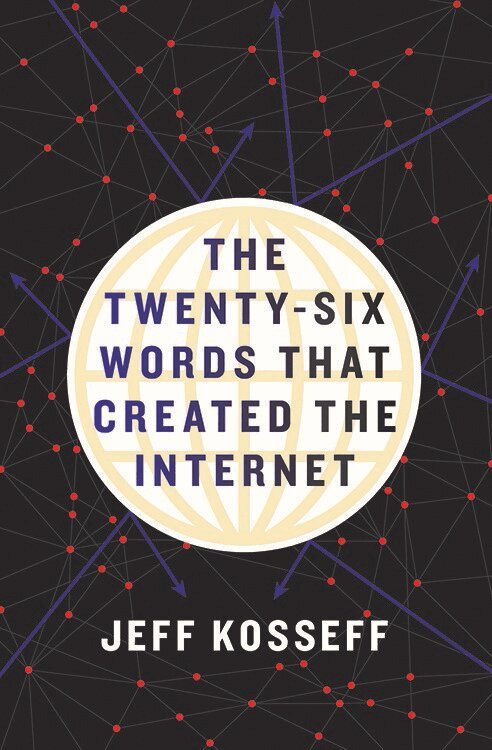
As seen on CBS 60 minutes"No provider or user of an interactive computer service shall be treated as the publisher or speaker of any information provided by another information content provider."Did you know that these twenty-six words are responsible for much of America's multibillion-dollar online industry? What we can and cannot write, say, and do online is based on just one law-a law that protects online services from lawsuits based on user content. Jeff Kosseff exposes the workings of Section 230 of the Communications Decency Act, which has lived mostly in the shadows since its enshrinement in 1996. Because many segments of American society now exist largely online, Kosseff argues that we need to understand and pay attention to what Section 230 really means and how it affects what we like, share, and comment upon every day.The Twenty-Six Words That Created the Internet tells the story of the institutions that flourished as a result of this powerful statute. It introduces us to those who created the law, those who advocated for it, and those involved in some of the most prominent cases decided under the law. Kosseff assesses the law that has facilitated freedom of online speech, trolling, and much more. His keen eye for the law, combined with his background as an award-winning journalist, demystifies a statute that affects all our lives –for good and for ill. While Section 230 may be imperfect and in need of refinement, Kosseff maintains that it is necessary to foster free speech and innovation.For filings from many of the cases discussed in the book and updates about Section 230, visit jeffkosseff.com
285 kr
Skickas inom 7-10 vardagar
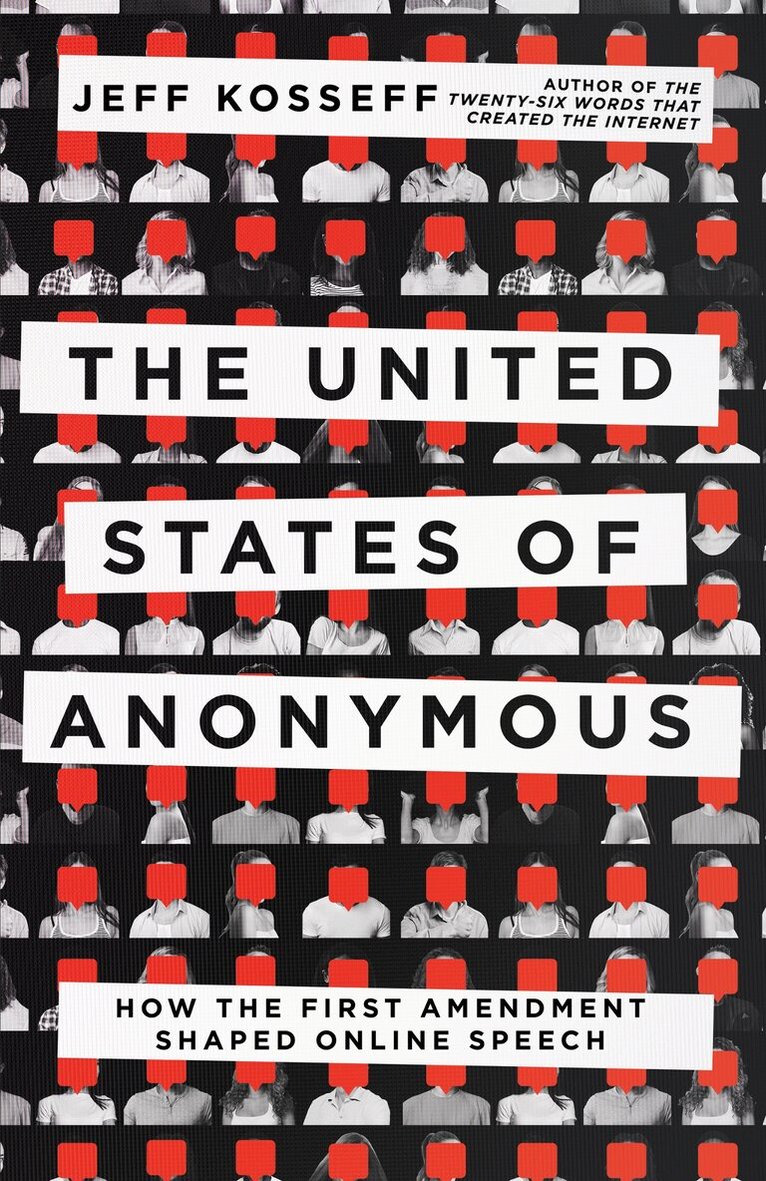
In The United States of Anonymous, Jeff Kosseff explores how the right to anonymity has shaped American values, politics, business, security, and discourse, particularly as technology has enabled people to separate their identities from their communications. Legal and political debates surrounding online privacy often focus on the Fourth Amendment's protection against unreasonable searches and seizures, overlooking the history and future of an equally powerful privacy right: the First Amendment's protection of anonymity. The United States of Anonymous features extensive and engaging interviews with people involved in the highest profile anonymity cases, as well as with those who have benefited from, and been harmed by, anonymous communications. Through these interviews, Kosseff explores how courts have protected anonymity for decades and, likewise, how law and technology have allowed individuals to control how much, if any, identifying information is associated with their communications. From blocking laws that prevent Ku Klux Klan members from wearing masks to restraining Alabama officials from forcing the NAACP to disclose its membership lists, and to refusing companies' requests to unmask online critics, courts have recognized that anonymity is a vital part of our free speech protections. The United States of Anonymous weighs the tradeoffs between the right to hide identity and the harms of anonymity, concluding that we must maintain a strong, if not absolute, right to anonymous speech.