Jeff Manza – författare
Visar alla böcker från författaren Jeff Manza. Handla med fri frakt och snabb leverans.
7 produkter
Locked Out
Felon Disenfranchisement and American Democracy
Av Christopher Uggen, Jeff Manza
E-bok, 2006
239 kr
Lägg i varukorg
5.4 million Americans--1 in every 40 voting age adults-- are denied the right to participate in democratic elections because of a past or current felony conviction. In several American states, 1 in 4 black men cannot vote due to a felony conviction. In a country that prides itself on universal …
Locked Out
Felon Disenfranchisement and American Democracy
Av Jeff Manza, Christopher Uggen
Inbunden, 2006
477 kr
Lägg i varukorg
5.4 million Americans--1 in every 40 voting age adults-- are denied the right to participate in democratic elections because of a past or current felony conviction. In several American states, 1 in 4 black men cannot vote due to a felony conviction. In a country that prides itself on universal …
Locked Out
Felon Disenfranchisement and American Democracy
Av Jeff Manza, Christopher Uggen
Häftad, 2008
373 kr
Lägg i varukorg
"Mr. Manza and Mr. Uggen... wade into one of the most contested empirical debates in political science: How many (if any) recent American elections would have gone differently if all former felons had been allowed to vote?"--The Chronicle of Higher Education. Jeff Manza and Christopher Uggen, who …
Navigating Public Opinion
Polls, Policy, and the Future of American Democracy
Av Benjamin I. Page, Fay Lomax Cook m. fl.
E-bok, 2002
569 kr
Lägg i varukorg
Do politicians listen to the public? How often and when? Or are the views of the public manipulated or used strategically by political and economic elites? Navigating Public Opinion brings together leading scholars of American politics to assess and debate these questions. It describes how the …
Locked Out
Felon Disenfranchisement and American Democracy
Av Christopher Uggen, Jeff Manza
E-bok, 2006
199 kr
Lägg i varukorg
5.4 million Americans--1 in every 40 voting age adults-- are denied the right to participate in democratic elections because of a past or current felony conviction. In several American states, 1 in 4 black men cannot vote due to a felony conviction. In a country that prides itself on universal …
Social Cleavages and Political Change
Voter Alignments and U.S. Party Coalitions
Inbunden, 1999
3617 kr
Lägg i varukorg
What social groups support which political party, and how that support has changed over time, are central questions in the sociology of political behaviour. This study provides the first systematic book-length reassessment and restatement of the sociological approach to American politics in more …
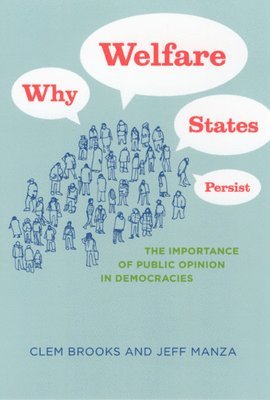
Why Welfare States Persist
The Importance of Public Opinion in Democracies
Häftad, 2007
265 kr
Lägg i varukorg
The world's richer democracies all provide such public benefits as pensions and health care, but why are some far more generous than others? And why, in the face of globalization and fiscal pressures, has the welfare state not been replaced by another model? Reconsidering the myriad issues raised …