Jeff Tayman - Böcker
Visar alla böcker från författaren Jeff Tayman. Handla med fri frakt och snabb leverans.
8 produkter
8 produkter
1 577 kr
Skickas inom 10-15 vardagar
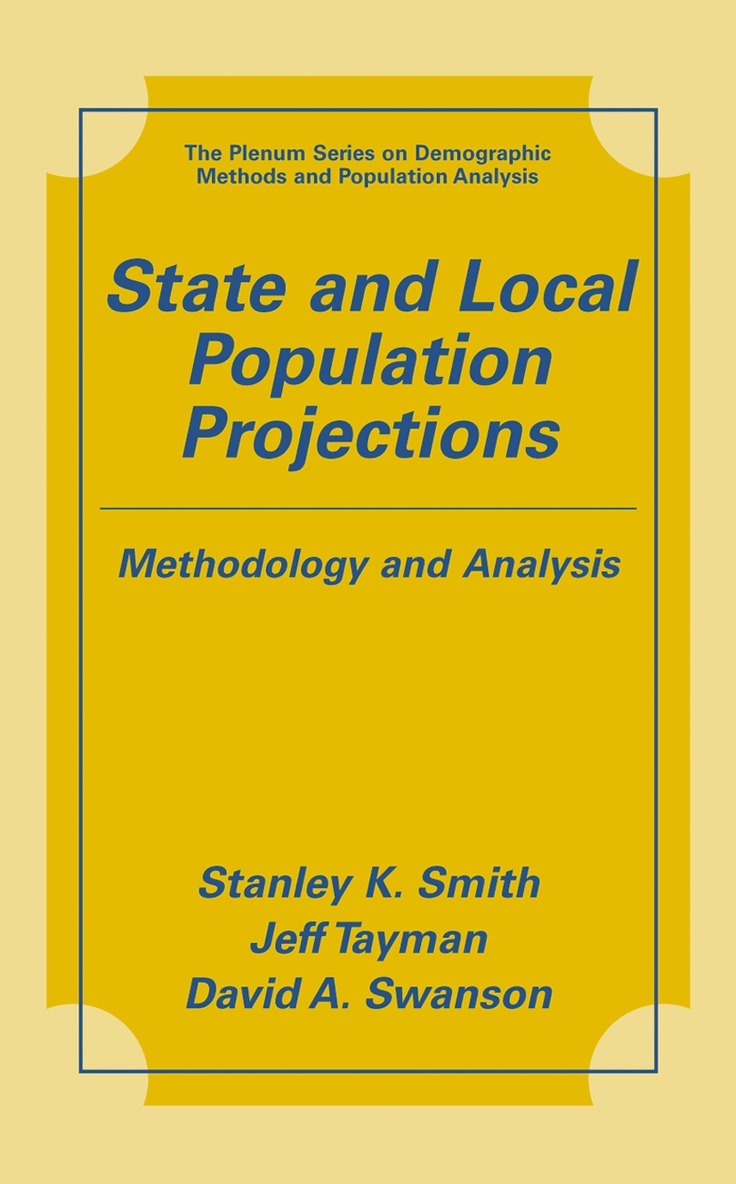
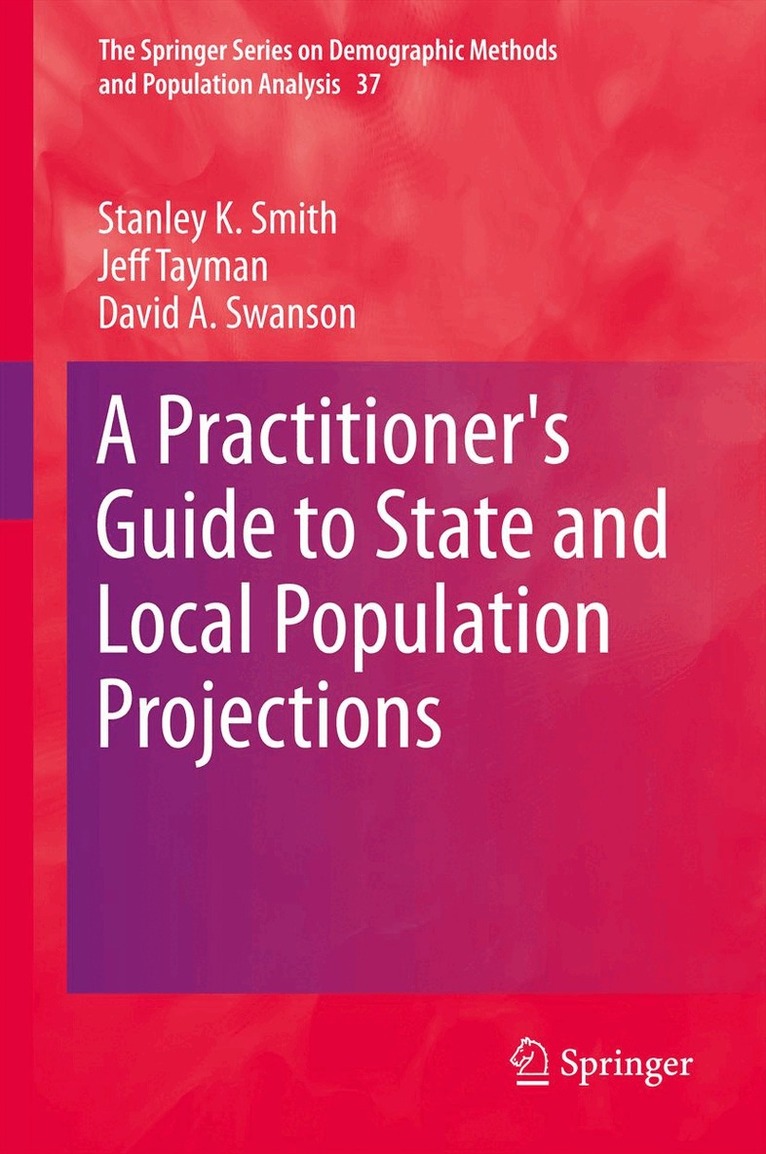
This text focuses on the methodology and analysis of state and local population projections. It describes the most commonly used data sources and application techniques within each of three classes of projection methods (cohort-component, trend extrapolation, and structural models) and covers the components of population growth, the formation of assumptions, the development of evaluation criteria, and the determinants of forecast accuracy. It considers the strengths and weaknesses of various projection methods, paying special attention to the unique problems of making projections for small areas, and closes with an examination of technological and methodological changes affecting the production of small-area population projections. The authors provide practical guidance to demographers, planners, and other analysts called on to construct state and local population projections. They use many examples and illustrations and present suggestions for dealing with special populations, unique circumstances, and inadequate or unreliable data; they also describe techniques for controlling one set of projections to another and for interpolating between two projections.They discuss the role of judgment and the importance of the political context in which projections are made and emphasize the "utility" of projections, or their usefulness for decision making in a world of competing demands and limited resources. This comprehensive book should provide readers with an understanding not only of the mechanics of commonly used population projection methods, but also of the many complex issues affecting their construction, interpretation, evaluation, and use.
1 577 kr
Skickas inom 10-15 vardagar
This text focuses on the methodology and analysis of state and local population projections. It describes the most commonly used data sources and application techniques within each of three classes of projection methods (cohort-component, trend extrapolation, and structural models) and covers the components of population growth, the formation of assumptions, the development of evaluation criteria, and the determinants of forecast accuracy. It considers the strengths and weaknesses of various projection methods, paying special attention to the unique problems of making projections for small areas, and closes with an examination of technological and methodological changes affecting the production of small-area population projections. The authors provide practical guidance to demographers, planners, and other analysts called on to construct state and local population projections. They use many examples and illustrations and present suggestions for dealing with special populations, unique circumstances, and inadequate or unreliable data; they also describe techniques for controlling one set of projections to another and for interpolating between two projections.They discuss the role of judgment and the importance of the political context in which projections are made and emphasize the "utility" of projections, or their usefulness for decision making in a world of competing demands and limited resources. This comprehensive book should provide readers with an understanding not only of the mechanics of commonly used population projection methods, but also of the many complex issues affecting their construction, interpretation, evaluation, and use.
644 kr
Skickas inom 10-15 vardagar
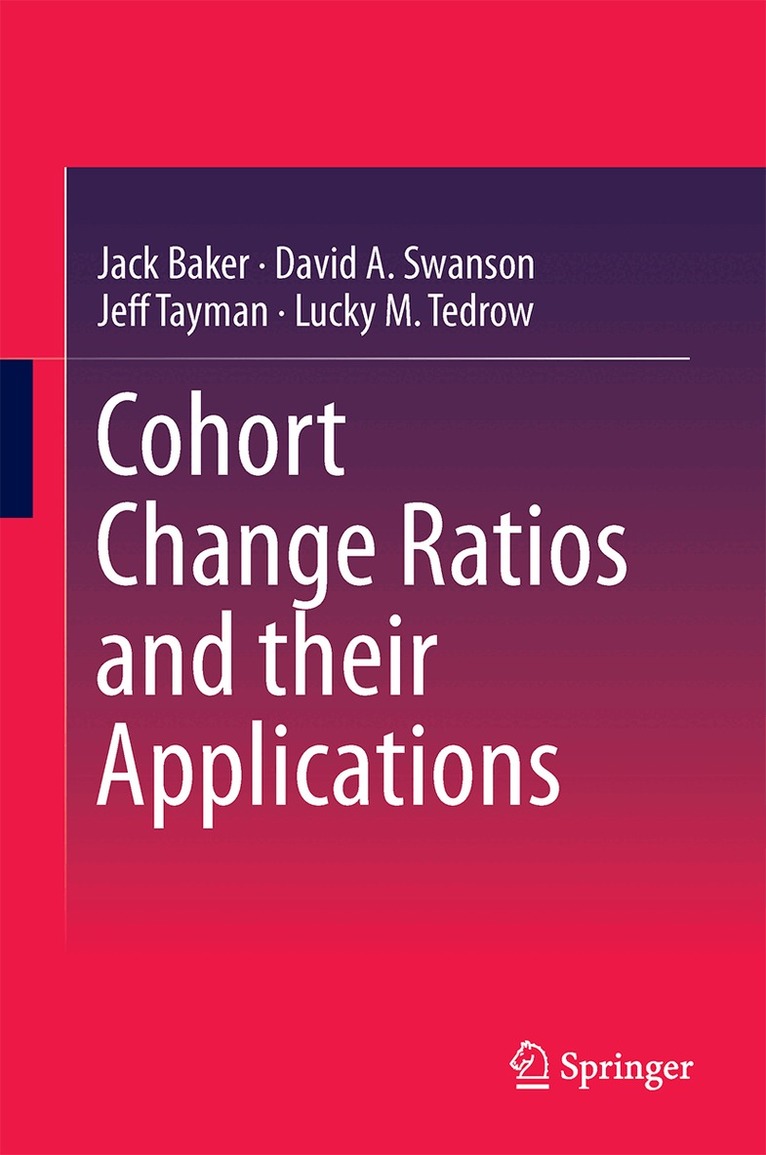
This textbook focuses on the cohort change ratio (CCR) method. It presents powerful, yet relatively simple ways to generate accurate demographic estimates and forecasts that are cost efficient and require fewer resources than other techniques. The concepts, analytical frameworks, and methodological tools presented do not require extensive knowledge of demographics, mathematics, or statistics.The demographic focus is on the characteristics of populations, especially age and sex composition, but these methods are applicable estimating and forecasting other characteristics and total population. The book contains more traditional applications such as the Hamilton-Perry method, but also includes new applications of the CCR method such as stable population theory. Real world empirical examples are provided for every application; along with excel files containing data and program code, which are accessible online.Topics covered include basic demographic measures, sources of demographic information, forecasting and estimating (both current and historical) populations, modifications to current methods, forecasting school enrollment and other characteristics, estimating life expectancy, stable population theory, decomposition of the CCR into its migration and mortality components, and the utility of the CCR.This textbook is designed to provide material for an advanced undergraduate or graduate course on demographic methods. It can also be used as a supplement for other courses including applied demography, business and economic forecasting and market research.
538 kr
Skickas inom 10-15 vardagar
This textbook focuses on the cohort change ratio (CCR) method. It presents powerful, yet relatively simple ways to generate accurate demographic estimates and forecasts that are cost efficient and require fewer resources than other techniques. The concepts, analytical frameworks, and methodological tools presented do not require extensive knowledge of demographics, mathematics, or statistics.The demographic focus is on the characteristics of populations, especially age and sex composition, but these methods are applicable estimating and forecasting other characteristics and total population. The book contains more traditional applications such as the Hamilton-Perry method, but also includes new applications of the CCR method such as stable population theory. Real world empirical examples are provided for every application; along with excel files containing data and program code, which are accessible online.Topics covered include basic demographic measures, sources of demographic information, forecasting and estimating (both current and historical) populations, modifications to current methods, forecasting school enrollment and other characteristics, estimating life expectancy, stable population theory, decomposition of the CCR into its migration and mortality components, and the utility of the CCR.This textbook is designed to provide material for an advanced undergraduate or graduate course on demographic methods. It can also be used as a supplement for other courses including applied demography, business and economic forecasting and market research.
1 900 kr
Skickas inom 10-15 vardagar
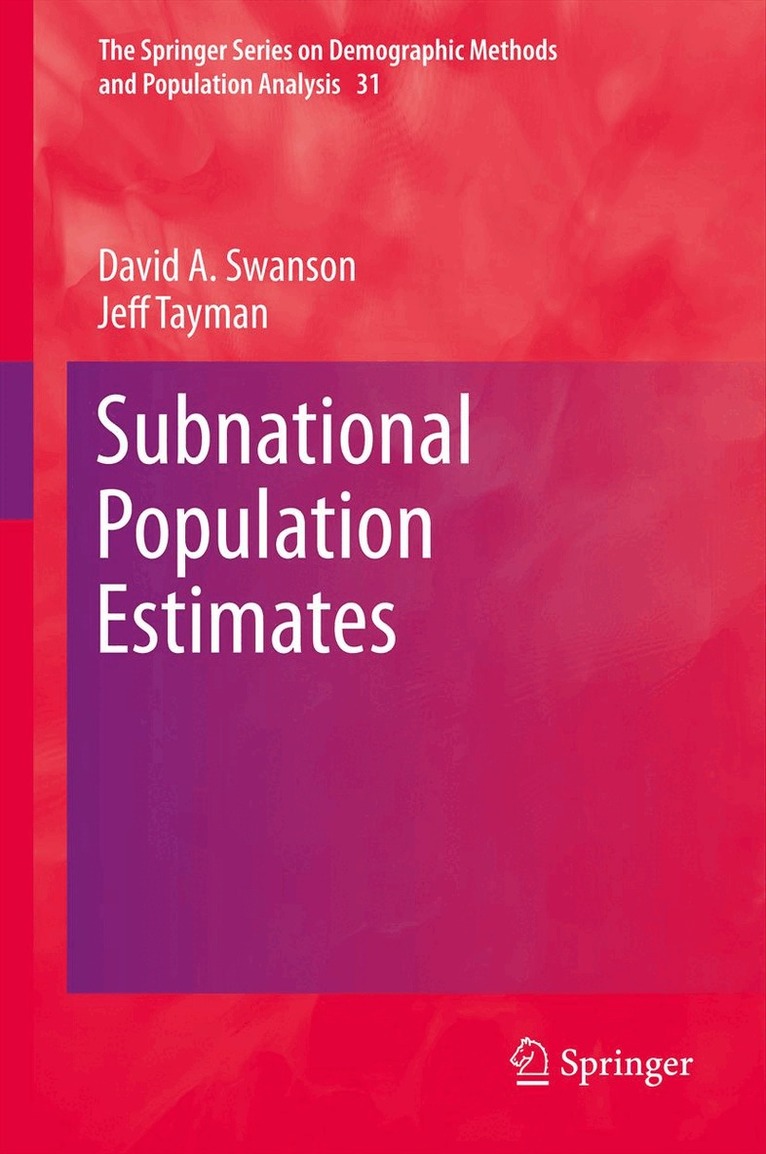
Providing a unified and comprehensive treatment of the theory and techniques of sub-national population estimation, this much-needed publication does more than collate disparate source material. It examines hitherto unexplored methodological links between differing types of estimation from both the demographic and sample-survey traditions and is a self-contained primer that combines academic rigor with a wealth of real-world examples that are useful models for demographers. Between censuses, which are expensive, administratively complex, and thus infrequent, demographers and government officials must estimate population using either demographic modeling techniques or statistical surveys that sample a fraction of residents. These estimates play a central role in vital decisions that range from funding allocations and rate-setting to education, health and housing provision. They also provide important data to companies undertaking market research. However, mastering small-area and sub-national population estimation is complicated by scattered, incomplete and outdated academic sources—an issue this volume tackles head-on. Rapidly increasing population mobility is making inter-census estimation ever more important to strategic planners. This book will make the theory and techniques involved more accessible to anyone with an interest in developing or using population estimates.
Del 37 - Springer Series on Demographic Methods and Population Analysis
Practitioner's Guide to State and Local Population Projections
Inbunden, Engelska, 2014
1 387 kr
Skickas inom 10-15 vardagar
This book focuses on the methodology and analysis of state and local population projections. They describe techniques for controlling one set of projections to another, for interpolating between time points, for sub-dividing age groups, and for constructing projections of population-related variables (e.g., school enrollment, households).
1 900 kr
Skickas inom 10-15 vardagar
Providing a unified and comprehensive treatment of the theory and techniques of sub-national population estimation, this much-needed publication does more than collate disparate source material. It examines hitherto unexplored methodological links between differing types of estimation from both the demographic and sample-survey traditions and is a self-contained primer that combines academic rigor with a wealth of real-world examples that are useful models for demographers. Between censuses, which are expensive, administratively complex, and thus infrequent, demographers and government officials must estimate population using either demographic modeling techniques or statistical surveys that sample a fraction of residents. These estimates play a central role in vital decisions that range from funding allocations and rate-setting to education, health and housing provision. They also provide important data to companies undertaking market research. However, mastering small-area and sub-national population estimation is complicated by scattered, incomplete and outdated academic sources—an issue this volume tackles head-on. Rapidly increasing population mobility is making inter-census estimation ever more important to strategic planners. This book will make the theory and techniques involved more accessible to anyone with an interest in developing or using population estimates.
1 387 kr
Skickas inom 10-15 vardagar
This book focuses on the methodology and analysis of state and local population projections. They describe techniques for controlling one set of projections to another, for interpolating between time points, for sub-dividing age groups, and for constructing projections of population-related variables (e.g., school enrollment, households).