Jeffrey A. Barrett - Böcker
Visar alla böcker från författaren Jeffrey A. Barrett. Handla med fri frakt och snabb leverans.
6 produkter
6 produkter
850 kr
Kommande
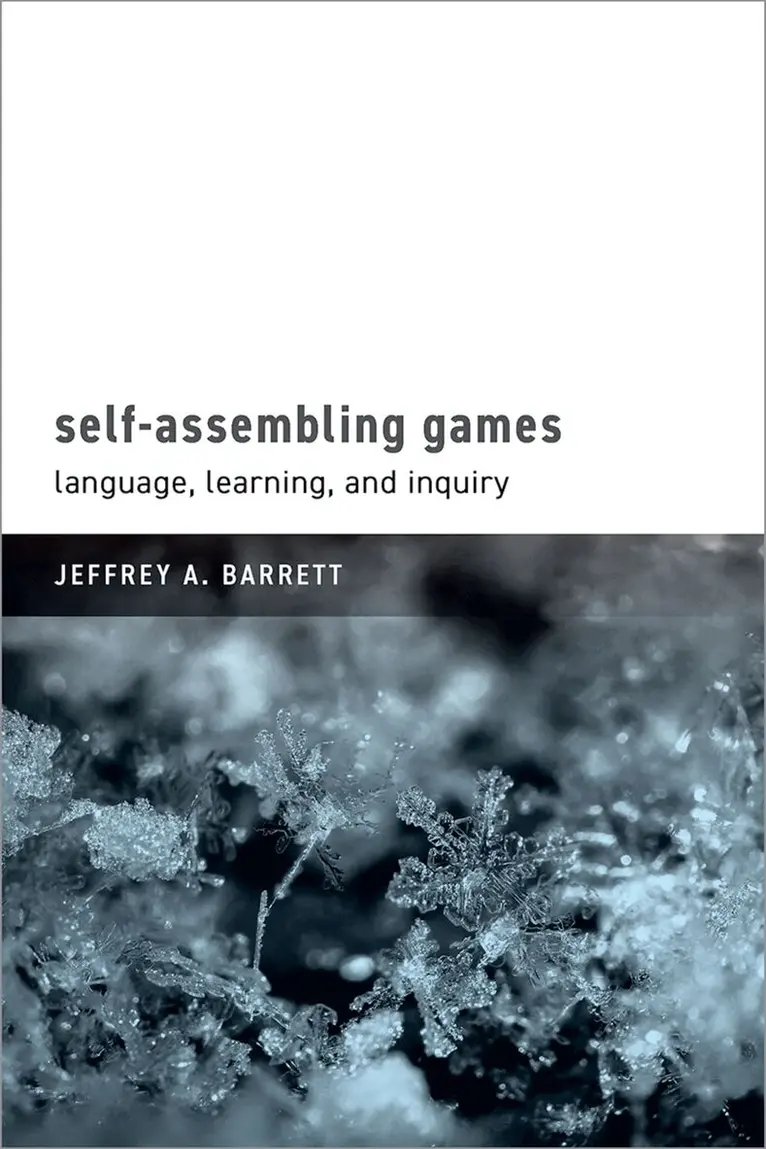
The theory of self-assembling games studies how evolutionary games emerge from basic interactions, and explores how once formed, the structure of a game may evolve on continued play. In Self Assembling Games, Jeffrey A. Barrett offers an incisive analysis of hierarchical, dialogue, and network-style games, illustrating how trial-and-error learners coevolve meaningful language and inferential capacities, how social structures that allow for more reliable learning emerge, and how learning itself develops in more sophisticated ways throughout this process.In a philosophical exploration of self-assembling games' impact on animal and human behaviour, Barrett follows a continuous philosophical thread, providing a framework for a thoughtful pragmatic account of empirical inquiry. In demonstrating how simple agents may evolve meaningful language, useful social connections, and better ways of learning as they succeed and fail together in action, Self Assembling Games offers readers new ways of considering game-theoretic ritualization at large.
1 975 kr
Skickas inom 5-8 vardagar
Jeffrey Barrett presents the most comprehensive study yet of a problem that has puzzled physicists and philosophers since the 1930s. The standard theory of quantum mechanics is in one sense the most successful physical theory ever, predicting the behaviour of the basic constituents of all physical things; no other theory has ever made such accurate empirical predictions. However, if one tries to understand the theory as providing a complete and accurate framework for the description of the behaviour of all physical interactions, it becomes evident that the theory is ambiguous, or even logically inconsistent. The most notable attempt to formulate the theory so as to deal with this problem, the quantum measurement problem, was initiated by Hugh Everett III in the 1950s. Barrett gives a careful and challenging examination and evaluation of the work of Everett and those who have followed him. His informal approach, minimizing technicality, will make the book accessible and illuminating for philosophers and physicists alike. Anyone interested in the interpretation of quantum mechanics should read it.
1 678 kr
Skickas inom 3-6 vardagar
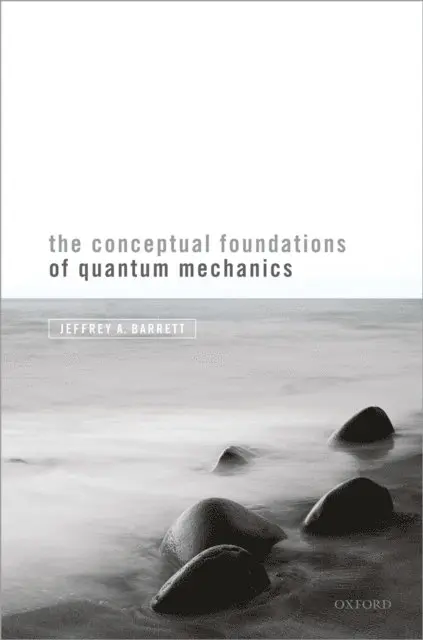
In this book Jeffrey A. Barrett provides an introduction to the history and conceptual foundations of quantum mechanics. He begins with a description of classical mechanics and a discussion of the quantum phenomena that radically undermine our common-sense classical intuitions about how the physical world works. He then considers the physical and conceptual arguments that led to the standard von Neumann-Dirac formulation of quantum mechanics and how the standard theory explains quantum phenomena. This includes a discussion of how the theory's two dynamical laws work with the standard interpretation of states to explain determinate measurement records, quantum statistics, interference effects, entanglement, decoherence, and quantum nonlocality.A careful understanding of how the standard theory works ultimately leads to the quantum measurement problem. Barrett considers how this problem threatens the logical consistency of the standard theory and then turns to a discussion of the main proposals for resolving it. This includes collapse formulations of quantum mechanics, the various many-worlds theories, and Bohmian mechanics. In discussing alternative formulations he pays particular attention to the explanatory role played by each theory's empirical ontology and associated metaphysical commitments, and the conceptual trade-offs between theoretical options. The book is well-suited to those interested in physics and the history and philosophy of quantum mechanics.
572 kr
Skickas inom 5-8 vardagar
In this book Jeffrey A. Barrett provides an introduction to the history and conceptual foundations of quantum mechanics. He begins with a description of classical mechanics and a discussion of the quantum phenomena that radically undermine our common-sense classical intuitions about how the physical world works. He then considers the physical and conceptual arguments that led to the standard von Neumann-Dirac formulation of quantum mechanics and how the standard theory explains quantum phenomena. This includes a discussion of how the theory's two dynamical laws work with the standard interpretation of states to explain determinate measurement records, quantum statistics, interference effects, entanglement, decoherence, and quantum nonlocality.A careful understanding of how the standard theory works ultimately leads to the quantum measurement problem. Barrett considers how this problem threatens the logical consistency of the standard theory and then turns to a discussion of the main proposals for resolving it. This includes collapse formulations of quantum mechanics, the various many-worlds theories, and Bohmian mechanics. In discussing alternative formulations he pays particular attention to the explanatory role played by each theory's empirical ontology and associated metaphysical commitments, and the conceptual trade-offs between theoretical options. The book is well-suited to those interested in physics and the history and philosophy of quantum mechanics.
816 kr
Skickas inom 5-8 vardagar
This is an open access title. It is available to read and download as a free PDF version on Oxford Academic and is made available under a Creative Commons Attribution-NonCommercial-NoDerivatives 4.0 International licence. Jeffrey Barrett presents the most comprehensive study yet of a problem that has puzzled physicists and philosophers since the 1930s. The standard theory of quantum mechanics is in one sense the most successful physical theory ever, predicting the behaviour of the basic constituents of all physical things; no other theory has ever made such accurate empirical predictions. However, if one tries to understand the theory as providing a complete and accurate framework for the description of the behaviour of all physical interactions, it becomes evident that the theory is ambiguous, or even logically inconsistent. The most notable attempt to formulate the theory so as to deal with this problem, the quantum measurement problem, was initiated by Hugh Everett III in the 1950s. Barrett
Everett Interpretation of Quantum Mechanics
Collected Works 1955-1980 with Commentary
Inbunden, Engelska, 2012
887 kr
Skickas inom 7-10 vardagar
Hugh Everett III was an American physicist best known for his many-worlds interpretation of quantum mechanics, which formed the basis of his PhD thesis at Princeton University in 1957. Although counterintuitive, Everett's revolutionary formulation of quantum mechanics offers the most direct solution to the infamous quantum measurement problem--that is, how and why the singular world of our experience emerges from the multiplicities of alternatives available in the quantum world. The many-worlds interpretation postulates the existence of multiple universes. Whenever a measurement-like interaction occurs, the universe branches into relative states, one for each possible outcome of the measurement, and the world in which we find ourselves is but one of these many, but equally real, possibilities. Everett's challenge to the orthodox interpretation of quantum mechanics was met with scorn from Niels Bohr and other leading physicists, and Everett subsequently abandoned academia to conduct military operations research. Today, however, Everett's formulation of quantum mechanics is widely recognized as one of the most controversial but promising physical theories of the last century.In this book, Jeffrey Barrett and Peter Byrne present the long and short versions of Everett's thesis along with a collection of his explanatory writings and correspondence. These primary source documents, many of them newly discovered and most unpublished until now, reveal how Everett's thinking evolved from his days as a graduate student to his untimely death in 1982. This definitive volume also features Barrett and Byrne's introductory essays, notes, and commentary that put Everett's extraordinary theory into historical and scientific perspective and discuss the puzzles that still remain.