Jeffrey Bub - Böcker
Visar alla böcker från författaren Jeffrey Bub. Handla med fri frakt och snabb leverans.
7 produkter
7 produkter
487 kr
Skickas inom 5-8 vardagar
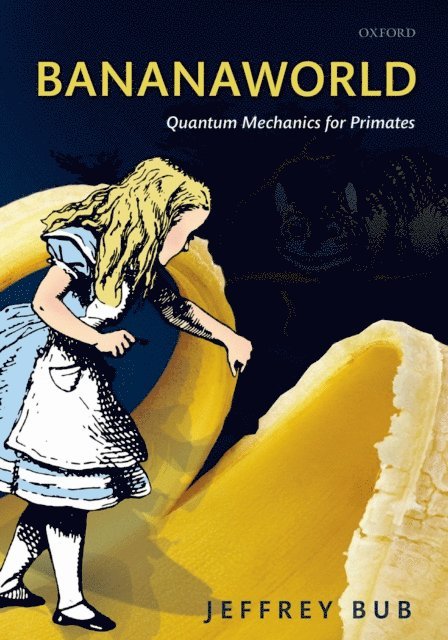
What on earth do bananas have to do with quantum mechanics?From a modern perspective, quantum mechanics is about strangely counterintuitive correlations between separated systems, which can be exploited in feats like quantum teleportation, unbreakable cryptographic schemes, and computers with enormously enhanced computing power. Schro?dinger coined the term "entanglement" to describe these bizarre correlations. Bananaworld - an imaginary island with "entangled" bananas - brings to life the fascinating discoveries of the new field of quantum information without the mathematical machinery of quantum mechanics. The connection with quantum correlations is fully explained in sections written for the non-physicist reader with a serious interest in understanding the mysteries of the quantum world. The result is a subversive but entertaining book that is accessible and interesting to a wide range of readers, with the novel thesis that quantum mechanics is about the structure of information. What we have discovered is that the possibilities for representing, manipulating, and communicating information are very different than we thought.
294 kr
Skickas inom 5-8 vardagar
What on earth do bananas have to do with quantum mechanics? From a modern perspective, quantum mechanics is about strangely counterintuitive correlations between separated systems, which can be exploited in feats like quantum teleportation, unbreakable cryptographic schemes, and computers with enormously enhanced computing power. Schrodinger coined the term "entanglement" to describe these bizarre correlations. Bananaworld -- an imaginary island with "entangled" bananas -- brings to life the fascinating discoveries of the new field of quantum information without the mathematical machinery of quantum mechanics. The connection with quantum correlations is fully explained in sections written for the non-physicist reader with a serious interest in understanding the mysteries of the quantum world. The result is a subversive but entertaining book that is accessible and interesting to a wide range of readers, with the novel thesis that quantum mechanics is about the structure of information. What we have discovered is that the possibilities for representing, manipulating, and communicating information are very different than we thought.
205 kr
Skickas inom 7-10 vardagar
A quirky, funny, and accessible blend of science and art that delves into the heart of Einstein’s theory of relativity “A fascinating introduction to the core concepts of special relativity. The unique illustrated format and elegant writing will appeal to readers who have not encountered these ideas before.”—Chad Orzel, author of How to Teach Quantum Physics to Your DogIt was a link to Albert Einstein’s 1905 paper—an early attempt at explaining his revolutionary ideas on space, time, and matter—that drew Tanya Bub into his imaginative vision of the world. What particularly struck her was how Einstein interwove words and math to create clear visuals illustrating his theories. As an artist, she naturally started doodling as she worked her way through his concepts, creating drawings that intuitively demonstrated Einstein’s core principles. In Reimagining Time, Tanya Bub teams up with her father, the distinguished physicist Jeffrey Bub, to create a quirky and accessible take on one of science’s most revolutionary discoveries. Blending original art and text, they guide readers—even nonmathematicians—through Einstein’s theory of special relativity to reveal truths about our universe: time is relative, lengths get shorter with motion, energy and mass are interchangeable, and the universe has a speed limit.
712 kr
Skickas inom 7-10 vardagar
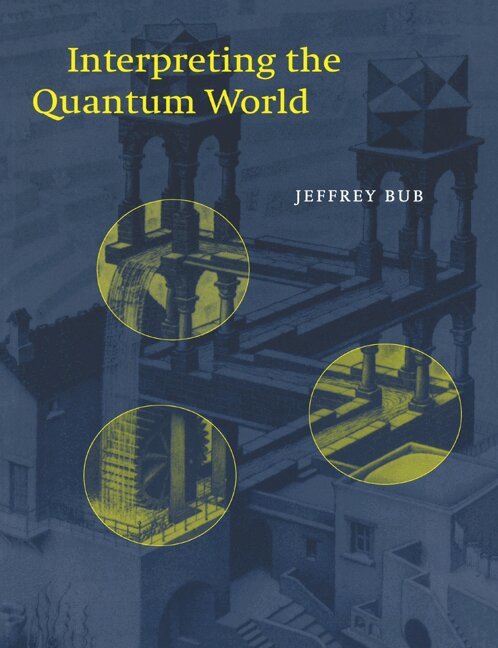
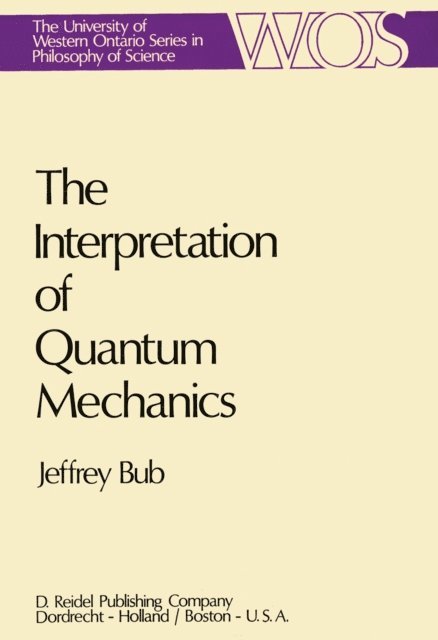
This is a book about the interpretation of quantum mechanics, in particular how to resolve the measurement problem introduced by the orthodox interpretation of the theory. The heart of the book is a new result that shows how to construct all possible 'no collapse' interpretations, subject to certain natural constraints and the limitations imposed by the hidden variable theorems. The discussion is self-contained and organized so that the technical portions may be skipped without losing the argument.
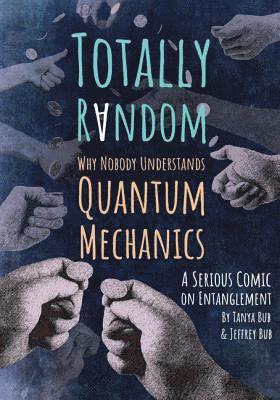
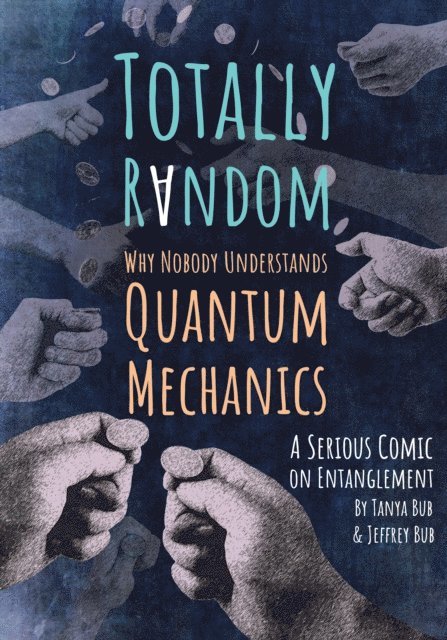
Totally Random
Why Nobody Understands Quantum Mechanics (A Serious Comic on Entanglement)
Häftad, Engelska, 2018
189 kr
Skickas inom 7-10 vardagar
An eccentric comic about the central mystery of quantum mechanicsTotally Random is a comic for the serious reader who wants to really understand the central mystery of quantum mechanics--entanglement: what it is, what it means, and what you can do with it.Measure two entangled particles separately, and the outcomes are totally random. But compare the outcomes, and the particles seem as if they are instantaneously influencing each other at a distance—even if they are light-years apart. This, in a nutshell, is entanglement, and if it seems weird, then this book is for you. Totally Random is a graphic experiential narrative that unpacks the deep and insidious significance of the curious correlation between entangled particles to deliver a gut-feel glimpse of a world that is not what it seems. See for yourself how entanglement has led some of the greatest thinkers of our time to talk about crazy-sounding stuff like faster-than-light signaling, many worlds, and cats that are both dead and alive. Find out why it remains one of science's most paradigm-shaking discoveries. Join Niels Bohr's therapy session with the likes of Einstein, Schrödinger, and other luminaries and let go of your commonsense notion of how the world works. Use your new understanding of entanglement to do the seemingly impossible, like beat the odds in the quantum casino, or quantum encrypt a message to evade the Sphinx's all-seeing eye. But look out, or you might just get teleported back to the beginning of the book!A fresh and subversive look at our quantum world with some seriously funny stuff, Totally Random delivers a real understanding of entanglement that will completely change the way you think about the nature of physical reality.
1 062 kr
Skickas inom 10-15 vardagar
This book is a contribution to a problem in foundational studies, the problem of the interpretation of quantum mechanics, in the sense of the theoretical significance of the transition from classical to quantum mechanics. The obvious difference between classical and quantum mechanics is that quantum mechanics is statistical and classical mechanics isn't. Moreover, the statistical character of the quantum theory appears to be irreducible: unlike classical statistical mechanics, the probabilities are not generated by measures on a probability space, i. e. by distributions over atomic events or classical states. But how can a theory of mechanics be statistical and complete? Answers to this question which originate with the Copenhagen inter pretation of Bohr and Heisenberg appeal to the limited possibilities of measurement at the microlevel. To put it crudely: Those little electrons, protons, mesons, etc. , are so tiny, and our fingers so clumsy, that when ever we poke an elementary particle to see which way it will jump, we disturb the system radically - so radically, in fact, that a considerable amount of information derived from previous measurements is no longer applicable to the system. We might replace our fingers by finer probes, but the finest possible probes are the elementary particles them selves, and it is argued that the difficulty really arises for these.
1 062 kr
Skickas inom 10-15 vardagar
This book is a contribution to a problem in foundational studies, the problem of the interpretation of quantum mechanics, in the sense of the theoretical significance of the transition from classical to quantum mechanics. The obvious difference between classical and quantum mechanics is that quantum mechanics is statistical and classical mechanics isn't. Moreover, the statistical character of the quantum theory appears to be irreducible: unlike classical statistical mechanics, the probabilities are not generated by measures on a probability space, i. e. by distributions over atomic events or classical states. But how can a theory of mechanics be statistical and complete? Answers to this question which originate with the Copenhagen inter pretation of Bohr and Heisenberg appeal to the limited possibilities of measurement at the microlevel. To put it crudely: Those little electrons, protons, mesons, etc. , are so tiny, and our fingers so clumsy, that when ever we poke an elementary particle to see which way it will jump, we disturb the system radically - so radically, in fact, that a considerable amount of information derived from previous measurements is no longer applicable to the system. We might replace our fingers by finer probes, but the finest possible probes are the elementary particles them selves, and it is argued that the difficulty really arises for these.