Jeffrey M. Pilcher - Böcker
Visar alla böcker från författaren Jeffrey M. Pilcher. Handla med fri frakt och snabb leverans.
11 produkter
11 produkter
284 kr
Skickas inom 5-8 vardagar
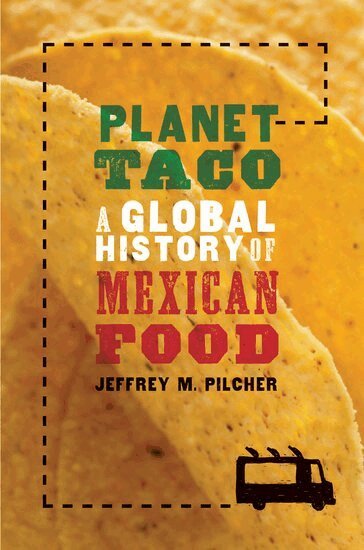
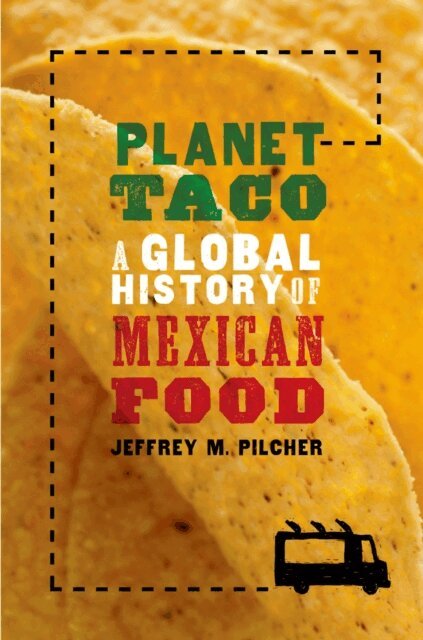
As late as the 1960s, tacos were virtually unknown outside Mexico and the American Southwest. Within fifty years the United States had shipped taco shells everywhere from Alaska to Australia, Morocco to Mongolia. But how did this tasty hand-held food--and Mexican food more broadly--become so ubiquitous? In Planet Taco, Jeffrey Pilcher traces the historical origins and evolution of Mexico's national cuisine, explores its incarnation as a Mexican American fast-food, shows how surfers became global pioneers of Mexican food, and how Corona beer conquered the world. Pilcher is particularly enlightening on what the history of Mexican food reveals about the uneasy relationship between globalization and authenticity. The burritos and taco shells that many people think of as Mexican were actually created in the United States. But Pilcher argues that the contemporary struggle between globalization and national sovereignty to determine the authenticity of Mexican food goes back hundreds of years. During the nineteenth century, Mexicans searching for a national cuisine were torn between nostalgic "Creole" Hispanic dishes of the past and French haute cuisine, the global food of the day. Indigenous foods were scorned as unfit for civilized tables. Only when Mexican American dishes were appropriated by the fast food industry and carried around the world did Mexican elites rediscover the foods of the ancient Maya and Aztecs and embrace the indigenous roots of their national cuisine. From a taco cart in Hermosillo, Mexico to the "Chili Queens" of San Antonio and tamale vendors in L.A., Jeffrey Pilcher follows this highly adaptable cuisine, paying special attention to the people too often overlooked in the battle to define authentic Mexican food: Indigenous Mexicans and Mexican Americans.
697 kr
Skickas inom 5-8 vardagar
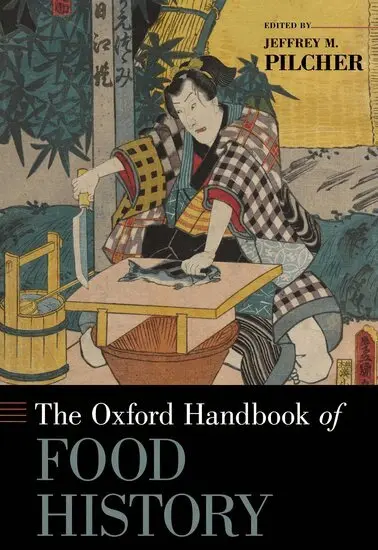
Food matters, not only as a subject of study in its own right, but also as a medium for conveying critical messages about capitalism, the environment, and social inequality to diverse audiences. Recent scholarship on the subject draws from both a pathbreaking body of secondary literature and an inexhaustible wealth of primary sources--from ancient Chinese philosophical tracts to McDonald's menus--contributing new perspectives to the historical study of food, culture, and society, and challenging the limits of history itself. The Oxford Handbook of Food History places existing works in historiographical context, crossing disciplinary, chronological, and geographic boundaries while also suggesting new routes for future research. The twenty-seven essays in this book are organized into five sections: historiography, disciplinary approaches, production, circulation, and consumption of food. The first two sections examine the foundations of food history, not only in relation to key developments in the discipline of history itself--such as the French Annales school and the cultural turn--but also in anthropology, sociology, geography, pedagogy, and the emerging Critical Nutrition Studies. The following three sections sketch various trajectories of food as it travels from farm to table, factory to eatery, nature to society. Each section balances material, cultural, and intellectual concerns, whether juxtaposing questions of agriculture and the environment with the notion of cookbooks as historical documents; early human migrations with modern culinary tourism; or religious customs with social activism. In its vast, interdisciplinary scope, this handbook brings students and scholars an authoritative guide to a field with fresh insights into one of the most fundamental human concerns.
295 kr
Skickas inom 5-8 vardagar
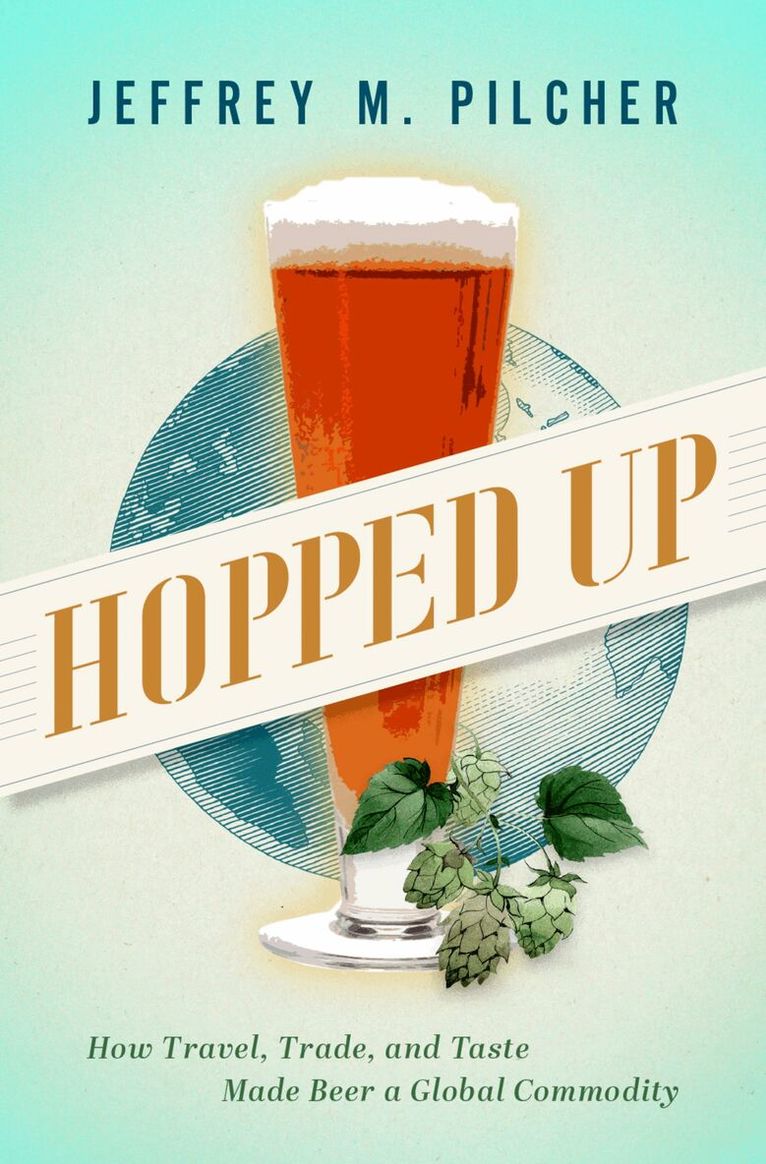
A lively history of beer and brewing traditions as globally connected commodities created through borrowing and exchange from precapitalist times to the present.Virtually every country has a bestselling or iconic national beer brand: from Budweiser in the United States and Corona in Mexico, to Tsingtao in China and Heineken in Holland. Yet, with the sole exception of Ireland's Guinness, every label represents the same style: light, crisp, clear, Pilsner lager. The global spread of lager can be told as a story of Western cultural imperialism: a European product travels through merchants, migrants, and imperialists to upend local patterns and transform faraway consumers' tastes. But this modern beer is just as much a product of globalization, invented and reinvented around the world. While distinctive craft beers such as London Porter, India Pale Ale, and Belgian sour ales have been revived by aficionados over the past half-century, they too have globalized through the same circuits of trade, migration, and knowledge that carried lager.Here eminent food historian Jeffrey M. Pilcher narrates the brewing traditions and contemporary production of beer across Europe, North America, Africa, Asia, and Latin America-from the fermented beverages of precapitalist societies to the present. Over the centuries, he shows, the exchange of technological advances in brewing contributed to regional divergences and convergences in beer varieties, but always in tandem with other social and cultural developments. Unique local products, often homebrewed by women, were transformed into homogenous global commodities as giant brewing factories exported their beers using new refrigeration technology, railroads, and steamships. Industrial food processing helped to recast strong flavors as a source of potential contamination, turning lager, with its clean, fresh taste, into a symbol of hygiene and civilization. Local elites demonstrated their modernity and sophistication by opting for chilled lagers over traditional beverages. These beers became so standardized that most consumers could not tell the difference between them, leading to cutthroat competition that bankrupted countless firms. Over the past half-century, the global concentration of the brewing industry has spawned a reaction among those seeking to return brewing to the local, artisanal, and communitarian roots of the premodern alehouse, but microbrewers have often been driven by the same capitalist quest for profit and expansion. Based on a wealth of multinational archives and industry publications, Hopped Up explores not only how humans have made beer but also how consumers--from nobility and clergy in the past to those raising a pint today--have used beer to make meaning in their lives.
2 303 kr
Skickas inom 5-8 vardagar
The historical study of food, culture, and society has become established within the academy based on a generation of high-quality scholarship. Following the foundational work of the French Annales school, the International Committee for the Research into European Food History and the Institut Europeen d'Histoire et des Cultures de l'Alimentation have conducted wide-ranging research, particularly on the changes brought about by culinary modernization. In the United States, the ascendancy of cultural history in the 1990s encouraged young scholars to write dissertations on food-related topics. Despite the existence of at least four major scholarly journals focused on food, the field still lacks a solid foundation of historiographical writing. As a result, innovative early approaches to commodity chains, ethnic identities, and culinary transformation have become repetitive. Meanwhile, scholars are often unaware of relevant literature when it does not directly relate to their particular national and chronological focus.The Oxford Handbook of Food History places existing works in historiographical context, crossing disciplinary, chronological, and geographic boundaries, while also suggesting new routes for future research. The twenty-seven essays in this book are organized into five basic sections: historiography and disciplinary approaches as well as the production, circulation, and consumption of food. Chapters on historiography examine the French Annales school, political history, the cultural turn, labor, and public history. Disciplinary methods that have contributed significantly to the history of food including anthropology, sociology, geography, the emerging Critical Nutrition Studies. The final chapter in this section explores the uses of food in the classroom. The production section encompasses agriculture, pastoralism, and the environment; using cookbooks as historical documents; food and empire; industrial foods; and fast food. Circulation is examined through the lenses of human mobility, chronological frames, and food regimes, along with case studies of the medieval spice trade, the Columbian exchange, and modern culinary tourism. Finally, the consumption section focuses on communities that arise through the sharing of food, including religion, race and ethnicity, national cuisines, and social movements.
319 kr
Skickas inom 7-10 vardagar
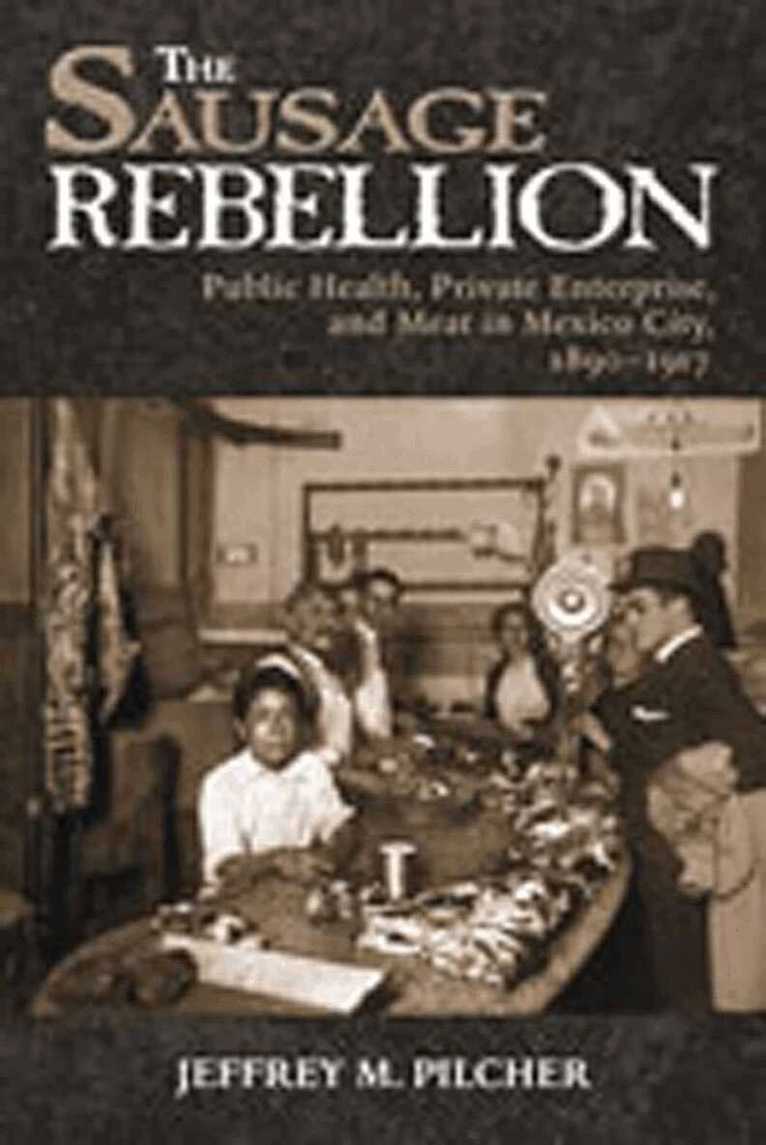
Sausage Rebellion
Public Health, Private Enterprise, and Meat in Mexico City, 1890-1917
Häftad, Engelska, 2006
534 kr
Skickas inom 3-6 vardagar
One of the great food fads of the 1980s, fajitas, brought widespread acclaim to Tex-Mex restaurants, but this novelty was simply the traditional Mexican method of preparing beef. Hispanic carne asada, thin cuts of freshly slaughtered meat cooked briefly on a hot grill, differed dramatically from thick Anglo-American steaks and roasts, which were aged to tenderise the meat. When investors sought to import the Chicago model of centralised meatpacking and refrigerated railroad distribution, these cultural preferences for freshness inspired widespread opposition by Mexican butchers and consumers alike, culminating in a veritable 'sausage rebellion'. Through a detailed examination of meat provisioning, this book illuminates the process of industrialisation in the final two decades of the Porfirio Diaz dictatorship and the popular origins of the Revolution of 1910 in Mexico City. Archival sources from Mexico and the United States provide a unique perspective on high-level Porfirian negotiations with foreign investors. The book also examines revolutionary resistance, including strikes, industrial sabotage, and assassination attempts on the foreign managers. Unlike the meatpacking 'Jungle' of Chicago, Mexican butchers succeeded in preserving their traditional craft.
1 520 kr
Skickas inom 10-15 vardagar
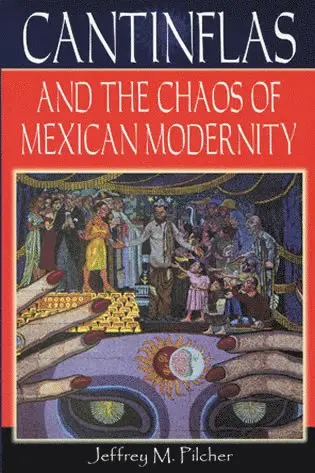
Cantinflas and the Chaos of Mexican Modernity is a revealing probe into the life and times of Mario Moreno, Latin America's most famous film star from the 1940s to the 1970s. This book helps to illuminate the social and cultural history of twentieth-century Mexico. Cantinflas (Moreno's film persona) was the most popular movie star in Mexican history. A fast-talking, nonsensical character, he helped Mexicans embrace their rich mestizo identity and cope with the difficulties of modernization. For thirty years he served as a 'weapon of the weak,' satirizing corrupt officials and pompous elites who victimized Mexico's urban poor. This is a valuable text for courses on Mexican history and Latin American film.
685 kr
Skickas inom 11-20 vardagar
Cantinflas and the Chaos of Mexican Modernity is a revealing probe into the life and times of Mario Moreno, Latin America's most famous film star from the 1940s to the 1970s. This book helps to illuminate the social and cultural history of twentieth-century Mexico. Cantinflas (Moreno's film persona) was the most popular movie star in Mexican history. A fast-talking, nonsensical character, he helped Mexicans embrace their rich mestizo identity and cope with the difficulties of modernization. For thirty years he served as a 'weapon of the weak,' satirizing corrupt officials and pompous elites who victimized Mexico's urban poor. This is a valuable text for courses on Mexican history and Latin American film.
15 712 kr
Tillfälligt slut
Food History: Critical and Primary Sources is an indispensable four-volume reference collection which focuses on the widest possible span of food in human history, to provide a comprehensive survey of problems and methods in the field of food history. Bringing together over 80 high-quality essays drawn from journal articles, book chapters, excerpts and historical documents and supported by introductory essays and a wealth of contextual material, this important new reference work combines contemporary scholarship with selected primary sources allowing scholars to use this as a starting point for their own historical research. The volumes are divided chronologically, moving from human evolution and the origins of complex societies to the agrarian and pastoral societies of the classical and post-classical eras, to the age of global contact and early industrialization, to the transition to industrial diets in the contemporary era. Each volume is introduced by an essay from the editor and is divided into broad thematic categories and offers a range of methodological approaches, multidisciplinary appeal and broad geographical coverage, highlighting how the field has developed over time and investigating how and why food is different at different points in world history. This will be an essential addition to libraries and a major scholarly resource for researchers involved in the study of food in world history.
579 kr
Skickas inom 10-15 vardagar
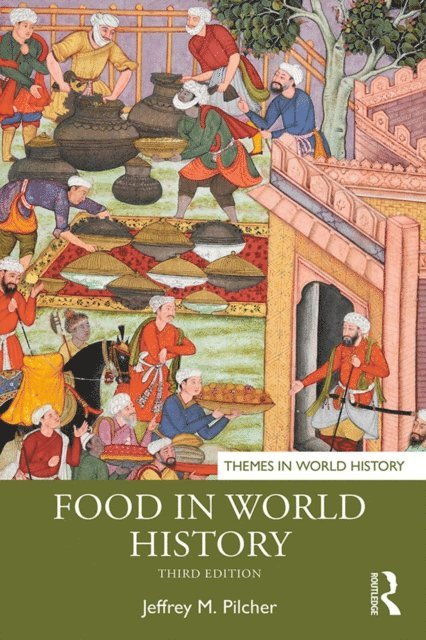
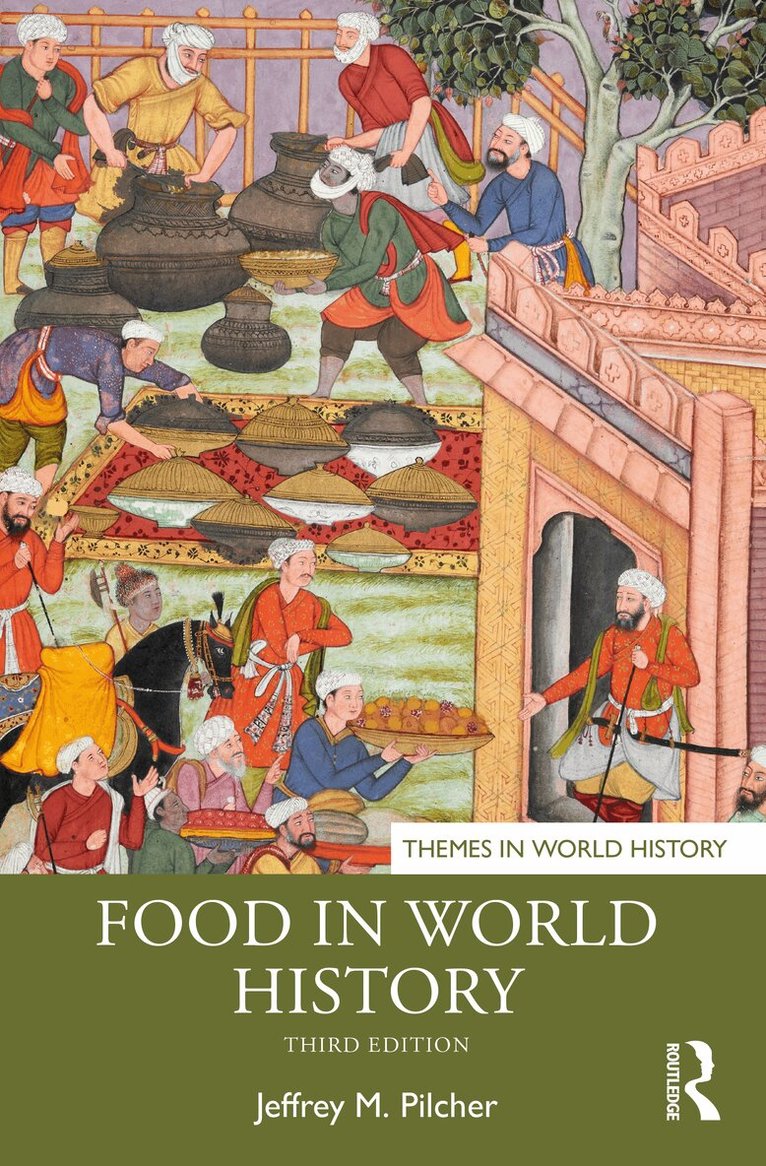
Now in its third edition, Food in World History explores culinary cultures and food politics throughout the world, from ancient times to the present day, with expanded discussions of industrialization, indigeneity, colonialism, gender, environment, and food and power.It examines the long history of globalization of foods as well as the political, social, and environmental implications of our changing relationship with food, showing how hunger and taste have been driving forces in human history. Including numerous case studies from diverse societies and periods, such as Maya and Inca cuisines and peasant agriculture in the early modern era, Food in World History explores such questions as: What social factors have historically influenced culinary globalization? How did early modern plantations establish patterns for modern industrial food production? How will the climate crisis affect food production and culinary cultures? Did Italian and Chinese migrant cooks sacrifice authenticity to gain social acceptance in the Americas? Have genetically modified foods fulfilled the promises made by proponents?With the inclusion of more global examples, this comprehensive survey is an ideal resource for all students who study food history or food studies.
2 012 kr
Skickas inom 10-15 vardagar
Now in its third edition, Food in World History explores culinary cultures and food politics throughout the world, from ancient times to the present day, with expanded discussions of industrialization, indigeneity, colonialism, gender, environment, and food and power.It examines the long history of globalization of foods as well as the political, social, and environmental implications of our changing relationship with food, showing how hunger and taste have been driving forces in human history. Including numerous case studies from diverse societies and periods, such as Maya and Inca cuisines and peasant agriculture in the early modern era, Food in World History explores such questions as: What social factors have historically influenced culinary globalization? How did early modern plantations establish patterns for modern industrial food production? How will the climate crisis affect food production and culinary cultures? Did Italian and Chinese migrant cooks sacrifice authenticity to gain social acceptance in the Americas? Have genetically modified foods fulfilled the promises made by proponents?With the inclusion of more global examples, this comprehensive survey is an ideal resource for all students who study food history or food studies.