Jeffrey Owens – författare
Tax Treaty Case Law around the Globe 2024
1 196 kr
Skickas inom 3-6 vardagar
1 501 kr
Läs direkt efter köp
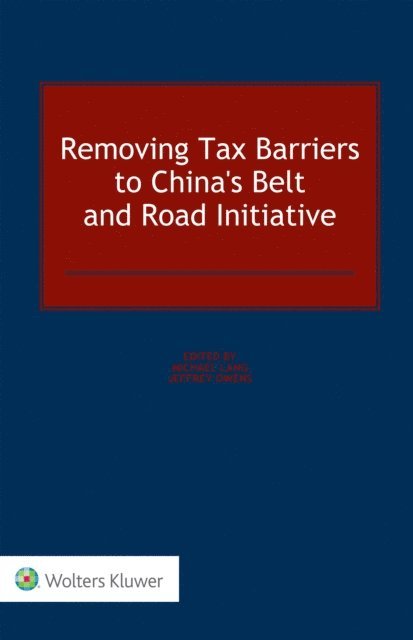
Since its announcement in 2013, the Belt and Road Initiative (BRI), also known as the New Silk Road, has gradually gained international recognition. The project requires not only extensive investment in infrastructure and transportation but also an acceleration of the internationalization of multinationals and supply chains in Belt and Road countries. The project will, hopefully, lead governments and businesses in countries along the Belt and Road to compete, adopt best practices and improve transparency.
The BRI marks a national push by China to increase economic links to Southeast Asia, Central Asia, Russia, the Baltic region (Central and Eastern Europe), Africa and Latin America, which will have major consequences for the way that tax systems interact.
Emerging from the research conducted by the WU Global Tax Policy Center in cooperation with several Chinese universities, this book offers fourteen policy-relevant research papers prepared by international experts on the following issues:
• The New Silk Road: Will Tax Be a Facilitator or a Barrier?• Neo-BEPS: China’s Prescription for International Tax Reform Embodying the Rationality of the Belt & Road Initiative;• International Taxation Coordination under China’s Belt and Road Strategy;• Tax Issues in the Main Belt and Road Countries and Industries of China’s Outward Foreign Direct Investment;• Preferential Arrangements under Chinese Tax Treaties with Belt and Road Countries and Disputes Regarding Their Applicability;• Tax Planning by Going-Global Enterprises for Cross-Border Earnings: Observations Based on Belt and Road Countries;• International Taxation Issues under the Belt and Road Initiative: Corporate Income Tax Laws and Tax Treaties;• Financial and Tax Operations in the Five Central Asian Countries;• The Role of Border-Crossing Procedures in the Transportation of Goods along the New Silk Road;• Transfer Pricing Issues Related to the Belt and Road Initiative;• Tax Treaties between Belt and Road Countries;• VAT Challenges in the Belt and Road Initiative;• Global Tax Policy Post-BEPS and the Perils of the Silk Road; and• Creating a Positive Tax Climate for Complex Multijurisdictional Investment Projects.Outcomes presented in the book consist of findings presented during Tax Policy Forum on the Belt and Road Initiative held on 12–13 June 2017 in Beijing, jointly organized with Peking University Tax Law Center and the Central University of Finance and Economics, Beijing. These papers also formed the basis for input by WU Global Tax Policy Center at the first meeting of The Belt and Road Initiative Tax Cooperation Conference (BRITCC) held in Astana on 14–16 May 2018, in which it was agreed to establish a permanent forum to examine the tax issues that arise from the BRI. The WU Global Tax Policy Center will continue to provide inputs to this forum.
1 501 kr
Läs direkt efter köp
Since its announcement in 2013, the Belt and Road Initiative (BRI), also known as the New Silk Road, has gradually gained international recognition. The project requires not only extensive investment in infrastructure and transportation but also an acceleration of the internationalization of multinationals and supply chains in Belt and Road countries. The project will, hopefully, lead governments and businesses in countries along the Belt and Road to compete, adopt best practices and improve transparency.
The BRI marks a national push by China to increase economic links to Southeast Asia, Central Asia, Russia, the Baltic region (Central and Eastern Europe), Africa and Latin America, which will have major consequences for the way that tax systems interact.
Emerging from the research conducted by the WU Global Tax Policy Center in cooperation with several Chinese universities, this book offers fourteen policy-relevant research papers prepared by international experts on the following issues:
• The New Silk Road: Will Tax Be a Facilitator or a Barrier?• Neo-BEPS: China’s Prescription for International Tax Reform Embodying the Rationality of the Belt & Road Initiative;• International Taxation Coordination under China’s Belt and Road Strategy;• Tax Issues in the Main Belt and Road Countries and Industries of China’s Outward Foreign Direct Investment;• Preferential Arrangements under Chinese Tax Treaties with Belt and Road Countries and Disputes Regarding Their Applicability;• Tax Planning by Going-Global Enterprises for Cross-Border Earnings: Observations Based on Belt and Road Countries;• International Taxation Issues under the Belt and Road Initiative: Corporate Income Tax Laws and Tax Treaties;• Financial and Tax Operations in the Five Central Asian Countries;• The Role of Border-Crossing Procedures in the Transportation of Goods along the New Silk Road;• Transfer Pricing Issues Related to the Belt and Road Initiative;• Tax Treaties between Belt and Road Countries;• VAT Challenges in the Belt and Road Initiative;• Global Tax Policy Post-BEPS and the Perils of the Silk Road; and• Creating a Positive Tax Climate for Complex Multijurisdictional Investment Projects.Outcomes presented in the book consist of findings presented during Tax Policy Forum on the Belt and Road Initiative held on 12–13 June 2017 in Beijing, jointly organized with Peking University Tax Law Center and the Central University of Finance and Economics, Beijing. These papers also formed the basis for input by WU Global Tax Policy Center at the first meeting of The Belt and Road Initiative Tax Cooperation Conference (BRITCC) held in Astana on 14–16 May 2018, in which it was agreed to establish a permanent forum to examine the tax issues that arise from the BRI. The WU Global Tax Policy Center will continue to provide inputs to this forum.
1 436 kr
Skickas inom 5-8 vardagar
1 217 kr
Läs direkt efter köp
National taxation authorities around the world are rapidly improving international cooperation, given the unprecedented triple impact of persistent revelations of large-scale corporate tax avoidance, the ever-increasing intricacies of digital cross-border transactions, and the unprecedented revenue deficits engendered by the COVID-19 pandemic. There is also a growing recognition that improving tax compliance needs to be reconciled with a legitimate desire on the part of businesses to have some certainty about their taxes. Cooperative compliance is one way to achieve that. This first analysis of the details of cooperative compliance programmes currently in operation describes tax control frameworks, suggests practical examples to assist practitioners in tax administrations and the private sector, and provides multiple perspectives on the design and legitimacy of such programmes.
Drawing on detailed information contributed by tax practitioners and academics from a wide range of jurisdictions worldwide, the book identifies and explains certain crucial elements of successful programmes:
the criteria for access to cooperative compliance (e.g., is the programme voluntary or mandatory? Is there a financial threshold? Will the criteria be publicly available?); model legislation that can facilitate the operation of such programmes (statutory provisions, administrative rules and procedures, etc.); the foundations for an international agreement on an audit assurance standard for tax control frameworks (including the role of the Organisation for Economic Co-operation and Development (OECD), the European Union (EU), and other international organizations); how to develop a methodology to measure the cost and benefits of cooperative compliance programmes; detailed case studies of existing compliance programmes in Australia, Austria, China, Germany, Italy, Poland, and Russia; and how to communicate a cooperative compliance programme to obtain trust from society.The analysis draws on two years of work led by WU Global Tax Policy Center (GTPC) at Vienna University of Economics and Business in cooperation with the International Chamber of Commerce (ICC) and the Commonwealth Association of Tax Administrators (CATA). The project brought together over two hundred people from 25 countries, including public officials, businesses, and academics.
Tax certainty and predictability are key components for providing a tax environment that is conducive to cross-border trade and investment, and, in the long term, it is in the interest of both governments and businesses to minimize tax uncertainty as much as possible. This truly helpful book promises to pave the way to an internationally effective tax framework that will be welcomed by taxation authorities and practitioners worldwide.
1 217 kr
Läs direkt efter köp
National taxation authorities around the world are rapidly improving international cooperation, given the unprecedented triple impact of persistent revelations of large-scale corporate tax avoidance, the ever-increasing intricacies of digital cross-border transactions, and the unprecedented revenue deficits engendered by the COVID-19 pandemic. There is also a growing recognition that improving tax compliance needs to be reconciled with a legitimate desire on the part of businesses to have some certainty about their taxes. Cooperative compliance is one way to achieve that. This first analysis of the details of cooperative compliance programmes currently in operation describes tax control frameworks, suggests practical examples to assist practitioners in tax administrations and the private sector, and provides multiple perspectives on the design and legitimacy of such programmes.
Drawing on detailed information contributed by tax practitioners and academics from a wide range of jurisdictions worldwide, the book identifies and explains certain crucial elements of successful programmes:
the criteria for access to cooperative compliance (e.g., is the programme voluntary or mandatory? Is there a financial threshold? Will the criteria be publicly available?); model legislation that can facilitate the operation of such programmes (statutory provisions, administrative rules and procedures, etc.); the foundations for an international agreement on an audit assurance standard for tax control frameworks (including the role of the Organisation for Economic Co-operation and Development (OECD), the European Union (EU), and other international organizations); how to develop a methodology to measure the cost and benefits of cooperative compliance programmes; detailed case studies of existing compliance programmes in Australia, Austria, China, Germany, Italy, Poland, and Russia; and how to communicate a cooperative compliance programme to obtain trust from society.The analysis draws on two years of work led by WU Global Tax Policy Center (GTPC) at Vienna University of Economics and Business in cooperation with the International Chamber of Commerce (ICC) and the Commonwealth Association of Tax Administrators (CATA). The project brought together over two hundred people from 25 countries, including public officials, businesses, and academics.
Tax certainty and predictability are key components for providing a tax environment that is conducive to cross-border trade and investment, and, in the long term, it is in the interest of both governments and businesses to minimize tax uncertainty as much as possible. This truly helpful book promises to pave the way to an internationally effective tax framework that will be welcomed by taxation authorities and practitioners worldwide.
1 136 kr
Skickas inom 5-8 vardagar
960 kr
Läs direkt efter köp
New technologies are changing the way that tax administrations, taxpayers and their advisers interact, leading to a reduction in the compliance cost for taxpayers, a level playing field for large and small businesses, and fewer opportunities to engage in aggressive tax practices. Although entering a new world where processes are supported by machines inevitably disrupts traditional ways of working, the contributors to this indispensable book reveal the enormous potential of ‘tax technology’ to positively transform tax compliance, clearly showing both government and business how to manage the transition from the old to the new.
With detailed treatment of the technology available in the tax field, the authors describe how to secure its benefits in such ways as the following:
electronic balance sheets and invoices; automated transmission to tax authorities; innovative analytics applications; blockchain in tax law processes; process mining in VAT; real-time reporting with cryptography; and meeting the challenges to taxpayers’ rights to privacy and personal data protection.The contributions draw on an international conference held under the auspices of the Digital Economy Taxation Network at the Vienna University of Economics and Business in December 2020.
The perspective throughout focuses on how to achieve better tax compliance at a lower cost. For this reason, this full-scale, practical guide on how to adapt tax law to new technologies and how to apply tax tech processes in practice will be welcomed by tax practitioners, tax administrations, and academics across the entire tax community.
960 kr
Läs direkt efter köp
New technologies are changing the way that tax administrations, taxpayers and their advisers interact, leading to a reduction in the compliance cost for taxpayers, a level playing field for large and small businesses, and fewer opportunities to engage in aggressive tax practices. Although entering a new world where processes are supported by machines inevitably disrupts traditional ways of working, the contributors to this indispensable book reveal the enormous potential of ‘tax technology’ to positively transform tax compliance, clearly showing both government and business how to manage the transition from the old to the new.
With detailed treatment of the technology available in the tax field, the authors describe how to secure its benefits in such ways as the following:
electronic balance sheets and invoices; automated transmission to tax authorities; innovative analytics applications; blockchain in tax law processes; process mining in VAT; real-time reporting with cryptography; and meeting the challenges to taxpayers’ rights to privacy and personal data protection.The contributions draw on an international conference held under the auspices of the Digital Economy Taxation Network at the Vienna University of Economics and Business in December 2020.
The perspective throughout focuses on how to achieve better tax compliance at a lower cost. For this reason, this full-scale, practical guide on how to adapt tax law to new technologies and how to apply tax tech processes in practice will be welcomed by tax practitioners, tax administrations, and academics across the entire tax community.