Jeffrey P. Bishop - Böcker
Visar alla böcker från författaren Jeffrey P. Bishop. Handla med fri frakt och snabb leverans.
4 produkter
4 produkter
433 kr
Skickas inom 10-15 vardagar
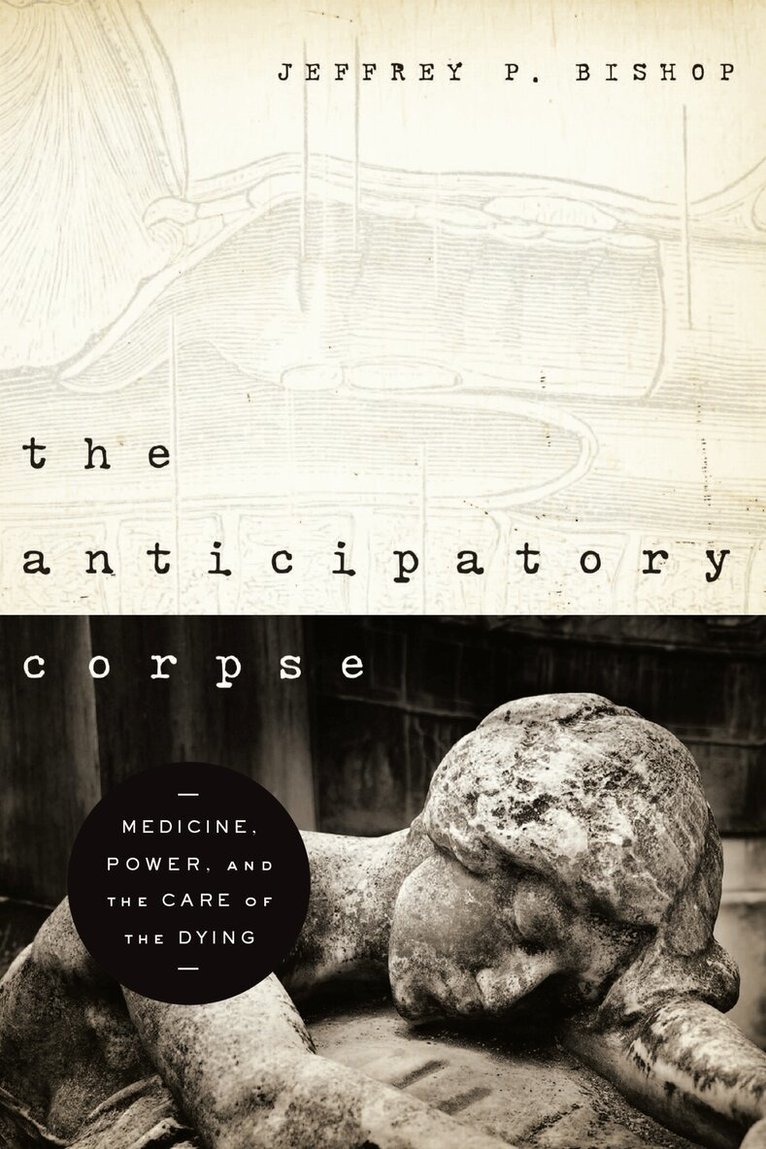
In this original and compelling book, Jeffrey P. Bishop, a philosopher, ethicist, and physician, argues that something has gone sadly amiss in the care of the dying by contemporary medicine and in our social and political views of death, as shaped by our scientific successes and ongoing debates about euthanasia and the "right to die"—or to live. The Anticipatory Corpse: Medicine, Power, and the Care of the Dying, informed by Foucault's genealogy of medicine and power as well as by a thorough grasp of current medical practices and medical ethics, argues that a view of people as machines in motion—people as, in effect, temporarily animated corpses with interchangeable parts—has become epistemologically normative for medicine. The dead body is subtly anticipated in our practices of exercising control over the suffering person, whether through technological mastery in the intensive care unit or through the impersonal, quasi-scientific assessments of psychological and spiritual "medicine." The result is a kind of nihilistic attitude toward the dying, and troubling contradictions and absurdities in our practices. Wide-ranging in its examples, from organ donation rules in the United States, to ICU medicine, to "spiritual surveys," to presidential bioethics commissions attempting to define death, and to high-profile cases such as Terri Schiavo's, The Anticipatory Corpse explores the historical, political, and philosophical underpinnings of our care of the dying and, finally, the possibilities of change. This book is a ground-breaking work in bioethics. It will provoke thought and argument for all those engaged in medicine, philosophy, theology, and health policy.
1 604 kr
Skickas inom 10-15 vardagar
In this original and compelling book, Jeffrey P. Bishop, a philosopher, ethicist, and physician, argues that something has gone sadly amiss in the care of the dying by contemporary medicine and in our social and political views of death, as shaped by our scientific successes and ongoing debates about euthanasia and the "right to die"—or to live. The Anticipatory Corpse: Medicine, Power, and the Care of the Dying, informed by Foucault's genealogy of medicine and power as well as by a thorough grasp of current medical practices and medical ethics, argues that a view of people as machines in motion—people as, in effect, temporarily animated corpses with interchangeable parts—has become epistemologically normative for medicine. The dead body is subtly anticipated in our practices of exercising control over the suffering person, whether through technological mastery in the intensive care unit or through the impersonal, quasi-scientific assessments of psychological and spiritual "medicine." The result is a kind of nihilistic attitude toward the dying, and troubling contradictions and absurdities in our practices. Wide-ranging in its examples, from organ donation rules in the United States, to ICU medicine, to "spiritual surveys," to presidential bioethics commissions attempting to define death, and to high-profile cases such as Terri Schiavo's, The Anticipatory Corpse explores the historical, political, and philosophical underpinnings of our care of the dying and, finally, the possibilities of change. This book is a ground-breaking work in bioethics. It will provoke thought and argument for all those engaged in medicine, philosophy, theology, and health policy.
1 276 kr
Skickas inom 10-15 vardagar
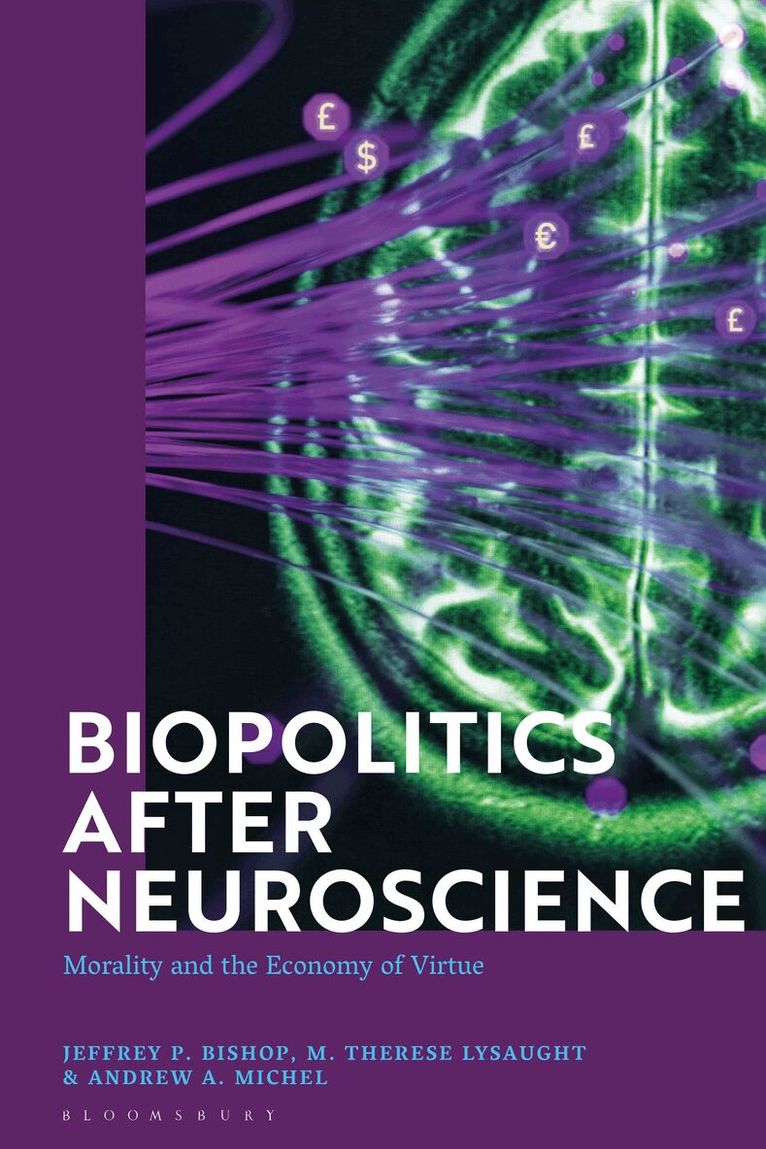
This book offers a provocative analysis of the neuroscience of morality. Written by three leading scholars of science, medicine, and bioethics, it critiques contemporary neuroscientific claims about individual morality and notions of good and evil. Winner of a 2021 prize from the Expanded Reason Institute, it connects moral philosophy to neoliberal economics and successfully challenges the idea that we can locate morality in the brain.Instead of discovering the source of morality in the brain as they claim to do, the popularizers of contemporary neuroscience are shown to participate in an understanding of human behavior that serves the vested interests of contemporary political economy. Providing evidence that the history of claims about morality and brain function reach back 400 years, the authors locate its genesis in the beginnings of modern philosophy, science, and economics. They further map this trajectory through the economic and moral theories of Francis Bacon, David Hume, Jeremy Bentham, John Stuart Mill, and the Chicago School of Economics to uncover a pervasive colonial anthropology at play in the neuroscience of morality today.The book concludes with a call for a humbler and more constrained neuroscience, informed by a more robust human anthropology that embraces the nobility, beauty, frailties, and flaws in being human.
408 kr
Skickas inom 10-15 vardagar
This book offers a provocative analysis of the neuroscience of morality. Written by three leading scholars of science, medicine, and bioethics, it critiques contemporary neuroscientific claims about individual morality and notions of good and evil. Winner of a 2021 prize from the Expanded Reason Institute, it connects moral philosophy to neoliberal economics and successfully challenges the idea that we can locate morality in the brain.Instead of discovering the source of morality in the brain as they claim to do, the popularizers of contemporary neuroscience are shown to participate in an understanding of human behavior that serves the vested interests of contemporary political economy. Providing evidence that the history of claims about morality and brain function reach back 400 years, the authors locate its genesis in the beginnings of modern philosophy, science, and economics. They further map this trajectory through the economic and moral theories of Francis Bacon, David Hume, Jeremy Bentham, John Stuart Mill, and the Chicago School of Economics to uncover a pervasive colonial anthropology at play in the neuroscience of morality today.The book concludes with a call for a humbler and more constrained neuroscience, informed by a more robust human anthropology that embraces the nobility, beauty, frailties, and flaws in being human.