Jeffrey S Adler - Böcker
Visar alla böcker från författaren Jeffrey S Adler. Handla med fri frakt och snabb leverans.
8 produkter
8 produkter
315 kr
Skickas inom 7-10 vardagar
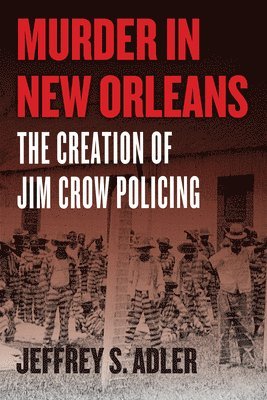
New Orleans in the 1920s and '30s was a deadly place. In 1925, the city's homicide rate was six times that of New York City and twelve times that of Boston, despite having a fraction of the population. Jeffrey S. Adler has explored every homicide officially recorded in New Orleans between 1925 and 1940--over two thousand in all--scouring police and autopsy reports, old interviews, and crumbling newspapers. More than simply quantifying these cases, Adler places them in larger contexts--legal, political, cultural, and demographic--and emerges with a tale of racism, urban violence, and vicious policing that has startling relevance for today.Murder in New Orleans shows how whites were convicted of homicide at far higher rates than blacks leading up the mid-1920s. But by the end of the next decade, this pattern had reversed completely, despite an overall plummet in municipal crime rates. This sharp rise in arrests was compounded by the increasingly harsh treatment of black subjects by New Orleans police, marked by acts of extreme brutality. Adler also explores counter-intuitive trends in violence, particularly how murder soared during the flush times of the Roaring Twenties, how it plummeted during the Great Depression, and how the vicious response to African American crime occurred as such violence plunged in frequency, revealing that the city's cycle of racial policing and punishment was connected less to actual patterns of wrongdoing than to the national enshrinement of Jim Crow. Rather than some hyperviolent outlier, this Louisiana city was a harbinger of the endemic racism at the center of today's criminal justice state. Murder in New Orleans lays bare how decades-old crimes, and the racially motivated cruelty of the official response, once again have baleful resonance in the age of Black Lives Matter.
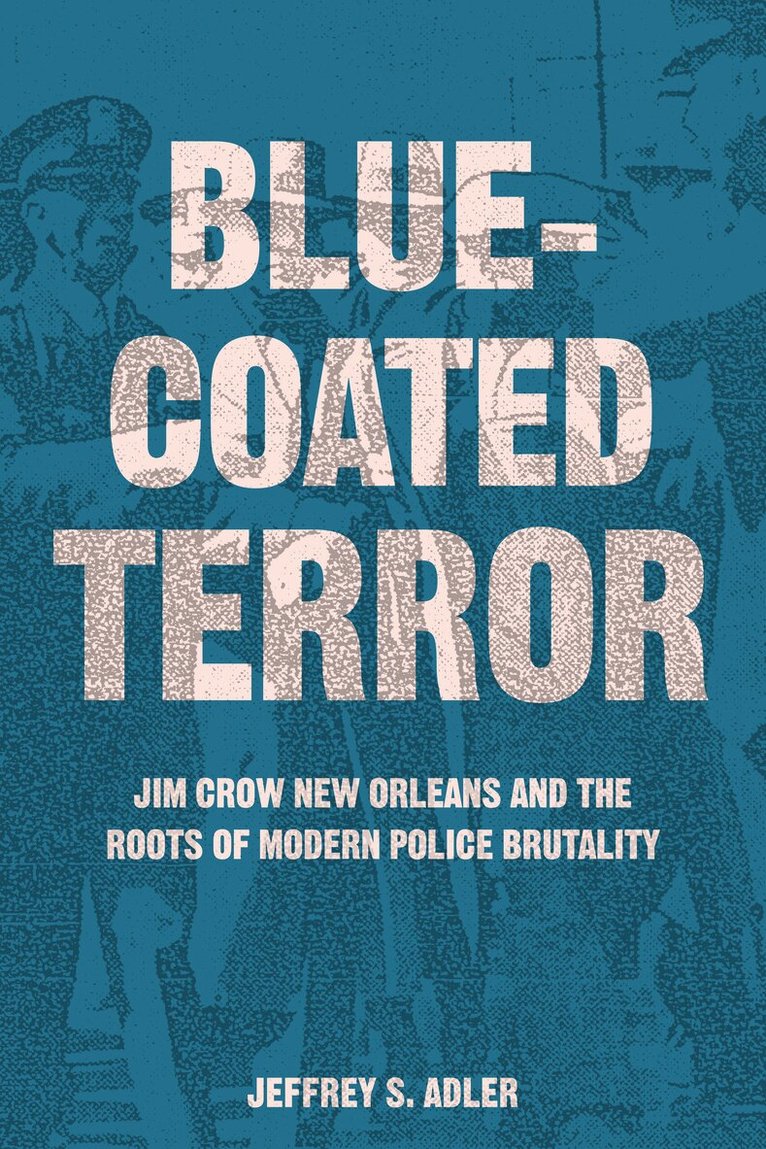
Bluecoated Terror
Jim Crow New Orleans and the Roots of Modern Police Brutality
Inbunden, Engelska, 2024
696 kr
Skickas inom 7-10 vardagar
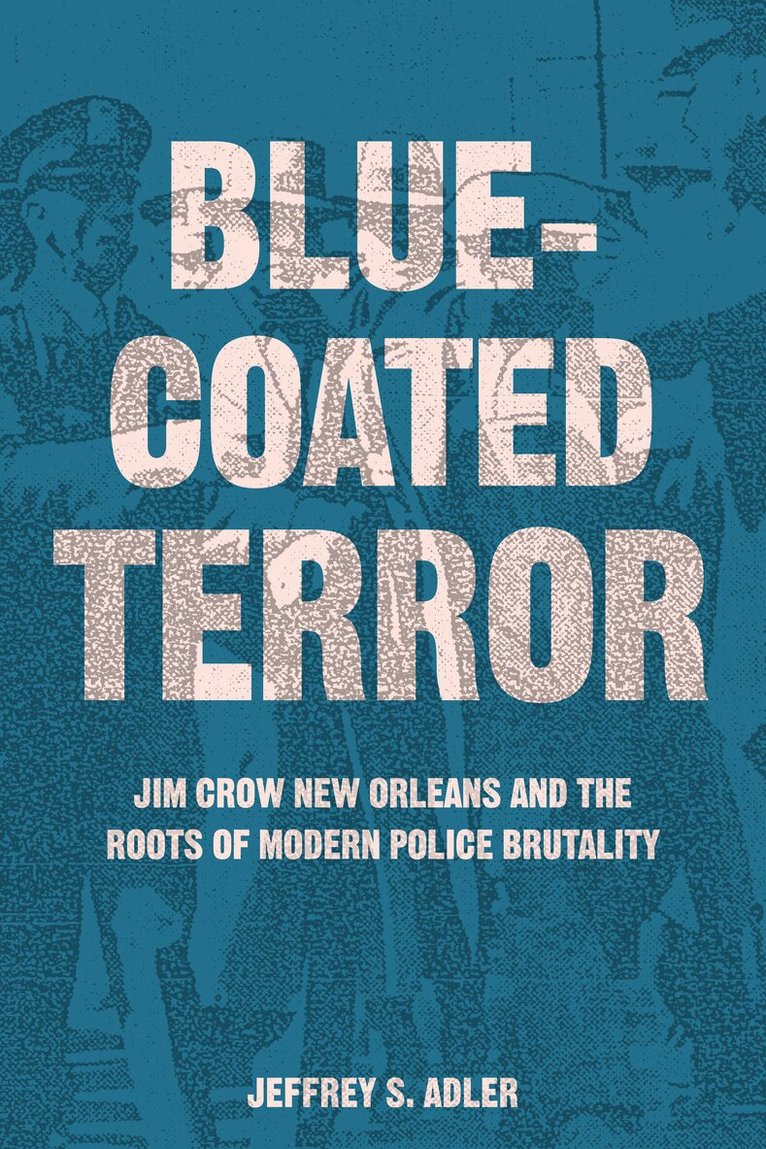
A searing chronicle of how racist violence became an ingrained facet of law enforcement in the United States. Too often, scholars and pundits argue either that police violence against African Americans has remained unchanged since the era of slavery or that it is a recent phenomenon and disconnected from the past. Neither view is accurate. In Bluecoated Terror, Jeffrey S. Adler draws on rich archival accounts to show, in narrative detail, how racialized police brutality is part of a larger system of state oppression with roots in the early twentieth-century South, particularly New Orleans.Wide racial differentials in the use of lethal force and beatings during arrest and interrogation emerged in the 1930s and 1940s. Adler explains how race control and crime control blended and blurred during this era, when police officers and criminal justice officials began to justify systemic violence against Black people as a crucial—and legal—tool for maintaining law and order. Bluecoated Terror explores both the rise of these law-enforcement trends and their chilling resilience, providing critical context for recent horrific police abuses as the ghost of Jim Crow law enforcement continues to haunt the nation.
Bluecoated Terror
Jim Crow New Orleans and the Roots of Modern Police Brutality
Häftad, Engelska, 2024
250 kr
Skickas inom 7-10 vardagar
A searing chronicle of how racist violence became an ingrained facet of law enforcement in the United States. Too often, scholars and pundits argue either that police violence against African Americans has remained unchanged since the era of slavery or that it is a recent phenomenon and disconnected from the past. Neither view is accurate. In Bluecoated Terror, Jeffrey S. Adler draws on rich archival accounts to show, in narrative detail, how racialized police brutality is part of a larger system of state oppression with roots in the early twentieth-century South, particularly New Orleans.Wide racial differentials in the use of lethal force and beatings during arrest and interrogation emerged in the 1930s and 1940s. Adler explains how race control and crime control blended and blurred during this era, when police officers and criminal justice officials began to justify systemic violence against Black people as a crucial—and legal—tool for maintaining law and order. Bluecoated Terror explores both the rise of these law-enforcement trends and their chilling resilience, providing critical context for recent horrific police abuses as the ghost of Jim Crow law enforcement continues to haunt the nation.
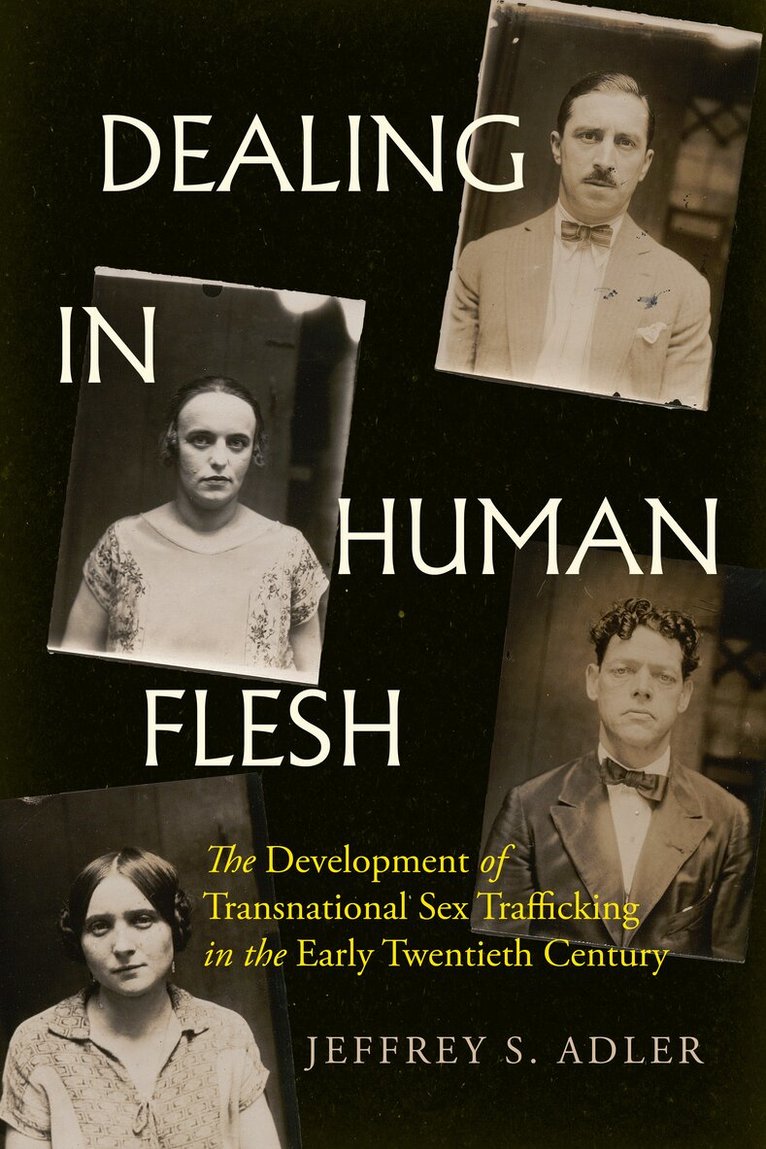
Dealing in Human Flesh
The Development of Transnational Sex Trafficking in the Early Twentieth Century
Inbunden, Engelska, 2026
1 012 kr
Kommande
In the wake of World War I, the League of Nations and numerous investigative journalists went undercover to infiltrate sex-trafficking rings, conduct clandestine interviews with men and women participating in the vice trade, and identify the weak links in their operations in order to destroy this "global menace." These covert researchers discovered that the sex-trafficking industry was dominated not by vast underworld syndicates but by petty hustlers operating tiny fly-by-night operations. In Dealing in Human Flesh, Jeffrey S. Adler uses these unpublished field reports to map how small-time criminals conducted their sex-trafficking ventures. Adler shows that, despite policymakers' (and filmmakers') obsessions with the cartels and international crime rings of myth, it was in fact the business model of sex traffickers that narcotics and arms smugglers borrowed from to forge the surprisingly un-organized structure of early twenty-first-century human, cocaine, and weapons trafficking.
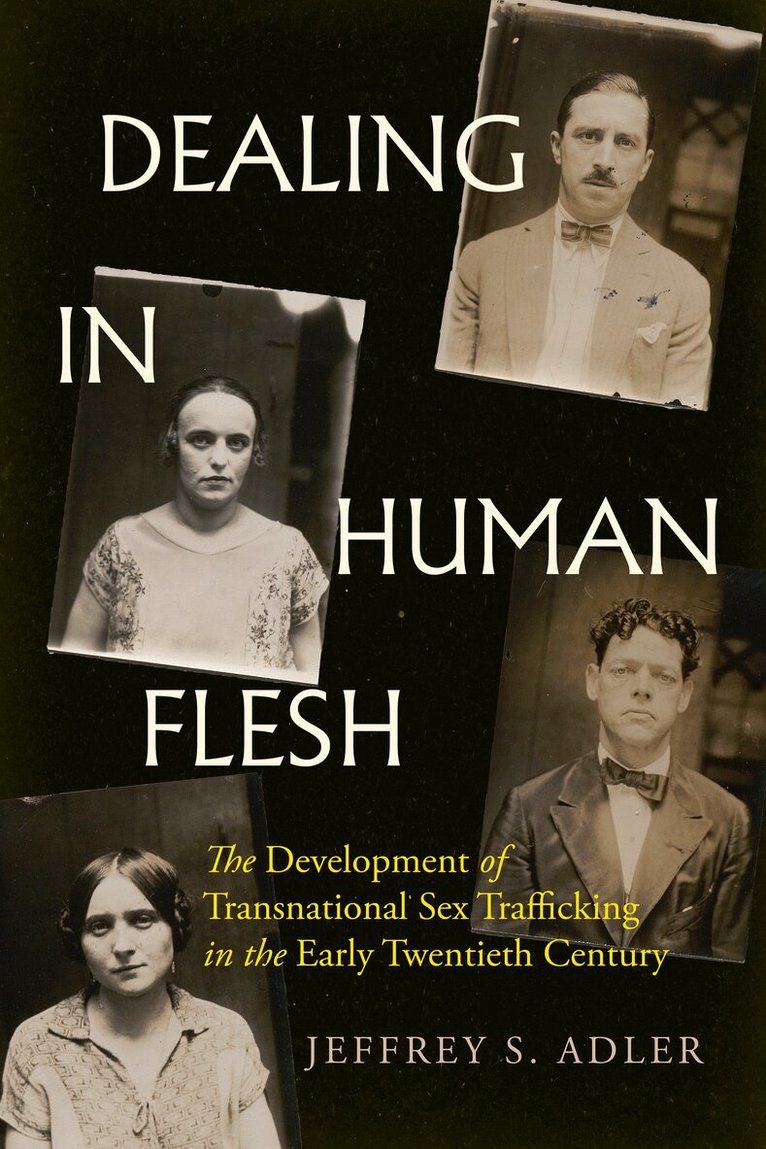
Dealing in Human Flesh
The Development of Transnational Sex Trafficking in the Early Twentieth Century
Häftad, Engelska, 2026
321 kr
Kommande
In the wake of World War I, the League of Nations and numerous investigative journalists went undercover to infiltrate sex-trafficking rings, conduct clandestine interviews with men and women participating in the vice trade, and identify the weak links in their operations in order to destroy this "global menace." These covert researchers discovered that the sex-trafficking industry was dominated not by vast underworld syndicates but by petty hustlers operating tiny fly-by-night operations. In Dealing in Human Flesh, Jeffrey S. Adler uses these unpublished field reports to map how small-time criminals conducted their sex-trafficking ventures. Adler shows that, despite policymakers' (and filmmakers') obsessions with the cartels and international crime rings of myth, it was in fact the business model of sex traffickers that narcotics and arms smugglers borrowed from to forge the surprisingly un-organized structure of early twenty-first-century human, cocaine, and weapons trafficking.
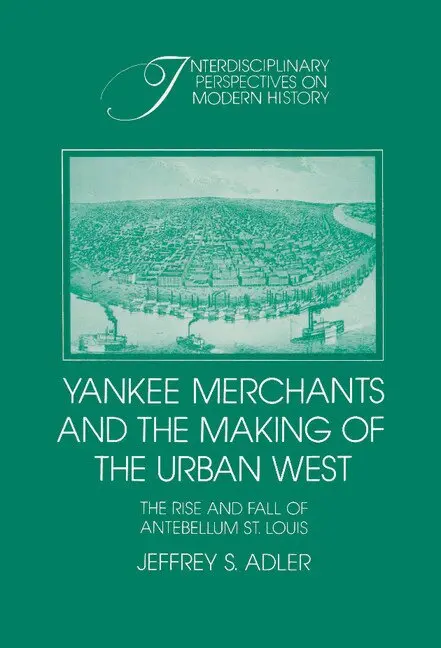
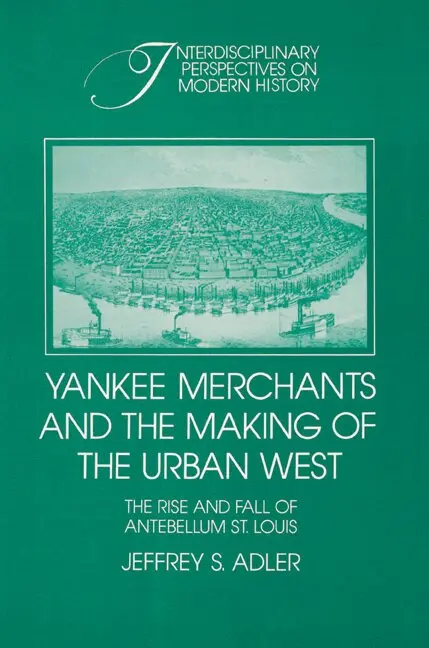
Yankee Merchants and the Making of the Urban West
The Rise and Fall of Antebellum St Louis
Inbunden, Engelska, 1991
1 390 kr
Skickas inom 7-10 vardagar
By the early 1850s, St Louis was one of the fastest-growing cities in America. In this book, Jeffrey Adler analyzes the forces that determined the role of western cities in the national economy. He devotes particular attention to the ways in which Yankee merchants forged ties that linked St Louis to the New York and Boston markets. Northeastern businessmen fuelled the ascent of St Louis and made the city a Yankee colony in the West. During the mid-1850s powerful political and cultural forces altered the sources of urban growth in the West. As a result, the economy of St Louis collapsed. Yankee merchants stopped migrating to the city and ceased investing in local businesses. This book demonstrates that the sectional crisis abruptly transformed St Louis's role in the national economy, redirecting the flow of capital and migrants away from St. Louis and toward a smaller western city - Chicago.
Yankee Merchants and the Making of the Urban West
The Rise and Fall of Antebellum St Louis
Häftad, Engelska, 2002
428 kr
Skickas inom 7-10 vardagar
By the early 1850s, St Louis was one of the fastest-growing cities in America. In this book, Jeffrey Adler analyzes the forces that determined the role of western cities in the national economy. He devotes particular attention to the ways in which Yankee merchants forged ties that linked St Louis to the New York and Boston markets. Northeastern businessmen fuelled the ascent of St Louis and made the city a Yankee colony in the West. During the mid-1850s powerful political and cultural forces altered the sources of urban growth in the West. As a result, the economy of St Louis collapsed. Yankee merchants stopped migrating to the city and ceased investing in local businesses. This book demonstrates that the sectional crisis abruptly transformed St Louis's role in the national economy, redirecting the flow of capital and migrants away from St. Louis and toward a smaller western city - Chicago.
406 kr
Skickas inom 10-15 vardagar
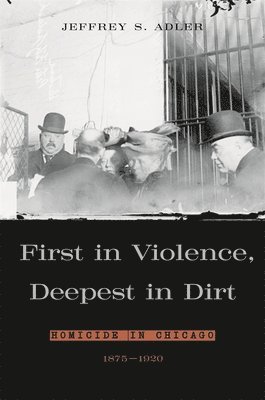
Between 1875 and 1920, Chicago's homicide rate more than quadrupled, making it the most violent major urban center in the United States--or, in the words of Lincoln Steffens, "first in violence, deepest in dirt." In many ways, however, Chicago became more orderly as it grew. Hundreds of thousands of newcomers poured into the city, yet levels of disorder fell and rates of drunkenness, brawling, and accidental death dropped. But if Chicagoans became less volatile and less impulsive, they also became more homicidal.Based on an analysis of nearly six thousand homicide cases, First in Violence, Deepest in Dirt examines the ways in which industrialization, immigration, poverty, ethnic and racial conflict, and powerful cultural forces reshaped city life and generated soaring levels of lethal violence. Drawing on suicide notes, deathbed declarations, courtroom testimony, and commutation petitions, Jeffrey Adler reveals the pressures fueling murders in turn-of-the-century Chicago. During this era Chicagoans confronted social and cultural pressures powerful enough to trigger surging levels of spouse killing and fatal robberies. Homicide shifted from the swaggering rituals of plebeian masculinity into family life and then into street life. From rage killers to the "Baby Bandit Quartet," Adler offers a dramatic portrait of Chicago during a period in which the characteristic elements of modern homicide in America emerged.