Jeffrey Sacks - Böcker
Visar alla böcker från författaren Jeffrey Sacks. Handla med fri frakt och snabb leverans.
5 produkter
5 produkter
1 051 kr
Skickas inom 10-15 vardagar
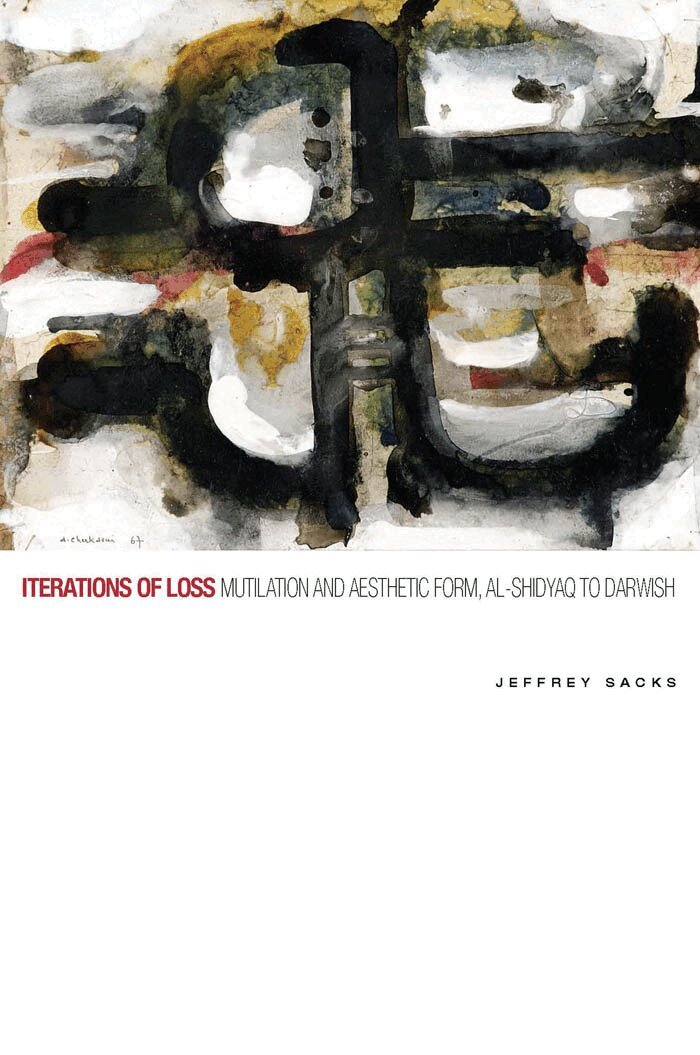
In a series of exquisite close readings of Arabic and Arab Jewish writing, Jeffrey Sacks considers the relation of poetic statement to individual and collective loss, the dispossession of peoples and languages, and singular events of destruction in the nineteenth, twentieth, and twenty-first centuries. Addressing the work of Mahmoud Darwish, Ahmad Faris al-Shidyaq, Elias Khoury, Edmond Amran El Maleh, Shimon Ballas, and Taha Husayn, Sacks demonstrates the reiterated incursion of loss into the time of life—losses that language declines to mourn. Language occurs as the iteration of loss, confounding its domestication in the form of the monolingual state in the Arabic nineteenth century's fallout.Reading the late lyric poetry of the Palestinian poet Mahmoud Darwish in relation to the destruction of Palestine in 1948, Sacks reconsiders the nineteenth century Arabic nahda and its relation to colonialism, philology, and the European Enlightenment. He argues that this event is one of catastrophic loss, wherein the past suddenly appears as if it belonged to another time. Reading al-Shidyaq's al-Saq 'ala al-saq (1855) and the legacies to which it points in post-1948 writing in Arabic, Hebrew, and French, Sacks underlines a displacement and relocation of the Arabic word adab and its practice, offering a novel contribution to Arabic and Middle East Studies, critical theory, poetics, aesthetics, and comparative literature.Drawing on writings of Jacques Derrida, Walter Benjamin, Avital Ronell, Judith Butler, Theodor Adorno, and Edward W. Said, Iterations of Loss shows that language interrupts its pacification as an event of aesthetic coherency, to suggest that literary comparison does not privilege a renewed giving of sense but gives place to a new sense of relation.
416 kr
Skickas inom 7-10 vardagar
In a series of exquisite close readings of Arabic and Arab Jewish writing, Jeffrey Sacks considers the relation of poetic statement to individual and collective loss, the dispossession of peoples and languages, and singular events of destruction in the nineteenth, twentieth, and twenty-first centuries. Addressing the work of Mahmoud Darwish, Ahmad Faris al-Shidyaq, Elias Khoury, Edmond Amran El Maleh, Shimon Ballas, and Taha Husayn, Sacks demonstrates the reiterated incursion of loss into the time of life—losses that language declines to mourn. Language occurs as the iteration of loss, confounding its domestication in the form of the monolingual state in the Arabic nineteenth century's fallout.Reading the late lyric poetry of the Palestinian poet Mahmoud Darwish in relation to the destruction of Palestine in 1948, Sacks reconsiders the nineteenth century Arabic nahda and its relation to colonialism, philology, and the European Enlightenment. He argues that this event is one of catastrophic loss, wherein the past suddenly appears as if it belonged to another time. Reading al-Shidyaq's al-Saq 'ala al-saq (1855) and the legacies to which it points in post-1948 writing in Arabic, Hebrew, and French, Sacks underlines a displacement and relocation of the Arabic word adab and its practice, offering a novel contribution to Arabic and Middle East Studies, critical theory, poetics, aesthetics, and comparative literature.Drawing on writings of Jacques Derrida, Walter Benjamin, Avital Ronell, Judith Butler, Theodor Adorno, and Edward W. Said, Iterations of Loss shows that language interrupts its pacification as an event of aesthetic coherency, to suggest that literary comparison does not privilege a renewed giving of sense but gives place to a new sense of relation.
1 542 kr
Skickas inom 10-15 vardagar
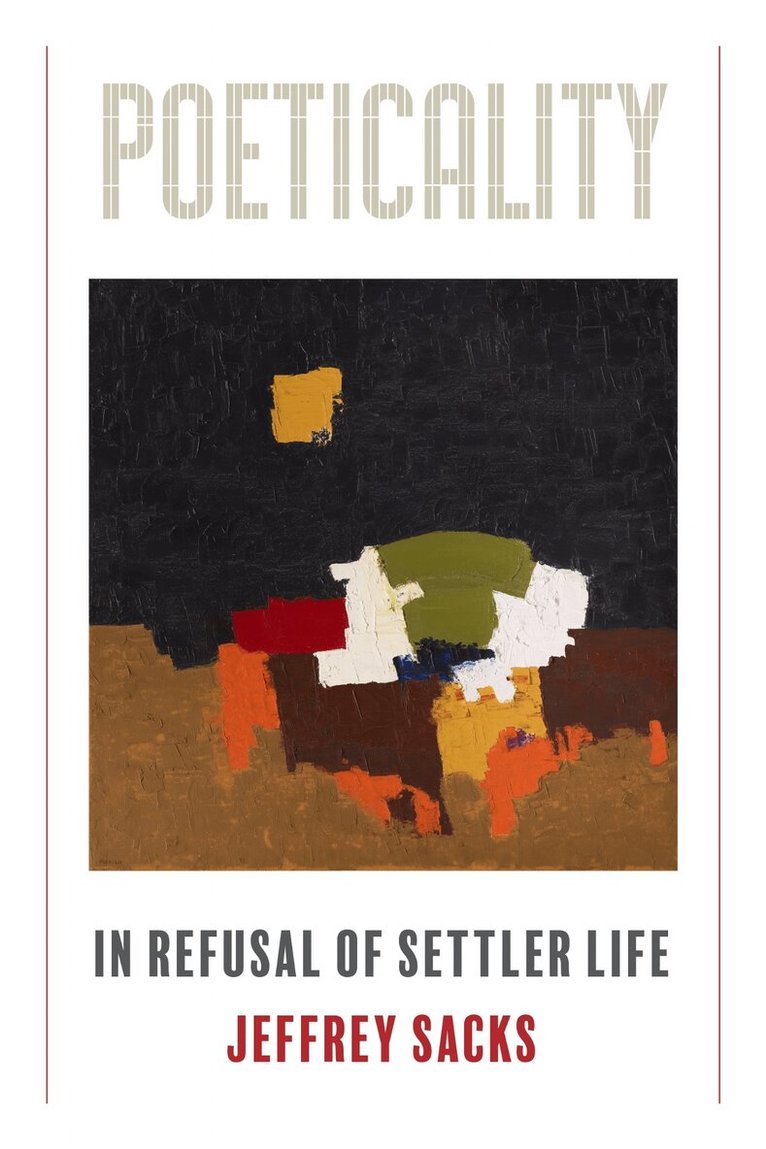
"Will you not memorize a little poetry to halt the slaughter?" the Palestinian poet Mahmoud Darwish wrote. Darwish’s poetic statement points to world-evacuating and genocidal violences – in a triangulation of Palestine, Iraq, and the American settler state – as his language recalls us to a sonority in utterance and acts of refusal in collective form. Through readings of Arabic and Arab poetry, art, translation, and philosophy, Jeffrey Sacks illumines an indetermined, non-accumulative, non-propertied manner of lingual doing – across post-Ottoman topographies and states, and in excess of any single language – where language is a practice in sociality, the social is indistinct from the ontological, and being is a poetic mode – what this book calls "poeticality."Poeticality studies the Lebanese-American poet and painter Etel Adnan, the Iraqi poet and translator Khālid al-Maʿālī, philosophers in the Arabic peripatetic tradition, and writings of Karl Marx, Paul Celan, Walter Benjamin, and others, to demonstrate a sense of form wholly other than what is advanced in self-determined social existence, linguistic self-understanding, and philosophical self-representation – a manner of address and a social pose, which Sacks summarizes under the heading "settler life."Settler life – a form of life, a practice of reading, and an asymmetric distribution of social destruction – asserts itself as a generalized and regulating attack upon Black and Indigenous life, and upon all forms of non-white, non-Christian, non-heteronormative existence. "Everything is in the language we use," the Oglala Lakota poet Layli Long Soldier has written. This book – learning from Long Soldier’s observation and with Darwish’s sense of the poetic – affirms the demand for Indigenous sovereignty, in Palestine, in Turtle Island, and elsewhere, a demand which, through the collective acts occasioned in it, decomposes and deposes all sovereign forms and all stately legalities, in refusal of settler life.
399 kr
Skickas
"Will you not memorize a little poetry to halt the slaughter?" the Palestinian poet Mahmoud Darwish wrote. Darwish’s poetic statement points to world-evacuating and genocidal violences – in a triangulation of Palestine, Iraq, and the American settler state – as his language recalls us to a sonority in utterance and acts of refusal in collective form. Through readings of Arabic and Arab poetry, art, translation, and philosophy, Jeffrey Sacks illumines an indetermined, non-accumulative, non-propertied manner of lingual doing – across post-Ottoman topographies and states, and in excess of any single language – where language is a practice in sociality, the social is indistinct from the ontological, and being is a poetic mode – what this book calls "poeticality."Poeticality studies the Lebanese-American poet and painter Etel Adnan, the Iraqi poet and translator Khālid al-Maʿālī, philosophers in the Arabic peripatetic tradition, and writings of Karl Marx, Paul Celan, Walter Benjamin, and others, to demonstrate a sense of form wholly other than what is advanced in self-determined social existence, linguistic self-understanding, and philosophical self-representation – a manner of address and a social pose, which Sacks summarizes under the heading "settler life."Settler life – a form of life, a practice of reading, and an asymmetric distribution of social destruction – asserts itself as a generalized and regulating attack upon Black and Indigenous life, and upon all forms of nonwhite, non-Christian, non-heteronormative existence. "Everything is in the language we use," the Oglala Lakota poet Layli Long Soldier has written. This book – learning from Long Soldier’s observation and with Darwish’s sense of the poetic – affirms the demand for Indigenous sovereignty, in Palestine, in Turtle Island, and elsewhere, a demand which, through the collective acts occasioned in it, decomposes and deposes all sovereign forms and all stately legalities, in refusal of settler life.
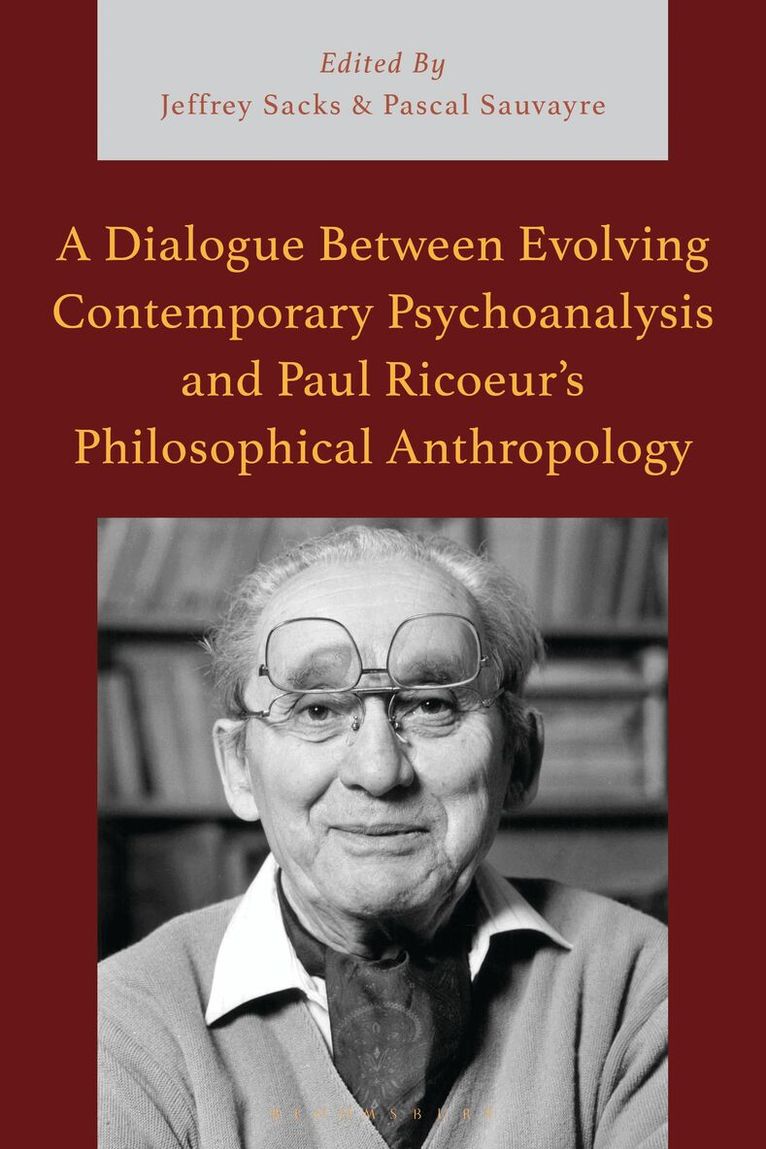
Dialogue Between Evolving Contemporary Psychoanalysis and Paul Ricoeur’s Philosophical Anthropology
Inbunden, Engelska, 2026
1 496 kr
Skickas inom 5-8 vardagar
Using elements of Ricoeur’s thought, psychoanalysts respond as both theoreticians and clinicians to his groundbreaking dialogue.Beginning with Sigmund Freud, the relationship between philosophy and psychoanalysis has fallen short of its mutually enriching potential. This volume builds on Ricoeur’s sustained effort to construct an innovative bridge between the two disciplines and contributes to a long-overdue dialogue.Ricoeur’s engagement with the Freudian opus was a vehicle for his philosophical anthropology, emphasizing the creativity of imagination and the power of the possible. Over the last sixty years, the challenges of Ricoeur’s commentary have changed in conjunction with the contemporary evolution of psychoanalysis. In this volume, the contributors explore the connections between philosophy and psychoanalysis, bringing the two into fruitful conversation.