Jeffrey Spier - Böcker
Visar alla böcker från författaren Jeffrey Spier. Handla med fri frakt och snabb leverans.
6 produkter
6 produkter
408 kr
Skickas inom 7-10 vardagar
830 kr
Skickas
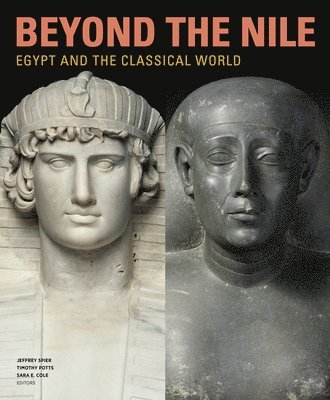
From about 2000 BCE onward, Egypt served as an important nexus for cultural exchange in the eastern Mediterranean, importing and exporting not just wares but also new artistic techniques and styles. Egyptian, Greek, and Roman craftsmen imitated one another's work, creating cultural and artistic hybrids that transcended a single tradition. Yet in spite of the remarkable artistic production that resulted from these interchanges, the complex vicissitudes of exchange between Egypt and the Classical world over the course of nearly 2500 years have not been comprehensively explored in a major exhibition or publication in the United States. It is precisely this aspect of Egypt's history, however, that Beyond the Nile uncovers. Renowned scholars have come together to provide compelling analyses of the constantly evolving dynamics of cultural exchange, first between Egyptians and Greeks-during the Bronze Age, then the Archaic and Classical periods of Greece, and finally Ptolemaic Egypt-and later when Egypt passed to Roman rule with the defeat of Cleopatra. Beyond the Nile is milestone publication on the occasion of a major international exhibition and one that will become an indispensable contribution to the field. With gorgeous photographs of more than two hundred rare objects, including frescoes, statues, obelisks, jewellery, papyri, pottery, and coins, this volume offers an essential and interdisciplinary approach to the rich world of artistic cross-pollination during antiquity.
347 kr
Skickas inom 7-10 vardagar
The first study devoted to classical art's vital creative impact on the work of the Flemish master Peter Paul Rubens. For the great Peter Paul Rubens (1577-1640), the classical past afforded lifelong creative stimulus and the camaraderie of humanist friends. A formidable scholar, Rubens ingeniously transmitted the physical ideals of ancient sculptors, visualized the spectacle of imperial occasions, rendered the intricacies of mythological tales, and delineated the character of gods and heroes in his drawings, paintings, and designs for tapestries. His passion for antiquity profoundly informed every aspect of his art and life. Including more than 150 color illustrations, this volume addresses the creative impact of Rubens's remarkable knowledge of the art and literature of antiquity through the consideration of key themes. The book's lively interpretive essays explore the formal and thematic relationships between ancient sources and Baroque expressions: the significance of neo-Stoic philosophy, the compositional and iconographic inspiration provided by exquisite carved gems, Rubens's study of Roman marble sculpture, and his inventive translation of ancient sources into new subjects made vivid by his dynamic painting style. This volume is published to accompany an exhibition on view at the J. Paul Getty Museum at the Getty Villa October 21, 2020, to January 11, 2021.
556 kr
Skickas inom 7-10 vardagar
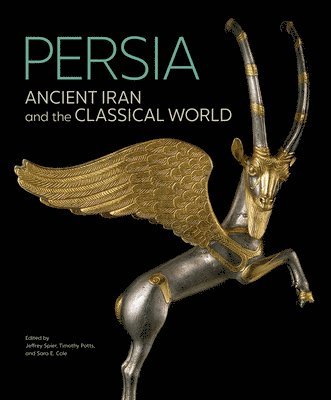
The founding of the first Persian Empire by the Achaemenid king Cyrus the Great in the sixth century BCE established one of the greatest world powers of antiquity. Extending from the borders of Greece to northern India, Persia was seen by the Greeks as a vastly wealthy and powerful rival and often as an existential threat. When the Macedonian king Alexander the Great finally conquered the Achaemenid Empire in 330 BCE, Greek culture spread throughout the Near East, but local dynasties-first the Parthian (247 BCE-224 CE) and then the Sasanian (224-651 CE)-reestablished themselves. The rise of the Roman Empire as a world power quickly brought it, too, into conflict with Persia, despite the common trade that flowed through their territories.Persia addresses the political, intellectual, religious, and artistic relations between Persia, Greece, and Rome from the seventh century BCE to the Arab conquest of 651 CE. Essays by international scholars trace interactions and exchanges of influence. With more than three hundred images, this richly illustrated volume features sculpture, jewelry, silver luxury vessels, coins, gems, and inscriptions that reflect the Persian ideology of empire and its impact throughout Persia's own diverse lands and the Greek and Roman spheres.
556 kr
Skickas inom 7-10 vardagar
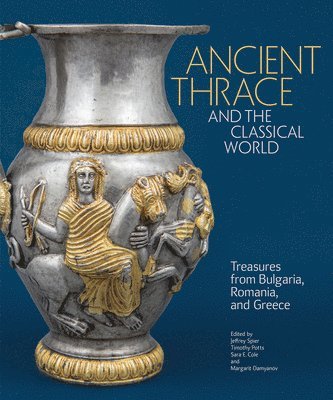
The Thracians-a collection of tribal peoples who inhabited territories north of ancient Greece, an area that comprises present-day Bulgaria, much of Romania, and parts of Greece and Turkey-were renowned for their skill as warriors and horsemen, as well as for their wealth in precious metals. Thracians left few written records, and knowledge of their history and customs has long been dependent on brief accounts from ancient Greek authors. They appeared in Greek myth as formidable adversaries in the Trojan War, cruel kings, and followers of the ecstatic god Dionysos. Spectacular archaeological discoveries made in Thracian lands during modern times, however, have provided firsthand evidence of this remarkable culture, illuminating Thrace's interactions with Greece, Persia, and Rome.Ancient Thrace and the Classical World reproduces more than two hundred glorious objects dating from the end of the Bronze Age, around 1200 BC, to the end of the first century AD, when Thrace became part of the Roman Empire. Experts explore topics such as Thracian royal tombs, the Greek colonization of the Black Sea coast, Thracian religion, and more, placing Thracian culture in a broader historical context that highlights its complex relationships with the surrounding regionEXHIBITIONJ. Paul Getty Museum, Getty CenterNovember 6, 2024-March 3, 2025
297 kr
Kommande
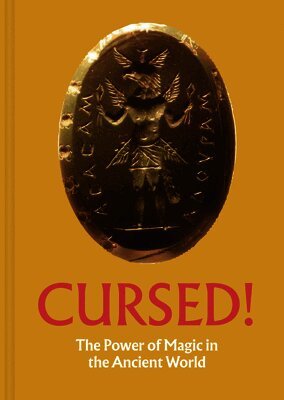
A bewitching study of magical objects from ancient societies, including Egypt, Mesopotamia, Greece and RomePublished with Toledo Museum of Art.The belief in magic was widespread across ancient Egypt, Mesopotamia, Greece and Rome. In these societies, the world was believed to be populated by divine forces, and magicians (also called sorcerers, witches and shamans) could manipulate supernatural powers through the performance of rituals and recitation of spells to achieve a wide range of aims, including protection from demonic harm, healing various medical ailments, attracting lovers, cursing enemies and even winning in the law courts and at the racetrack. This volume, published on the occasion of the exhibition of the same name at the Toledo Museum of Art, explores how the supernatural was visualized in these societies and how magic was actually practiced in the period from around 2000 BCE to 300 CE. It displays and studies magical objects from each of these regions, including protective objects, written records of spells and images of supernatural beings.