Jemima Parker – författare
Visar alla böcker från författaren Jemima Parker. Handla med fri frakt och snabb leverans.
2 produkter
2 produkter
149 kr
Kommande
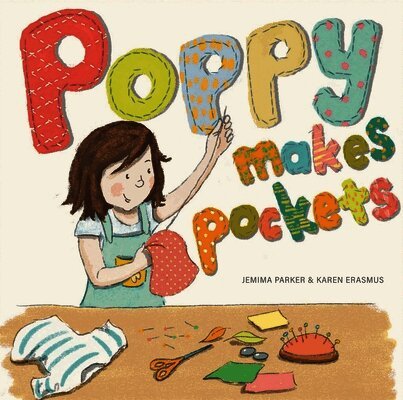
Poppy finds a crafty solution for carrying her treasures in this uplifting story about creativity, upcycling, community spirit – and the joy of pockets!Poppy picks up the most amazing things when she’s out exploring, from glossy feathers to rattling seed pods to shiny buttons. But she’s missing something very important: pockets to carry her findings!After an unsuccessful wardrobe search, Poppy’s creativity is sparked. With some crafty textile upcycling, she makes her own pocket-covered outfit. It’s such a success that she opens a stand in her street offering pocket-making for all. But what happens when Poppy runs out of fabric, and people still want pockets? Can Poppy and her neighbourhood friends come together to find a solution?Girls’ clothing almost never has practical pockets, which affects how girls play, move, and navigate life. Poppy Makes Pockets celebrates of the joy of pockets, and highlights that girls need them too. It also explores themes of upcycling worn-out clothing, inspiring young readers to think about sustainable and creative solutions to problems. Full of positivity and joy, this delightful story will entertain little readers everywhere, especially those who love collecting treasures.
203 kr
Kommande
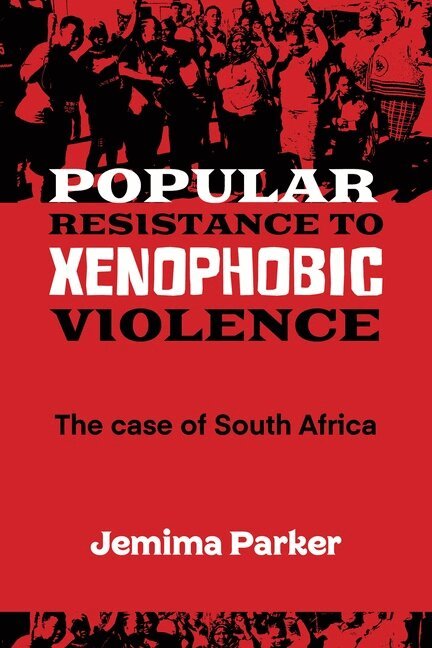
It argues, that xenophobia itself is not primarily a reaction to poverty, inequality, or any other set of social conditions. Rather, xenophobia must be considered to be a collective political discourse which has arisen in post-apartheid South Africa from an exclusionary conception of state nationalism. Where this work may be distinguished from the majority of research on xenophobia in South Africa is in the fact that its particular focus is on instances where 'ordinary' South Africans have challenged and resisted xenophobic violence in their communities through collective political mobilisation. I suggest that these sites of resistance deserve careful consideration in their own right. I argue that they may demonstrate a subjective break with the oppressive politics of state nationalism through the affirmation of alternative political conceptions. Drawing on the political theory of Sylvain Lazarus, and his principal thesis that people are capable of thinking politics in ways which can subjectively think beyond the social and the extant (underscored by his political and methodological axiom, people think), the book will argue that these sites of resistance show that people - and especially those who are considered to be marginalised from the domain of legitimate politics - can and do think politically, and it is in the thought of people that new and potentially emancipatory visions of politics may emerge.