Jenna Weissman Joselit – författare
Visar alla böcker från författaren Jenna Weissman Joselit. Handla med fri frakt och snabb leverans.
10 produkter
Set in Stone
America's Embrace of the Ten Commandments
Häftad, 2019
316 kr
Lägg i varukorg
When Cecil B. DeMille's epic, The Ten Commandments, came out in 1956, lines of people crowded into theaters across America to admire the movie's spectacular special effects. Thanks to DeMille, the commandments now had fans as well as adherents. But the country's fascination with the Ten …
Set in Stone
America's Embrace of the Ten Commandments
Inbunden, 2017
656 kr
Lägg i varukorg
The Ten Commandments need no introduction. In fact, we probably think we know all there is to know about these divine dos and don'ts. But as this imaginative and vivid account reveals, there is a lot more to this ancient biblical code than Moses and Mount Sinai. Situating the Ten Commandments …
Set in Stone
America's Embrace of the Ten Commandments
E-bok, 2017
257 kr
Lägg i varukorg
When Cecil B. DeMille''s epic, The Ten Commandments , came out in 1956, lines of people crowded into theaters across America to admire the movie''s spectacular special effects. Thanks to DeMille, the commandments now had fans as well as adherents. But the country''s fascination with the Ten …
Set in Stone
America's Embrace of the Ten Commandments
E-bok, 2017
257 kr
Lägg i varukorg
When Cecil B. DeMille''s epic, The Ten Commandments , came out in 1956, lines of people crowded into theaters across America to admire the movie''s spectacular special effects. Thanks to DeMille, the commandments now had fans as well as adherents. But the country''s fascination with the Ten …
Parade of Faiths
Immigration and American Religion
Häftad, 2007
341 kr
Lägg i varukorg
American religious history IS the history of immigration, from the first settlers in the 'Promised Land' to today's arrivals from every corner of the globe. Immigration and American Relgion in American Life series (Jon Butler and Harry S. Stout, general editors), examines the immigrant experience …
Parade of Faiths
Immigration and American Religion
E-bok, 2007
228 kr
Lägg i varukorg
Since the seventeenth century, millions of people from every continent have settled in America. Seeking a better life for themselves and their children, they braved deprivations, studied an unfamiliar language, adapted to a different way of life, and battled prejudices and hostility. Most of them …
Parade of Faiths
Immigration and American Religion
E-bok, 2007
228 kr
Lägg i varukorg
Since the seventeenth century, millions of people from every continent have settled in America. Seeking a better life for themselves and their children, they braved deprivations, studied an unfamiliar language, adapted to a different way of life, and battled prejudices and hostility. Most of them …
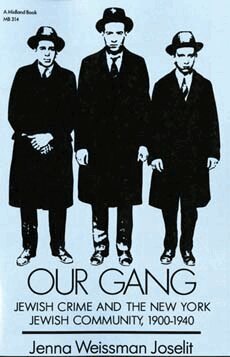
Our Gang
Jewish Crime and the New York Jewish Community, 1900-1940
Häftad, 1983
218 kr
Lägg i varukorg
Our Gang provides a fascinating historical portrait of the Jewish criminal world from the era of mass immigration through Prohibition and beyond. Jenna Weissman Joselit traces the origins, nature, patterns, location, and impact of Jewish crime from the early years, when it was inextricably bound up …
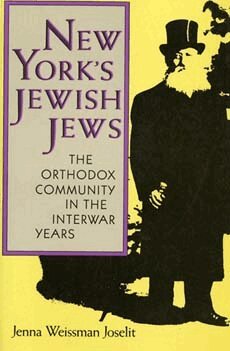
New York's Jewish Jews
The Orthodox Community in the Interwar Years
Häftad, 1990
218 kr
Lägg i varukorg
In this first interpretive historical account of the American Orthodox Jewish experience, Jenna Weissman Joselit investigates the ways in which pious Jews reconciled the requirements of religious tradition with the freedoms of interwar America. Through its focus on representative American Jewish …
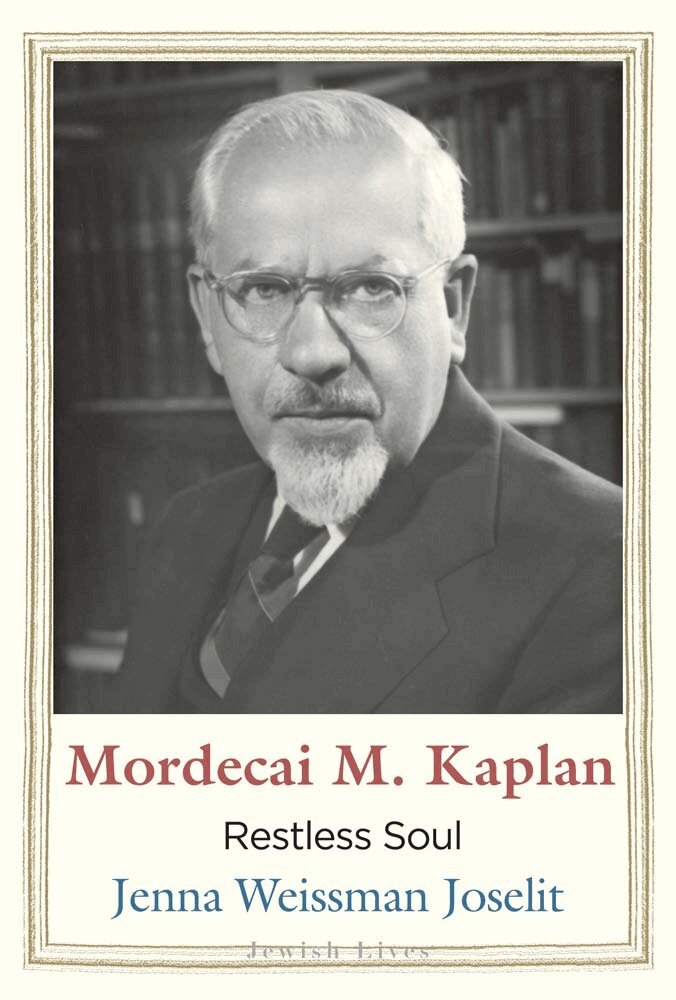
Mordecai M. Kaplan
Restless Soul
Inbunden, 2026
245 kr
Lägg i varukorg
An engaging biography that goes behind the myths to reveal the complex life of a transformative figure in modern American Judaism Rabbi, writer, teacher, and thinker, Mordecai M. Kaplan (1881–1983) was one of the leading Jewish personalities of twentieth-century America. Founder of the …