Jennifer A. Lemak - Böcker
Visar alla böcker från författaren Jennifer A. Lemak. Handla med fri frakt och snabb leverans.
3 produkter
3 produkter
345 kr
Tillfälligt slut
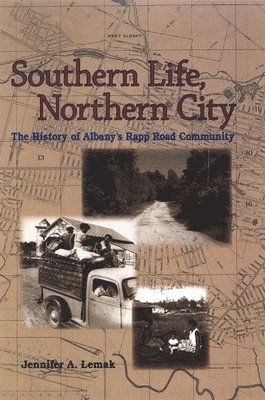
The inspirational story of an African American community that migrated from the Deep South to Albany, New York, in the 1930s.Southern Life, Northern City is the inspirational story of an African American community in Albany that has fought doggedly for generations to preserve its legacy and way of life. In the 1920s and 1930s rural African American families living in Shubuta, Mississippi, began relocating to Albany, New York. These former sharecroppers initially settled in Albany's South End, but quickly became unhappy with the vice and overcrowding of city life. A leading member of this community, Reverend Louis W. Parson, courageously led the effort to purchase land on the city's western edge. The newly relocated residents enthusiastically recreated their rural southern life in the north-building homes, planting crops, hunting, and raising families. Fifty years later, their settlement found itself threatened by sprawl, commercial development, and corporate greed. Joining forces with public historians and preservationists, the residents triumphed, with the Rapp Road community being named a New York State and a National Historic District.
325 kr
Tillfälligt slut
Examines the pivotal role New York State played in the Civil War.An Irrepressible Conflict documents the pivotal role New York State played in our nation's bloodiest and most enduring conflict. As the wealthiest and most populous state in the Union, the Empire State led all others in supplying men, money, and material to the causes of unity and freedom. New York's experience provides significant insight into the reasons why the war was fought and the meaning that the Civil War holds today.A companion to the award-winning exhibition of the same name, displayed at the New York State Museum from September 2012 to March 2014, An Irrepressible Conflict includes reproductions of objects from the collections of the New York State Museum, Library, and Archives, as well as more than twenty-five different institutions across the state. Among the many significant objects are a Lincoln life mask from 1860 from the New-York Historical Society; the earliest photograph of Frederick Douglass (a rare 8″ x 10″ daguerreotype image, courtesy of the Onondaga Historical Association); the only known portrait of Dred Scott, also from New-York Historical Society; and a bronze medal given to the defenders of Fort Sumter by the City of New York from the museum's own collection.The title is inspired by an 1858 quote from then US Senator William H. Seward, who also served as governor of New York (1839–42) and Secretary of State (1861–69). Seward disagreed with those who believed that the prospect of war between the North and South was the work of "fanatical agitators." He understood that the roots of conflict went far deeper, writing, "It is an irrepressible conflict, between opposing and enduring forces, and it means that the United States must and will, sooner or later, become either entirely a slave-holding nation or entirely a free-labor nation."
325 kr
Tillfälligt slut
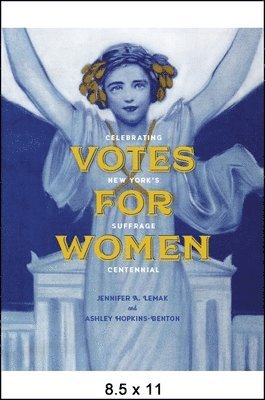
Chronicles the history of the women's rights and suffrage movements in New York State and examines the important role the state played in the national suffrage movement.The work for women's suffrage started more than seventy years before the passage of the Nineteenth Amendment at the Seneca Falls Convention in 1848 when Elizabeth Cady Stanton, Lucretia Mott, and one hundred supporters signed the Declaration of Sentiments asserting that "all men and women are created equal." This convention served as a catalyst for debates and action on both the national and state levels, and on November 6, 1917, New York State passed the referendum for women's suffrage. Its passing in New York signaled that the national passage of suffrage would soon follow. On August 18, 1920, "Votes for Women" was constitutionally granted.Votes for Women, an exhibition catalog, celebrates the pivotal role the state played in the struggle for equal rights in the nineteenth century, the campaign for New York State suffrage, and the ratification of the Nineteenth Amendment. It highlights the nationally significant role of state leaders in regards to women's rights and the feminist movement through the early twenty-first century and includes focused essays from historians on the various aspects of the suffrage and equal rights movements around New York, providing greater detail about local stories with statewide significance.The exhibition of the same name, on display at the New York State Museum beginning November 2017, features artifacts from the New York State Museum, Library, and Archives, as well as historical institutions and private collections across the state.