Jennifer A. Yoder - Böcker
Visar alla böcker från författaren Jennifer A. Yoder. Handla med fri frakt och snabb leverans.
4 produkter
4 produkter
108 kr
Skickas inom 5-8 vardagar
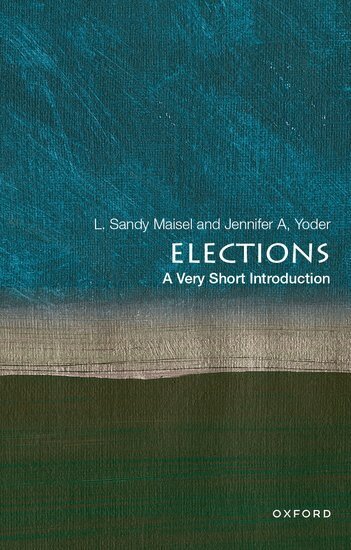
Most citizens know how elections work in their own country, but not all elections are created equally. Elections occur in all democracies and many non-democratic regimes as well. They determine who will hold public office and who will have the power to govern. They connect citizens to those whom they choose to make decisions on their behalf and who regulate their behavior. This book looks comparatively at the key aspects of elections. In addition to describing types of electoral systems, it discusses the implications of the various systems for the administration of elections, voter participation, representation, government stability, and other factors. Where appropriate, it examines efforts to reform a nation's (or a sub-national entity's) system, exploring the impetus for reform and the effects of those reforms when implemented.Elections: A Very Short Introduction asks readers to view election systems critically and comparatively, to understand that all democracies do not function in the same way, to think about the reasons their system functions as it does-for good or ill-and to consider alternatives with which they might not previously have been familiar. L. Sandy Maisel and Jennifer A. Yoder lay out the variety of electoral systems in the broadest terms- single-member district plurality systems; proportional systems; and mixed systems. They discuss voting and the various electoral institutions used to implement the ways in which voting occurs and how votes are tabulated across electoral systems. They analyze the consequences of each system, first for the functioning of the democracy, and second for the electoral strategies politicians employ, closing with a discussion of reforms under consideration in a number of countries.
1 124 kr
Skickas inom 5-8 vardagar
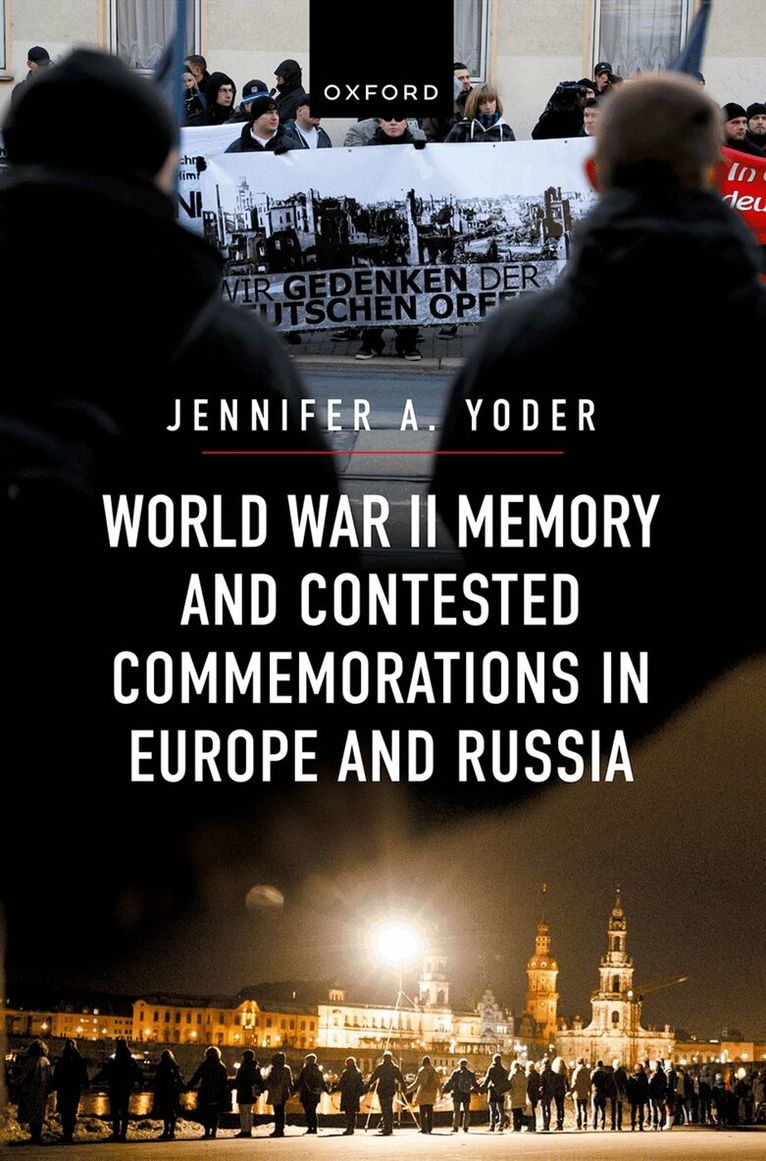
Instrumentalization of the wartime past for political gain is the subject of this study of eleven World War II commemorations. Using a comparative, conceptually original approach, Yoder identifies the actors who manipulate memory surrounding wartime anniversaries, such as the bombing of Dresden and ceremonies to honor fallen soldiers and fascist collaborators. The cases of memory contestation span three geographic regions, Western Europe, Eastern Europe, and Russia, recognizing that each developed distinctive interpretations of the war and different patterns of memory politics. This empirically rich study reveals the grievances that motivate memory challengers and their strategies for shaping the commemoration discourses and rituals. The memory challengers' toolkit includes varieties of emotional manipulation, subtle distortion, revisionism and full-scale denial. The study finds that, while there are differences in context and strategy across cases and regions, there are also areas of convergence. Moreover, a memory challenge in one country can spill over into others with serious consequences for foreign relations. While World War II Memory and Contested Commemorations in Europe and Russia deals with debates and narratives about events in the last century, its focus is on power, persuasion, and identity in the present.
362 kr
Skickas inom 7-10 vardagar
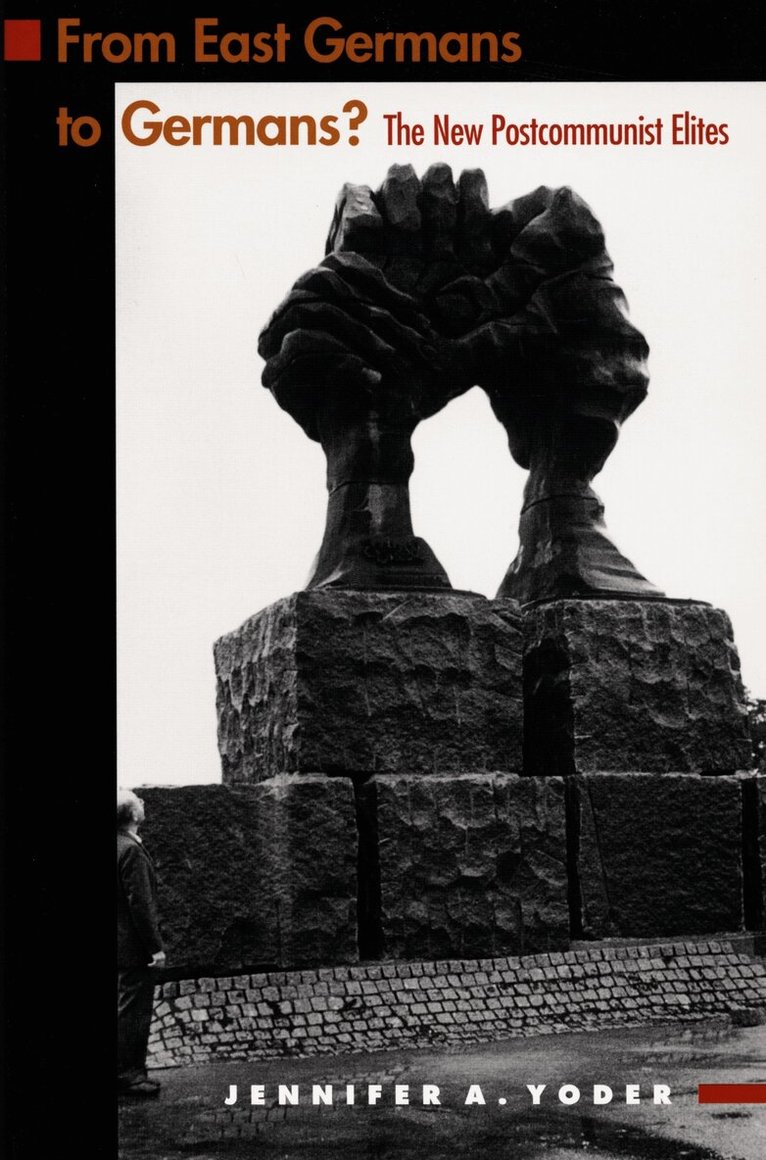
In 1990 Germany launched an experiment to transplant democracy into a formerly communist country, effectively dismantling the system of the German Democratic Republic and rebuilding it in the likeness of the democratic Federal Republic of Germany. From East Germans to Germans? examines the role of the first generation of democratically elected political elites in the former GDR’s transition to democracy.Although the quick transplant of a ready-made democratic system supported by West German financial backing and expertise provided benefits, problems arose for the development of postcommunist political leadership and for the growth of mass support for the democratic system. Jennifer A. Yoder analyzes the implications of the transition process for democratic legitimation and integration. Based on field research in East Germany that included interviews with parliamentarians, her study addresses issues such as culture, identity, and the lack of continuity between the old and new political elites. Although the availability of West German role models, together with pressure to conform, allowed the process of decommunization to occur much faster than elsewhere in Eastern Europe, the cultural differences between east and west are more extensive and complex than previously assumed. Unification has also been followed by a reinvigoration of regional interests. Yoder shows how some political elites have adopted western German patterns, while others openly criticize many of the practices and policies originating in Bonn and present themselves as democratic alternatives and advocates for East German interests in the new Germany. Indeed, for many East Germans, these new regional elites are regarded as the only representatives of their interests in the western-dominated political system. Providing insight into elite-building at a time of transition and a valuable alternative to the “institutions versus culture” debate found in traditional analyses of political change, this book will interest political scientists and students and scholars of European politics and German studies.
1 476 kr
Skickas inom 10-15 vardagar
The importance of subnational regions to politics, governance, and economic development in Western Europe has long been recognized. However, far less is known about recent steps to introduce a regional level of politics in East Central Europe. Reforms there are part of the larger process of crafting democracy; that is, regional reforms are linked to the economic and political transition away from communism and toward “Europe,” specifically the European Union.Crafting Democracy offers an important comparative analysis of the process and outcomes of region-building in the four Visegrád countries. Jennifer A. Yoder investigates why some but not other post-communist countries chose to introduce a regional level of elected government. In the 1990s, for example, Poland boldly took the lead in regionalization, while the Czech Republic and Slovakia lagged behind. Hungary, meanwhile, declined to create regions. The author argues that these regional reform processes have potentially far-reaching implications for state-society relations, political participation, and policymaking at the domestic level. The emergence of new actors at the subnational level, moreover, creates opportunities for cross-border and European Union–level initiatives.