Jennifer Amyx – författare
Visar alla böcker från författaren Jennifer Amyx. Handla med fri frakt och snabb leverans.
5 produkter
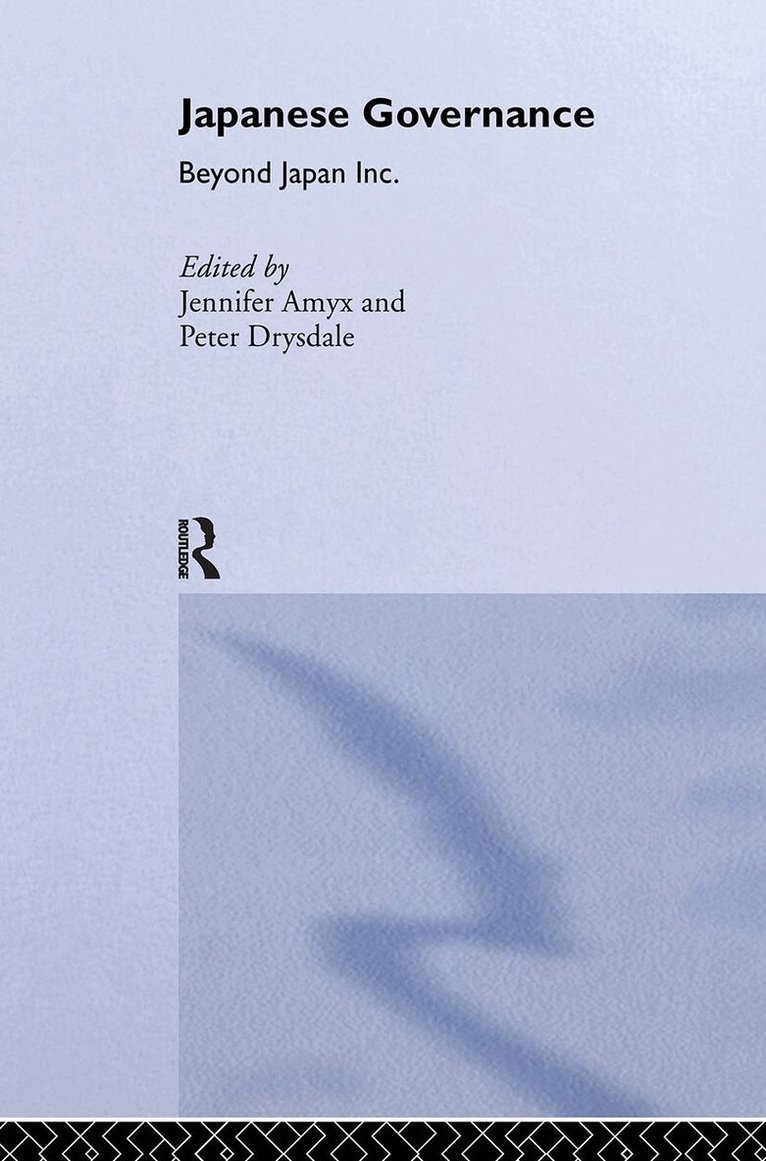
Japanese Governance
Beyond Japan Inc.
Av Jennifer Amyx, Peter Drysdale
Inbunden, 2002
2510 kr
Lägg i varukorg
Japan Inc was once used to describe the powerful political and economic system that delivers Japan's transformation to an industrial power. This book is about the breakdown and failure of policy coherence in Japan in the 1990s and how the political economy of Japan has changed in response. The …
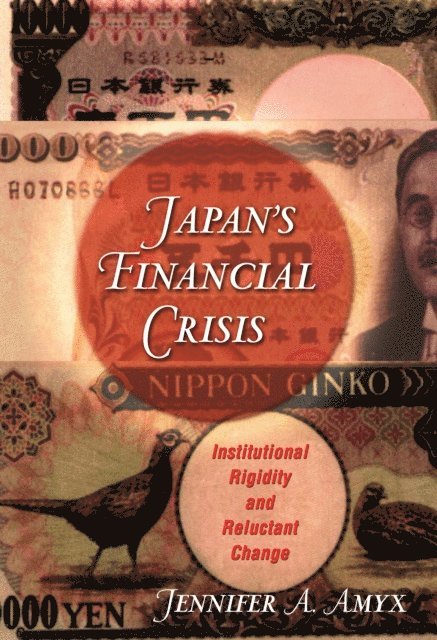
Japan's Financial Crisis
Institutional Rigidity and Reluctant Change
Häftad, 2006
925 kr
Lägg i varukorg
At the beginning of the 1990s, a massive speculative asset bubble burst in Japan, leaving the nation's banks with an enormous burden of nonperforming loans. Banking crises have become increasingly common across the globe, but what was distinctive about the Japanese case was the unusually long delay …
Japanese Governance
Beyond Japan Inc.
Av Peter Drysdale, Jennifer Amyx
E-bok, 2003
813 kr
Lägg i varukorg
Japan Inc was once used to describe the powerful political and economic system that delivers Japan''s transformation to an industrial power. This book is about the breakdown and failure of policy coherence in Japan in the 1990s and how the political economy of Japan has changed in response. The …
Japanese Governance
Beyond Japan Inc.
Av Peter Drysdale, Jennifer Amyx
E-bok, 2003
831 kr
Lägg i varukorg
Japan Inc was once used to describe the powerful political and economic system that delivers Japan''s transformation to an industrial power. This book is about the breakdown and failure of policy coherence in Japan in the 1990s and how the political economy of Japan has changed in response. The …
Japan's Financial Crisis
Institutional Rigidity and Reluctant Change
E-bok, 2013
683 kr
Lägg i varukorg
At the beginning of the 1990s, a massive speculative asset bubble burst in Japan, leaving the nation''s banks with an enormous burden of nonperforming loans. Banking crises have become increasingly common across the globe, but what was distinctive about the Japanese case was the unusually long …