Jennifer Gabrys - Böcker
Visar alla böcker från författaren Jennifer Gabrys. Handla med fri frakt och snabb leverans.
8 produkter
8 produkter
2 306 kr
Skickas inom 10-15 vardagar
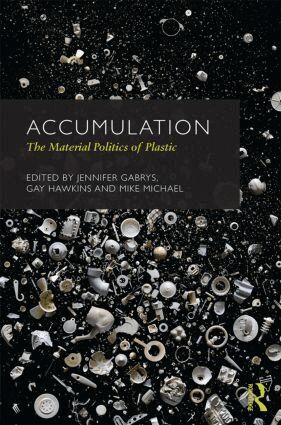
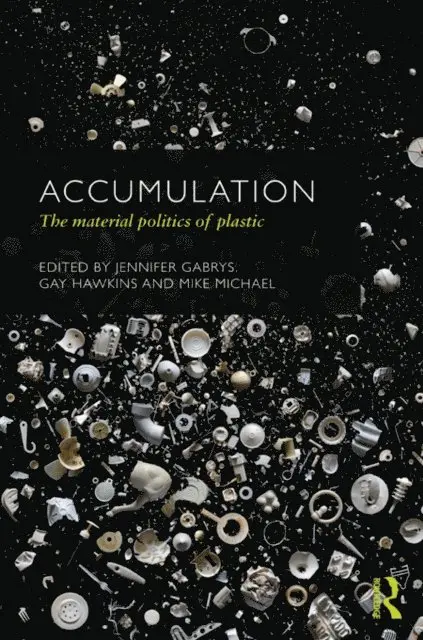
From food punnets to credit cards, plastic facilitates every part of our daily lives. It has become central to processes of contemporary socio-material living. Universalised and abstracted, it is often treated as the passive object of political deliberations, or a problematic material demanding human management. But in what ways might a 'politics of plastics' deal with both its specific manifestation in particular artefacts and events, and its complex dispersed heterogeneity?Accumulation explores the vitality and complexity of plastic. This interdisciplinary collection focuses on how the presence and recalcitrance of plastic reveals the relational exchanges across human and synthetic materialities. It captures multiplicity by engaging with the processual materialities or plasticity of plastic. Through a series of themed essays on plastic materialities, plastic economies, plastic bodies and new articulations of plastic, the editors and chapter authors examine specific aspects of plastic in action. How are multiple plastic realities enacted? What are their effects?This book will be of interest to students and scholars of sociology, human and cultural geography, environmental studies, consumption studies, science and technology studies, design, and political theory.
363 kr
Skickas inom 7-10 vardagar
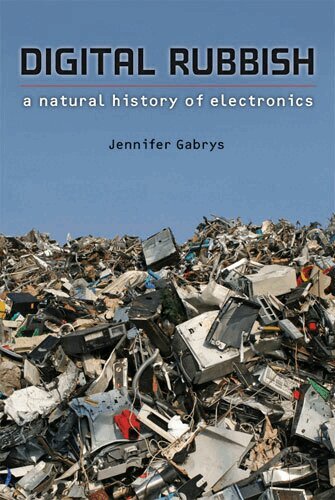
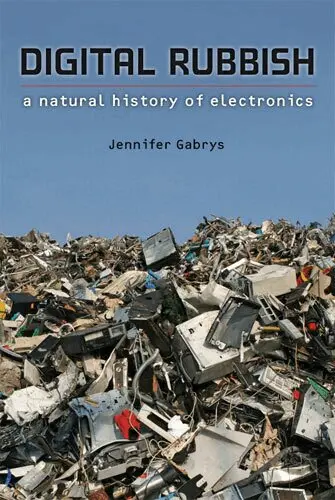
This is a study of the material life of information and its devices; of electronic waste in its physical and electronic incarnations; a cultural and material mapping of the spaces where electronics in the form of both hardware and information accumulate, break down, or are stowed away. Electronic waste occurs not just in the form of discarded computers but also as a scatter of information devices, software, and systems that are rendered obsolete and fail. Where other studies have addressed "digital" technology through a focus on its immateriality or virtual qualities, Gabrys traces the material, spatial, cultural, and political infrastructures that enable the emergence and dissolution of these technologies. In the course of her book, she explores five interrelated "spaces" where electronics fall apart: from Silicon Valley to Nasdaq, from containers bound for China to museums and archives that preserve obsolete electronics as cultural artifacts, to the landfill as material repository. All together, these sites stack up into a sedimentary record that forms the "natural history" of this study.Digital Rubbish: A Natural History of Electronics describes the materiality of electronics from a unique perspective, examining the multiple forms of waste that electronics create as evidence of the resources, labor, and imaginaries that are bundled into these machines. By drawing on the material analysis developed by Walter Benjamin, this natural history method allows for an inquiry into electronics that focuses neither on technological progression nor on great inventors but rather considers the ways in which electronic technologies fail and decay. Ranging across studies of media and technology, as well as environments, geography, and design, Jennifer Gabrys pulls together the far-reaching material and cultural processes that enable the making and breaking of these technologies.Jennifer Gabrys is Senior Lecturer in Design and Convener of the Masters in Design and Environment in the Department of Design, Goldsmiths, University of London.Jacket image: Computer dump ©iStockphoto/Lya_Cattel.digitalculturebooks is an imprint of the University of Michigan Press and the Scholarly Publishing Office of the University of Michigan Library dedicated to publishing innovative and accessible work exploring new media and their impact on society, culture, and scholarly communication. Visit the website at www.digitalculture.org.
Program Earth
Environmental Sensing Technology and the Making of a Computational Planet
Häftad, Engelska, 2016
312 kr
Skickas inom 7-10 vardagar
Sensors are everywhere. Small, flexible, economical, and computationally powerful, they operate ubiquitously in environments. They compile massive amounts of data, including information about air, water, and climate. Never before has such a volume of environmental data been so broadly collected or so widely available.Grappling with the consequences of wiring our world, Program Earth examines how sensor technologies are programming our environments. As Jennifer Gabrys points out, sensors do not merely record information about an environment. Rather, they generate new environments and environmental relations. At the same time, they give a voice to the entities they monitor: to animals, plants, people, and inanimate objects. This book looks at the ways in which sensors converge with environments to map ecological processes, to track the migration of animals, to check pollutants, to facilitate citizen participation, and to program infrastructure. Through discussing particular instances where sensors are deployed for environmental study and citizen engagement across three areas of environmental sensing, from wild sensing to pollution sensing and urban sensing, Program Earth asks how sensor technologies specifically contribute to new environmental conditions. What are the implications for wiring up environments? How do sensor applications not only program environments, but also program the sorts of citizens and collectives we might become?Program Earth suggests that the sensor-based monitoring of Earth offers the prospect of making new environments not simply as an extension of the human but rather as new “technogeographies” that connect technology, nature, and people.
812 kr
Skickas inom 10-15 vardagar
From food punnets to credit cards, plastic facilitates every part of our daily lives. It has become central to processes of contemporary socio-material living. Universalised and abstracted, it is often treated as the passive object of political deliberations, or a problematic material demanding human management. But in what ways might a 'politics of plastics' deal with both its specific manifestation in particular artefacts and events, and its complex dispersed heterogeneity?Accumulation explores the vitality and complexity of plastic. This interdisciplinary collection focuses on how the presence and recalcitrance of plastic reveals the relational exchanges across human and synthetic materialities. It captures multiplicity by engaging with the processual materialities or plasticity of plastic. Through a series of themed essays on plastic materialities, plastic economies, plastic bodies and new articulations of plastic, the editors and chapter authors examine specific aspects of plastic in action. How are multiple plastic realities enacted? What are their effects?This book will be of interest to students and scholars of sociology, human and cultural geography, environmental studies, consumption studies, science and technology studies, design, and political theory.
125 kr
Skickas inom 7-10 vardagar
An investigation of how-to guides for sensor technologiesSensors are increasingly common within citizen-sensing and DIY projects, but these devices often require the use of a how-to guide. From online instructional videos for troubleshooting sensor installations to handbooks for using and abusing the Internet of Things, the how-to genres and formats of digital instruction continue to expand and develop. As the how-to proliferates, and instructions unfold through multiple aspects of technoscientific practices, Jennifer Gabrys asks why the how-to has become one of the prevailing genres of the digital. How to Do Things with Sensors explores the ways in which things are made do-able with and through sensors and further considers how worlds are made sense-able and actionable through the instructional mode of citizen-sensing projects.Forerunners: Ideas FirstShort books of thought-in-process scholarship, where intense analysis, questioning, and speculation take the lead
1 270 kr
Skickas inom 7-10 vardagar
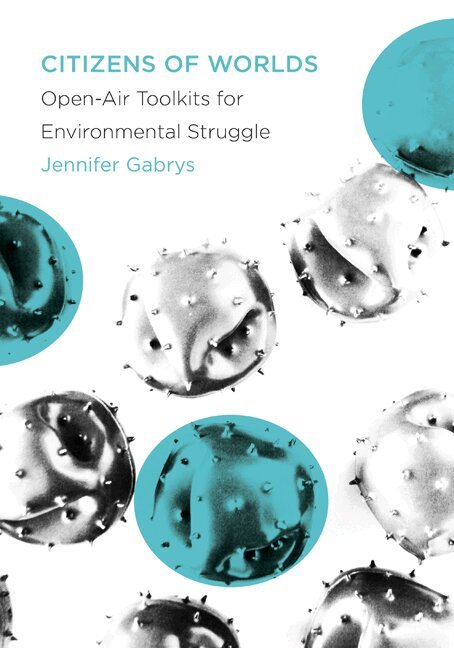
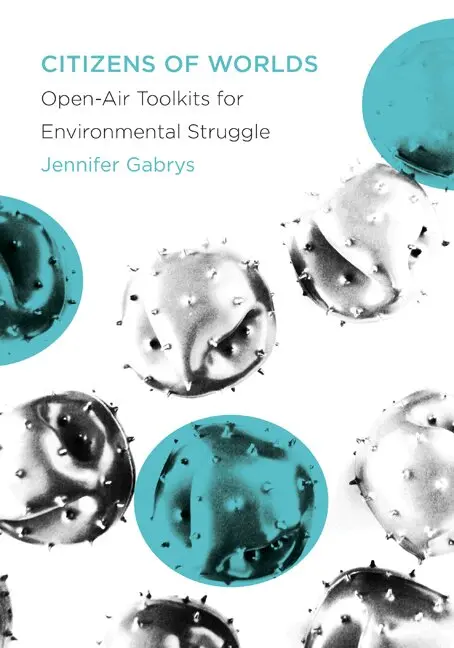
An unparalleled how-to guide to citizen-sensing practices that monitor air pollutionModern environments are awash with pollutants churning through the air, from toxic gases and intensifying carbon to carcinogenic particles and novel viruses. The effects on our bodies and our planet are perilous. Citizens of Worlds is the first thorough study of the increasingly widespread use of digital technologies to monitor and respond to air pollution. It presents practice-based research on working with communities and making sensor toolkits to detect pollution while examining the political subjects, relations, and worlds these technologies generate. Drawing on data from the Citizen Sense research group, which worked with communities in the United States and the United Kingdom to develop digital-sensor toolkits, Jennifer Gabrys argues that citizen-oriented technologies promise positive change but then collide with entrenched and inequitable power structures. She asks: Who or what constitutes a “citizen” in citizen sensing? How do digital sensing technologies enable or constrain environmental citizenship? Spanning three project areas, this study describes collaborations to monitor air pollution from fracking infrastructure, to document emissions in urban environments, and to create air-quality gardens. As these projects show, how people respond to, care for, and struggle to transform environmental conditions informs the political subjects and collectives they become as they strive for more breathable worlds.
309 kr
Skickas inom 7-10 vardagar
An unparalleled how-to guide to citizen-sensing practices that monitor air pollutionModern environments are awash with pollutants churning through the air, from toxic gases and intensifying carbon to carcinogenic particles and novel viruses. The effects on our bodies and our planet are perilous. Citizens of Worlds is the first thorough study of the increasingly widespread use of digital technologies to monitor and respond to air pollution. It presents practice-based research on working with communities and making sensor toolkits to detect pollution while examining the political subjects, relations, and worlds these technologies generate. Drawing on data from the Citizen Sense research group, which worked with communities in the United States and the United Kingdom to develop digital-sensor toolkits, Jennifer Gabrys argues that citizen-oriented technologies promise positive change but then collide with entrenched and inequitable power structures. She asks: Who or what constitutes a “citizen” in citizen sensing? How do digital sensing technologies enable or constrain environmental citizenship? Spanning three project areas, this study describes collaborations to monitor air pollution from fracking infrastructure, to document emissions in urban environments, and to create air-quality gardens. As these projects show, how people respond to, care for, and struggle to transform environmental conditions informs the political subjects and collectives they become as they strive for more breathable worlds.
432 kr
Kommande