
Jennifer J. Davis – författare
Visar alla böcker från författaren Jennifer J. Davis. Handla med fri frakt och snabb leverans.
2 produkter
2 produkter
Defining Culinary Authority
The Transformation of Cooking in France, 1650-1830
Inbunden, Engelska, 2013
545 kr
Skickas inom 5-8 vardagar
In the eighteenth and nineteenth centuries, French cooks began to claim central roles in defining and enforcing taste, as well as in educating their diners to changing standards. Tracing the transformation of culinary trades in France during the Revolutionary era, Jennifer J. Davis argues that the work of cultivating sensibility in food was not simply an elite matter; it was essential to the livelihood of thousands of men and women.Combining rigorous archival research with social history and cultural studies, Davis analyzes the development of cooking aesthetics and practices by examining the propagation of taste, the training of cooks, and the policing of the culinary marketplace in the name of safety and good taste. French cooks formed their profession through a series of debates intimately connected to broader Enlightenment controversies over education, cuisine, law, science, and service. Though cooks assumed prominence within the culinary public sphere, the unique literary genre of gastronomy replaced the Old Regime guild police in the wake of the French Revolution as individual diners began to rethink cooks' authority. The question of who wielded culinary influence -- and thus shaped standards of taste -- continued to reverberate throughout society into the early nineteenth century.This remarkable study illustrates how culinary discourse affected French national identity within the country and around the globe, where elite cuisine bears the imprint of the country's techniques and labor organization.
731 kr
Skickas inom 10-15 vardagar
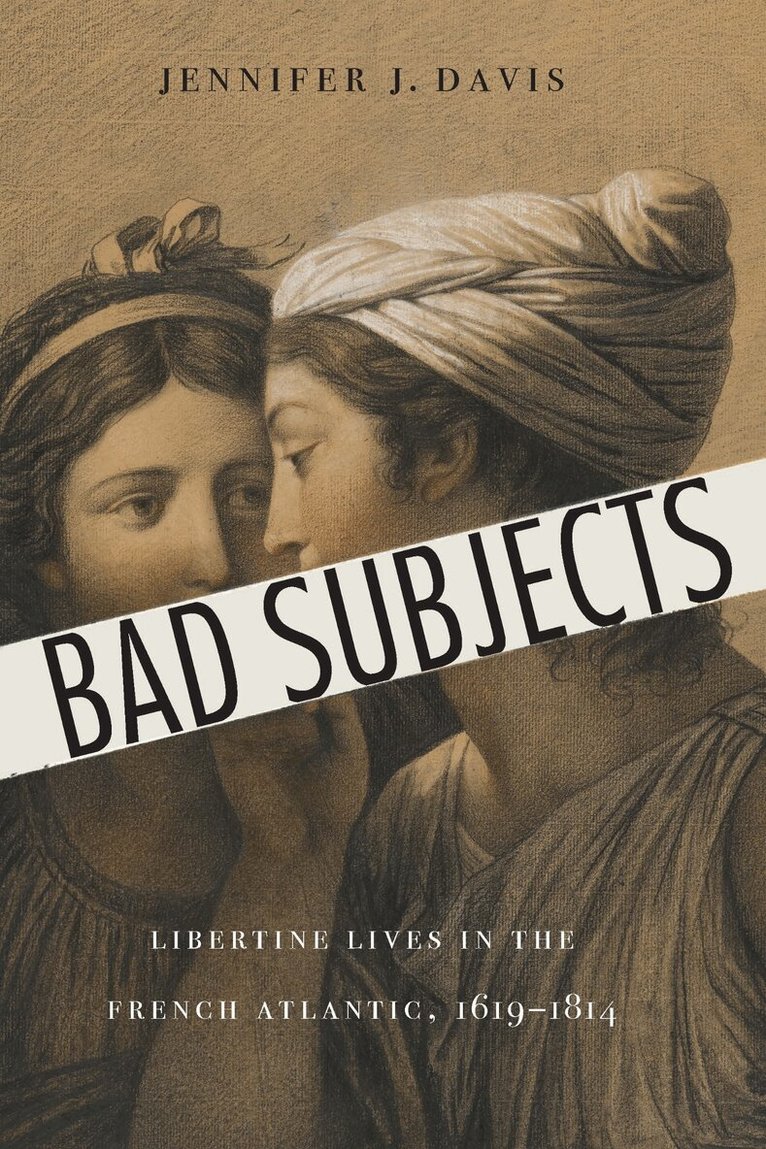
In a lively account that spans continents, Jennifer J. Davis considers what it meant to be called a libertine in early modern France and its colonies. Libertinage was a polysemous term in early modern Europe and the Atlantic World, generally translated as “debauchery” or “licentiousness” in English. Davis assesses the changing fortunes of the quasi-criminal category of libertinage in the French Atlantic, based on hundreds of cases drawn from the police and judicial archives of seventeenth- and eighteenth-century France and its Atlantic colonies alongside the literature inspired by those proceedings.The libertine life was not merely a subject for fiction nor a topos against which to play out potential revolutions. It was a charge authorities imposed on a startlingly wide array of behaviors, including gambling, selling alcohol to Native Americans, and secret marriages. Once invoked by family and state authorities, the charge proved nearly impossible for the accused to contest, for a libertine need not have committed any crimes to be perceived as disregarding authority and thereby threatening families and social institutions. The research in Bad Subjects provides a framework for analysis of libertinage as a set of anti-authoritarian practices and discourses that circulated among the peoples of France and the Atlantic World, ultimately providing a compelling blueprint for alternative social and economic order in the Revolutionary period.