Jennifer R. Rust – författare
Visar alla böcker från författaren Jennifer R. Rust. Handla med fri frakt och snabb leverans.
5 produkter
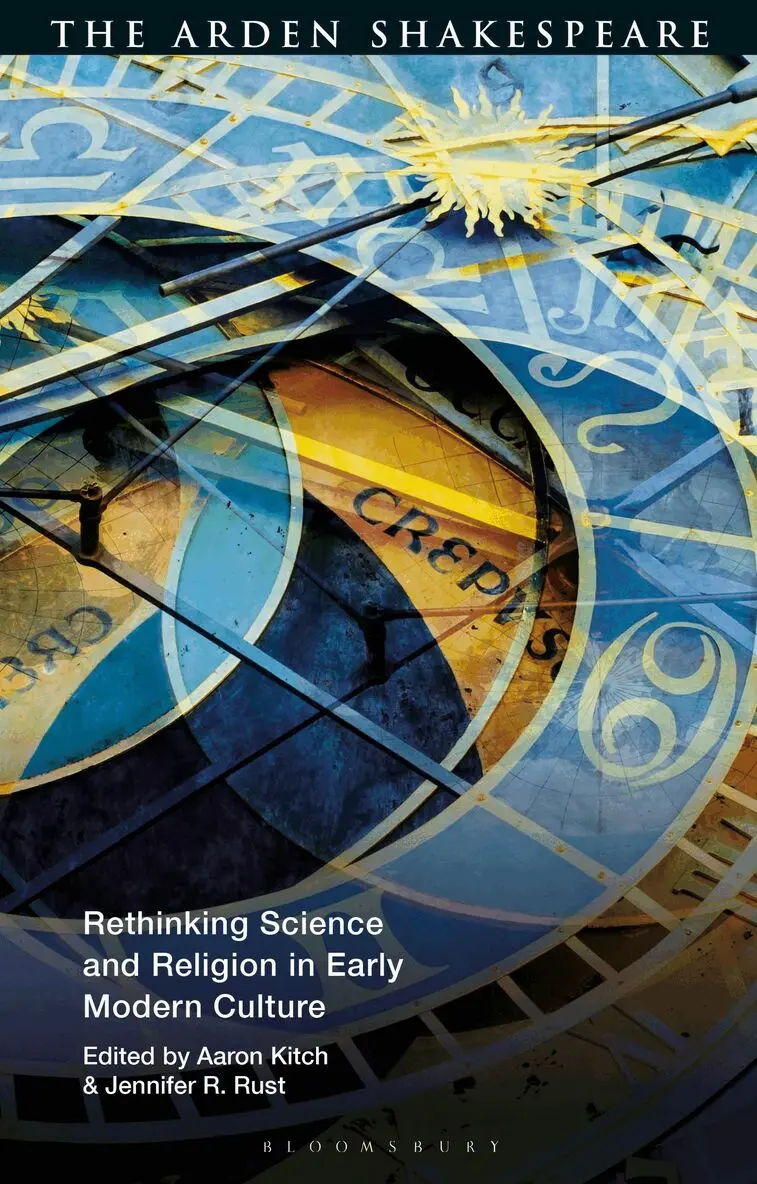
Rethinking Science and Religion in Early Modern Culture
Av Aaron Kitch, Jennifer R. Rust
Inbunden, 2026
1136 kr
Lägg i varukorg
Early modern Europe provides a rich context from which to challenge the rigid opposition between science and religion in this bold new edited collection. Rethinking Science and Religion in Early Modern Culture approaches “science” and “religion” as overlapping and mutually defining modes of …
Body in Mystery
The Political Theology of the 'Corpus Mysticum' in the Literature of Reformation England
Inbunden, 2013
1047 kr
Lägg i varukorg
In The Body in Mystery, Jennifer R. Rust engages the political concept of the mystical body of the commonwealth, the corpus mysticum of the medieval church. Rust argues that the communitarian ideal of sacramental sociality had a far longer afterlife than has been previously assumed. Reviving a …
Rethinking Science and Religion in Early Modern Culture
Av Aaron Kitch, Jennifer R. Rust
E-bok, 2026
1247 kr
Lägg i varukorg
Early modern Europe provides a rich context from which to challenge the rigid opposition between science and religion in this bold new edited collection. Contributors reveal how modes of science or natural philosophy, and religion, were mutually interdependent, even if they were also fluid and …
Rethinking Science and Religion in Early Modern Culture
Av Aaron Kitch, Jennifer R. Rust
E-bok, 2026
1247 kr
Lägg i varukorg
Early modern Europe provides a rich context from which to challenge the rigid opposition between science and religion in this bold new edited collection. Contributors reveal how modes of science or natural philosophy, and religion, were mutually interdependent, even if they were also fluid and …
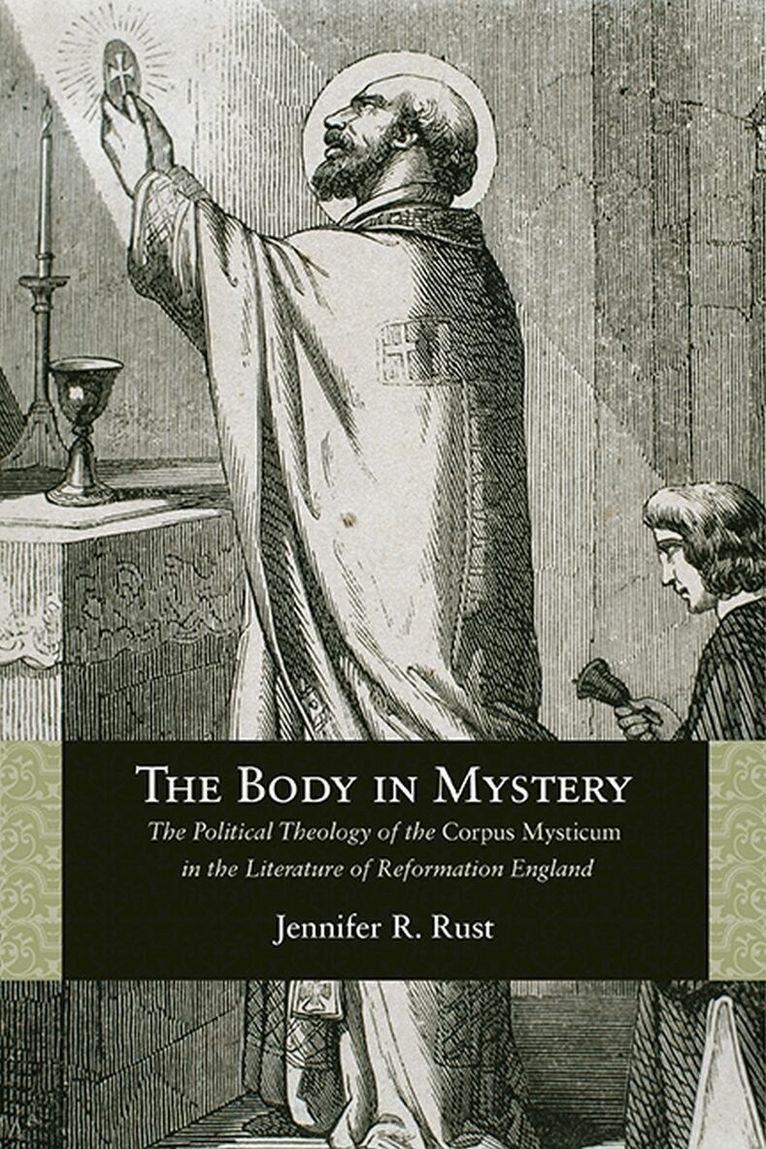
Body in Mystery
The Political Theology of the 'Corpus Mysticum' in the Literature of Reformation England
Häftad, 2013
508 kr
Tillfälligt slut
In The Body in Mystery, Jennifer R. Rust engages the political concept of the mystical body of the commonwealth, the corpus mysticum of the medieval church. Rust argues that the communitarian ideal of sacramental sociality had a far longer afterlife than has been previously assumed. Reviving a …