Jenny Kaminer - Böcker
Visar alla böcker från författaren Jenny Kaminer. Handla med fri frakt och snabb leverans.
4 produkter
4 produkter
554 kr
Skickas inom 7-10 vardagar
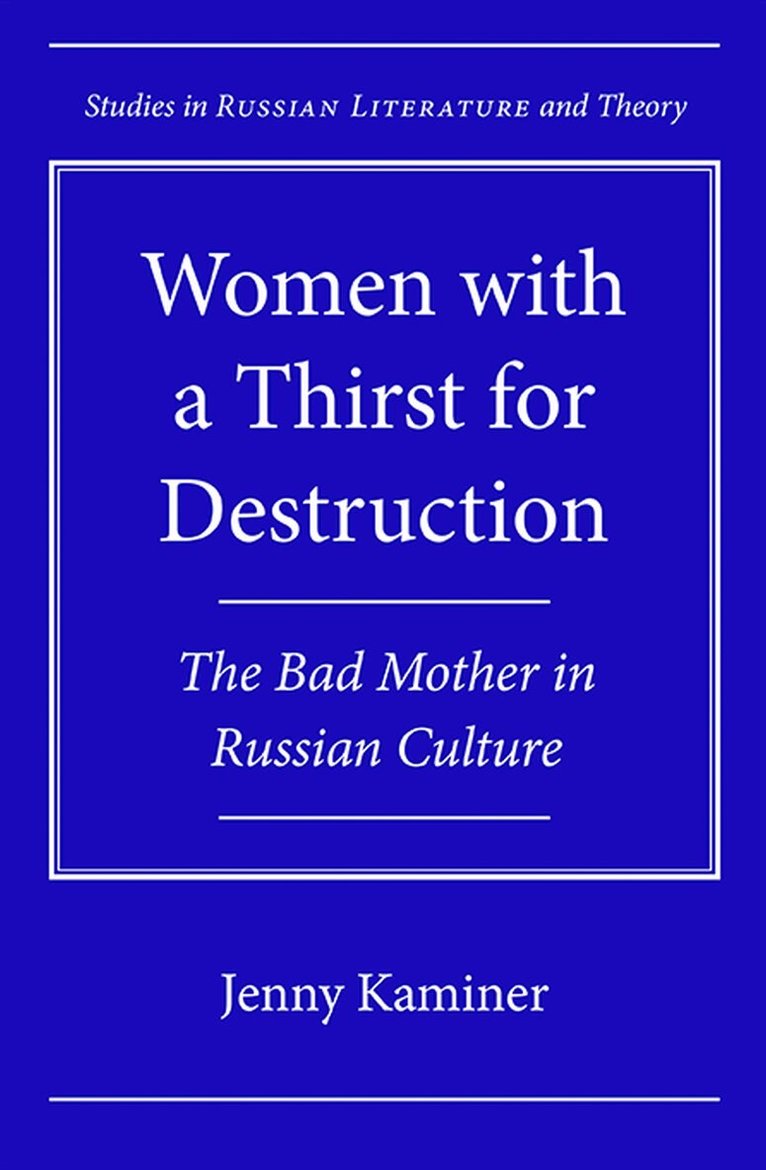
In Russian culture, the archetypal mother is noble and self-sacrificing. In Women with a Thirst for Destruction, however, Jenny Kaminer shows how this image is destabilized during periods of dramatic rupture in Russian society, examining in detail the aftermath of three key moments in the country’s history: the emancipation of the serfs in 1861, the Russian Revolution of 1917, and the fall of the Communist regime in 1991. She explores works both familiar and relatively unexamined: Leo Tolstoy’s Anna Karenina, Mikhail Saltykov-Shchedrin’s The Golovlev Family, Fyodor Gladkov’s Cement, and Liudmila Petrushevskaia’s The Time: Night, as well as a late Soviet film (Vyacheslav Krishtofovich’s Adam’s Rib, 1990) and media coverage of the Chechen conflict. Kaminer’s book speaks broadly to the mutability of seemingly established cultural norms in the face of political and social upheaval.
539 kr
Skickas inom 7-10 vardagar
Winner, 2014 AWSS Best Book in Slavic/East European/Eurasian Women's StudiesIn Russian culture, the archetypal mother is noble and self-sacrificing. In Women with a Thirst for Destruction, however, Jenny Kaminer shows how this image is destabilized during periods of dramatic rupture in Russian society, examining in detail the aftermath of three key moments in the country’s history: the emancipation of the serfs in 1861, the Russian Revolution of 1917, and the fall of the Communist regime in 1991. She explores works both familiar and relatively unexamined: Leo Tolstoy’s Anna Karenina, Mikhail Saltykov-Shchedrin’s The Golovlev Family, Fyodor Gladkov’s Cement, and Liudmila Petrushevskaia’s The Time: Night, as well as a late Soviet film (Vyacheslav Krishtofovich’s Adam’s Rib, 1990) and media coverage of the Chechen conflict. Kaminer’s book speaks broadly to the mutability of seemingly established cultural norms in the face of political and social upheaval.
562 kr
Skickas inom 10-15 vardagar
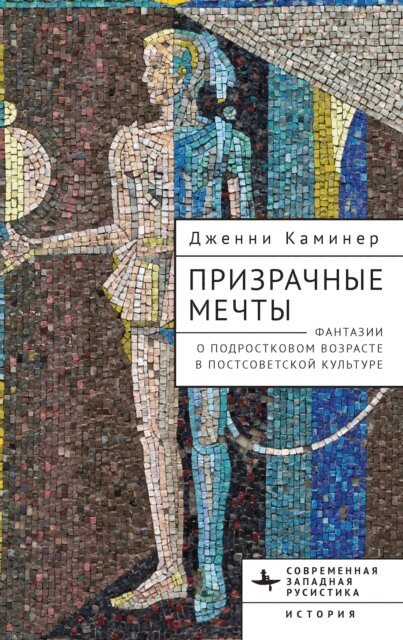
Haunted Dreams is the first comprehensive study in English devoted to cultural representations of adolescence in Russia since the end of the Soviet Union in 1991. Jenny Kaminer situates these cultural representations within the broader context of European and Anglo-American scholarship on adolescence and youth, and she explores how Russian writers, dramatists, and filmmakers have repeatedly turned to the adolescent protagonist in exploring the myriad fissures running through post-Soviet society. Through close analysis of prose, drama, television, and film, this book maps how the adolescent hero has become a locus for multiple anxieties throughout the tumultuous years since the end of the Soviet experiment. Kaminer also directly addresses some of the pivotal questions facing scholars of post-Soviet Russia: Have Soviet cultural models been transcended? Or do they continue to dominate? The figure of the adolescent, an especially potent and enduring source of cultural mythology throughout the Soviet years, provides provocative material for exploring these questions. In Haunted Dreams, Kaminer employs a historical approach to reveal how fantasies of adolescence have mutated and remained constant across the Soviet/post-Soviet divide, focusing on violence, temporality, and gender and the body. Some of the works discussed present the possibility of salvaging the model of the heroic adolescent for a new society. Others, by contrast, relegate this figure to the dustbin of history by evoking disgust or horror, or by unmasking the tragic consequences that ensue from the combination of adolescence, violence, and fantasy.
367 kr
Skickas inom 5-8 vardagar
ENG:Through close analysis of prose, drama, television, and film, this book maps how the adolescent hero has become a locus for multiple anxieties throughout the tumultuous years since the end of the Soviet experiment. Kaminer also directly addresses some of the pivotal questions facing scholars of post-Soviet Russia: Have Soviet cultural models been transcended? Or do they continue to dominate? The figure of the adolescent, an especially potent and enduring source of cultural mythology throughout the Soviet years, provides provocative material for exploring these questions.In Haunted Dreams, Kaminer employs a historical approach to reveal how fantasies of adolescence have mutated and remained constant across the Soviet/post-Soviet divide, focusing on violence, temporality, and gender and the body. Some of the works discussed present the possibility of salvaging the model of the heroic adolescent for a new society. Others, by contrast, relegate this figure to the dustbin of history by evoking disgust or horror, or by unmasking the tragic consequences that ensue from the combination of adolescence, violence, and fantasy.RUS:В своей книге Дженни Каминер показывает, почему именно подросток — неустойчивый, ранимый, склонный к бунту — стал ключевой фигурой в осмыслении тревожной, противоречивой реальности постсоветской эпохи. Сравнивая российский материал с западными подходами к изучению молодежи, автор вписывает свое исследование в широкий международный контекст.Каминер исследует тему на материале прозы, кино, театра и телевидения. В одних произведениях подросток предстает как носитель новых смыслов и перемен, в других — как символ распада и несбывшихся утопий. Анализируя эту противоречивую фигуру, автор задается важным вопросом: удалось ли преодолеть инерцию советского прошлого — или оно по-прежнему определяет культурные образы и способы мышления?