Jenny R. Labendz - Böcker
Visar alla böcker från författaren Jenny R. Labendz. Handla med fri frakt och snabb leverans.
2 produkter
2 produkter
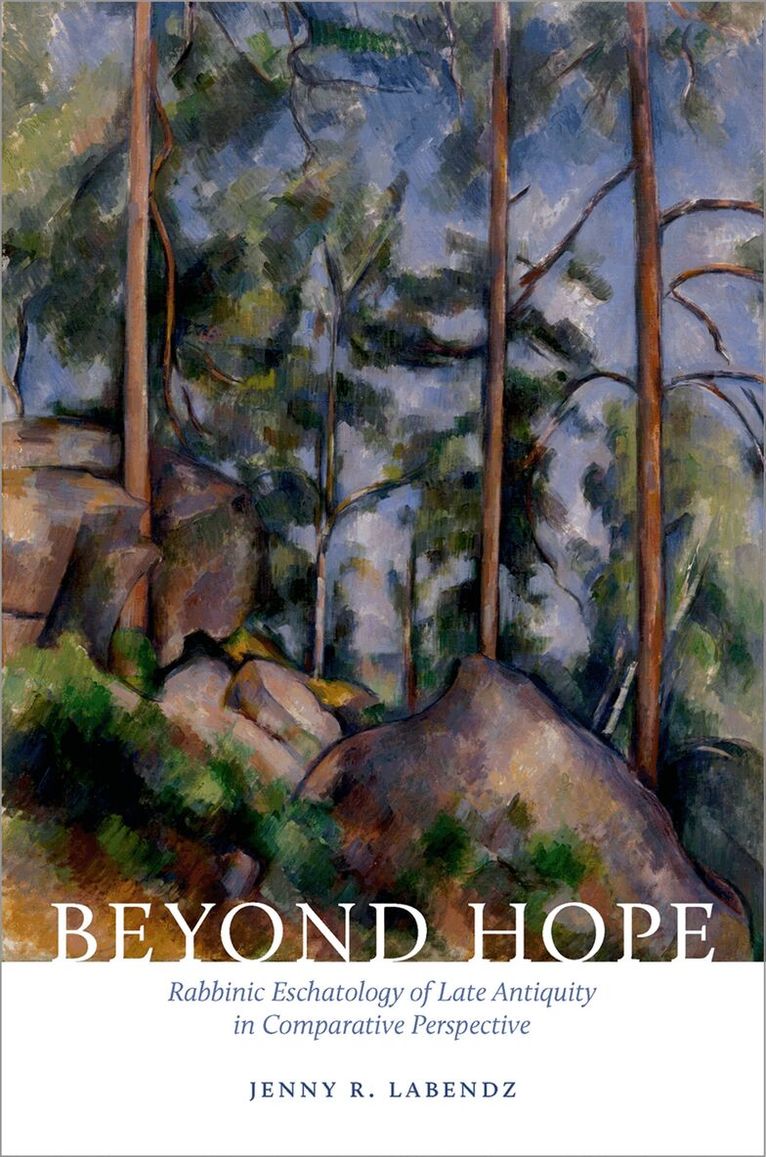
Beyond Hope
Rabbinic Eschatology of Late Antiquity in Comparative Perspective
Inbunden, Engelska, 2026
850 kr
Kommande
Beyond Hope is the first academic monograph devoted to rabbinic eschatology in Late Antiquity. It addresses distinct patterns within rabbinic eschatology that have been overlooked in scholarship and in Jewish thought. Contrary to what is usually expected of eschatology, this book demonstrates that the rabbis held a sustained eschatology of irresolution. While the rabbis occasionally waxed poetic along the lines of a perfected new world in the eschaton, a vast store of rabbinic texts depicts a deeply imperfect eschaton. This is the profound difference between rabbinic and early Christian eschatology.Despite its differences from the Christian doctrine of perfection, rabbinic eschatology aligns neatly with a different Christian concept, namely inaugurated eschatology. The eschaton is not only be hoped for in the future, but can be attained in the present. The best of all possible worlds has not yet been entirely actualized, but it has been inaugurated, in the rabbinic view by the exodus from slavery in Egypt, the revelation of the Torah at Sinai, and the construction of the Tabernacle in the wilderness. This is a paradigm shift for thinking about rabbinic eschatology, which rejects the dogmas and binaries that generations of scholars have taken for granted. In this exciting new book, Jenny R. Labendz explores the relationship between this world and the best possible world, the limits of that best possible world, and asks a crucially grounding question--what are we talking about when we're talking about the end of the world?
1 217 kr
Skickas inom 5-8 vardagar
Jenny R. Labendz investigates rabbinic self-perception and self-fashioning within the non-Jewish social and intellectual world of antique Palestine, showing how the rabbis drew on Hellenistic and Roman concepts for Torah study and answering a fundamental question: was rabbinic participation in Greco-Roman society a begrudging concession or a principled choice? As Labendz demonstrates, Torah study was an intellectual arena in which rabbis were extremely unlikely to look beyond their private domain. Yet despite the highly internal and self-referential nature of rabbinic Torah study, some rabbis believed that the involvement of non-Jews in rabbinic intellectual culture enriched the rabbis' own learning and teaching. Labendz identifies a sub-genre of rabbinic texts that she terms "Socratic Torah, " which portrays rabbis engaging in productive dialogue with non-Jews about biblical and rabbinic law and narrative. In these texts, rabbinic epistemology expands to include reliance not only upon Scripture and rabbinic tradition, but upon intuitions and life experiences common to Jews and non-Jews. While most scholarly readings of rabbinic dialogues with non-Jews have focused on the polemical, hostile, or anxiety-ridden nature of the interactions, Socratic Torah reveals that the presence of non-Jews was at times a welcome opportunity for the rabbis to think and speak differently about Torah. Labendz contextualizes her explication of Socratic Torah within rabbinic literature at large, including other passages and statements about non-Jews as well as general intellectual trends in rabbinic literature, and also within cognate literatures, including Plato's dialogues, Jewish texts of the Second Temple period, and the New Testament. While she focuses on non-Jews in the Palestinian Talmud and midrashim, the book includes chapters on the Babylonian Talmud and on the liminal figures of minim and Matrona. The passages that make up the sub-genre of Socratic Torah serve as the entryway for a much broader understanding of rabbinic literature and rabbinic intellectual culture.