Jerald T. Milanich - Böcker
Visar alla böcker från författaren Jerald T. Milanich. Handla med fri frakt och snabb leverans.
9 produkter
9 produkter
468 kr
Skickas inom 7-10 vardagar
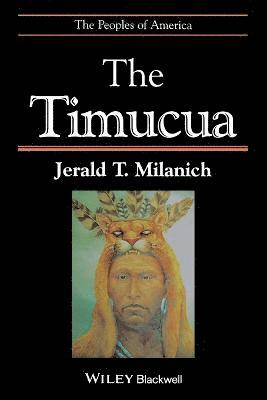
Based on the latest research findings, this is the moving story of the demise of one of the oldest of the American Indian peoples.
667 kr
Skickas inom 10-15 vardagar
Hernando de Soto, the Spanish conquistador, is legendary in the United States today: counties, cars, caverns, shopping malls and bridges all bear his name. This work explains the historical importance of his expedition, a journey that began at Tampa Bay in 1539 and ended in Arkansas in 1543. De Soto's explorations, the first European penetration of eastern North America, preceded a demographic disaster for the aboriginal peoples in the region. Old World diseases, perhaps introduced by the de Soto expedition and certainly by other Europeans in the 16th and 17th centuries, killed many thousands of Indians. By the middle of the 18th century only a few remained alive. The de Soto narratives provide the first European account of many of these Indian societies as they were at the time of European contact. This work interprets these and other 16th-century accounts in the light of new archaeological information, resulting in a more comprehensive view of the native peoples. Matching de Soto's camps to sites where artifacts from the de Soto era have been found, the authors reconstruct his route in Florida and at the same time clarify questions about the social geography and political relationships of the Florida Indians. They link names once known only from documents (for example, the Uzita, who occupied territory at the de Soto landing site, and the Aguacaleyquen of north peninsular Florida) to actual archaeological remains and sites.
323 kr
Skickas inom 10-15 vardagar
329 kr
Skickas inom 5-8 vardagar
242 kr
Skickas inom 5-8 vardagar
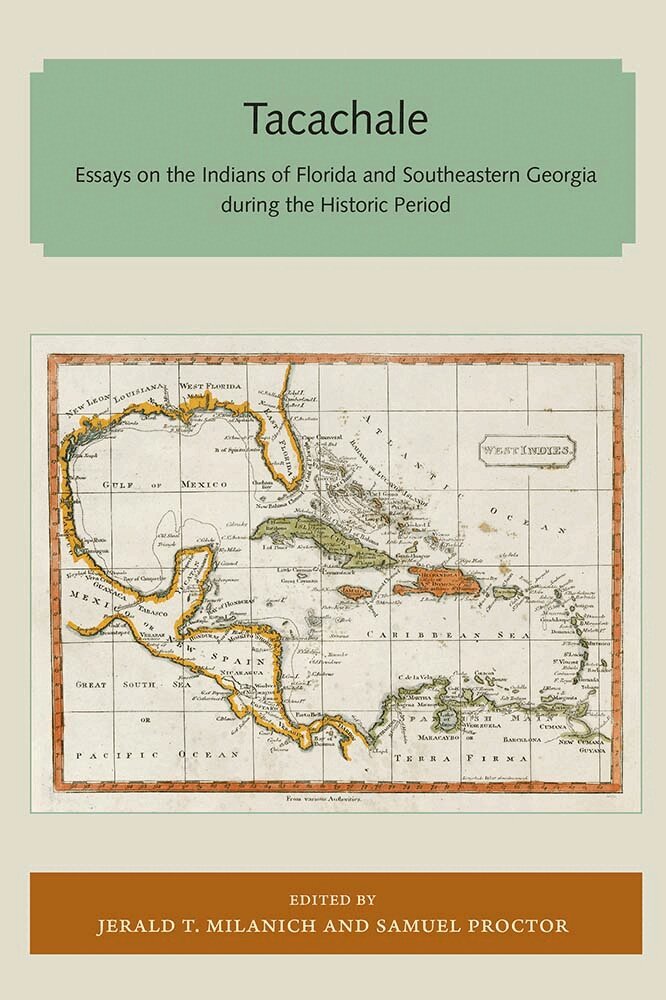
Tacachale
Essays on the Indians of Florida and Southeastern Georgia During the Historic Period
Häftad, Engelska, 2017
214 kr
Skickas inom 10-15 vardagar
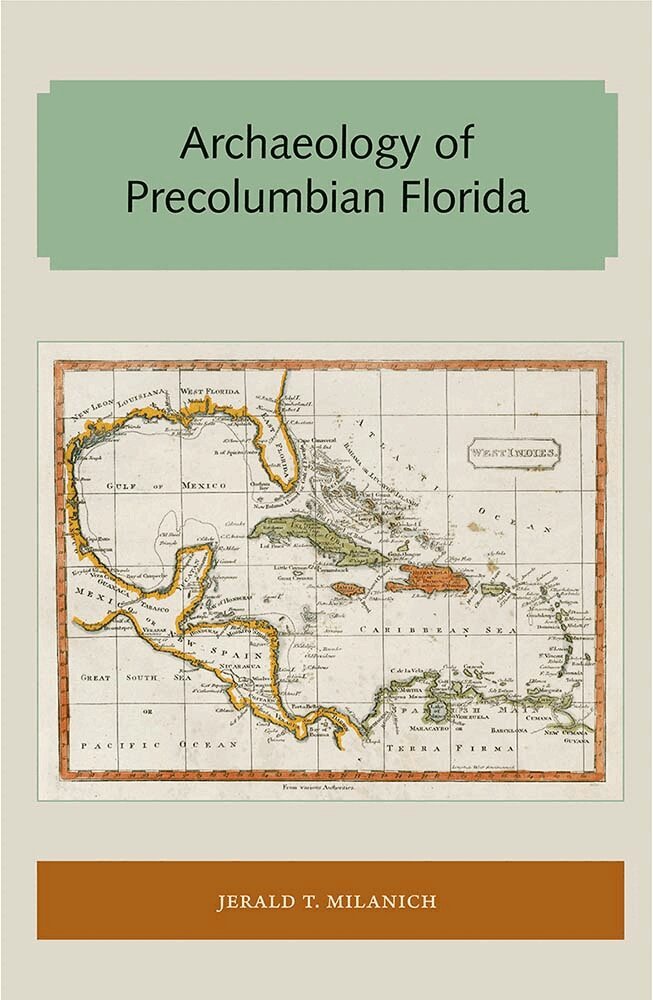
The books in the Florida and the Caribbean Open Books Series demonstrate the University Press of Florida’s long history of publishing Latin American and Caribbean studies titles that connect in and through Florida, highlighting the connections between the Sunshine State and its neighboring islands. Books in this series show how early explorers found and settled Florida and the Caribbean. They tell the tales of early pioneers, both foreign and domestic. They examine topics critical to the area such as travel, migration, economic opportunity, and tourism. They look at the growth of Florida and the Caribbean and the attendant pressures on the environment, culture, urban development, and the movement of peoples, both forced and voluntary. The Florida and the Caribbean Open Books Series gathers the rich data available in these architectural, archaeological, cultural, and historical works, as well as the travelogues and naturalists’ sketches of the area in prior to the twentieth century, making it accessible for scholars and the general public alike. The Florida and the Caribbean Open Books Series is made possible through a grant from the National Endowment for the Humanities and the Andrew W. Mellon Foundation, under the Humanities Open Books program.
268 kr
Skickas inom 10-15 vardagar
Florida's Indians tells the story of the native societies that have lived in Florida for twelve millennia, from the early hunters at the end of the Ice Age to the modern Seminole, Miccosukee, and Creeks.When the first Indians arrived in what is now Florida, they wrested their livelihood from a land far different from the modern countryside, one that was cooler, drier, and almost twice the size. Thousands of years later European explorers encountered literally hundreds of different Indian groups living in every part of the state. (Today every Florida county contains an Indian archaeological site.) The arrival of colonists brought the native peoples a new world and great changes took place--by the mid-1700s, through warfare, slave raids, and especially epidemics, the population was almost annihilated. Other Indians soon moved into the state, including Creeks from Georgia and Alabama, who were the ancestors of the modern Seminole and Miccosukee Indians. Written for a general audience, this book is lavishly illustrated with full-color drawings and photographs. It skillfully integrates the latest archaeological and historical information about the Sunshine State's Native Americans, connecting the past and present with modern place-names, and it gives a proud voice to Florida’s rich Indian heritage.
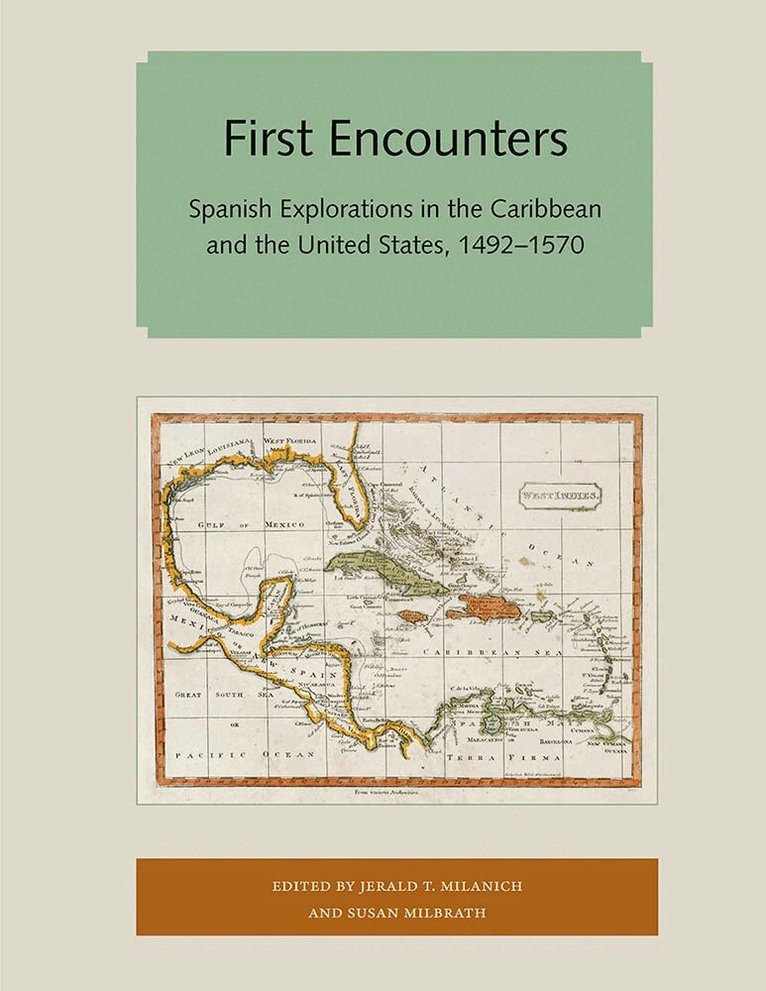
First Encounters
Spanish Explorations in the Caribbean and the United States, 1492-1570
Häftad, Engelska, 2018
282 kr
Skickas inom 10-15 vardagar
Drawing on the most recent historical and archaeological research, ""First Encounters"" describes the period of early Spanish contact with New World peoples. This series of essays reports original research mounted over the last ten years, a decade of remarkable breakthroughs in knowledge about significant events in the first decades after 1492. In non-technical language the authors invite us to play Watson to their Sherlockian investigations. We are made privy to the modus operandi of anthropologists, archaeologists, and historians as they assemble clues from historic documents, topographic features, and excavated artifacts to map out the neighbourhood boundaries of Puerto Rial, Hispaniola, abandoned in 1578, or to establish which sites in the South East United States can legitimately claim that "de Soto slept here". We learn how Columbus's ship ""Nina"" must have smelled on her 1498 voyage, and how the discovery of a pig mandible helped nail down the site of Anhaica, de Soto's 1539-1540 winter camp.
323 kr
Skickas inom 10-15 vardagar
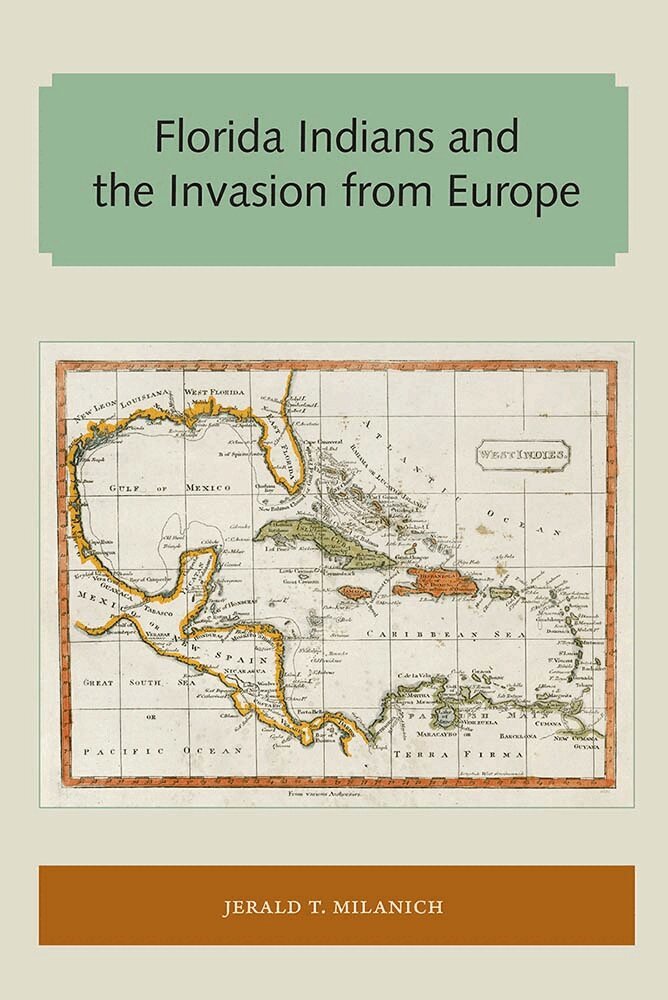
The books in the Florida and the Caribbean Open Books Series demonstrate the University Press of Florida’s long history of publishing Latin American and Caribbean studies titles that connect in and through Florida, highlighting the connections between the Sunshine State and its neighboring islands. Books in this series show how early explorers found and settled Florida and the Caribbean. They tell the tales of early pioneers, both foreign and domestic. They examine topics critical to the area such as travel, migration, economic opportunity, and tourism. They look at the growth of Florida and the Caribbean and the attendant pressures on the environment, culture, urban development, and the movement of peoples, both forced and voluntary. The Florida and the Caribbean Open Books Series gathers the rich data available in these architectural, archaeological, cultural, and historical works, as well as the travelogues and naturalists’ sketches of the area in prior to the twentieth century, making it accessible for scholars and the general public alike. The Florida and the Caribbean Open Books Series is made possible through a grant from the National Endowment for the Humanities and the Andrew W. Mellon Foundation, under the Humanities Open Books program.