Susan Milbrath - Böcker
Visar alla böcker från författaren Susan Milbrath. Handla med fri frakt och snabb leverans.
6 produkter
6 produkter
373 kr
Skickas inom 7-10 vardagar
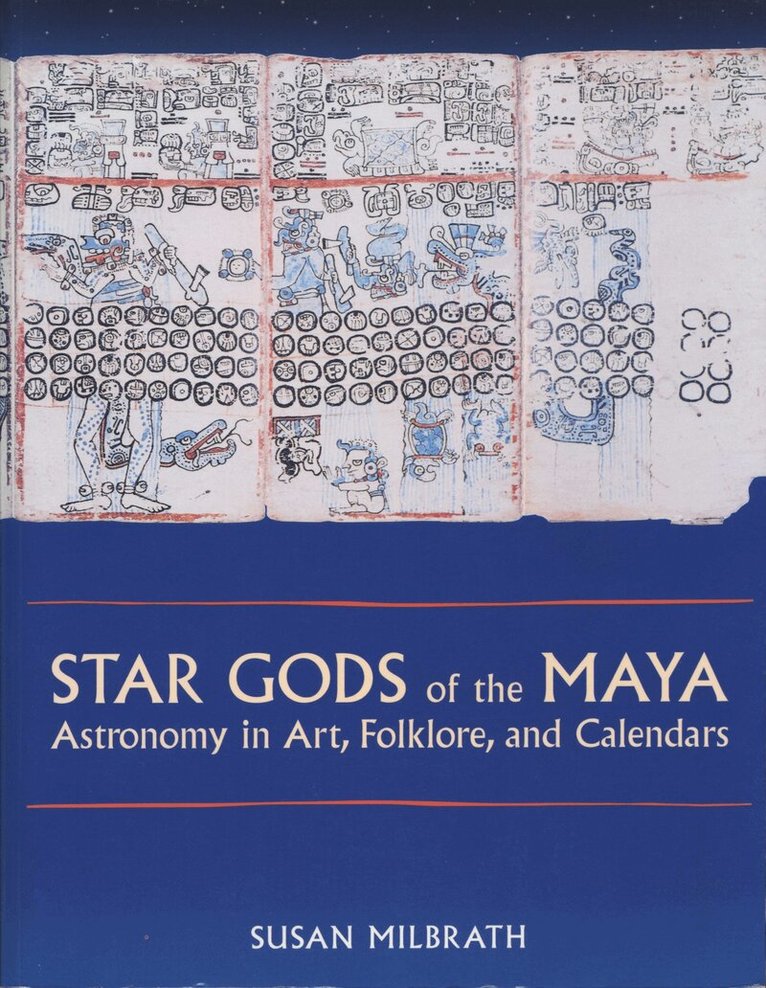
Observations of the sun, moon, planets, and stars played a central role in ancient Maya lifeways, as they do today among contemporary Maya who maintain the traditional ways. This pathfinding book reconstructs ancient Maya astronomy and cosmology through the astronomical information encoded in Precolumbian Maya art and confirmed by the current practices of living Maya peoples.Susan Milbrath opens the book with a discussion of modern Maya beliefs about astronomy, along with essential information on naked-eye observation. She devotes subsequent chapters to Precolumbian astronomical imagery, which she traces back through time, starting from the Colonial and Postclassic eras. She delves into many aspects of the Maya astronomical images, including the major astronomical gods and their associated glyphs, astronomical almanacs in the Maya codices [painted books], and changes in the imagery of the heavens over time. This investigation yields new data and a new synthesis of information about the specific astronomical events and cycles recorded in Maya art and architecture. Indeed, it constitutes the first major study of the relationship between art and astronomy in ancient Maya culture.
1 361 kr
Skickas inom 7-10 vardagar
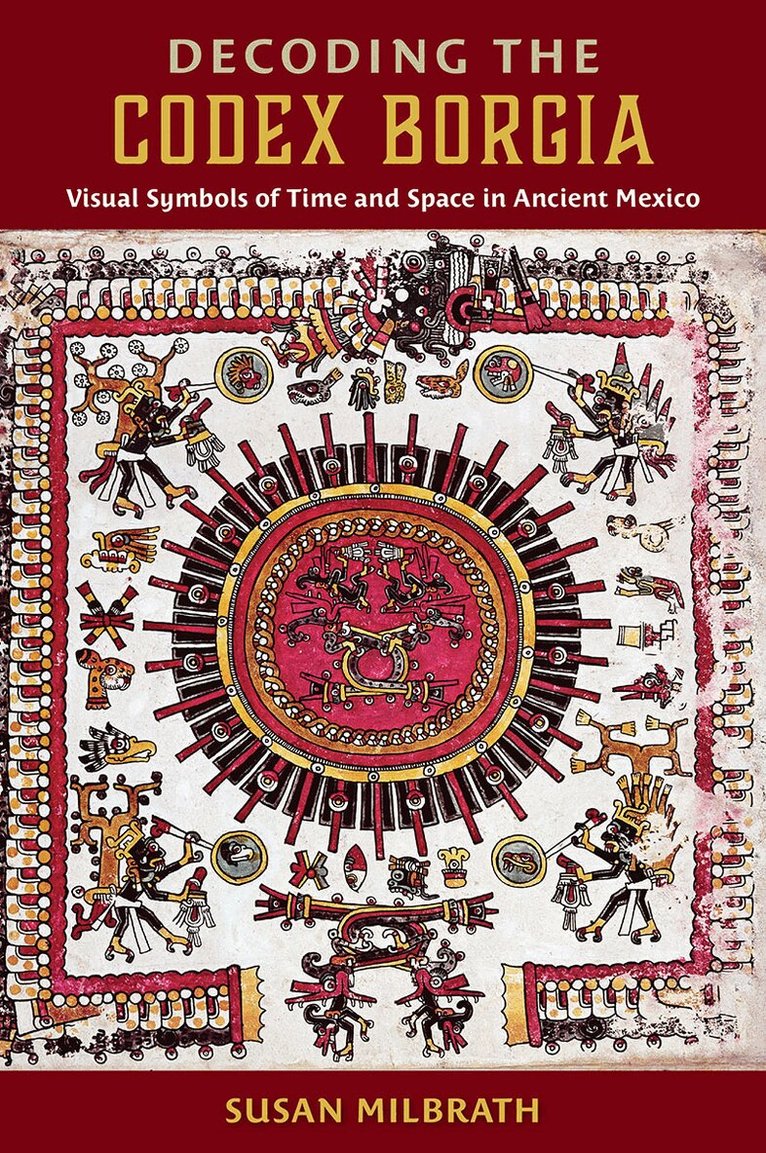
This book explores the rich symbolism of the Codex Borgia, a masterpiece of Pre-Columbian art dating to the fifteenth century, showing how the manuscript’s intricate and colorful imagery conveys complex ideas related to Mesoamerican myths and religion.
866 kr
Skickas inom 3-6 vardagar
Birds and Beasts of Ancient Mesoamerica
Animal Symbolism in the Postclassic Period
Inbunden, Engelska, 2023
1 391 kr
Tillfälligt slut
Birds and Beasts of Ancient Mesoamerica links Precolumbian animal imagery with scientific data related to animal morphology and behavior, providing in-depth studies of the symbolic importance of animals and birds in Postclassic period Mesoamerica. Representations of animal deities in Mesoamerica can be traced back at least to Middle Preclassic Olmec murals, stone carvings, and portable art such as lapidary work and ceramics. Throughout the history of Mesoamerica real animals were merged with fantastical creatures, creating zoological oddities not unlike medieval European bestiaries. According to Spanish chroniclers, the Aztec emperor was known to keep exotic animals in royal aviaries and zoos. The Postclassic period was characterized by an iconography that was shared from central Mexico to the Yucatan peninsula and south to Belize. In addition to highlighting the symbolic importance of nonhuman creatures in general, the volume focuses on the importance of the calendrical and astronomical symbolism associated with animals and birds. Inspired by and dedicated to the work of Mesoamerican scholar Cecelia Klein and featuring imagery from painted books, monumental sculpture, portable arts, and archaeological evidence from the field of zooarchaeology, Birds and Beasts of Ancient Mesoamerica highlights the significance of the animal world in Postclassic and early colonial Mesoamerica. It will be important to students and scholars studying Mesoamerican art history, archaeology, ethnohistory, and zoology.
Birds and Beasts of Ancient Mesoamerica
Animal Symbolism in the Postclassic Period
Häftad, Engelska, 2025
765 kr
Skickas inom 5-8 vardagar
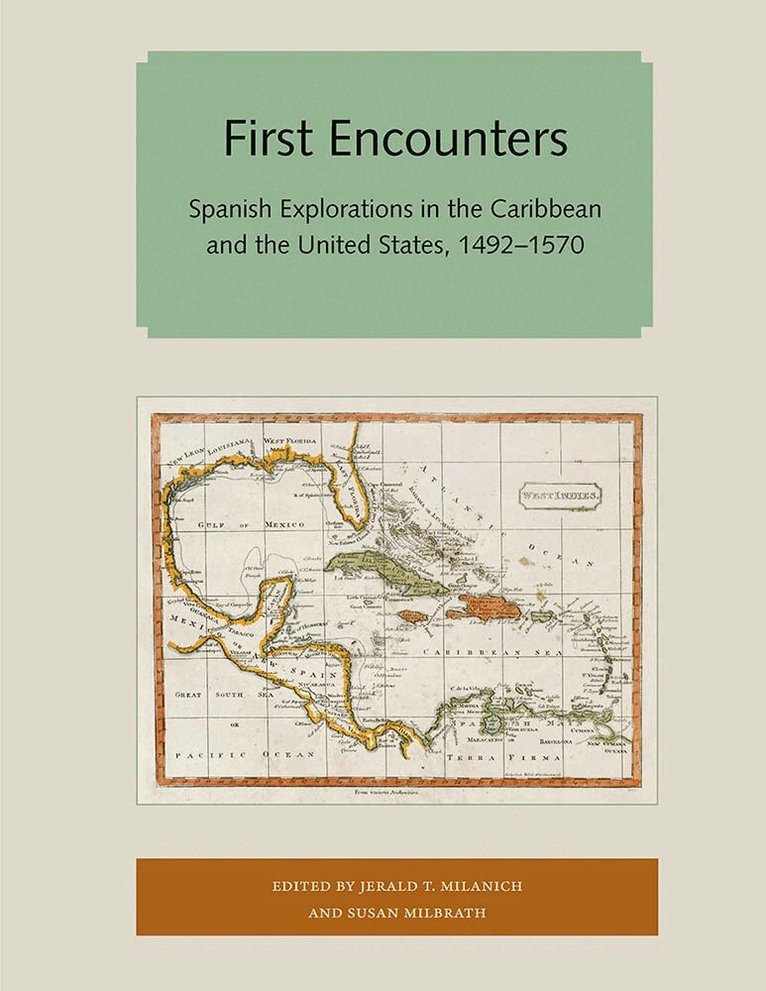
First Encounters
Spanish Explorations in the Caribbean and the United States, 1492-1570
Häftad, Engelska, 2018
282 kr
Skickas inom 10-15 vardagar
Drawing on the most recent historical and archaeological research, ""First Encounters"" describes the period of early Spanish contact with New World peoples. This series of essays reports original research mounted over the last ten years, a decade of remarkable breakthroughs in knowledge about significant events in the first decades after 1492. In non-technical language the authors invite us to play Watson to their Sherlockian investigations. We are made privy to the modus operandi of anthropologists, archaeologists, and historians as they assemble clues from historic documents, topographic features, and excavated artifacts to map out the neighbourhood boundaries of Puerto Rial, Hispaniola, abandoned in 1578, or to establish which sites in the South East United States can legitimately claim that "de Soto slept here". We learn how Columbus's ship ""Nina"" must have smelled on her 1498 voyage, and how the discovery of a pig mandible helped nail down the site of Anhaica, de Soto's 1539-1540 winter camp.