Anne S. Dowd – författare
Visar alla böcker från författaren Anne S. Dowd. Handla med fri frakt och snabb leverans.
5 produkter
5 produkter
1 392 kr
Skickas inom 10-15 vardagar
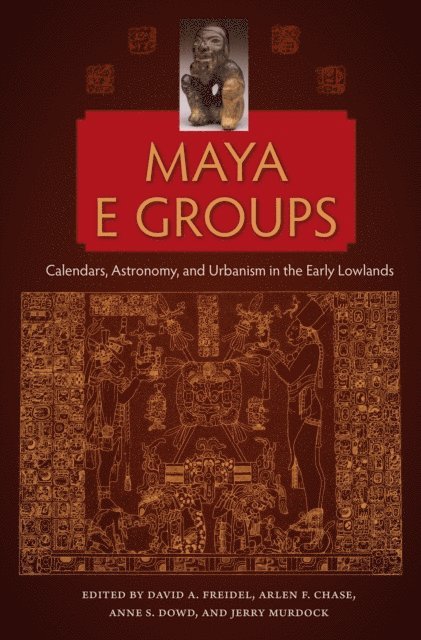
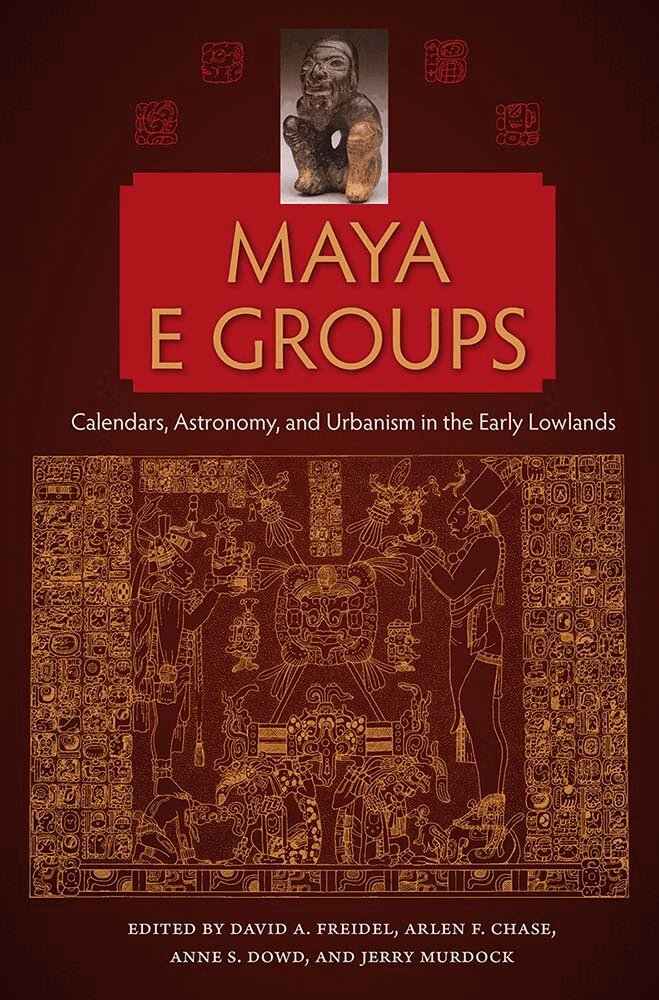
In ancient Maya cities, “E Groups” are sets of buildings aligned with the movements of the sun. This volume presents new archaeological data to reveal that E Groups were constructed earlier than previously thought—in fact, they are the earliest identifiable architectural plan at many Maya settlements. More than just astronomical observatories or calendars, E Groups were gathering places for emerging communities and centers of ritual: the very first civic-religious public architecture in the Maya lowlands. Investigating a wide variety of E Group sites in different contexts, this volume pieces together the development of social and political complexity in the ancient Maya civilization.A volume in the series Maya Studies, edited by Diane Z. Chase and Arlen F. Chase.
492 kr
Skickas inom 10-15 vardagar
As complex societies emerged in the Maya lowlands during the first millen¬nium BCE, so did stable communities focused around public squares and the worship of a divine ruler tied to a Maize God cult. "E Groups," central to many of these settle¬ments, are architectural complexes: typically, a long platform supporting three struc¬tures and facing a western pyramid across a formal plaza. Aligned with the movements of the sun, E Groups have long been interpreted as giant calendrical devices crucial to the rise of Maya civilization. This volume presents new archaeological data to reveal that E Groups were constructed earlier than previously thought. In fact, they are the earliest identifiable architectural plan at many Maya settlements. More than just astronomical observatories or calendars, E Groups were a key ele¬ment of community organization, urbanism, and identity in the heart of the Maya lowlands. They served as gathering places for emerging communities and centers of ritual; they were the very first civic-religious public architecture in the Maya lowlands. Investigating a wide variety of E Group sites—including some of the most famous like the Mundo Perdido in Tikal and the hitherto little known complex at Chan, as well as others in Ceibal, El Palmar, Cival, Calakmul, Caracol, Xunantunich, Yaxnohcah, Yaxuná, and San Bartolo—this volume pieces together the development of social and political complexity in ancient Maya civilization.
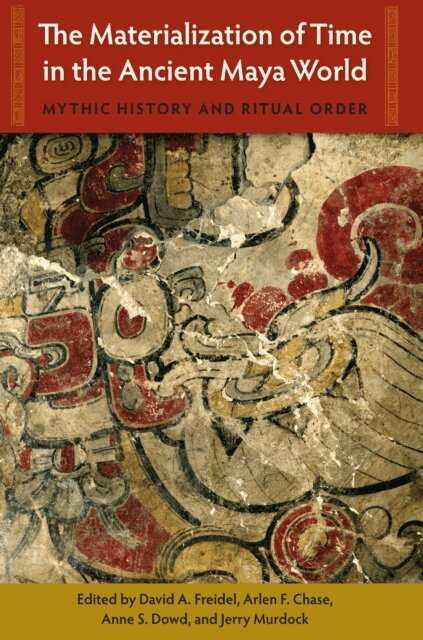
Materialization of Time in the Ancient Maya World
Mythic History and Ritual Order
Inbunden, Engelska, 2024
1 392 kr
Skickas inom 10-15 vardagar
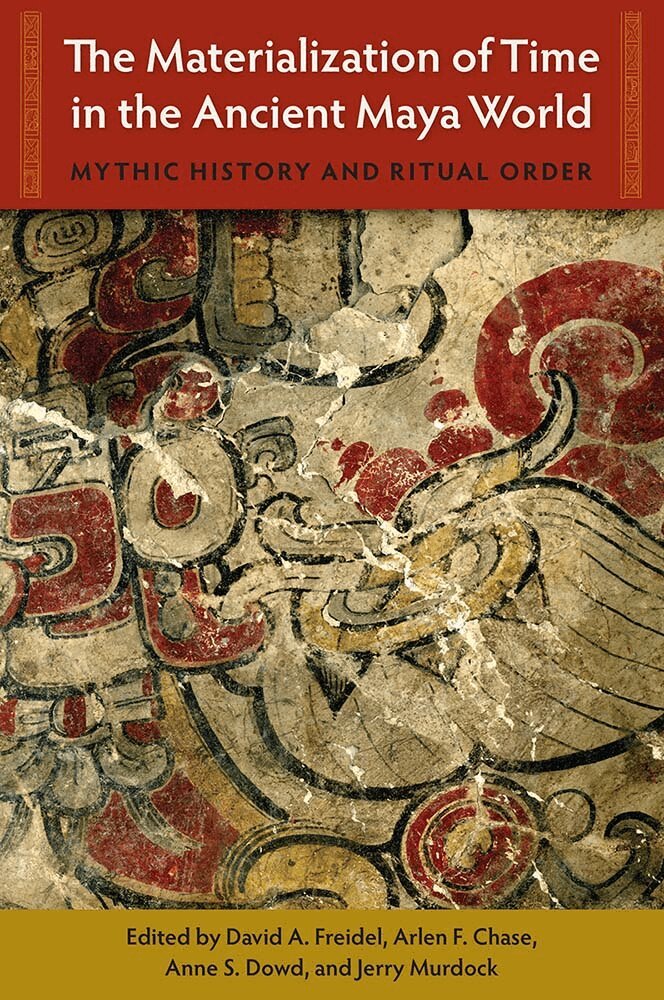
New understandings of how Maya people expressed timekeeping in daily lifeThis book discusses the range of ways the ancient Maya people made time tangible through their architecture, arts, writing, beliefs, and practices. These chapters show how the Maya incorporated cyclicality and expanded dimensionality into the built environment, embedding notions of time in shared political and economic institutions, religious and philosophical traditions, and mythology.Beginning several millennia ago, the Maya observed and calculated the solar year cycle and scheduled collective activities that integrated cities, towns, and villages over great distances. Their timekeeping approaches evolved from commemorative ceremonial architectural complexes starting around 1000 BCE to the formal public inscription of calendar jubilees on stone monuments, the use of calendar almanacs, written prophetic and historical accounts, and the customs of modern priest shamans. Contributors to this volume discuss everyday examples of how the Maya kept time through these practices, including divining with snail shells, laying out center designs with creation stories and star patterns, singing those stories while drinking from vases depicting mythic history, and embedding symbolic temporal deposits within their buildings and living areas. This comprehensive volume includes analyses of groundbreaking recent discoveries, such as the early center of Aguada Fénix and the connections it shows between Maya and Olmec timekeeping. By sharing how the Maya crafted a cosmological sense of time into their daily lives, The Materialization of Time in the Ancient Maya World addresses and rethinks the most famous intellectual feature of this civilization.A volume in the series Maya Studies, edited by Diane Z. Chase and Arlen F. Chase
866 kr
Skickas inom 3-6 vardagar
468 kr
Skickas inom 3-6 vardagar
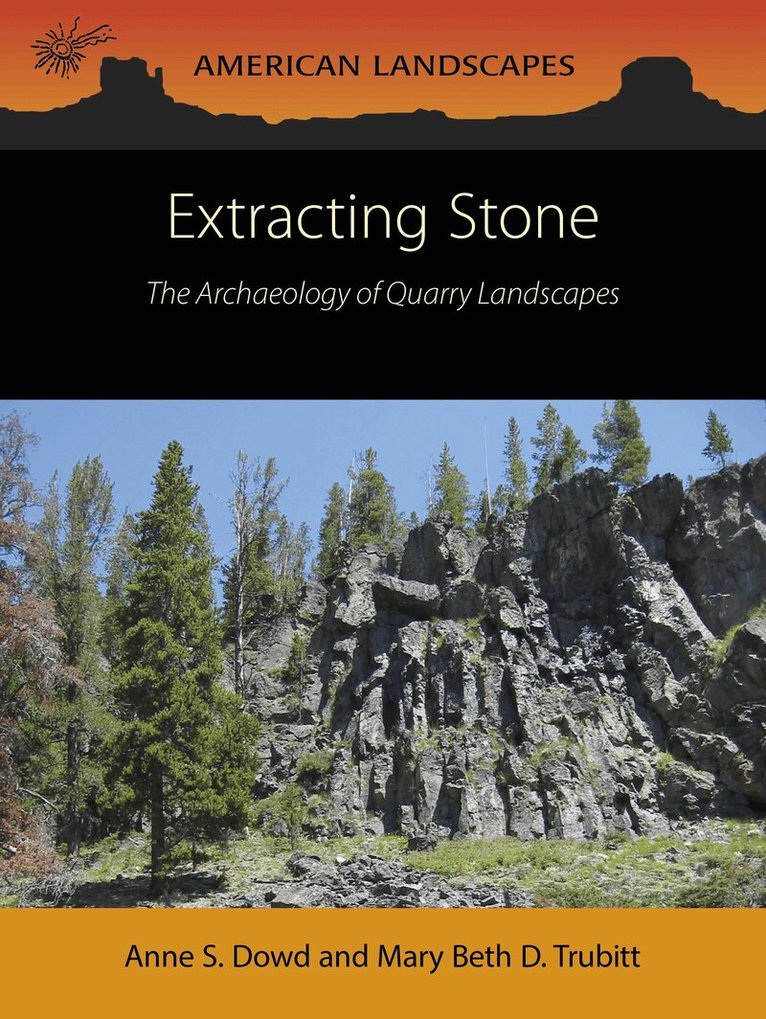
_Extracting Stone_ considers where chert or obsidian were mined and how North American stone quarry landscapes have been identified and studied from the time of pioneer William Henry Holmes (1846–1933) onward. Three especially significant extraction areas are examined in detail: Flint Mine Hill, New York, along the Hudson River; “Spanish Diggings”, Arkansas, in the Ouachita Mountains; and Obsidian Cliff, Wyoming, in the headwaters of the Yellowstone River. The authors compare and contrast extraction scales with artifact distribution or use areas established through precise material characterization techniques to discuss trade and exchange, the emergence of inequalities, resource restriction orcontrol, and the technological systems of which these land- or quarry-scapes formed a part.The chronological periods covered by quarrying activities show that most intensive use took place in the Archaic and Woodland periods, roughly 4000–1000 years ago when denser populations existed, but use began as early as the Paleoindian Period, about 13,000–9000 years ago and, in some cases, continues into the modern day. Recent research into early human population of the continent at sites such as White Sands in Nevada, where human footprints are found in association with those of extinct fauna, may push back these dates another 10,000 years, to 23,000 years ago.Archaeologists are now employing a landscape approach to quarry systems, using new technologies such as Geographic Information System (GIS) computer mapping and Light and RADAR (LiDAR) aerial imaging. The authors demonstrate how sites functioned in a broad synchronic landscape context, which site locations or raw material types were preferred and why, what cultures were responsible for innovative or intensive quarry resource extraction, and how this land use changed over time.An Appendix lists quarry sites that the general public can view.