Arlen F. Chase - Böcker
Visar alla böcker från författaren Arlen F. Chase. Handla med fri frakt och snabb leverans.
9 produkter
9 produkter
323 kr
Skickas inom 10-15 vardagar
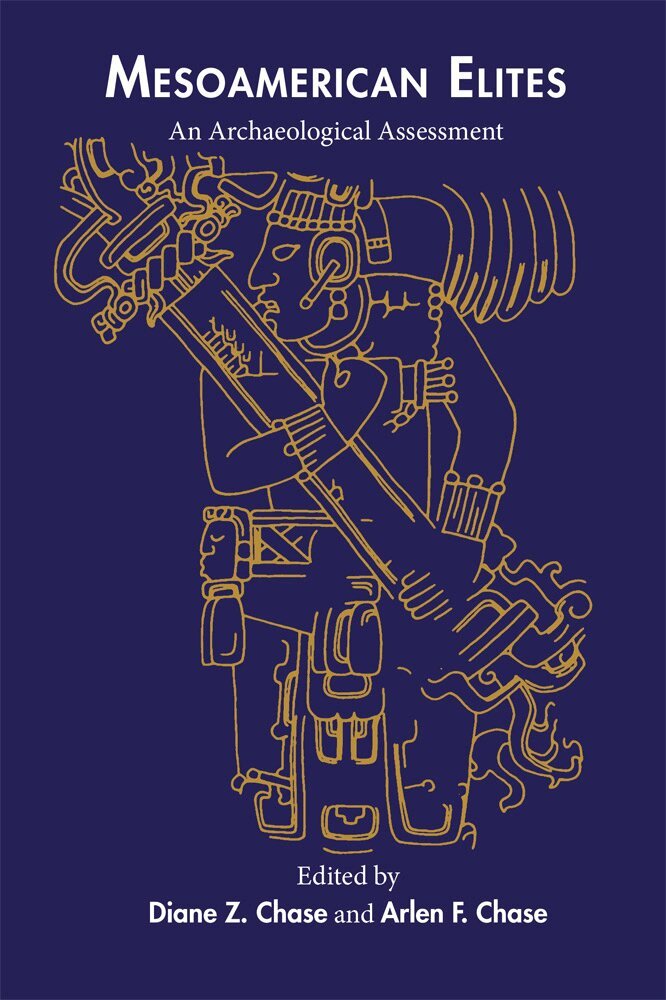
In Mesoamerican Elites, Diane Z. Chase and Arlen F. Chase present a wide variety of essays, all of which evaluate current archaeological knowledge of the privileged ruling classes, or elites, in Mesoamerica. Some experts argue that Mesoamerican societies consisted only of elites and peasants, while others argue that considerable intermediate social levels also existed. In light of such diverse opinions, this volume addresses problems in the interpretation of archaeological evidence regarding ancient Mesoamerican social structure.
1 381 kr
Skickas inom 10-15 vardagar
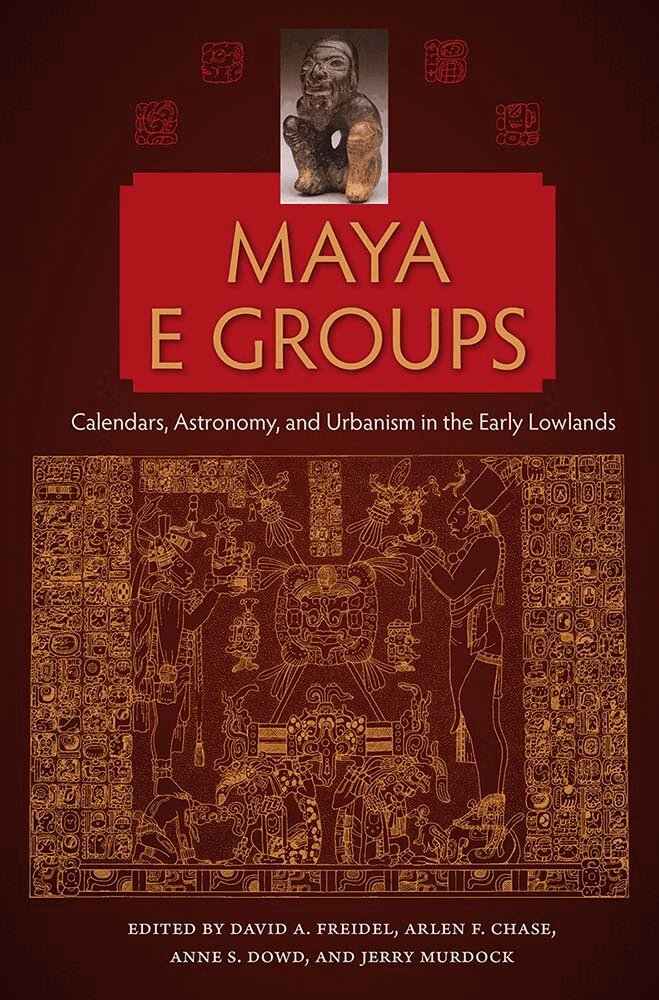
In ancient Maya cities, “E Groups” are sets of buildings aligned with the movements of the sun. This volume presents new archaeological data to reveal that E Groups were constructed earlier than previously thought—in fact, they are the earliest identifiable architectural plan at many Maya settlements. More than just astronomical observatories or calendars, E Groups were gathering places for emerging communities and centers of ritual: the very first civic-religious public architecture in the Maya lowlands. Investigating a wide variety of E Group sites in different contexts, this volume pieces together the development of social and political complexity in the ancient Maya civilization.A volume in the series Maya Studies, edited by Diane Z. Chase and Arlen F. Chase.
488 kr
Skickas inom 10-15 vardagar
As complex societies emerged in the Maya lowlands during the first millen¬nium BCE, so did stable communities focused around public squares and the worship of a divine ruler tied to a Maize God cult. "E Groups," central to many of these settle¬ments, are architectural complexes: typically, a long platform supporting three struc¬tures and facing a western pyramid across a formal plaza. Aligned with the movements of the sun, E Groups have long been interpreted as giant calendrical devices crucial to the rise of Maya civilization. This volume presents new archaeological data to reveal that E Groups were constructed earlier than previously thought. In fact, they are the earliest identifiable architectural plan at many Maya settlements. More than just astronomical observatories or calendars, E Groups were a key ele¬ment of community organization, urbanism, and identity in the heart of the Maya lowlands. They served as gathering places for emerging communities and centers of ritual; they were the very first civic-religious public architecture in the Maya lowlands. Investigating a wide variety of E Group sites—including some of the most famous like the Mundo Perdido in Tikal and the hitherto little known complex at Chan, as well as others in Ceibal, El Palmar, Cival, Calakmul, Caracol, Xunantunich, Yaxnohcah, Yaxuná, and San Bartolo—this volume pieces together the development of social and political complexity in ancient Maya civilization.
996 kr
Skickas inom 10-15 vardagar
Examining changes to the institution of divine kingship from 750 to 950 CE in the Maya lowland cities, Maya Kingship presents a new way of studying the collapse of that civilization and the transformation of political systems between the Terminal Classic and Postclassic Periods.Leading experts in Maya studies offer insights into the breakdown of kingship regimes, as well as the gradual urban collapse and settlement relocations that followed. The volume illuminates historical factors and actions that led to the end of the institution across kingdoms and the mechanisms that enabled societies to eventually recover with new political structures. Contributors provide archaeological, iconographic, epigraphic, and ethnohistorical perspectives, exploring datasets in the spheres of warfare, social dynamics, economics, and architecture.Unfolding with precision the chains of processes and events that occurred during the ninth and tenth centuries in the southern lowlands, and slightly later in the north, this volume displays an original and ambitious historical approach central to understanding one of the most radical political shifts to occur in the pre-Columbian Americas.
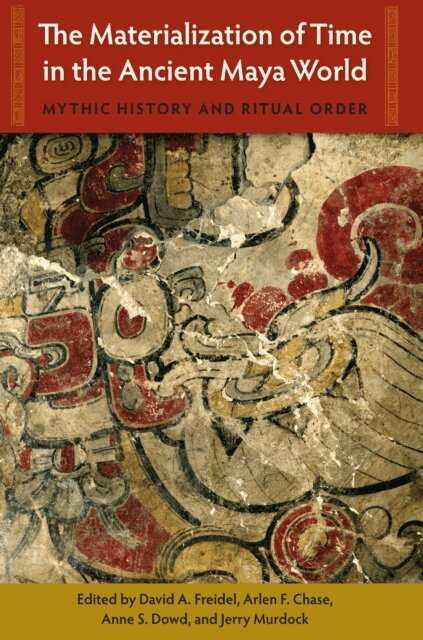
Materialization of Time in the Ancient Maya World
Mythic History and Ritual Order
Inbunden, Engelska, 2024
1 381 kr
Skickas inom 10-15 vardagar
New understandings of how Maya people expressed timekeeping in daily lifeThis book discusses the range of ways the ancient Maya people made time tangible through their architecture, arts, writing, beliefs, and practices. These chapters show how the Maya incorporated cyclicality and expanded dimensionality into the built environment, embedding notions of time in shared political and economic institutions, religious and philosophical traditions, and mythology.Beginning several millennia ago, the Maya observed and calculated the solar year cycle and scheduled collective activities that integrated cities, towns, and villages over great distances. Their timekeeping approaches evolved from commemorative ceremonial architectural complexes starting around 1000 BCE to the formal public inscription of calendar jubilees on stone monuments, the use of calendar almanacs, written prophetic and historical accounts, and the customs of modern priest shamans. Contributors to this volume discuss everyday examples of how the Maya kept time through these practices, including divining with snail shells, laying out center designs with creation stories and star patterns, singing those stories while drinking from vases depicting mythic history, and embedding symbolic temporal deposits within their buildings and living areas. This comprehensive volume includes analyses of groundbreaking recent discoveries, such as the early center of Aguada Fénix and the connections it shows between Maya and Olmec timekeeping. By sharing how the Maya crafted a cosmological sense of time into their daily lives, The Materialization of Time in the Ancient Maya World addresses and rethinks the most famous intellectual feature of this civilization.A volume in the series Maya Studies, edited by Diane Z. Chase and Arlen F. Chase
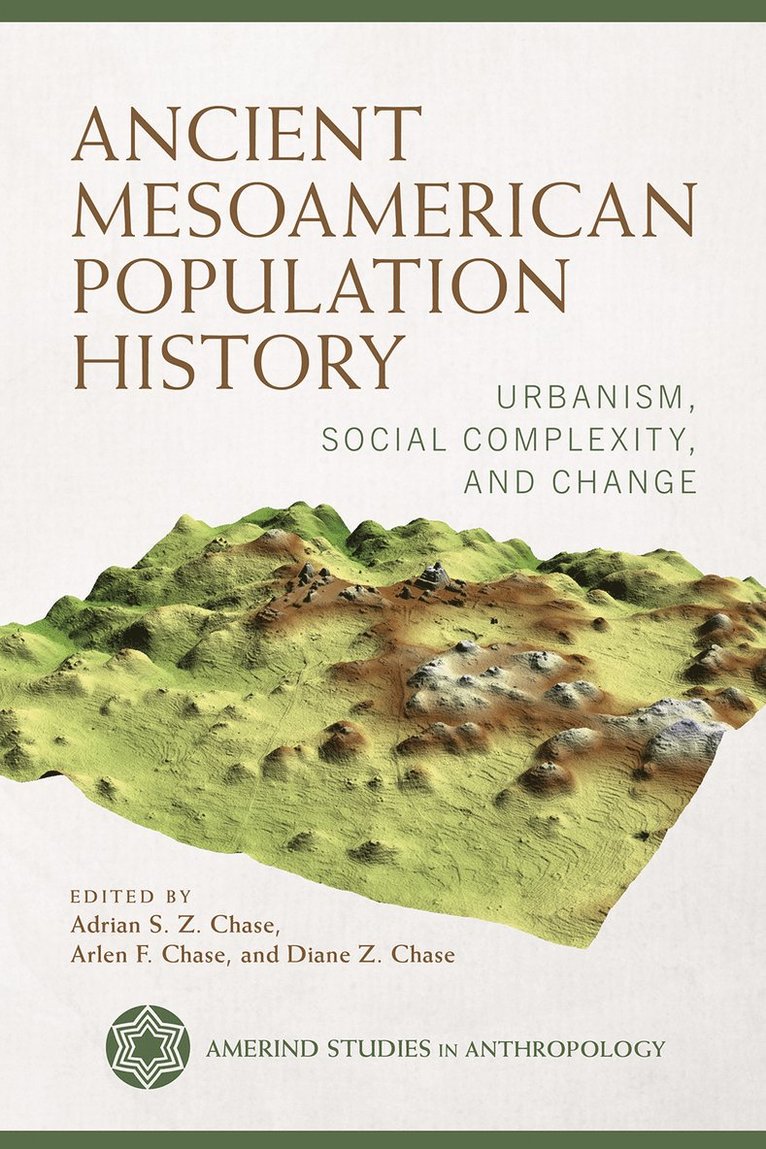
Ancient Mesoamerican Population History
Urbanism, Social Complexity, and Change
Inbunden, Engelska, 2024
874 kr
Skickas inom 7-10 vardagar
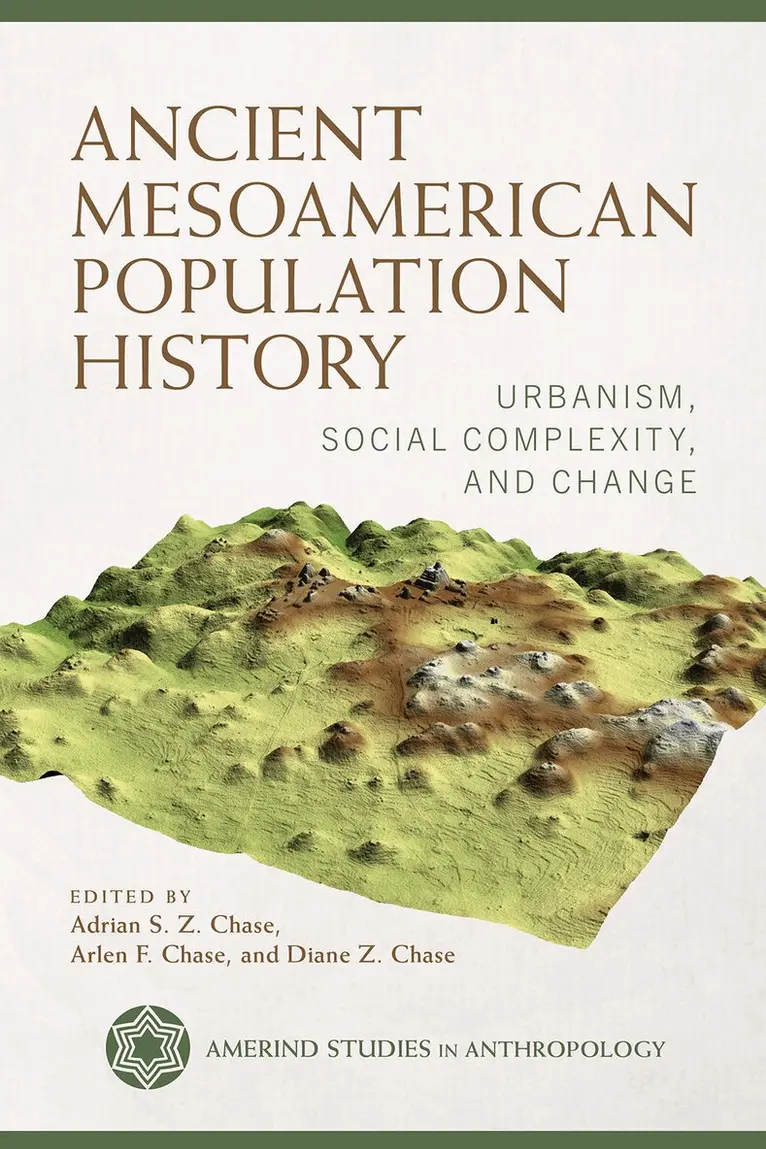
Establishing ancient population numbers and determining how they were distributed across a landscape over time constitute two of the most pressing problems in archaeology. Accurate population data is crucial for modeling, interpreting, and understanding the past. Now, advances in both archaeology and technology have changed the way that such approximations can be achieved.Including research from both highland central Mexico and the tropical lowlands of the Maya and Olmec areas, this book reexamines the demography in ancient Mesoamerica. Contributors present methods for determining population estimates, field methods for settlement pattern studies to obtain demographic data, and new technologies such as LiDAR (light detecting and ranging) that have expanded views of the ground in forested areas. Contributions to this book provide a view of ancient landscape use and modification that was not possible in the twentieth century. This important new work provides new understandings of Mesoamerican urbanism, development, and changes over time. ContributorsTraci ArdrenLuke Auld-ThomasM. Charlotte ArnauldBarbara ArroyoMarcello CanutoAdrian S. Z. ChaseArlen F. ChaseDiane Z. ChaseElyse D. Z. ChaseJavier EstradaGary M. FeinmanL. J. GorenfloJulien HiquetScott R. HutsonGerardo Jimenez DelgadoEva LemonnierRodrigo LiendoJosÉ LoboJavier Lopez MejiaMichael L. LoughlinDeborah NicholsChristopher A. PoolIan G. RobertsonJeremy A. SabloffTravis W. Stanton
Ancient Mesoamerican Population History
Urbanism, Social Complexity, and Change
Häftad, Engelska, 2026
727 kr
Kommande
Establishing ancient population numbers and determining how they were distributed across a landscape over time constitute two of the most pressing problems in archaeology. Accurate population data is crucial for modeling, interpreting, and understanding the past. Now, advances in both archaeology and technology have changed the way that such approximations can be achieved. Including research from both highland central Mexico and the tropical lowlands of the Maya and Olmec areas, this book reexamines the demography in ancient Mesoamerica. Contributors present methods for determining population estimates, field methods for settlement pattern studies to obtain demographic data, and new technologies such as LiDAR (light detecting and ranging) that have expanded views of the ground in forested areas. Contributions to this book provide a view of ancient landscape use and modification that was not possible in the twentieth century. This important new work provides new understandings of Mesoamerican urbanism, development, and changes over time.ContributorsTraci ArdrenM. Charlotte ArnauldBárbara ArroyoLuke Auld-ThomasMarcello A. CanutoAdrian S. Z. ChaseArlen F. ChaseDiane Z. ChaseElyse D. Z. ChaseJavier EstradaGary M. FeinmanL. J. GorenfloJulien HiquetScott R. HutsonGerardo Jiménez DelgadoEva LemonnierRodrigo Liendo StuardoJosé LoboJavier López MejíaMichael L. LoughlinDeborah L. NicholsChristopher A. PoolIan G. RobertsonJeremy A. SabloffTravis W. Stanton
Resilience and Vulnerability of Ancient Landscapes
Transforming Maya Archaeology through IHOPE
Häftad, Engelska, 2014
453 kr
Skickas inom 11-20 vardagar
This volume represents the concerted efforts of a group of Maya archaeologists to employ a different approach to their archaeological data that is consistent with an effort called IHOPE: Integrated History and Future of People on Earth. IHOPE is a global network of scientists and researchers that seeks to use a wide range of data to examine how changes in the Earth's systems of the past have been correlated with changes in the coupled human-biophysical environment (Costanza et al. 2007). “The specific objectives for IHOPE are to identify slow and rapidly moving features of complex social-ecological systems, on local to continental spatial scales, which induce resilience, stress, or collapse in linked systems of humans and nature. These objectives will be reached by exploring innovative ways of conducting inter and trans-disciplinary science, including theory, case studies, and integrated modeling” (Costanza et al. 2012:1). The integration of these data, a large portion of which are derived from archaeology, is seen as an important contribution to the accurate and applicable information base for addressing both short- and long-term planning issues facing modern populations.
378 kr
Skickas inom 10-15 vardagar
This collection represents a major step forward in understanding the era from the end of Classic Maya civilization to the Spanish conquest.