Jeremy Hayhoe - Böcker
Visar alla böcker från författaren Jeremy Hayhoe. Handla med fri frakt och snabb leverans.
3 produkter
3 produkter
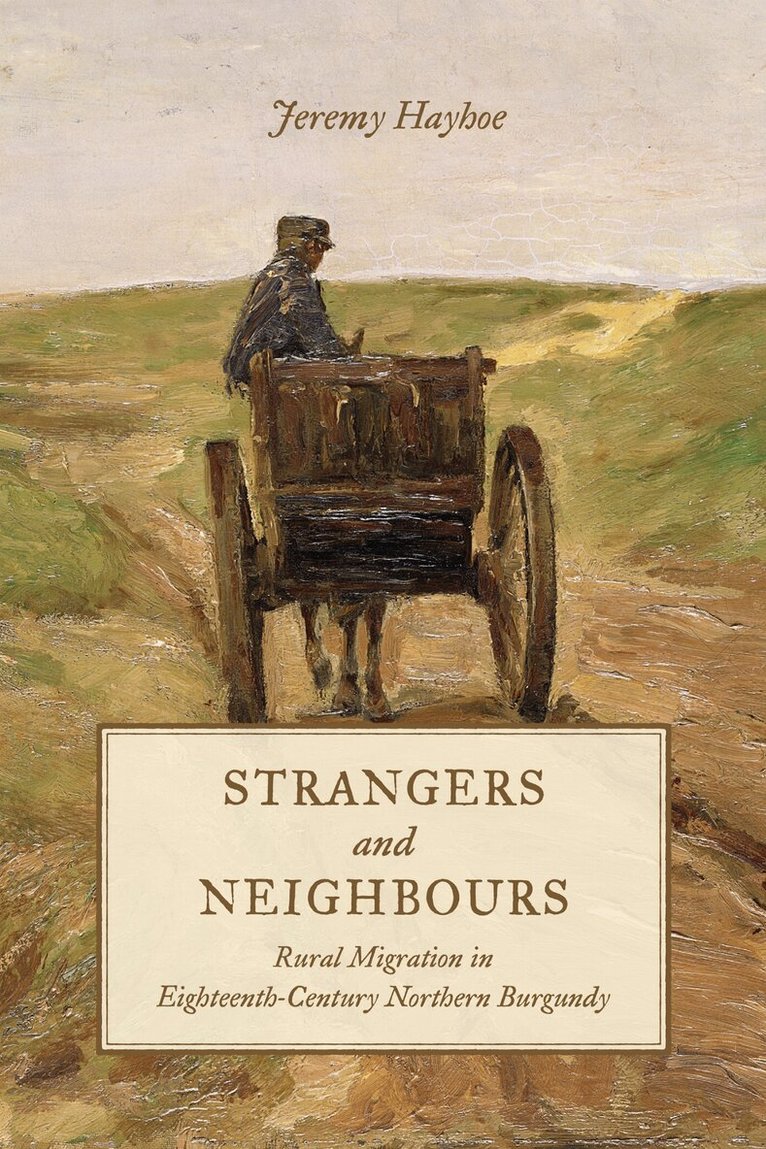
Strangers and Neighbours
Rural Migration in Eighteenth-Century Northern Burgundy
Inbunden, Engelska, 2016
613 kr
Skickas inom 7-10 vardagar
Though historians have come to acknowledge the mobility of rural populations in early modern Europe, few books demonstrate the intensity and importance of short-distance migrations as definitively as Strangers and Neighbours. Marshalling an incredible range of evidence that includes judicial records, tax records, parish registers, and the census of 1796, Jeremy Hayhoe reconstructs the migration profiles of more than 70,000 individuals from eighteenth-century northern Burgundy.In this book, Hayhoe paints a picture of a surprisingly mobile and dynamic rural population. More than three quarters of villagers would move at least once in their lifetime; most of those who moved would do so more than once, in many cases staying only briefly in each community. Combining statistical analysis with an extensive discussion of witness depositions, he brings the experiences and motivations of these many migrants to life, creating a virtuoso reconceptualization of the rural demography of the ancien rÉgime.
Del 10 - Changing Perspectives on Early Modern Europe
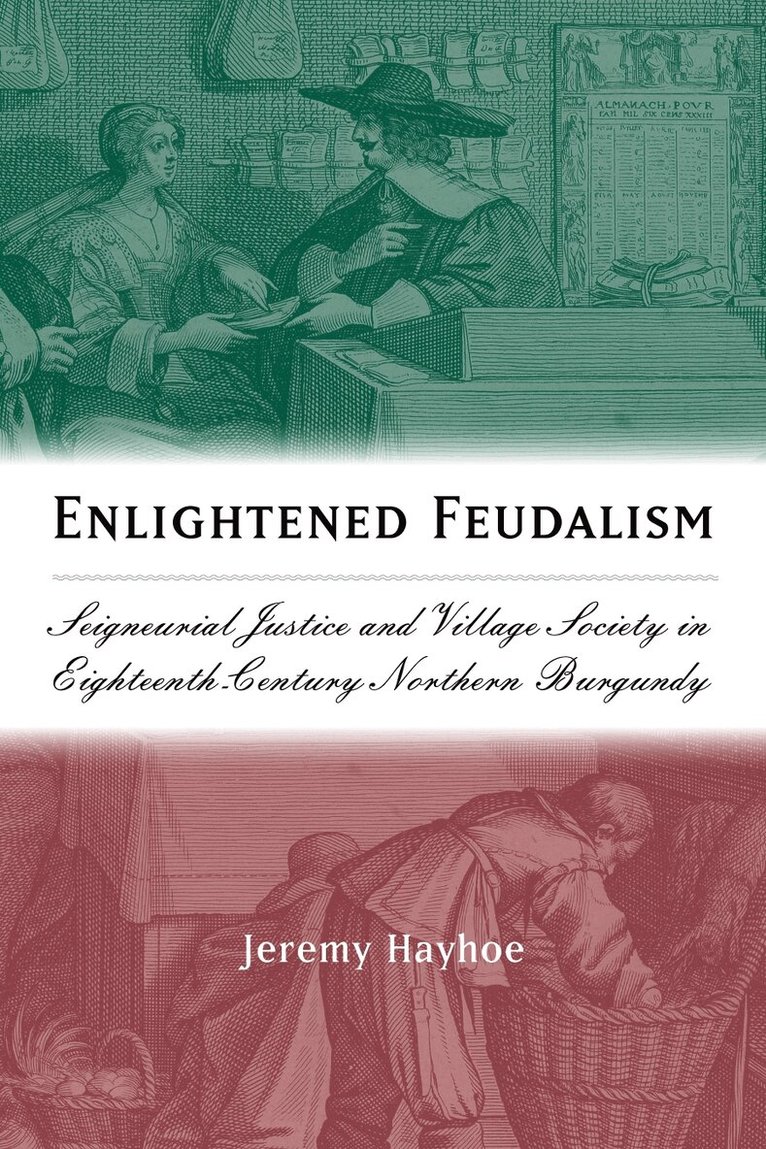
Enlightened Feudalism
Seigneurial Justice and Village Society in Eighteenth-Century Northern Burgundy
Inbunden, Engelska, 2008
1 205 kr
Skickas inom 10-15 vardagar
A reassessment of seigneurial justice that presents a new vision of village society in eighteenth-century France.Thousands of seigneurial courts covered the French countryside in the early modern era. By the eighteenth century these courts were subject to mounting criticism, as Enlightenment concerns about rationality and standardization combined with older absolutist worries that lords' ownership of justice weakened the king's authority. Although the courts were abolished in 1789, this criticism persisted, with historians traditionally portraying them as marginal and abusive relics of a bygone feudal age.In Enlightened Feudalism, Jeremy Hayhoe demonstrates that these local institutions actually functioned with a degree of efficiency, professionalism, and attention to peasant concerns that few historians have appreciated. Set in Northern Burgundy, this study reveals how provincial administrative elites quietly encouraged the use of simpler procedure for minor disputes, thus bringing seigneurial courts closer to village life. But these reforms paradoxically made the newly invigorated courts a key instrument of the late eighteenth-century intensification of the seigneurie. Peasant ambivalence toward seigneurial courts reflected thisduality, as the cahiers de doléances both praised the institution for its role in community affairs, and vigorously criticized it for bolstering the seigneurial system.By situating the local court within a wide rangeof para-judicial institutions and behaviors, Hayhoe presents a new vision of village society, one in which communal bonds were too weak to enforce behavioral norms. Village communities had substantial authority over their own affairs, but required the frequent and active collaboration of the court to enforce the rules that they put into place.Jeremy Hayhoe is Assistant Professor at the Université de Moncton, New Brunswick, Canada.
Del 10 - Boydell Studies in Rural History
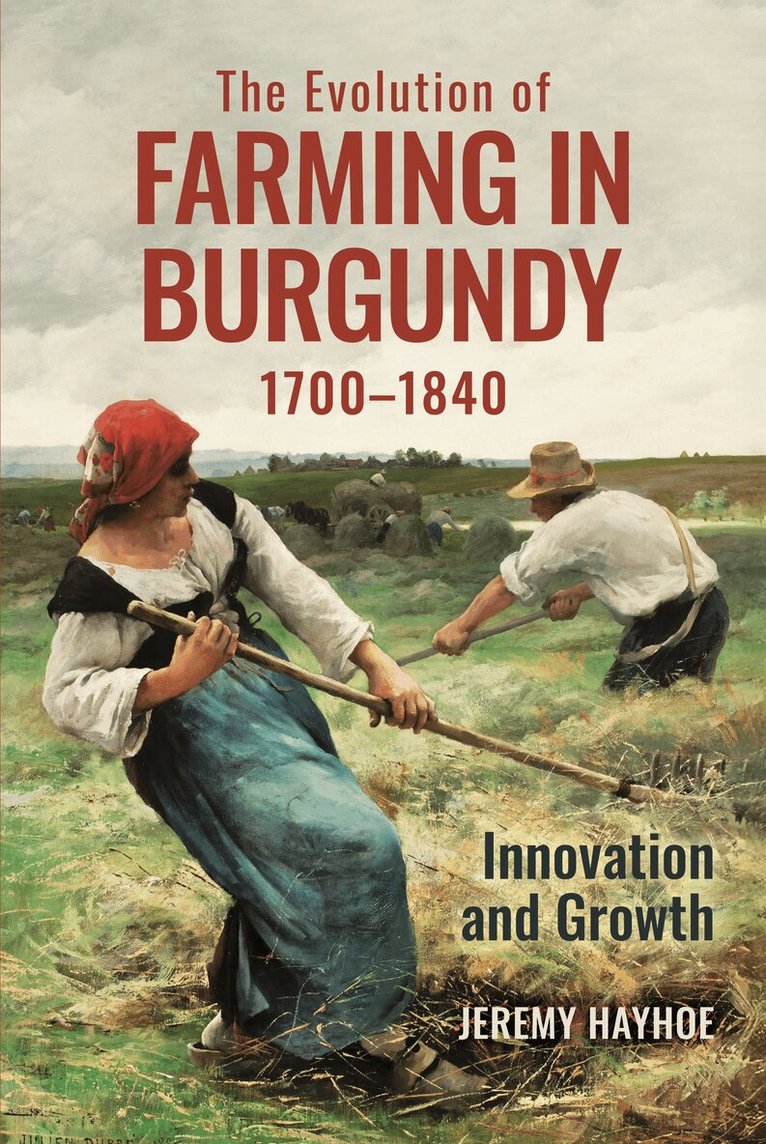
Evolution of Farming in Burgundy, 1700-1840
Innovation and Growth
Inbunden, Engelska, 2026
1 942 kr
Kommande
Traces the development of farming in the Burgundian flatlands of eastern France, looking at agricultural productivity, techniques, and the agronomic thinking of ordinary farmers.How did French farmers feed a third more people at the end than at the beginning of the eighteenth century? While historians have demonstrated that a few areas of large farms in the fertile plains of northern France increased their level of production considerably, the idea that regions of small farms saw little improvement because peasants resisted innovation and prioritized subsistence over profit remains influential. This book, however, argues that, in responding to favorable prices and improved export opportunities, small peasant farmers brought about substantial production increases, with 1740-80 being a key period for growth.Based on a novel source - probate auctions of standing grain - it shows that crop yields increased by about 50 per cent, while total grain production increased even more due to the planting of an increasing proportion of the fallow. Probate inventories also indicate other forms of improvement, such as an increase in animal feed production that then drove a substantial increase in dairy production. Growth did not, however, require the weakening of collective regulation of agriculture; this book demonstrates that communal rotation patterns and pasture rights persisted throughout the period studied. It also discusses the agronomic theories of ordinary farmers, revealing that peasants were aware of many of the ideas that circulated as part of the Agricultural Enlightenment in the eighteenth century.