Jeremy McInerney – författare
Visar alla böcker från författaren Jeremy McInerney. Handla med fri frakt och snabb leverans.
13 produkter
The Oxford History of the Classical Greek World
Volume I: The Environment and Resources
Av Hans Beck, Christy Constantakopoulou m. fl.
Inbunden, 2026
2058 kr
Lägg i varukorg
The Oxford History of the Classical Greek World (OHCGW) offers a new comprehensive account of the history and culture of ancient Greece in the fifth and fourth centuries BCE. Over seven volumes, the series deals with all aspects of the Greek world during this seminal period of Classical antiquity, …
By Land and by Sea
The Persian Wars and the Birth of Classical Greece
Inbunden, 2027
333 kr
Kommande
A bold new history of the Persian Wars that overturns long-held assumptions and reveals the surprising truths behind one of antiquity's most iconic conflictsMany who champion the idea of "Western Civilization" have only the loosest grasp of its history and of the Persian Wars, often portrayed as …
Folds of Parnassos
Land and Ethnicity in Ancient Phokis
Häftad, 2000
458 kr
Lägg i varukorg
Independent city-states (poleis) such as Athens have been viewed traditionally as the most advanced stage of state formation in ancient Greece. By contrast, this pioneering book argues that for some Greeks the ethnos, a regionally based ethnic group, and the koinon, or regional confederation, were …
Ancient Greece
A New History
Häftad, 2018
566 kr
Lägg i varukorg
Ancient Greece: A New History is a new, single-authored survey of the ancient Greek world that brings the past to life with a fresh narrative and vivid images. Drawing on the latest archaeological research and textual evidence, award-winning teacher and scholar Jeremy McInerney shows that many of …
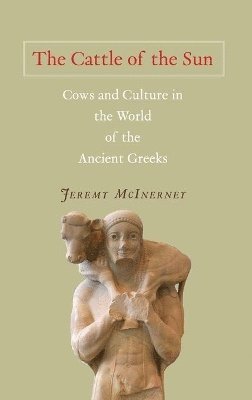
Cattle of the Sun
Cows and Culture in the World of the Ancient Greeks
Inbunden, 2010
699 kr
Lägg i varukorg
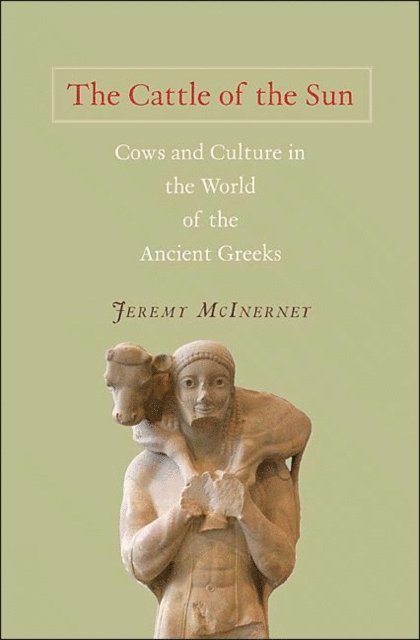
Though Greece is traditionally seen as an agrarian society, cattle were essential to Greek communal life, through religious sacrifice and dietary consumption. Cattle were also pivotal in mythology: gods and heroes stole cattle, expected sacrifices of cattle, and punished those who failed to provide …
Centaurs and Snake-Kings
Hybrids and the Greek Imagination
Inbunden, 2024
435 kr
Lägg i varukorg
Griffins, centaurs and gorgons: the Greek imagination teems with wondrous, yet often monstrous, hybrids. Jeremy McInerney discusses how these composite creatures arise from the entanglement of humans and animals. Overlaying such enmeshment is the rich cultural exchange experienced by Greeks across …
Companion to Ethnicity in the Ancient Mediterranean
E-bok, 2014
2819 kr
Lägg i varukorg
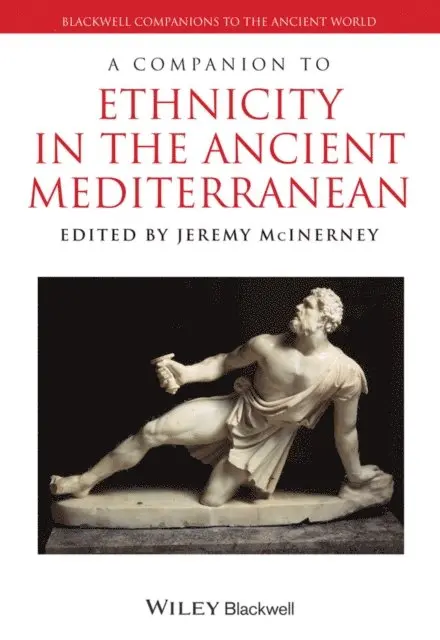
A Companion to Ethnicity in the Ancient Mediterranean presents a comprehensive collection of essays contributed by Classical Studies scholars that explore questions relating to ethnicity in the ancient Mediterranean world. Covers topics of ethnicity in civilizations ranging from ancient Egypt and …
Companion to Ethnicity in the Ancient Mediterranean
E-bok, 2014
2819 kr
Lägg i varukorg
A Companion to Ethnicity in the Ancient Mediterranean presents a comprehensive collection of essays contributed by Classical Studies scholars that explore questions relating to ethnicity in the ancient Mediterranean world. Covers topics of ethnicity in civilizations ranging from ancient Egypt and …
Cattle of the Sun
Cows and Culture in the World of the Ancient Greeks
E-bok, 2010
955 kr
Lägg i varukorg
Though Greece is traditionally seen as an agrarian society, cattle were essential to Greek communal life, through religious sacrifice and dietary consumption. Cattle were also pivotal in mythology: gods and heroes stole cattle, expected sacrifices of cattle, and punished those who failed to provide …
Companion to Ethnicity in the Ancient Mediterranean
Inbunden, 2014
2426 kr
Lägg i varukorg
A Companion to Ethnicity in the Ancient Mediterranean presents a comprehensive collection of essays contributed by Classical Studies scholars that explore questions relating to ethnicity in the ancient Mediterranean world. Covers topics of ethnicity in civilizations ranging from ancient Egypt and …
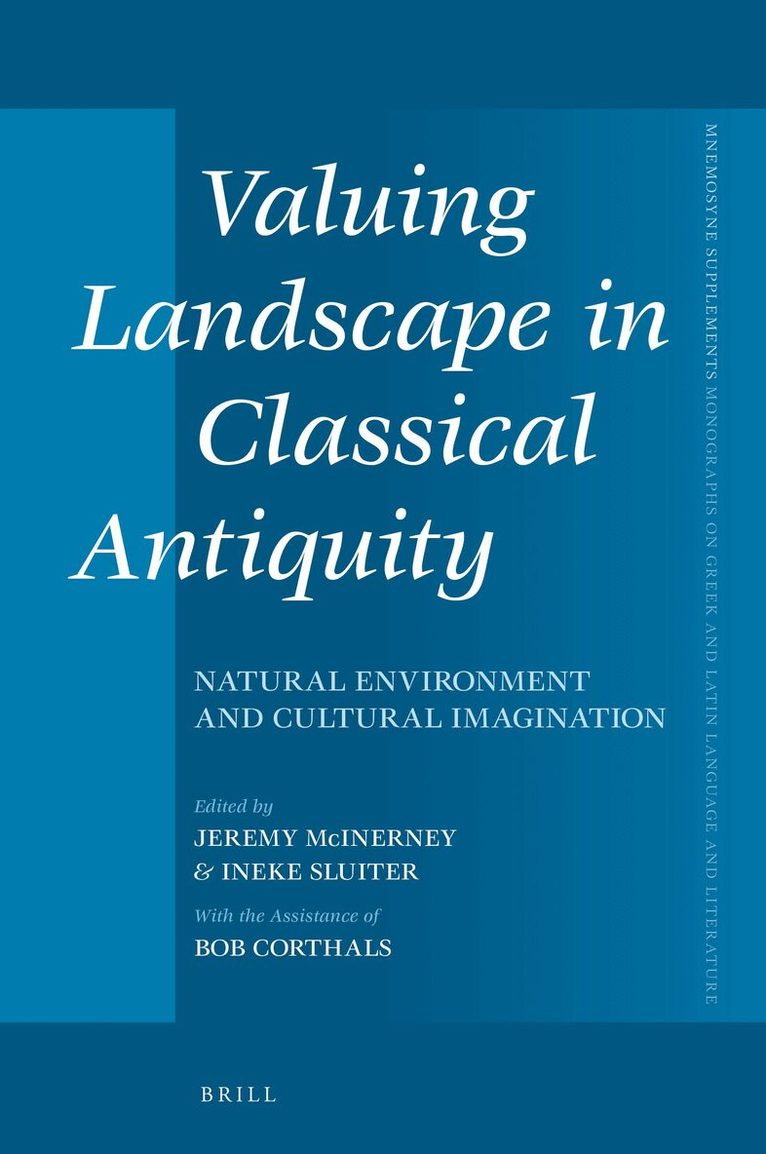
Valuing Landscape in Classical Antiquity
Natural Environment and Cultural Imagination
Inbunden, 2016
3090 kr
Lägg i varukorg
‘Where am I?’. Our physical orientation in place is one of the defining characteristics of our embodied existence. However, while there is no human life, culture, or action without a specific location functioning as its setting, people go much further than this bare fact in attributing meaning and …