Jeremy Rich - Böcker
Visar alla böcker från författaren Jeremy Rich. Handla med fri frakt och snabb leverans.
8 produkter
8 produkter
502 kr
Skickas inom 10-15 vardagar
In Libreville, the capital of the African nation of Gabon, the colonial past has evolved into a present indelibly marked by colonial rule and ongoing French influence. This is especially evident in areas as essential to life as food. In this complex, hybrid culinary culture of Libreville, croissants are as readily available as plantains. Yet this same culinary diversity is accompanied by high prices and a scarcity of locally made food that is bewildering to residents and visitors alike. A staggering two-thirds of the country's food is imported from outside Gabon, making Libreville's cost of living comparable to that of Tokyo and Paris. In this compelling study of food culture and colonialism, Jeremy Rich explores how colonial rule intimately shaped African life and how African townspeople developed creative ways of coping with colonialism as European expansion threatened African self-sufficiency. From colonization in the 1840s through independence, Libreville struggled with problems of food scarcity resulting from the legacy of Atlantic slavery, the violence of colonial conquest, and the rise of the timber export industry. Marriage disputes, racial tensions, and worker unrest often centered on food, and townspeople employed varied tactics to combat its scarcity. Ultimately, imports emerged as the solution and have had a lasting impact on Gabon's culinary culture and economy. Fascinating and informative, A Workman Is Worthy of His Meat engages a new avenue of historical inquiry in examining the culture of food as part of the colonial experience and resonates with the questions of globalization dominating culinary economics today.
268 kr
Skickas inom 10-15 vardagar
In Libreville, the capital of the African nation of Gabon, the colonial past has evolved into a present indelibly marked by colonial rule and ongoing French influence. This is especially evident in areas as essential to life as food. In this complex, hybrid culinary culture of Libreville, croissants are as readily available as plantains. Yet this same culinary diversity is accompanied by high prices and a scarcity of locally made food that is bewildering to residents and visitors alike. A staggering two-thirds of the country's food is imported from outside Gabon, making Libreville's cost of living comparable to that of Tokyo and Paris. In this compelling study of food culture and colonialism, Jeremy Rich explores how colonial rule intimately shaped African life and how African townspeople developed creative ways of coping with colonialism as European expansion threatened African self-sufficiency. From colonization in the 1840s through independence, Libreville struggled with problems of food scarcity resulting from the legacy of Atlantic slavery, the violence of colonial conquest, and the rise of the timber export industry. Marriage disputes, racial tensions, and worker unrest often centered on food, and townspeople employed varied tactics to combat its scarcity. Ultimately, imports emerged as the solution and have had a lasting impact on Gabon's culinary culture and economy. Fascinating and informative, A Workman Is Worthy of His Meat engages a new avenue of historical inquiry in examining the culture of food as part of the colonial experience and resonates with the questions of globalization dominating culinary economics today.
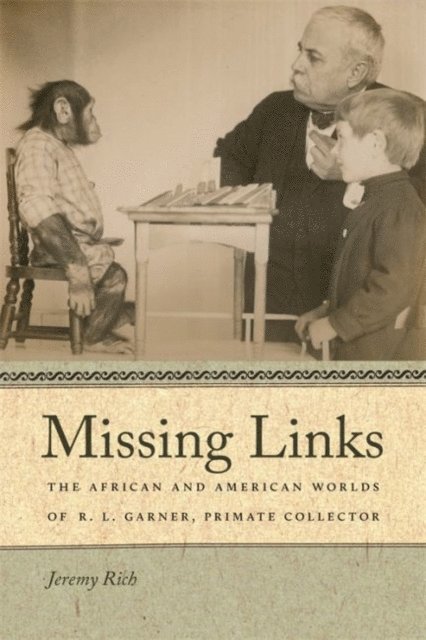
Missing Links
The African and American Worlds of R. L. Garner, Primate Collector
Inbunden, Engelska, 2012
1 191 kr
Skickas inom 5-8 vardagar
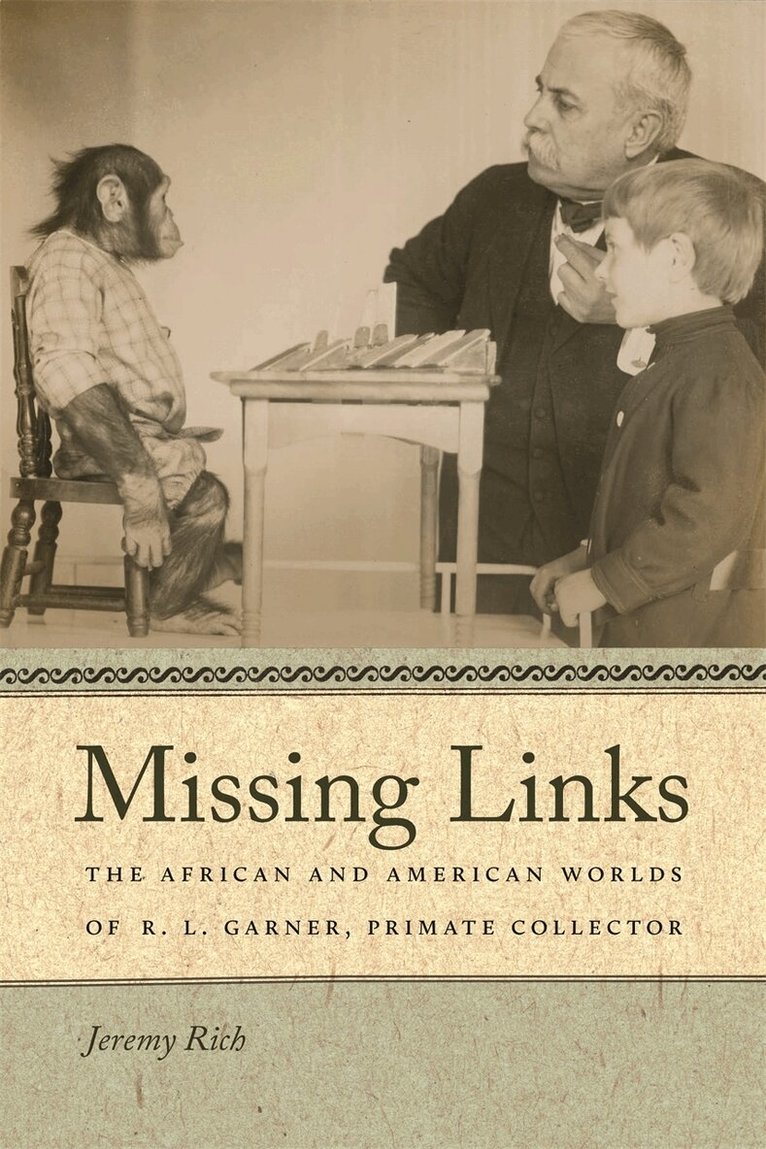
Jeremy Rich uses the eccentric life of R. L. Garner (1848–1920) to examine the commercial networks that brought the first apes to America during the Progressive Era, a critical time in the development of ideas about African wildlife, race, and evolution.Garner was a self-taught zoologist and atheist from southwest Virginia. Starting in 1892, he lived on and off in the French colony of Gabon, studying primates and trying to engage U.S. academics with his theories. Most prominently, Garner claimed that he could teach apes to speak human languages and that he could speak the languages of primates. Garner brought some of the first live primates to America, launching a traveling demonstration in which he claimed to communicate with a chimpanzee named Susie. He was often mocked by the increasingly professionalized scientific community, who were wary of his colorful escapades, such as his ill-fated plan to make a New York City socialite the queen of southern Gabon, and his efforts to convince Thomas Edison to finance him in Africa.Yet Garner did influence evolutionary debates, and as with many of his era, race dominated his thinking. Garner’s arguments—for example, that chimpanzees were more loving than Africans, or that colonialism constituted a threat to the separation of the races—offer a fascinating perspective on the thinking and attitudes of his times. Missing Links explores the impact of colonialism on Africans, the complicated politics of buying and selling primates, and the popularization of biological racism.
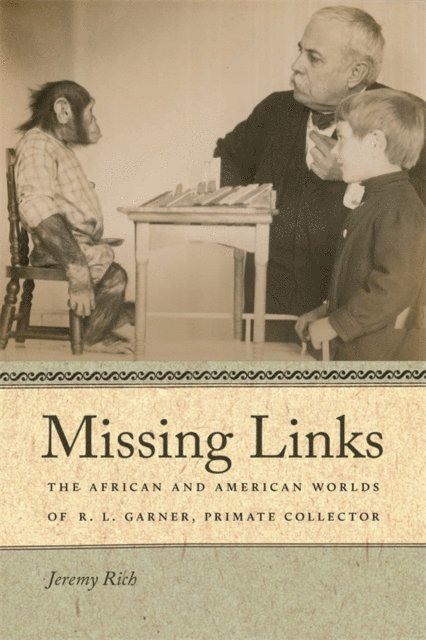
Missing Links
The African and American Worlds of R. L. Garner, Primate Collector
Häftad, Engelska, 2012
435 kr
Skickas inom 5-8 vardagar
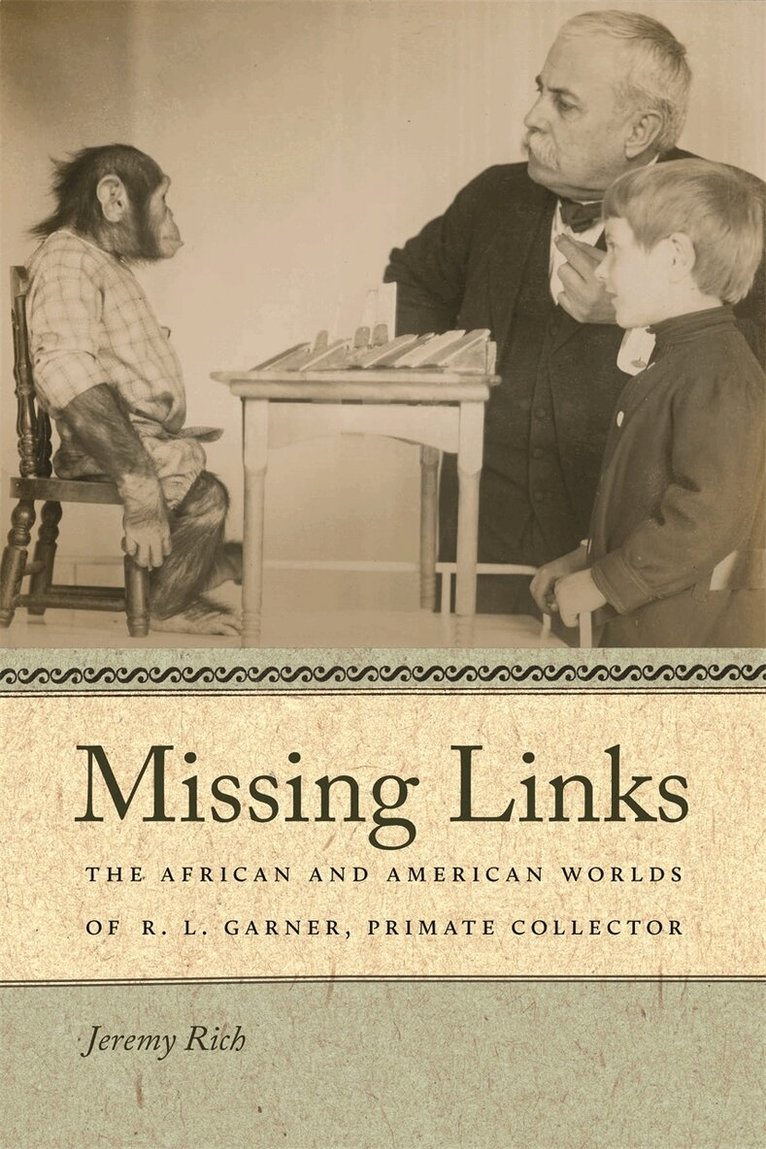
Jeremy Rich uses the eccentric life of R. L. Garner (1848–1920) to examine the commercial networks that brought the first apes to America during the Progressive Era, a critical time in the development of ideas about African wildlife, race, and evolution.Garner was a self-taught zoologist and atheist from southwest Virginia. Starting in 1892, he lived on and off in the French colony of Gabon, studying primates and trying to engage U.S. academics with his theories. Most prominently, Garner claimed that he could teach apes to speak human languages and that he could speak the languages of primates. Garner brought some of the first live primates to America, launching a traveling demonstration in which he claimed to communicate with a chimpanzee named Susie. He was often mocked by the increasingly professionalized scientific community, who were wary of his colorful escapades, such as his ill-fated plan to make a New York City socialite the queen of southern Gabon, and his efforts to convince Thomas Edison to finance him in Africa.Yet Garner did influence evolutionary debates, and as with many of his era, race dominated his thinking. Garner’s arguments—for example, that chimpanzees were more loving than Africans, or that colonialism constituted a threat to the separation of the races—offer a fascinating perspective on the thinking and attitudes of his times. Missing Links explores the impact of colonialism on Africans, the complicated politics of buying and selling primates, and the popularization of biological racism.
481 kr
Skickas inom 7-10 vardagar
2 380 kr
Skickas inom 10-15 vardagar
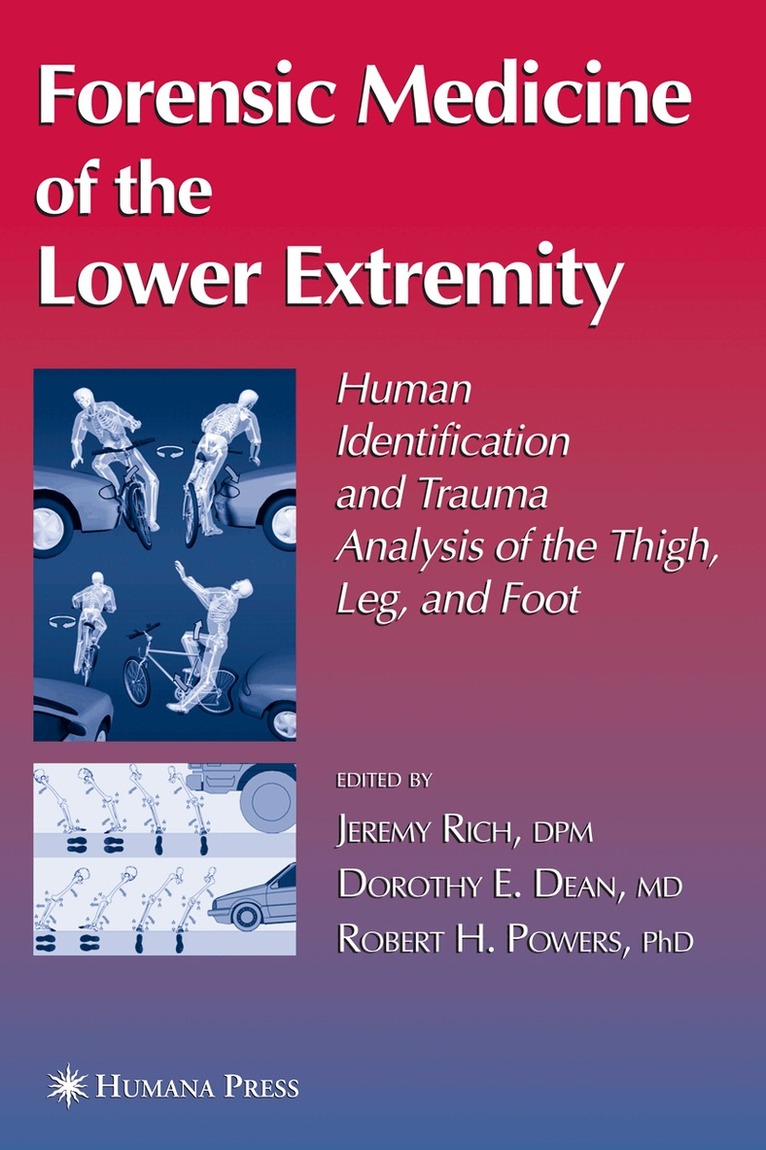
This book covers human identification, trauma analysis, and forensic biomechanics of the foot, ankle, tibia, and femur as frequently encountered in mass casualty incidents, human decomposition, and human rights abuse investigations.
2 380 kr
Skickas inom 10-15 vardagar
This comprehensive collection of rigorous review articles covers both the scientific and practical aspects of using of lower extremity remains for human identification and trauma analysis. On the scientific side, the authors describe the biochemical events of decomposition, detail the use of radiology to facilitate identification and evaluate trauma, and explain principles of osteology, with an emphasis on the implications for skeletal anatomy for age, sex, race, and height estimation. On the practical side, they apply these approaches to trauma analysis and accident reconstruction, including slip-and-fall incidents, impact, traffic, and pediatric injuries, and considerations of foot and footprint identification. Specific case studies discuss the identification process using the foot and ankle and illuminate the forensic potential of feet, footwear, and barefoot impression evidence.
Protestant Missionaries & Humanitarianism in the DRC
The Politics of Aid in Cold War Africa
Inbunden, Engelska, 2020
1 160 kr
Skickas inom 7-10 vardagar
A significant contribution to the history of humanitarianism, Christianity and the politics of aid in Africa.In the wake of the civil wars in Congo from 1960 to 1973, international and internal struggles for power led to famines, the collapse of public health and a huge population of refugees. This book explores the role played by missionaries from the US, Canada and the UK who organized aid, and shows how they had to redefine their roles in independent Africa after the end of colonialism. Partnering US government officials to overcome the humanitarian crisis as the politics of aid threatened to sink their efforts, Protestant aid programs also worked with US-backed Congolese military efforts to crush leftist rebels and joined with Angolan rebels to help hundreds of thousands of Angolan refugees fleeing Portuguese colonialism. After Mobutu Sese Seko seized power in 1965, they found themselves adjusting with difficulty to the rise of Congolese religious leaders who demanded aid workers and donor agencies accept African control over development projects.In this examination of the changing history of humanitarianism in Central Africa, the author shows how aid workers, who believed themselves to be politically neutral humanitarians, had to question their privileged role, and negotiate new ways of collaboration. Offering material aid and support, they hoped to heal the wounds of colonial repression and the violence of independence - abandoned hospitals, starving refugees, economic recession - yet also sought to ensure a Christian Congo would emerge allied to Western countries. The author explores the role of Protestant aid workers in the ethnic violence of South Kasai province; shows how Protestant aid became a tool in US-back counterinsurgency campaigns against leftist rebels; examines the interplay of Congolese and Western medicine in the work of Protestant medical volunteers; and discusses conflict in the aims of the missionaries and Africans over the control of aid funds and aid initiatives.