Jeroen Duindam – författare
Visar alla böcker från författaren Jeroen Duindam. Handla med fri frakt och snabb leverans.
13 produkter
13 produkter
E-bok
PDF, Engelska, 201989 kr
Läs direkt efter köp
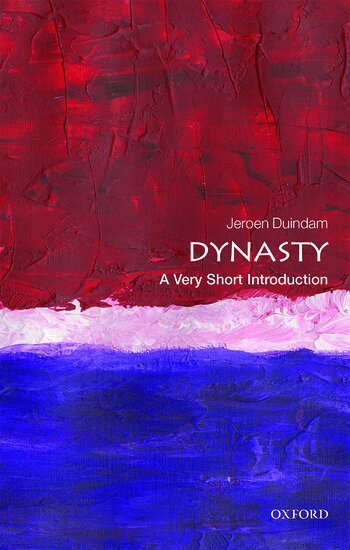
For thousands of years bloodlines have been held as virtually unassailable credentials for leadership, with supreme political power perceived as a family affair across the globe and throughout history. At the heart of royal dynasties, kings were inflated to superhuman proportions, yet their status came at a price: whilst they may have reigned, they were very often ruled by others who sheltered behind the ruler''s proclaimed omnipotence. Descent through the female line also occurred, subverting our common view of dynasty as built on father-son succession. Everywhere, women were important as mothers of boy-kings, and could even rule in their own right in some places.In this Very Short Introduction Jeroen Duindam connects the earliest history of kings and queens to contemporary examples of family-based leadership. His sweeping overview of five millennia of dynastic rule brings to light recurring predicaments of families on the throne. Examining persistent family conflict and the dilemmas of leadership, he shows how the challenge of governing the family was balanced by the necessity of family scions, close or distant, for the survival of dynasties. Tensions between ageing fathers and eager sons can be found among ancient kings as well as in modern business empires. Guidebooks for rulers throughout history provided counsel that will appear strikingly familiar to contemporary leaders. The thoughts and confessions of rulers added a more personal touch to these rules of thumb. Throughout, Duindam sheds light not only on similarities, but also on divergence and change in dynastic practice. ABOUT THE SERIES: The Very Short Introductions series from Oxford University Press contains hundreds of titles in almost every subject area. These pocket-sized books are the perfect way to get ahead in a new subject quickly. Our expert authors combine facts, analysis, perspective, new ideas, and enthusiasm to make interesting and challenging topics highly readable.
E-bok
Engelska, 201989 kr
Läs direkt efter köp
For thousands of years bloodlines have been held as virtually unassailable credentials for leadership, with supreme political power perceived as a family affair across the globe and throughout history. At the heart of royal dynasties, kings were inflated to superhuman proportions, yet their status came at a price: whilst they may have reigned, they were very often ruled by others who sheltered behind the ruler''s proclaimed omnipotence. Descent through the female line also occurred, subverting our common view of dynasty as built on father-son succession. Everywhere, women were important as mothers of boy-kings, and could even rule in their own right in some places.In this Very Short Introduction Jeroen Duindam connects the earliest history of kings and queens to contemporary examples of family-based leadership. His sweeping overview of five millennia of dynastic rule brings to light recurring predicaments of families on the throne. Examining persistent family conflict and the dilemmas of leadership, he shows how the challenge of governing the family was balanced by the necessity of family scions, close or distant, for the survival of dynasties. Tensions between ageing fathers and eager sons can be found among ancient kings as well as in modern business empires. Guidebooks for rulers throughout history provided counsel that will appear strikingly familiar to contemporary leaders. The thoughts and confessions of rulers added a more personal touch to these rules of thumb. Throughout, Duindam sheds light not only on similarities, but also on divergence and change in dynastic practice. ABOUT THE SERIES: The Very Short Introductions series from Oxford University Press contains hundreds of titles in almost every subject area. These pocket-sized books are the perfect way to get ahead in a new subject quickly. Our expert authors combine facts, analysis, perspective, new ideas, and enthusiasm to make interesting and challenging topics highly readable.
Häftad, Engelska, 2019
110 kr
Skickas inom 5-8 vardagar
For thousands of years bloodlines have been held as virtually unassailable credentials for leadership, with supreme political power perceived as a family affair across the globe and throughout history. At the heart of royal dynasties, kings were inflated to superhuman proportions, yet their status came at a price: whilst they may have reigned, they were very often ruled by others who sheltered behind the ruler's proclaimed omnipotence. Descent through the female line also occurred, subverting our common view of dynasty as built on father-son succession. Everywhere, women were important as mothers of boy-kings, and could even rule in their own right in some places.In this Very Short Introduction Jeroen Duindam connects the earliest history of kings and queens to contemporary examples of family-based leadership. His sweeping overview of five millennia of dynastic rule brings to light recurring predicaments of families on the throne. Examining persistent family conflict and the dilemmas of leadership, he shows how the challenge of governing the family was balanced by the necessity of family scions, close or distant, for the survival of dynasties. Tensions between ageing fathers and eager sons can be found among ancient kings as well as in modern business empires. Guidebooks for rulers throughout history provided counsel that will appear strikingly familiar to contemporary leaders. The thoughts and confessions of rulers added a more personal touch to these rules of thumb. Throughout, Duindam sheds light not only on similarities, but also on divergence and change in dynastic practice. ABOUT THE SERIES: The Very Short Introductions series from Oxford University Press contains hundreds of titles in almost every subject area. These pocket-sized books are the perfect way to get ahead in a new subject quickly. Our expert authors combine facts, analysis, perspective, new ideas, and enthusiasm to make interesting and challenging topics highly readable.
Häftad, Engelska, 2007
716 kr
Skickas inom 7-10 vardagar
This book brings vividly to life the courtiers and servants of the imperial court in Vienna and the royal court at Paris-Versailles. Drawing on a wealth of material masterfully set in a comparative context, the book makes a unique contribution to the field of court studies. Staff, numbers, costs and hierarchies; daily routines and ceremonies; court favourites and the nature of rulership; the integrative and centripetal forces of the central courtly establishment: all are seen in a long-term, comparative perspective that highlights both the similarities and the distinctiveness of developments in France and the Habsburg lands. In the process, most conventional views of each court - and of court life in general - are challenged, and an alternative interpretation emerges. Finally, by relocating the household in the heart of the early modern state, Vienna and Versailles forces us to rethink the process of statebuilding and the notion of 'absolutism'.
Inbunden, Engelska, 2015
1 237 kr
Skickas inom 7-10 vardagar
For thousands of years, societies have fallen under the reign of a single leader, ruling as chief, king, or emperor. In this fascinating global history of medieval and early modern dynastic power, Jeroen Duindam charts the rise and fall of dynasties, the rituals of rulership, and the contested presence of women on the throne. From European, African, Mughal, Ming-Qing and Safavid dynasties to the Ottoman Empire, Tokugawa Japan and Chosŏn Korea, he reveals the tension between the ideals of kingship and the lives of actual rulers, the rich variety of arrangements for succession, the households or courts which catered to rulers' daily needs, and the relationship between the court and the territories under its control. The book integrates numerous African examples, sets dynasties within longer-term developments such as the rise of the state, and examines whether the tensions inherent in dynastic power led inexorably to cycles of ascent and decline.
Häftad, Engelska, 2015
352 kr
Skickas inom 7-10 vardagar
For thousands of years, societies have fallen under the reign of a single leader, ruling as chief, king, or emperor. In this fascinating global history of medieval and early modern dynastic power, Jeroen Duindam charts the rise and fall of dynasties, the rituals of rulership, and the contested presence of women on the throne. From European, African, Mughal, Ming-Qing and Safavid dynasties to the Ottoman Empire, Tokugawa Japan and Chosŏn Korea, he reveals the tension between the ideals of kingship and the lives of actual rulers, the rich variety of arrangements for succession, the households or courts which catered to rulers' daily needs, and the relationship between the court and the territories under its control. The book integrates numerous African examples, sets dynasties within longer-term developments such as the rise of the state, and examines whether the tensions inherent in dynastic power led inexorably to cycles of ascent and decline.
E-bok
Engelska, 2015425 kr
Läs direkt efter köp
For thousands of years, societies have fallen under the reign of a single leader, ruling as chief, king, or emperor. In this fascinating global history of medieval and early modern dynastic power, Jeroen Duindam charts the rise and fall of dynasties, the rituals of rulership, and the contested presence of women on the throne. From European, African, Mughal, Ming-Qing and Safavid dynasties to the Ottoman Empire, Tokugawa Japan and Chosŏn Korea, he reveals the tension between the ideals of kingship and the lives of actual rulers, the rich variety of arrangements for succession, the households or courts which catered to rulers'' daily needs, and the relationship between the court and the territories under its control. The book integrates numerous African examples, sets dynasties within longer-term developments such as the rise of the state, and examines whether the tensions inherent in dynastic power led inexorably to cycles of ascent and decline.
E-bok
PDF, Engelska, 2015425 kr
Läs direkt efter köp
For thousands of years, societies have fallen under the reign of a single leader, ruling as chief, king, or emperor. In this fascinating global history of medieval and early modern dynastic power, Jeroen Duindam charts the rise and fall of dynasties, the rituals of rulership, and the contested presence of women on the throne. From European, African, Mughal, Ming-Qing and Safavid dynasties to the Ottoman Empire, Tokugawa Japan and Chosŏn Korea, he reveals the tension between the ideals of kingship and the lives of actual rulers, the rich variety of arrangements for succession, the households or courts which catered to rulers'' daily needs, and the relationship between the court and the territories under its control. The book integrates numerous African examples, sets dynasties within longer-term developments such as the rise of the state, and examines whether the tensions inherent in dynastic power led inexorably to cycles of ascent and decline.
113 kr
Läs direkt efter köp
¿Quién atendía a las necesidades de la corte y cómo se organizaba y pagaba a ese grupo? ¿Cuáles eran las actividades diarias de tales servidores y oficiales, y hasta qué punto venían dictadas por normas ceremoniales?, ¿cómo situar a la corte en el cuerpo político, cuál era la posición de los oficiales de corte en el proceso decisorio, cuáles eran los mecanismos de padrinazgo, facciones y favoritos, y cómo valorar la importancia sociopolítica de la corte para el reino en su conjunto?La rivalidad de los Habsburgo y los Borbones han marcado la historia de la Edad Moderna, pero nunca antes se había escrito un estudio comparativo sobre el funcionamiento de sus cortes.Duindam en este libro llega a unas conclusiones tan sorprendentes como reveladoras, que nos hará replantearnos nuestros conceptos convencionales sobre, por ejemplo, el proceso de la constitución de nación o a reinterpretar la palabra "absolutismo".
Del 1 - Rulers & Elites
Royal Courts in Dynastic States and Empires
A Global Perspective
Inbunden, Engelska, 2011
2 971 kr
Skickas inom 5-8 vardagar
In recent decades the history of premodern states and empires has undergone major revision. At the heart of this process stood the court, encompassing the household as well as government institutions. This volume for the first time brings together the fruits of research on royal courts from antiquity to the modern world, from Asia to Europe. The authors are acknowledged specialists in their own fields, but they address themes relevant for all courts: the inner and outer dimensions of court architecture as well as staff organizations; the connections between court, capital, and realm; the relationship of the ruler with relatives and other elites. This volume pioneers comparative history combining a rich empirical orientation with a critical assessment of theoretical perspectives.This title is available online in its entirety in Open AccessContributors: Tülay Artan, Gojko Barjamovic, Peter Fibiger Bang, Jeroen Duindam, Sabine Dabringhaus, Nadia Maria El Cheikh, Ebba Koch, Metin Kunt, Paul Magdalino, Rosamond McKitterick, Ruth Macrides, Rolf Strootman, Isenbike Togan, Maria Antonietta Visceglia, and Andrew Wallace-Hadrill.
Del 3 - Rulers & Elites
Law and Empire
Ideas, Practices, Actors
Inbunden, Engelska, 2013
2 396 kr
Skickas inom 5-8 vardagar
Law and Empire provides a comparative view of legal practices in Asia and Europe, from Antiquity to the eighteenth century. It relates the main principles of legal thinking in Chinese, Islamic, and European contexts to practices of lawmaking and adjudication. In particular, it shows how legal procedure and legal thinking could be used in strikingly different ways. Rulers could use law effectively as an instrument of domination; legal specialists built their identity, livelihood and social status on their knowledge of law; and non-elites exploited the range of legal fora available to them. This volume shows the relevance of legal pluralism and the social relevance of litigation for premodern power structures.
Del 5 - Rulers & Elites
Dynastic Centre and the Provinces
Agents & Interactions
Inbunden, Engelska, 2014
2 317 kr
Skickas inom 5-8 vardagar
Maintaining the connections between the dynastic court and the provinces was a major challenge for pre-modern governments. The allegiance of governors shifted easily from the centre to the provinces. Ritual and festive occasions, equally important to generate cohesion, were rarely shaped wholly by either side. Agents & Interactions examines these connections in late imperial China, early modern Europe, and the Ottoman empire. Contributions highlight the different and evolving notions of the governor, the choreography of rulers touring their realm, and the interpretations of sources describing such events. Important intercultural parallels appear, and it becomes clear that the domains of politics and culture cannot be separated. The chapters in this volume suggest important revisions and outline an agenda for comparison.This title is available online in its entirety in Open AccessContributors include: Patricia Buckley Ebrey, Jürgen Osterhammel, R. Kent Guy, Helen Watanabe-O’Kelly, I. Metin Kunt, Michael G. Chang, Margit Thøfner, Yingcong Dai, Neil Murphy, Christian Büschges
Del 15 - Rulers & Elites
Prince, Pen, and Sword: Eurasian Perspectives
Inbunden, Engelska, 2018
3 097 kr
Skickas inom 5-8 vardagar
Prince, Pen, and Sword offers a synoptic interpretation of rulers and elites in Eurasia from the fourteenth to the eighteenth century. Four core chapters zoom in on the tensions and connections at court, on the nexus between rulers and religious authority, on the status, function, and self-perceptions of military and administrative elites respectively. Two additional concise chapters provide a focused analysis of the construction of specific dynasties (the Golden Horde and the Habsburgs) and narratives of kingship found in fiction throughout Eurasia. The contributors and editors, authorities in their fields, systematically bring together specialised literature on numerous Eurasian kingdoms and empires. This book is a careful and thought-provoking experiment in the global, comparative and connected history of rulers and elites.