Jerzy Lukowski – författare
Visar alla böcker från författaren Jerzy Lukowski. Handla med fri frakt och snabb leverans.
14 produkter
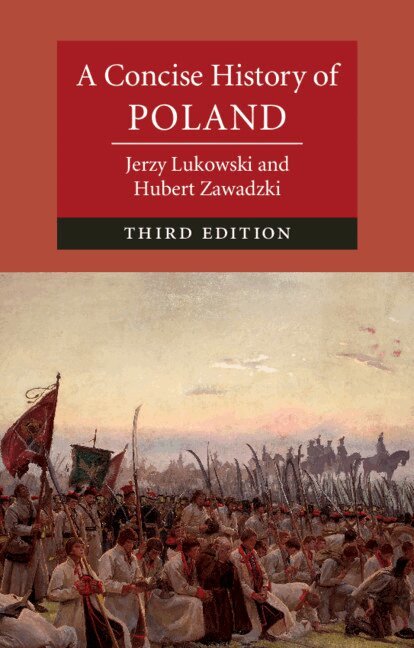
A Concise History of Poland
Av Jerzy Lukowski, Hubert Zawadzki
Häftad, 2019
4,0 utav 5 stjärnor. Totalt antal röster: (1)
383 kr
Lägg i varukorg
Poland is a tenacious survivor-state: it was wiped off the map in 1795, resurrected after the First World War, apparently annihilated again in the Second World War, and reduced to satellite status of the Soviet Union after 1945. Yet it emerged in the vanguard of resistance to the USSR in the 1980s, …
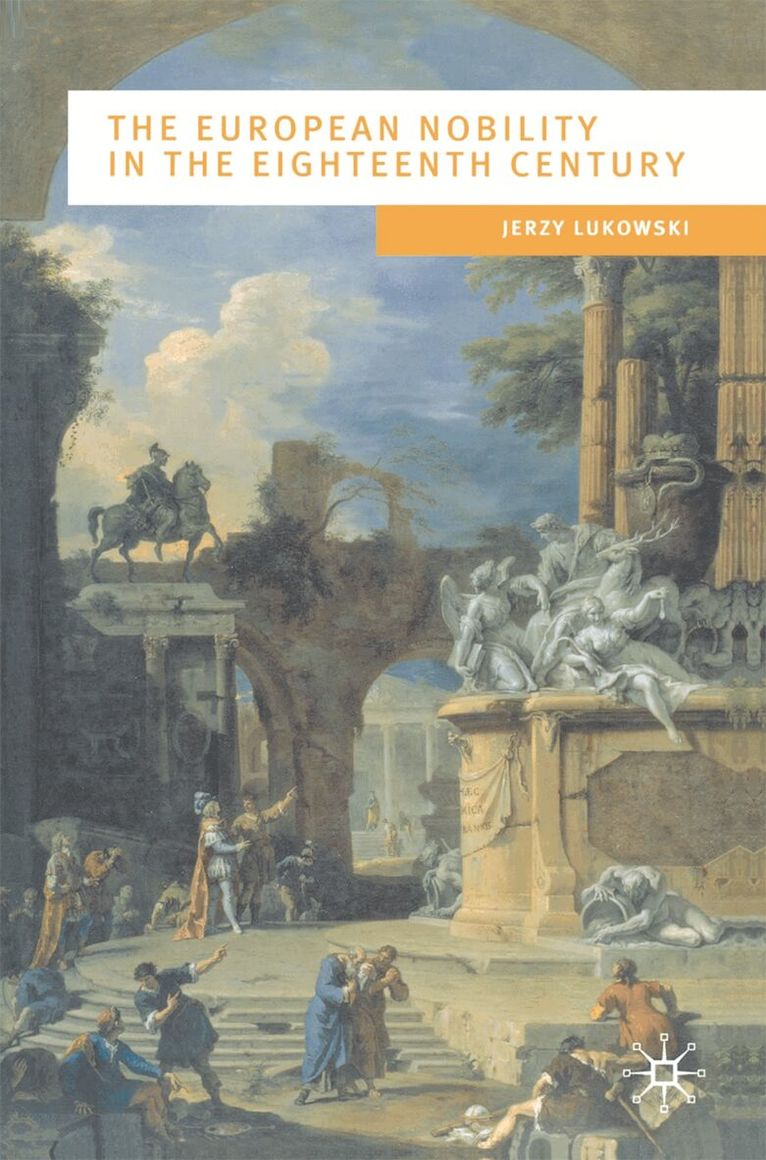
European Nobility in the Eighteenth Century
Av Jeremy Black, Jerzy Lukowski
Häftad, 2003
558 kr
Lägg i varukorg
The position of the nobility depended on a stable world which accepted their authority: but, in the eighteenth century, that world was becoming increasingly fractured as a result of social and economic developments and new ideas. Since nobles were, in economic terms, an extremely disparate group, …
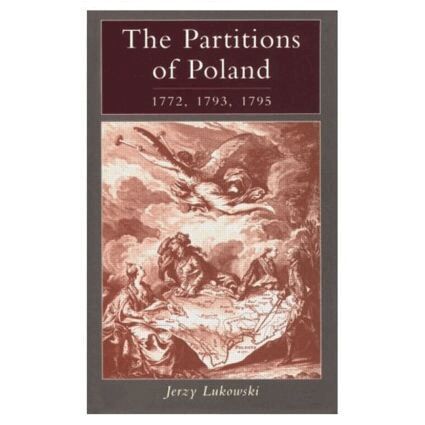
Partitions of Poland 1772, 1793, 1795
Häftad, 1999
889 kr
Lägg i varukorg
The Partitions of Poland were a key event in the power politics of the late ancien regime, and had major long term consequences for the balance of power in northern and eastern Europe. Over a period of twenty five years Catherine II (Russia), Frederick II (Prussia) and Maria Theresa and Joseph II …
Concise History of Poland
Av Hubert Zawadzki, Jerzy Lukowski
E-bok, 2006
336 kr
Lägg i varukorg
The second edition of this guide to Poland has been updated to take account of the years from 1989–2005. This period marked its liberation from the Soviet Union, the birth of Poland''s ''Third Republic'' and, recently, its accession to the European Union in 2004. Poland''s history has been marked …
Concise History of Poland
Av Hubert Zawadzki, Jerzy Lukowski
E-bok, 2006
336 kr
Lägg i varukorg
The second edition of this guide to Poland has been updated to take account of the years from 1989–2005. This period marked its liberation from the Soviet Union, the birth of Poland''s ''Third Republic'' and, recently, its accession to the European Union in 2004. Poland''s history has been marked …
Concise History of Poland
Av Hubert Zawadzki, Jerzy Lukowski
E-bok, 2019
437 kr
Lägg i varukorg
Poland is a tenacious survivor-state: it was wiped off the map in 1795, resurrected after the First World War, apparently annihilated again in the Second World War, and reduced to satellite status of the Soviet Union after 1945. Yet it emerged in the vanguard of resistance to the USSR in the 1980s, …
Concise History of Poland
Av Hubert Zawadzki, Jerzy Lukowski
E-bok, 2019
427 kr
Lägg i varukorg
Poland is a tenacious survivor-state: it was wiped off the map in 1795, resurrected after the First World War, apparently annihilated again in the Second World War, and reduced to satellite status of the Soviet Union after 1945. Yet it emerged in the vanguard of resistance to the USSR in the 1980s, …
A Concise History of Poland
Av Jerzy Lukowski, Hubert Zawadzki
Inbunden, 2019
1230 kr
Lägg i varukorg
Poland is a tenacious survivor-state: it was wiped off the map in 1795, resurrected after the First World War, apparently annihilated again in the Second World War, and reduced to satellite status of the Soviet Union after 1945. Yet it emerged in the vanguard of resistance to the USSR in the 1980s, …
Partitions of Poland 1772, 1793, 1795
Inbunden, 2016
2578 kr
Lägg i varukorg
The Partitions of Poland were a key event in the power politics of the late ancien regime, and had major long term consequences for the balance of power in northern and eastern Europe. Over a period of twenty five years Catherine II (Russia), Frederick II (Prussia) and Maria Theresa and Joseph II …
Partitions of Poland 1772, 1793, 1795
E-bok, 2014
1052 kr
Lägg i varukorg
The Partitions of Poland were a key event in the power politics of the late ancien regime, and had major long term consequences for the balance of power in northern and eastern Europe. Over a period of twenty five years Catherine II (Russia), Frederick II (Prussia) and Maria Theresa and Joseph II …
Partitions of Poland 1772, 1793, 1795
E-bok, 2014
1052 kr
Lägg i varukorg
The Partitions of Poland were a key event in the power politics of the late ancien regime, and had major long term consequences for the balance of power in northern and eastern Europe. Over a period of twenty five years Catherine II (Russia), Frederick II (Prussia) and Maria Theresa and Joseph II …
Disorderly Liberty
The Political Culture of the Polish-Lithuanian Commonwealth in the Eighteenth Century
E-bok, 2010
608 kr
Lägg i varukorg
The first detailed study of the history of Poland and its political development during the 18th century.
Disorderly Liberty
The Political Culture of the Polish-Lithuanian Commonwealth in the Eighteenth Century
Inbunden, 2010
2038 kr
Lägg i varukorg
During the eighteenth century EuropeaaC--s republics may have been an integral part of the international scene, but they were marginalised or in decline. When, in 1772, the Commonwealth of Poland-Lithuania suffered a massive loss of territory to its three more powerful neighbours, Russia, Prussia …
Disorderly Liberty
The Political Culture of the Polish-Lithuanian Commonwealth in the Eighteenth Century
Häftad, 2012
573 kr
Lägg i varukorg
During the eighteenth century Europe's republics may have been an integral part of the international scene, but they were marginalised or in decline. When, in 1772, the Commonwealth of Poland-Lithuania suffered a massive loss of territory to its three more powerful neighbours, Russia, Prussia and …