Jesper Aagaard Petersen - Böcker
Visar alla böcker från författaren Jesper Aagaard Petersen. Handla med fri frakt och snabb leverans.
3 produkter
3 produkter
2 289 kr
Skickas inom 10-15 vardagar
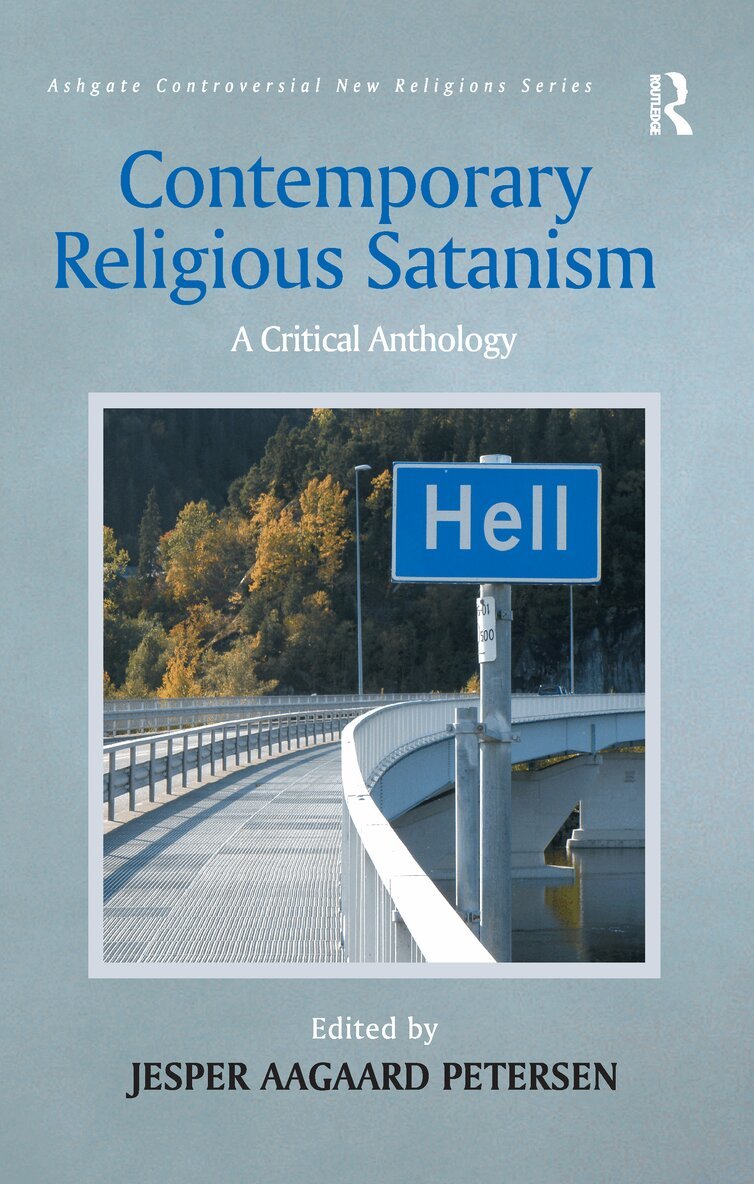
The Church of Satan was founded by Anton LaVey on April 30, 1966. In his hands, Satan became a provocative symbol for indulgence, vital existence, natural wisdom and the human being's true animal nature. At present, religious Satanism exists primarily as a decentralized subculture with a strong internet presence within a larger Satanic milieu in Western culture. Though most are inspired by LaVey, the majority of contemporary Satanists are not members of the Church of Satan. The various expressions of modern Satanism all navigate in today's detraditionalized religious market through the creative appropriation of popular culture, philosophy, literature and religion. The concrete solutions are varied; but they all understand the power of transgression allying oneself with a most powerful symbol of resistance, namely Satan. Thus, contemporary religious Satanism could be understood as a complex negotiation of atheism, secularism, esotericism and self: A "self-religion" in the modern age. Despite the fascinating nature of religious Satanism, it has attracted little scholarship until relatively recently. This book brings together a group of international scholars to produce the first serious book-length study of religious Satanism, presenting a collection that will have wide appeal to specialists and non-specialists alike. The first part contains broader studies of influential groups and important aspects of the Satanic milieu, especially regarding historical developments, the construction of tradition and issues of legitimacy. The second part narrows the view to regional variations, especially with studies on Northern and Eastern Europe. The third part consists of primary documents selected for their representational and informational value.
820 kr
Skickas inom 10-15 vardagar
The Church of Satan was founded by Anton LaVey on April 30, 1966. In his hands, Satan became a provocative symbol for indulgence, vital existence, natural wisdom and the human being's true animal nature. At present, religious Satanism exists primarily as a decentralized subculture with a strong internet presence within a larger Satanic milieu in Western culture. Though most are inspired by LaVey, the majority of contemporary Satanists are not members of the Church of Satan. The various expressions of modern Satanism all navigate in today's detraditionalized religious market through the creative appropriation of popular culture, philosophy, literature and religion. The concrete solutions are varied; but they all understand the power of transgression allying oneself with a most powerful symbol of resistance, namely Satan. Thus, contemporary religious Satanism could be understood as a complex negotiation of atheism, secularism, esotericism and self: A "self-religion" in the modern age. Despite the fascinating nature of religious Satanism, it has attracted little scholarship until relatively recently. This book brings together a group of international scholars to produce the first serious book-length study of religious Satanism, presenting a collection that will have wide appeal to specialists and non-specialists alike. The first part contains broader studies of influential groups and important aspects of the Satanic milieu, especially regarding historical developments, the construction of tradition and issues of legitimacy. The second part narrows the view to regional variations, especially with studies on Northern and Eastern Europe. The third part consists of primary documents selected for their representational and informational value.
1 250 kr
Skickas inom 3-6 vardagar
In the public imagination Satanism is associated with bizarre rituals, perverse hedonistic lifestyles, heavy metal music, immature adolescents acting out, horror movies, and rumors of ritual abuse. But what are the facts behind the urban legends and the "moral panics" that periodically sweep the country regarding this countercultural phenomenon? This authoritative reference work gathers together scholarly studies of Satanism and original source material, focusing on two major aspects—organized religious Satanism and the Satanic Ritual Abuse hoax that was prevalent in the 1980s and early 1990s. The contributors first examine modern Satanism, a decentralized movement whose only coherence is based on certain themes that date back to the writings of Anton Szandor LaVey, especially his Satanic Bible. Among other factors, the authors discuss how the emergence of the Internet as a form of communication has created some coherence among disparate groups through cross-reference.Many articles are devoted to the Satanic Ritual Abuse scare, an erroneous belief in a vast underground network of Satanists who were abusing children. For years members of the law enforcement community and numerous therapists, encouraged by the hype of mass media, bought into this panic.Other topics include the role of the media in the perceptions of Satanism and Satanic Ritual Abuse, juvenile delinquency and Satanism, and police pursuit of satanic crime. The volume concludes with primary source material, including a report from the Ritual Abuse Task Force and selections from current Satanism groups.This objective reference work will be useful for professionals in many fields and members of the public interested in sorting out the facts from the myths surrounding this controversial subculture.