Jessica Eise – Författare
Visar alla böcker från författaren Jessica Eise. Handla med fri frakt och snabb leverans.
3 produkter
3 produkter
2 385 kr
Skickas inom 10-15 vardagar
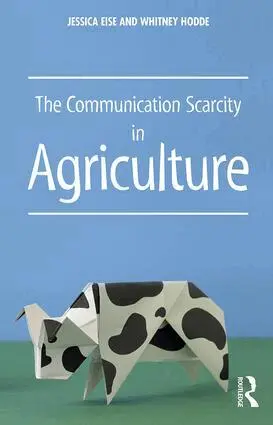
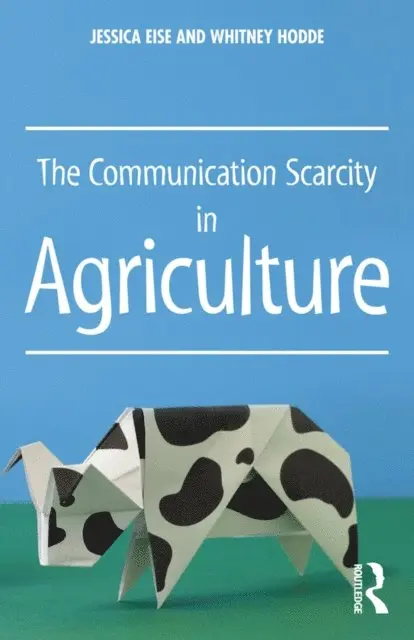
Today, the general public craves information on food and agriculture with an unprecedented passion. But the agricultural sector, unaccustomed to an interested and inquisitive society, has largely failed to respond to the public’s demands for information. Instead, corporations, time-pressed journalists, bloggers, media celebrities, film-makers, authors and concerned consumers jumped in to fill the void. Food is emotional, and these players - some well-intentioned and others not - got a lot of traction playing off consumer fears of the unknown. This critical and timely book explains how changing demographics, cultural shifts, technological advances and agriculture’s silence all combined to create the perfect storm – a great chasm between those who know, and those who don’t know, agriculture. The ramifications of a poorly-informed consumer base are now becoming clear in our policy debates and consumer-driven business decisions. There is a lot of common ground between the agricultural sector and their consumer base, but each group largely fails to appreciate it, and the consequences of such a divide grow increasingly dire. Drawing on a wide-range of expertise, from leading agricultural researchers to major agribusiness leaders to consumer advocates, Eise and Hodde lay out exactly why communication is so urgently critical to our modern-day agricultural system. They outline the major themes affecting agricultural communication – perception, emotion, technology, science - and what we can do now to improve the debate and safeguard our future food supply for generations to come.This book is suitable for those who study agriculture, environmental economics and mass media and communication.
651 kr
Skickas inom 10-15 vardagar
Today, the general public craves information on food and agriculture with an unprecedented passion. But the agricultural sector, unaccustomed to an interested and inquisitive society, has largely failed to respond to the public’s demands for information. Instead, corporations, time-pressed journalists, bloggers, media celebrities, film-makers, authors and concerned consumers jumped in to fill the void. Food is emotional, and these players - some well-intentioned and others not - got a lot of traction playing off consumer fears of the unknown. This critical and timely book explains how changing demographics, cultural shifts, technological advances and agriculture’s silence all combined to create the perfect storm – a great chasm between those who know, and those who don’t know, agriculture. The ramifications of a poorly-informed consumer base are now becoming clear in our policy debates and consumer-driven business decisions. There is a lot of common ground between the agricultural sector and their consumer base, but each group largely fails to appreciate it, and the consequences of such a divide grow increasingly dire. Drawing on a wide-range of expertise, from leading agricultural researchers to major agribusiness leaders to consumer advocates, Eise and Hodde lay out exactly why communication is so urgently critical to our modern-day agricultural system. They outline the major themes affecting agricultural communication – perception, emotion, technology, science - and what we can do now to improve the debate and safeguard our future food supply for generations to come.This book is suitable for those who study agriculture, environmental economics and mass media and communication.
347 kr
Skickas inom 11-20 vardagar
By 2050, we will have ten billion mouths to feed in a world profoundly altered by environmental change. How can we meet this challenge? In How to Feed the World, a diverse group of experts from Purdue University break down this crucial question by tackling big issues one-by-one. Covering population, water, land, climate change, technology, food systems, trade, food waste and loss, health, social buy-in, communication, and, lastly, the ultimate challenge of achieving equal access to food, the book reveals a complex web of factors that must be addressed in order to reach global food security. How to Feed the World unites contributors from different perspectives and academic disciplines, ranging from agronomy and hydrology to agricultural economy and communication. Hailing from Germany, the Philippines, the U.S., Ecuador, and beyond, the contributors weave their own life experiences into their chapters, connecting global issues to our tangible, day-to-day existence. Across every chapter, a similar theme emerges: these are not simple problems, yet we can overcome them. Doing so will require cooperation between farmers, scientists, policy makers, consumers, and many others. The resulting collection is an accessible but wide-ranging look at the modern food system. Readers will not only get a solid grounding in key issues, but be challenged to investigate further and contribute to the paramount effort to feed the world.