Jessica Kanold-McIntyre – författare
376 kr
Läs direkt efter köp
Part of the Every Student Can Learn Mathematics series
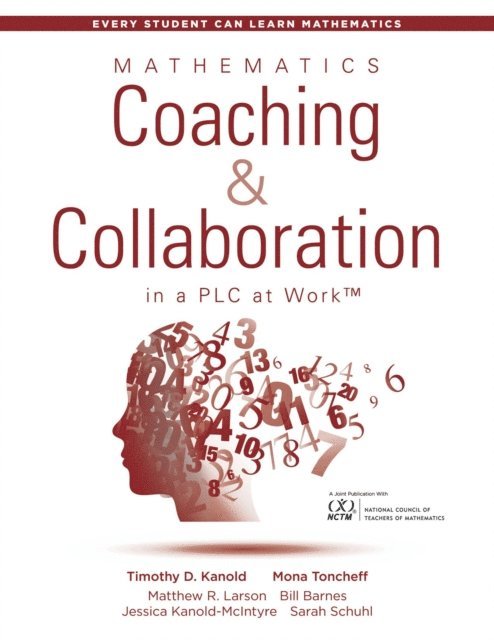
Build a mathematics teaching community that promotes learning for K-12 educators and students. This user-friendly resource is divided into two parts, each covering actionable team strategies in teaching mathematics in a PLC at Work™. First you''ll discover how to coach highly effective mathematics teams within your professional learning community. Then you''ll learn how to utilize collaboration and lesson-design elements within your math curriculum for teacher team reflection, assessment data analysis, and action.
Learn to lead math teacher teams and foster effective collaborative teaching strategies:
Build a collaborative math learning culture that engages and promotes learning for students and staff members.Optimize coaching and foster equity and belonging, to encourage collaboration on instruction and math assessment.Engage in mathematics lesson study, to help teams learn from one another and reflect on effective strategies in teaching mathematics.Develop norms, SMART goals for teachers, agendas, and a plan for working effectively as a collaborative team in a PLC at Work™.Address all parts of your math curriculum, from math instruction to math interventions.Contents:PrefaceIntroductionPart 1: Develop PLC Structures for Effective Teacher Team Engagement, Transparency, and ActionChapter 1: Five Inspirational PLC Leadership PracticesChapter 2: Five Leadership Strategies for Effective Collaboration in MathematicsPart 2: Use Common Assessments and Lesson-Design Elements for Teacher Team Reflection, Data Analysis, and Subsequent ActionChapter 3: How to Create and Nurture a Culture of Change, Growth, Reflection, and Improvement in Your Mathematics ProgramChapter 4: How to Lead a Culture of Transparency and Learning with Mathematics AssessmentsChapter 5: How to Lead in a Culture of Transparency and Learning with Mathematics InstructionChapter 6: How to Lead a Culture of Collective ResponsibilityEpilogueAppendix AReferences and Resources
Books in the Every Student Can Learn Mathematics series:
Mathematics Assessment and Intervention in a PLC at Work™Mathematics Instruction and Tasks in a PLC at Work™Mathematics Homework and Grading in a PLC at Work™Mathematics Coaching and Collaboration in a PLC at Work™332 kr
Läs direkt efter köp
Part of the Every Student Can Learn Mathematics series
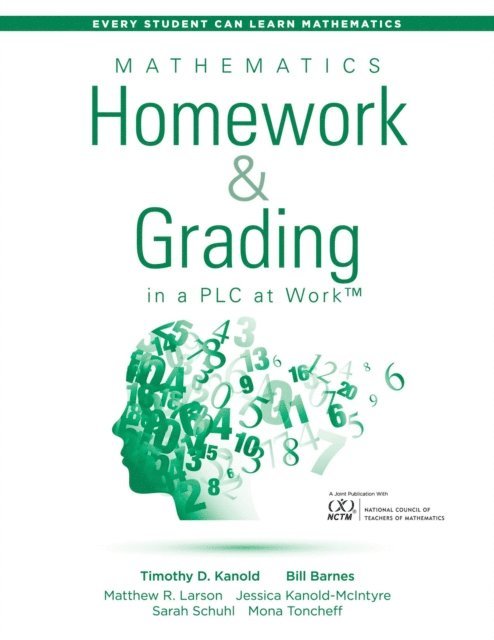
Boost K-12 student achievement and math skills by enhancing your approach to mathematics homework and grading. This user-friendly resource is divided into two parts, each covering a key team action for mathematics in a PLC at Work™. First, you''ll learn how to develop common independent practice assignments or math homework for formative student learning within a professional learning community (PLC). Then, discover how to work collaboratively to create quality equitable grading practices to help you evaluate independent practice effectiveness. The book features teacher team tools and activities to inspire student achievement and enhance grading routines as part of a formative student learning process.
Learn collaborative homework and grading practices to grow your students'' math skills:
Discover how you and your colleagues can design and use mathematics homework and grading practices to produce significant improvement in student learning.Learn the value of common scoring agreements among educators.Understand and find solutions to common grading errors to ensure equity among all students.Implement effective grading practices that provide meaningful and actionable formative feedback to students.Support student engagement and ensure students persevere in their learning of mathematics problem solving.Contents:Preface Introduction
Part 1: Team Action 5--Develop and Use High-Quality Common Independent Practice Assignments for Formative Student LearningChapter 1: The Purpose of High-Quality Common Independent Practice AssignmentsChapter 2: Sample Independent Practice AssignmentsChapter 3: Formative Routines for Improved Student LearningChapter 4: Common Scoring and Grading Agreements for Homework Assignments
Part 2: Team Action 6--Develop and Use High-Quality Common Grading Components and Formative Grading RoutinesChapter 5: The Purpose and Nature of Grading in MathematicsChapter 6: How to Create an Evaluate Quality Grading ComponentsChapter 7: Formative Grading RoutinesChapter 8: Traditional Report Card Grades and Standards-Based Scoring Routines
EpilogueAppendixReferences and ResourcesIndex
Books in the Every Student Can Learn Mathematics series:
Mathematics Assessment and Intervention in a PLC at Work™Mathematics Instruction and Tasks in a PLC at Work™Mathematics Homework and Grading in a PLC at Work™Mathematics Coaching and Collaboration in a PLC at Work™365 kr
Läs direkt efter köp
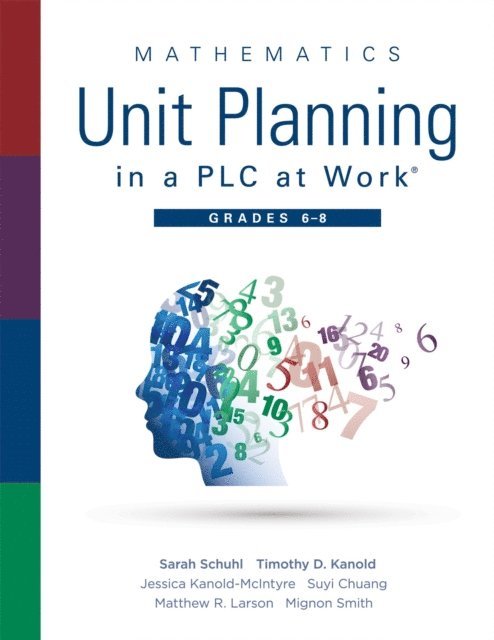
What exactly do your students need to know by the end of each unit of mathematics study throughout the school year? This practical resource empowers teacher teams to collectively plan for and deliver highly effective units of study in grades 6-8. The authors clearly outline how to generate essential learning standards, create a team unit calendar, identify prior knowledge, and complete many other essential collaborative tasks.
Use this resource to provide intermediate grade-level students with a more equitable mathematics learning experience
Understand how to collaboratively plan mathematics units in grades 6-8 as a professional learning community (PLC).Study the seven unit-planning elements and learn how to incorporate each in essential unit design.Review the role of the PLC at Work® process in enhancing student learning and teacher collaboration.Observe three model units, one for each grade, for ratios and proportional reasoning.Receive tools and templates for effective unit planning.Contents:AcknowledgmentsTable of ContentsAbout the AuthorsIntroductionPart One: Mathematics Unit Planning and Design Elements Chapter 1: Planning for Student Learning of Mathematics in Grades 6–8 Chapter 2: Unit Planning as a Collaborative Mathematics TeamPart Two: Proportional Reasoning Unit Examples, Grades 6-8 Chapter 3: Grade 6 Unit--Ratios and Rates Chapter 4: Grade 7 Unit--Proportional Reasoning Chapter 5: Grade 8 Unit--Linear Functions and EquationsEpilogue: Mathematics Team OrganizationAppendix A: Create a Proficiency MapAppendix B: Team Checklist and Questions for Mathematics Unit PlanningReferences and ResourcesIndex
396 kr
Skickas inom 5-8 vardagar
376 kr
Läs direkt efter köp
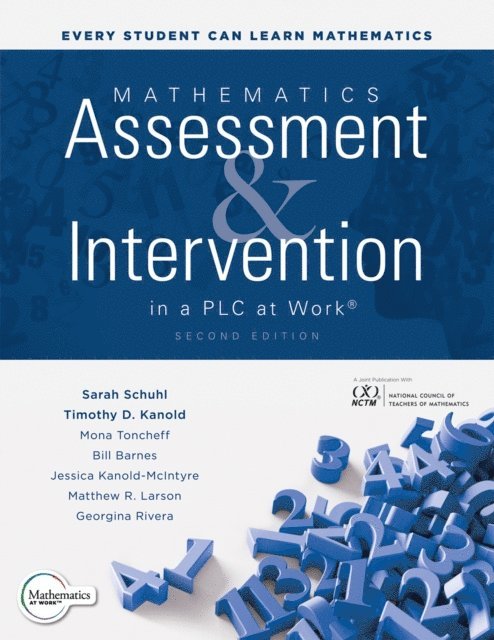
This second edition book from the Every Student Can Learn Mathematics series guides you and your collaborative teams in building student and collective teacher efficacy through the formative use of common assessments. Discover how you can work interdependently to design high-quality assessments, calibrate scoring of student work, and analyze data to enhance instructional practices and sustain effective Tier 2 learning experiences for students. New and enhanced protocols and examples provide practical tools and models for immediate implementation. Improve your mathematics collaborative team assessment processes using the four critical questions of a PLC at Work® along with an RTI or MTSS focus on effective Tier 2 interventions.
This book will help K–12 mathematics teachers and teacher teams: Learn the criteria for the formative use of all unit-by-unit common mathematics assessmentsIdentify essential learning standards as drivers for common assessments and student reflectionDesign and use high-quality common assessments and team scoring agreementsCalibrate the scoring of student work for consistent formative feedback to studentsEngage in data protocols that analyze student work to enhance instructional practices, identify students in need of targeted intervention or extension, and create effective intervention learning experiencesDetermine how students can reflect and set goals using the formative feedback process based on common unit-by-unit assessmentsDesign and implement an effective Tier 2 mathematics intervention program to support student learningContents:PrefaceIntroductionChapter 1: The Mathematics at Work Common Assessment ProcessChapter 2: Quality Common Mathematics AssessmentsChapter 3: Sample Common Mathematics Assessments and Calibration RoutinesChapter 4: Teacher Actions in the Formative Assessment ProcessChapter 5: Student Actions in the Formative Assessment ProcessChapter 6: Team Response to Student Learning Using Tier 2 Mathematics Intervention CriteriaSummaryEpilogueAppendixReferences and ResourcesIndex376 kr
Läs direkt efter köp
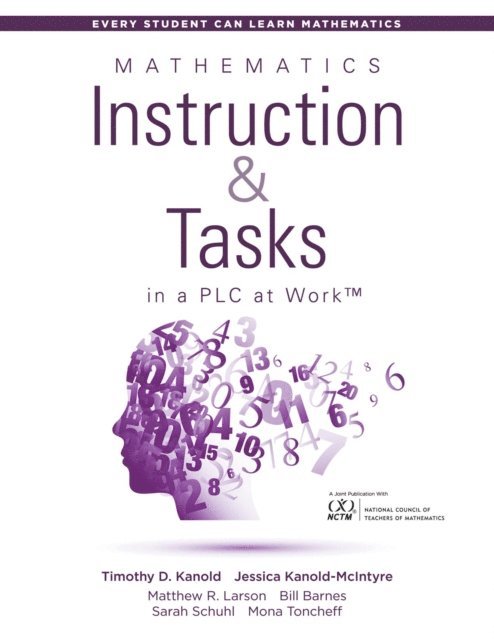
Build collective teacher efficacy and students’ mathematical thinking using the Mathematics in a PLC at Work™ lesson-design process. This second edition of the popular Mathematics Instruction and Tasks book guides preK–12 teacher teams in ensuring improved mathematics achievement. Gain new and enhanced understanding of research-affirmed instructional routines, and learn how to efficiently elicit high levels of student engagement and self-efficacy.Implement instructional strategies and methods of teaching mathematics in a professional learning community.
This book will help preK–12 mathematics teachers and teacher teams:Identify essential mathematics content standards students learn during a unit Understand the importance of communicating the why of the essential mathematics learning standards to students Plan for the use of balanced rigor and mathematical routines to teach each content standard during instruction Use a balance of appropriate mathematics activities and tasks needed to develop conceptual understanding, procedural fluency, and application of mathematical concepts and skillsImplement instructional math routines that ensure the formative learning of all students during lessonsContents:PrefaceIntroduction: The Mathematics at Work™ Lesson Design FrameworkChapter 1: Essential Learning Standards—The Why of the LessonChapter 2: Prior-Knowledge RoutinesChapter 3: Mathematics Language RoutinesChapter 4: A Balance of Mathematical TasksChapter 5: Mathematical Discourse RoutinesChapter 6: Lesson Closure RoutinesChapter 7: High-Quality Tier 1 Mathematics InterventionChapter 8: Analyzing the Effectiveness of Mathematics InstructionEpilogueAppendix AAppendix B: Cognitive-Demand-Level Task Analysis GuideAppendix C: Mathematics Instruction and Tasks in a PLC at Work Protocols and Tools