Sarah Schuhl – författare
434 kr
Läs direkt efter köp
376 kr
Läs direkt efter köp
Part of the Every Student Can Learn Mathematics series
Build a mathematics teaching community that promotes learning for K-12 educators and students. This user-friendly resource is divided into two parts, each covering actionable team strategies in teaching mathematics in a PLC at Work™. First you''ll discover how to coach highly effective mathematics teams within your professional learning community. Then you''ll learn how to utilize collaboration and lesson-design elements within your math curriculum for teacher team reflection, assessment data analysis, and action.
Learn to lead math teacher teams and foster effective collaborative teaching strategies:
Build a collaborative math learning culture that engages and promotes learning for students and staff members.Optimize coaching and foster equity and belonging, to encourage collaboration on instruction and math assessment.Engage in mathematics lesson study, to help teams learn from one another and reflect on effective strategies in teaching mathematics.Develop norms, SMART goals for teachers, agendas, and a plan for working effectively as a collaborative team in a PLC at Work™.Address all parts of your math curriculum, from math instruction to math interventions.Contents:PrefaceIntroductionPart 1: Develop PLC Structures for Effective Teacher Team Engagement, Transparency, and ActionChapter 1: Five Inspirational PLC Leadership PracticesChapter 2: Five Leadership Strategies for Effective Collaboration in MathematicsPart 2: Use Common Assessments and Lesson-Design Elements for Teacher Team Reflection, Data Analysis, and Subsequent ActionChapter 3: How to Create and Nurture a Culture of Change, Growth, Reflection, and Improvement in Your Mathematics ProgramChapter 4: How to Lead a Culture of Transparency and Learning with Mathematics AssessmentsChapter 5: How to Lead in a Culture of Transparency and Learning with Mathematics InstructionChapter 6: How to Lead a Culture of Collective ResponsibilityEpilogueAppendix AReferences and Resources
Books in the Every Student Can Learn Mathematics series:
Mathematics Assessment and Intervention in a PLC at Work™Mathematics Instruction and Tasks in a PLC at Work™Mathematics Homework and Grading in a PLC at Work™Mathematics Coaching and Collaboration in a PLC at Work™332 kr
Läs direkt efter köp
Part of the Every Student Can Learn Mathematics series
Boost K-12 student achievement and math skills by enhancing your approach to mathematics homework and grading. This user-friendly resource is divided into two parts, each covering a key team action for mathematics in a PLC at Work™. First, you''ll learn how to develop common independent practice assignments or math homework for formative student learning within a professional learning community (PLC). Then, discover how to work collaboratively to create quality equitable grading practices to help you evaluate independent practice effectiveness. The book features teacher team tools and activities to inspire student achievement and enhance grading routines as part of a formative student learning process.
Learn collaborative homework and grading practices to grow your students'' math skills:
Discover how you and your colleagues can design and use mathematics homework and grading practices to produce significant improvement in student learning.Learn the value of common scoring agreements among educators.Understand and find solutions to common grading errors to ensure equity among all students.Implement effective grading practices that provide meaningful and actionable formative feedback to students.Support student engagement and ensure students persevere in their learning of mathematics problem solving.Contents:Preface Introduction
Part 1: Team Action 5--Develop and Use High-Quality Common Independent Practice Assignments for Formative Student LearningChapter 1: The Purpose of High-Quality Common Independent Practice AssignmentsChapter 2: Sample Independent Practice AssignmentsChapter 3: Formative Routines for Improved Student LearningChapter 4: Common Scoring and Grading Agreements for Homework Assignments
Part 2: Team Action 6--Develop and Use High-Quality Common Grading Components and Formative Grading RoutinesChapter 5: The Purpose and Nature of Grading in MathematicsChapter 6: How to Create an Evaluate Quality Grading ComponentsChapter 7: Formative Grading RoutinesChapter 8: Traditional Report Card Grades and Standards-Based Scoring Routines
EpilogueAppendixReferences and ResourcesIndex
Books in the Every Student Can Learn Mathematics series:
Mathematics Assessment and Intervention in a PLC at Work™Mathematics Instruction and Tasks in a PLC at Work™Mathematics Homework and Grading in a PLC at Work™Mathematics Coaching and Collaboration in a PLC at Work™446 kr
Skickas inom 3-6 vardagar
400 kr
Läs direkt efter köp
Continuous school improvement only happens when teachers and administrators collectively center their powers on ensuring student success within a professional learning community. With this practical guide, K-12 educators will discover how to target their school''s specific needs with an immediate course of action to improve and measure student achievement. Each chapter includes space for teams to determine actions steps and a list of questions to help bring greater focus to your school improvement process.
A how-to guide for implementing Professional Learning Community at Work™ practices:
Learn how to drive increased academic achievement for all students.Consider anecdotes from the authors'' experiences working with schools that illustrate best practices in action.Contemplate your school''s reality, and determine what actions you can take to improve student achievement.Prepare a school improvement plan for the structural changes needed to create a positive school culture.Use helpful protocols, rubrics, and action and assessment plans found throughout the book to design your continuous improvement plan.Contents:IntroductionChapter 1: Charting a Course Focused on LearningChapter 2: Transforming Culture and Structures Chapter 3: Focusing on 21st Century LearnersChapter 4: Establishing a Common CurriculumChapter 5: Creating and Using Common AssessmentsChapter 6: Planning Meaningful and Effective InstructionChapter 7: Embracing AccountabilityEpilogueReferences and Resources
356 kr
Läs direkt efter köp
Part of the Every Student Can Learn Mathematics series
Harness the power of formative assessment processes within an RTI model (MTSS) to inspire student learning in mathematics. This user-friendly resource is divided into two parts, each covering a key team action for mathematics in a PLC at Work™. First you''ll learn how to develop high-quality common assessments. Then discover how to use the mathematics assessments for formative student learning and intervention. The book features unit samples for learning standards, sample unit exams, student performance trackers, and more.
Improve your math assessment methods using RTI Tier 2 interventions and PLC processes as a guide:
Explore an assessment model for writing quality common assessments.Utilize RTI Tier 2 intervention strategies for effectively responding to student learning.Make sense of the grade-level content standards and corresponding tasks.Learn how to write quality common unit assessments and score them accurately.Determine how students can reflect and set performance goals using common unit assessment results.Develop a Tier 2 RTI math intervention program to support student learning.Contents:PrefaceIntroduction
Part 1: Team Action 1 -- Develop High-Quality Common Assessments for the Agreed-On Essential Learning StandardsChapter 1: The Purpose and Benefit of Common Mathematics AssessmentsChapter 2: Quality Common Mathematics Unit AssessmentsChapter 3: Sample Common Mathematics Unit Assessments and Collaborative Scoring Agreements
Part 2: Team Action 2 -- Use Common Unit Assessments for Formative Student Learning and InterventionChapter 4: Quality of Mathematics Assessment Feedback Processes Chapter 5: Team Response to Student Learning Using Tier 2 Mathematics Intervention CriteriaChapter 6: Student Action on Assessment Feedback During the Unit
EpilogueReferences and ResourcesIndexBooks in the Every Student Can Learn Mathematics series:
Mathematics Assessment and Intervention in a PLC at Work™Mathematics Instruction and Tasks in a PLC at Work™Mathematics Homework and Grading in a PLC at Work™Mathematics Coaching and Collaboration in a PLC at Work™246 kr
Läs direkt efter köp
Developed by experts Timothy D. Kanold and Sarah Schuhl, this math lesson plan book is a must-have for teachers of mathematics and their collaborative teams. Within this teacher lesson planner, you will find 38 weeks of unit-planning pages and pacing charts designed to help you achieve student success in mathematics. Also included are a wealth of activities, reproducibles, and success stories to inform and inspire your work.
Use this math unit planning guide to support your implementation of research-based instructional strategies:
Review the foundational ideas and basic concepts of Mathematics at Work™, a comprehensive PLC at Work® approach to achieving student success in mathematics.Access unit-pacing charts and daily lesson plan templates for 38 weeks of instruction, designed to help math teachers and other educators of mathematics implement the Mathematics at Work process.Acquire reproducible forms designed to support the work of professional learning communities (PLCs) and collaborative teams in teaching mathematics and creating math unit plans.Recognize the positive cultural shifts that occur in schools that follow the PLC at Work process, and answer your essential questions for lesson plans.Read stories from teachers and principals who have seen dramatic, inspiring change in their schools.Contents:
Details on the three big ideas and four critical questions of a PLC as they relate to mathematics instruction, task-creation, homework, and grading routines.Forms and reproducibles to help educators work with their teams more effectively as well as collect and organize information about students and classes.38 weeks of planning pages, which include text and activities to inform, inspire, and challenge educators on the professional learning community journey.Unit-pacing charts and calendar pages that provide a template for teachers to plan instruction for ten four-to-five-week units.Additional references and resources for further study.365 kr
Läs direkt efter köp
Bring a laser-like focus to the mathematics content your students need to learn throughout the year. Written by trusted mathematics experts, this resource helps PreK-2 teachers fully answer PLC critical question one: what do we want all students to know and be able to do? Read the book as a team to acquire detailed model mathematics units, learn how to perform seven collaborative tasks, and more.
Use this resource to increase mathematics achievement and provide students with a more equitable learning experience:
Understand how to collaboratively plan curriculum units in grades preK-2.Study the seven unit-planning elements and learn how to incorporate each in unit designs for early childhood education.Review the role of the PLC at Work®️ process in enhancing student learning and teacher collaboration.Observe four model units related to the foundations of addition and subtraction, one for each grade level.Receive tools and templates for effective unit planning in a professional learning community (PLC).Contents:Introduction by Timothy D. KanoldPart 1: Mathematics Unit Planning and Design ElementsChapter 1: Planning for Student Learning of Mathematics in Grades PreK-2Chapter 2: Unit Planning as a Collaborative Mathematics TeamPart 2: Foundations of Addition and Subtraction Unit Examples, Grades PreK-2Chapter 3: PreK Unit: Counting and CardinalityChapter 4: Kindergarten Unit: Addition and Subtraction to 10Chapter 5: Grade 1 Unit: Addition and Subtraction to 20Chapter 6: Grade 2 Unit: Multidigit Addition and SubtractionEpilogue: Mathematics Team OrganizationAppendix A: Create a Proficiency MapAppendix B: Team Checklist and Questions for Mathematics Unit PlanningReferences and ResourcesIndex
365 kr
Läs direkt efter köp
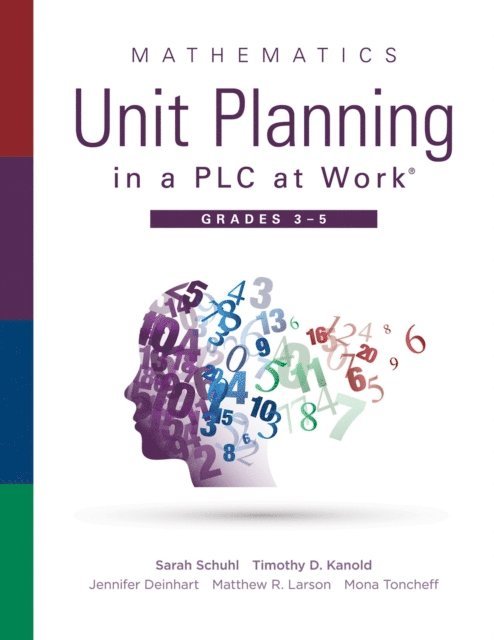
Build collaborative teacher teams committed to fostering student self-efficacy and increasing achievement in mathematics. Part of the Every Student Can Learn Mathematics series, this practical resource provides a framework for collectively planning a unit of study in grades 3–5. Grade-level teams will learn how to work together to perform key tasks—from unwrapping standards and creating team unit calendars to determining academic vocabulary and designing robust fraction units.
Help your team identify what students need to know by the end of each unit and build student self-efficacy:
Understand how to collaboratively plan thematic units in grades 3-5.Study the seven unit-planning elements and learn how to incorporate each in essential unit design.Review the role of the PLC at Work® process in enhancing collaborative student learning and teacher collaboration.Observe three model fraction units, one for each grade level.Receive tools and templates for effective unit planning.Contents:Introduction by Timothy D. KanoldPart 1: Mathematics Unit Planning and Design Elements Chapter 1: Planning for Student Learning of Mathematics in Grades 3–5 Chapter 2: Unit Planning as a Collaborative Mathematics TeamPart 2: Fraction Unit Examples, Grades 3–5 Chapter 3: Grade 3 Unit—Fraction Understanding Chapter 4: Grade 4 Unit—Fraction Equivalence, Addition, and Subtraction Chapter 5: Grade 5 Unit—Fraction Addition and SubtractionEpilogue: Mathematics Team OrganizationAppendix A: Create a Proficiency MapAppendix B: Checklist and Questions for Mathematics Unit PlanningReferences and Resources
365 kr
Läs direkt efter köp
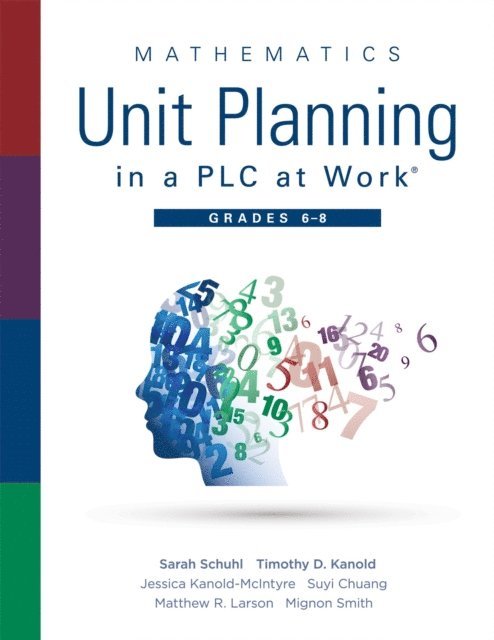
What exactly do your students need to know by the end of each unit of mathematics study throughout the school year? This practical resource empowers teacher teams to collectively plan for and deliver highly effective units of study in grades 6-8. The authors clearly outline how to generate essential learning standards, create a team unit calendar, identify prior knowledge, and complete many other essential collaborative tasks.
Use this resource to provide intermediate grade-level students with a more equitable mathematics learning experience
Understand how to collaboratively plan mathematics units in grades 6-8 as a professional learning community (PLC).Study the seven unit-planning elements and learn how to incorporate each in essential unit design.Review the role of the PLC at Work® process in enhancing student learning and teacher collaboration.Observe three model units, one for each grade, for ratios and proportional reasoning.Receive tools and templates for effective unit planning.Contents:AcknowledgmentsTable of ContentsAbout the AuthorsIntroductionPart One: Mathematics Unit Planning and Design Elements Chapter 1: Planning for Student Learning of Mathematics in Grades 6–8 Chapter 2: Unit Planning as a Collaborative Mathematics TeamPart Two: Proportional Reasoning Unit Examples, Grades 6-8 Chapter 3: Grade 6 Unit--Ratios and Rates Chapter 4: Grade 7 Unit--Proportional Reasoning Chapter 5: Grade 8 Unit--Linear Functions and EquationsEpilogue: Mathematics Team OrganizationAppendix A: Create a Proficiency MapAppendix B: Team Checklist and Questions for Mathematics Unit PlanningReferences and ResourcesIndex
365 kr
Läs direkt efter köp
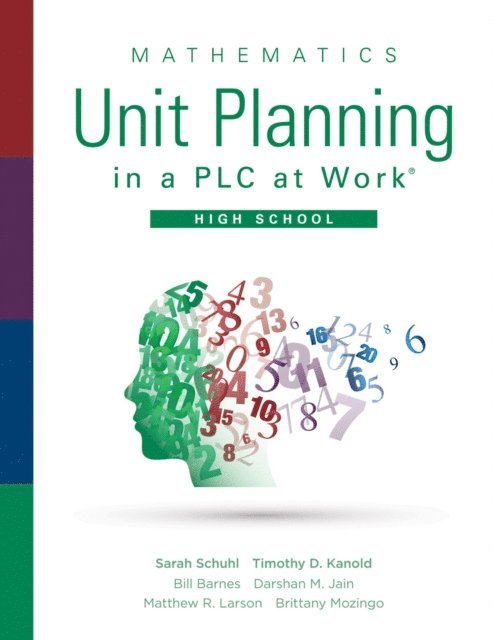
Champion student mastery of essential mathematics content in grades 9-12. Part of the Every Student Can Learn Mathematics series, this guidebook provides high school teachers with a framework for collectively planning units of study in a professional learning community (PLC). The authors share tools and protocols for unwrapping standards, generating unit calendars, developing rigorous lessons, and many other essential team actions.
Use this resource to discover practical insight into collaborative planning and inspiring detailed models of unit planning in action:
Understand how to collaboratively plan units for high school mathematics.Study the seven unit-planning elements, and learn how to incorporate each in unit designs.Review the role of the PLC at Work® process in enhancing student learning and teacher collaboration.Observe model units for Algebra 1, geometry, and Algebra 2.Receive tools and templates for effective unit planning.Contents:Introduction by Timothy D. KanoldPart 1: Mathematics Unit Planning and Design ElementsChapter 1: Planning for Student Learning of Mathematics in High SchoolChapter 2: Unit Planning as a Collaborative Mathematics TeamPart 2: Transformations on the Coordinate Plane Unit Examples for Algebra 1, Geometry, and Algebra 2Chapter 3: Algebra 1 Unit--Graphs of Quadratic FunctionsChapter 4: Geometry Unit--Transformations and CongruenceChapter 5: Algebra 2 Unit--Graphs of Trigonometric FunctionsEpilogue: Mathematics Team OperationsAppendix A: Create a Proficiency MapAppendix B: Checklist and Questions for Mathematics Unit Planning
446 kr
Skickas inom 3-6 vardagar
400 kr
Läs direkt efter köp
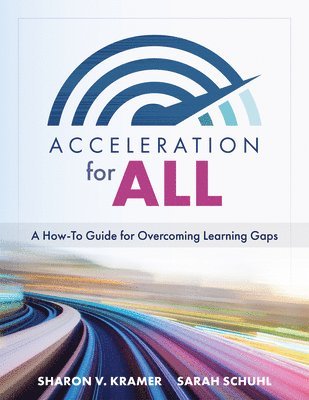
The need to overcome student learning gaps exists in every school. The answer is not a culture of remediation but one of acceleration. Every student deserves to learn at grade level or beyond—this is equity in action. Acceleration for All offers research-informed, real-world, and ready-to-implement strategies, with an emphasis on core instructional practices, to ensure accelerated learning schoolwide.
This book will help K–12 teachers and leaders:Implement practical strategies for sustained accelerated student learningShift from a mindset of deficit thinking to strengths-based thinking related to student learningDevelop opportunity equity so all students have access to grade-level learning every dayDevelop learning cycles to address instruction, assessment, and interventions or extensions as a team with a focus on every student learning grade-level standardsLearn how to establish a learning-based culture rooted in collective efficacySupport teachers, teams, and students through collaborative leadershipCreate processes and procedures for continuously improving learningContents:IntroductionChapter 1: The Case for AccelerationChapter 2: The Importance of CultureChapter 3: Curriculum Plans for Grade-Level LearningChapter 4: An Assessment System That Supports AccelerationChapter 5: Daily Grade-Level InstructionChapter 6: An Intervention System That Supports AccelerationChapter 7: The Importance of LeadershipChapter 8: Continuous ImprovementEpilogueReferences and ResourcesIndex475 kr
Läs direkt efter köp
The second edition of the bestseller Taking Action delves deeper into how educators can leverage the PLC at Work® process to create a highly effective multitiered system of supports. This step-by-step guide defines—tier by tier—the essential actions of the guiding coalition, teacher teams, and intervention team. New recommendations and tools are included to target assessments, engage students, and address resistance.
Use this book to: Close the achievement gaps exacerbated by the impact of the COVID-19 pandemicLeverage proven Tier 1 instructional practices to provide first-best teaching and engage students in learningUnderstand the critical roles and responsibilities of the guiding coalition, teacher teams, and site intervention teamCreate schoolwide, balanced assessment and grading practices that promote student learning and engagementEmploy crucial skills and tools to address common leadership obstacles, such as staff resistance to changeContents:Introduction: The Urgency of the MomentChapter 1: The RTI at Work PyramidPart One: Tier 1 Essential ActionsChapter 2: A Culture of Collective ResponsibilityChapter 3: Tier 1 Teacher Team Essential ActionsChapter 4: Tier 1 Guiding Coalition Essential ActionsPart Two: Tier 2 Essential ActionsChapter 5: Tier 2 Teacher Team Essential ActionsChapter 6: Tier 2 Guiding Coalition Essential ActionsPart Three: Tier 3 Essential ActionsChapter 7: Tier 3 Guiding Coalition Essential ActionsChapter 8: Tier 3 Intervention Team Essential ActionsEpilogue: Get Started . . . Then Get BetterReferences and ResourcesIndex401 kr
Skickas inom 5-8 vardagar
376 kr
Läs direkt efter köp
This second edition book from the Every Student Can Learn Mathematics series guides you and your collaborative teams in building student and collective teacher efficacy through the formative use of common assessments. Discover how you can work interdependently to design high-quality assessments, calibrate scoring of student work, and analyze data to enhance instructional practices and sustain effective Tier 2 learning experiences for students. New and enhanced protocols and examples provide practical tools and models for immediate implementation. Improve your mathematics collaborative team assessment processes using the four critical questions of a PLC at Work® along with an RTI or MTSS focus on effective Tier 2 interventions.
This book will help K–12 mathematics teachers and teacher teams: Learn the criteria for the formative use of all unit-by-unit common mathematics assessmentsIdentify essential learning standards as drivers for common assessments and student reflectionDesign and use high-quality common assessments and team scoring agreementsCalibrate the scoring of student work for consistent formative feedback to studentsEngage in data protocols that analyze student work to enhance instructional practices, identify students in need of targeted intervention or extension, and create effective intervention learning experiencesDetermine how students can reflect and set goals using the formative feedback process based on common unit-by-unit assessmentsDesign and implement an effective Tier 2 mathematics intervention program to support student learningContents:PrefaceIntroductionChapter 1: The Mathematics at Work Common Assessment ProcessChapter 2: Quality Common Mathematics AssessmentsChapter 3: Sample Common Mathematics Assessments and Calibration RoutinesChapter 4: Teacher Actions in the Formative Assessment ProcessChapter 5: Student Actions in the Formative Assessment ProcessChapter 6: Team Response to Student Learning Using Tier 2 Mathematics Intervention CriteriaSummaryEpilogueAppendixReferences and ResourcesIndex376 kr
Läs direkt efter köp
Build collective teacher efficacy and students’ mathematical thinking using the Mathematics in a PLC at Work™ lesson-design process. This second edition of the popular Mathematics Instruction and Tasks book guides preK–12 teacher teams in ensuring improved mathematics achievement. Gain new and enhanced understanding of research-affirmed instructional routines, and learn how to efficiently elicit high levels of student engagement and self-efficacy.Implement instructional strategies and methods of teaching mathematics in a professional learning community.
This book will help preK–12 mathematics teachers and teacher teams:Identify essential mathematics content standards students learn during a unit Understand the importance of communicating the why of the essential mathematics learning standards to students Plan for the use of balanced rigor and mathematical routines to teach each content standard during instruction Use a balance of appropriate mathematics activities and tasks needed to develop conceptual understanding, procedural fluency, and application of mathematical concepts and skillsImplement instructional math routines that ensure the formative learning of all students during lessonsContents:PrefaceIntroduction: The Mathematics at Work™ Lesson Design FrameworkChapter 1: Essential Learning Standards—The Why of the LessonChapter 2: Prior-Knowledge RoutinesChapter 3: Mathematics Language RoutinesChapter 4: A Balance of Mathematical TasksChapter 5: Mathematical Discourse RoutinesChapter 6: Lesson Closure RoutinesChapter 7: High-Quality Tier 1 Mathematics InterventionChapter 8: Analyzing the Effectiveness of Mathematics InstructionEpilogueAppendix AAppendix B: Cognitive-Demand-Level Task Analysis GuideAppendix C: Mathematics Instruction and Tasks in a PLC at Work Protocols and Tools