Jhuma Basak - Böcker
Visar alla böcker från författaren Jhuma Basak. Handla med fri frakt och snabb leverans.
5 produkter
5 produkter
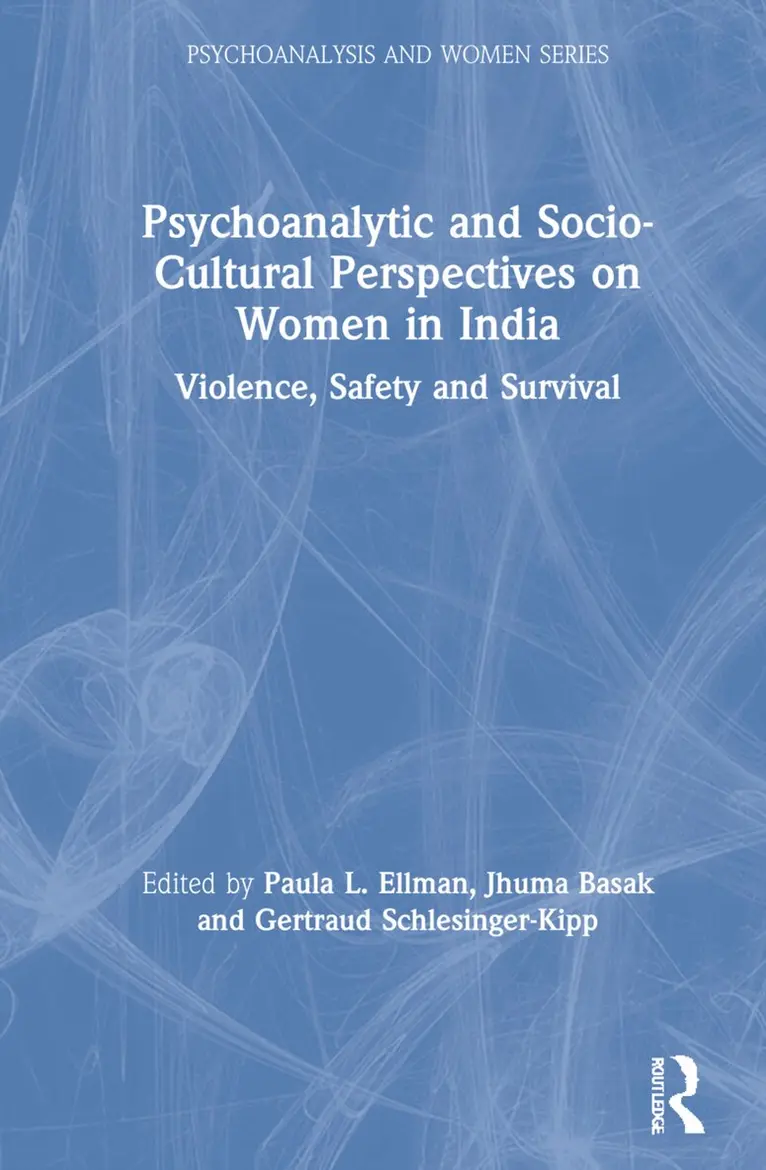
Psychoanalytic and Socio-Cultural Perspectives on Women in India
Violence, Safety and Survival
Inbunden, Engelska, 2021
2 026 kr
Skickas inom 10-15 vardagar
This important book provides a bridge between psychoanalytic perspectives and socio-cultural issues to shine a spotlight on the experiences of women in India today.Women’s well-being and security has often depended upon their gender positioning while other binaries like rural-urban, class, and caste have also played a crucial role globally and especially in India. Historically, women have been subjected to various forms of oppression that include sex selective abortions, domestic violence, bride burning for dowry, and acid attacks. Threats to women’s security have recently increased with progressive polarization and hardening of socio-political and cultural ideologies. This book assesses how women’s lives are impacted by these social and cultural conventions and stigma, including ideas around motherhood, religion, intimacy and femininity itself, and the psychological implications these have. Topics include the seduction of religion, motherhood in contemporary times, intimacy and violence, and fundamentalist states of mind in the clinical space. While the book echoes a regional specificity, it simultaneously resonates a backdrop of global change of affairs that has its impact on ideological freedom and the concept of inclusivity in terms of gender, race, culture, and politics across the world. For this comprehensive perspective, the effort is to create a platform of authors comprising psychoanalysts, social scientists, scholars from the liberal arts discipline, as well as social activists.In a country where women have been historically subjected to both psychological and physical oppression, this timely and original book will interest a range of scholars interested in gender, mental health and contemporary Indian society, as well as clinicians in the field.
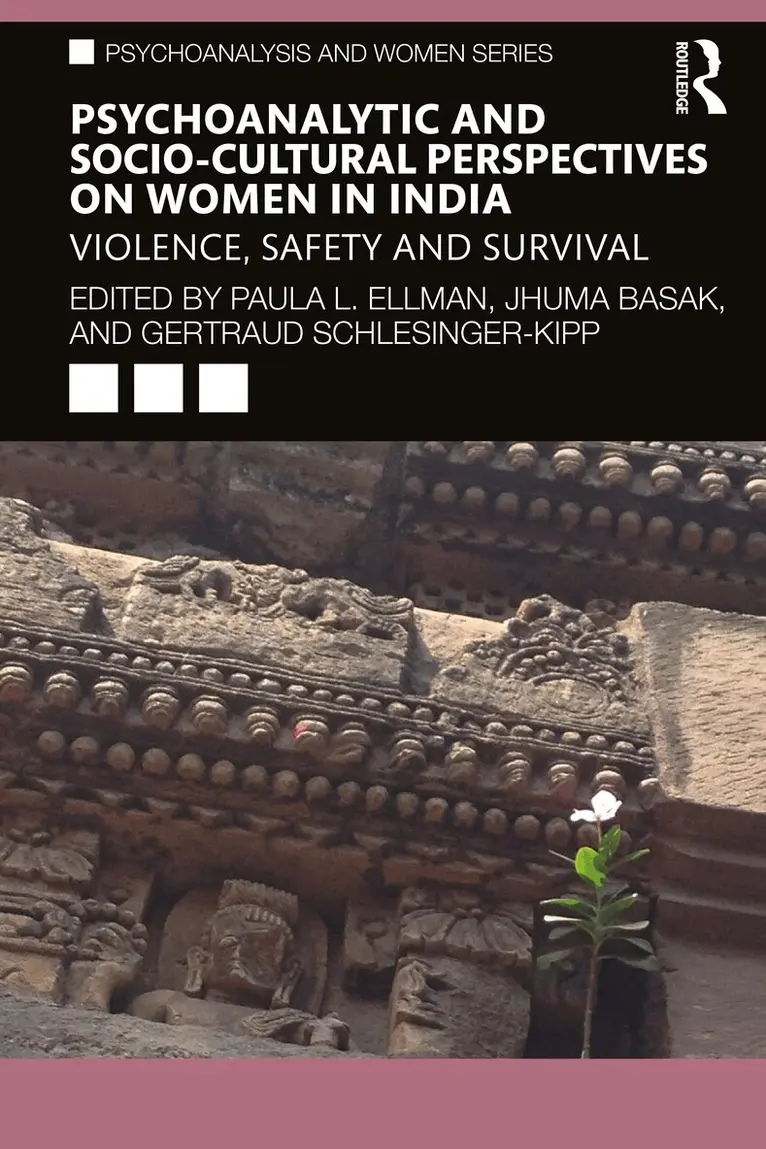
Psychoanalytic and Socio-Cultural Perspectives on Women in India
Violence, Safety and Survival
Häftad, Engelska, 2021
499 kr
Skickas inom 10-15 vardagar
This important book provides a bridge between psychoanalytic perspectives and socio-cultural issues to shine a spotlight on the experiences of women in India today.Women’s well-being and security has often depended upon their gender positioning while other binaries like rural-urban, class, and caste have also played a crucial role globally and especially in India. Historically, women have been subjected to various forms of oppression that include sex selective abortions, domestic violence, bride burning for dowry, and acid attacks. Threats to women’s security have recently increased with progressive polarization and hardening of socio-political and cultural ideologies. This book assesses how women’s lives are impacted by these social and cultural conventions and stigma, including ideas around motherhood, religion, intimacy and femininity itself, and the psychological implications these have. Topics include the seduction of religion, motherhood in contemporary times, intimacy and violence, and fundamentalist states of mind in the clinical space. While the book echoes a regional specificity, it simultaneously resonates a backdrop of global change of affairs that has its impact on ideological freedom and the concept of inclusivity in terms of gender, race, culture, and politics across the world. For this comprehensive perspective, the effort is to create a platform of authors comprising psychoanalysts, social scientists, scholars from the liberal arts discipline, as well as social activists.In a country where women have been historically subjected to both psychological and physical oppression, this timely and original book will interest a range of scholars interested in gender, mental health and contemporary Indian society, as well as clinicians in the field.
482 kr
Skickas inom 10-15 vardagar
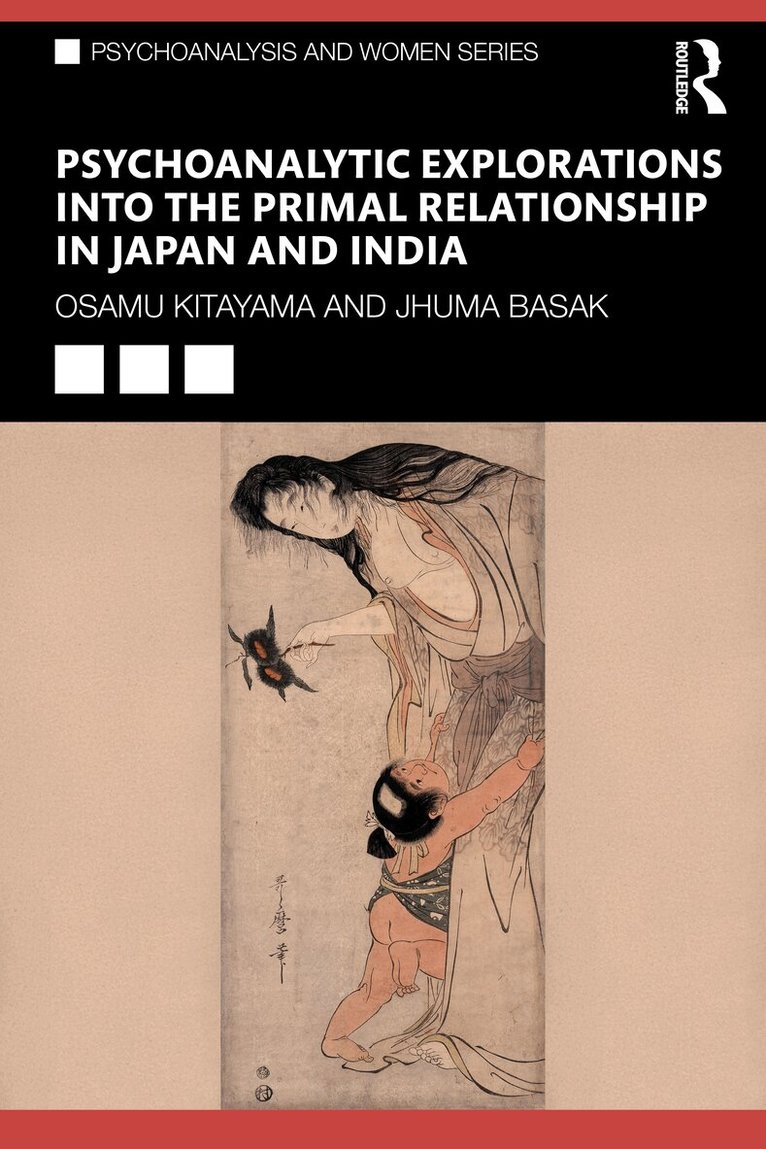
In this landmark collaboration, Osamu Kitayama and Jhuma Basak chronical their long-standing collaboration and cultural exchange to survey the importance of familial relationships in Japan and India, exploring primal relations through a cross-cultural psychoanalytic lens.Divided into three sections, Psychoanalytic Explorations into the Primal Relationship in Japan and India looks at each country’s perception of parenthood and approach to raising children in turn before concluding in an illuminating dialogue between the two authors. Kitayama explores the maternal figure within the mother-child relationship, with a focus on the mother-son dyad, as well as relationships between parents. He considers, in depth, how Japanese culture can often exclude what is perceived as alien, delving into its rich tapestry of folklore to understand underlying ‘mental scripts’ which can shape collective perceptions, societal norms and expectations, each of which can pose an issue to healthy familial relationships. Basak’s response draws from Indian socio-cultural and mythological contexts, as well as clinical applications, to provide psychoanalytic insight into the stark differences and similarities between attitudes in Japan, India and the eastern culture at large. Both authors join together to highlight different child rearing practises such as co-sleeping and how they can shape human sexuality-subjectivity. Challenging the standardisation of the Oedipal myth, the book draws from literary and clinical examples in Japan and India to invite the reader into another world of parenting style and another idiom of psychoanalysis. Uniquely positioned to develop understanding of how psychoanalysis has developed in non-Western countries, this book is an essential resource for psychoanalysts in training and in practice.
2 091 kr
Skickas inom 10-15 vardagar
In this landmark collaboration, Osamu Kitayama and Jhuma Basak chronical their long-standing collaboration and cultural exchange to survey the importance of familial relationships in Japan and India, exploring primal relations through a cross-cultural psychoanalytic lens.Divided into three sections, Psychoanalytic Explorations into the Primal Relationship in Japan and India looks at each country’s perception of parenthood and approach to raising children in turn before concluding in an illuminating dialogue between the two authors. Kitayama explores the maternal figure within the mother-child relationship, with a focus on the mother-son dyad, as well as relationships between parents. He considers, in depth, how Japanese culture can often exclude what is perceived as alien, delving into its rich tapestry of folklore to understand underlying ‘mental scripts’ which can shape collective perceptions, societal norms and expectations, each of which can pose an issue to healthy familial relationships. Basak’s response draws from Indian socio-cultural and mythological contexts, as well as clinical applications, to provide psychoanalytic insight into the stark differences and similarities between attitudes in Japan, India and the eastern culture at large. Both authors join together to highlight different child rearing practises such as co-sleeping and how they can shape human sexuality-subjectivity. Challenging the standardisation of the Oedipal myth, the book draws from literary and clinical examples in Japan and India to invite the reader into another world of parenting style and another idiom of psychoanalysis. Uniquely positioned to develop understanding of how psychoanalysis has developed in non-Western countries, this book is an essential resource for psychoanalysts in training and in practice.
6 388 kr
Skickas inom 5-8 vardagar
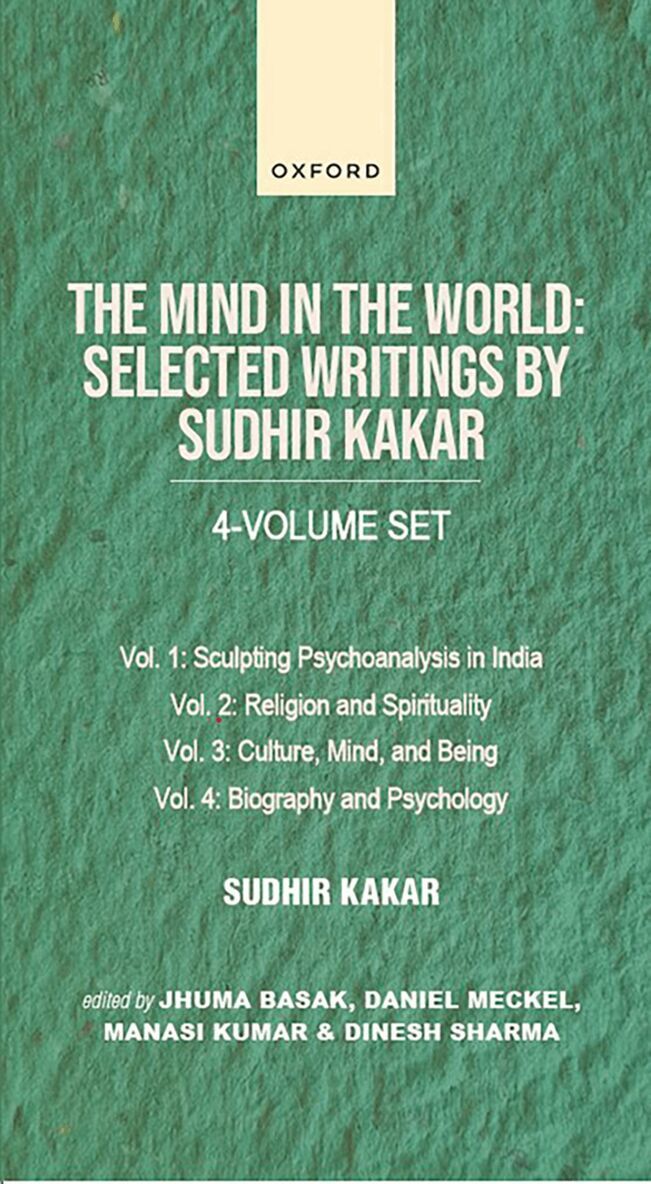
The four volumes cover Sudhir Kakar's selected writings on psychoanalysis, culture and society, and religion and biography over the last four decades. As the 'psychoanalyst of civilizations', Kakar uniquely captures wide swathes of Indian cultural imagination through his essays. The first volume unfolds his psychoanalytic journey comprising both his theoretical innovations and clinical speculations. It recounts his personal travelogue in psychoanalysis that gave birth to the later macro spectrum of his analytic explorations into the concept of maternal enthralment, Oedipal alliance, and spiritual healing traditions. Kakar's thinking from his earliest works to the most recent is traced in the four sections of the second volume: Hinduism and psychoanalysis; psychoanalytic and spiritual healing in India; violence, self, and the sacred; and spirit and psyche. The third focusses on Kakar's original contributions on culture and society and maps the landscape of Indian cultural imagination from multiple vantage points, thus demonstrating Kakar's dynamism as a prominent, deep, and fierce Indian thinker who has combined Western philosophical thinking with critical Indian cultural thinking. The fourth volume presents psychological biographies to advance the claim that the study of life narratives across cultures needs to be pursued, especially in the era of globalization and increased cross-cultural exchange and connectivity.