Jialu Fan – författare
Visar alla böcker från författaren Jialu Fan. Handla med fri frakt och snabb leverans.
3 produkter
3 produkter
441 kr
Skickas inom 10-15 vardagar
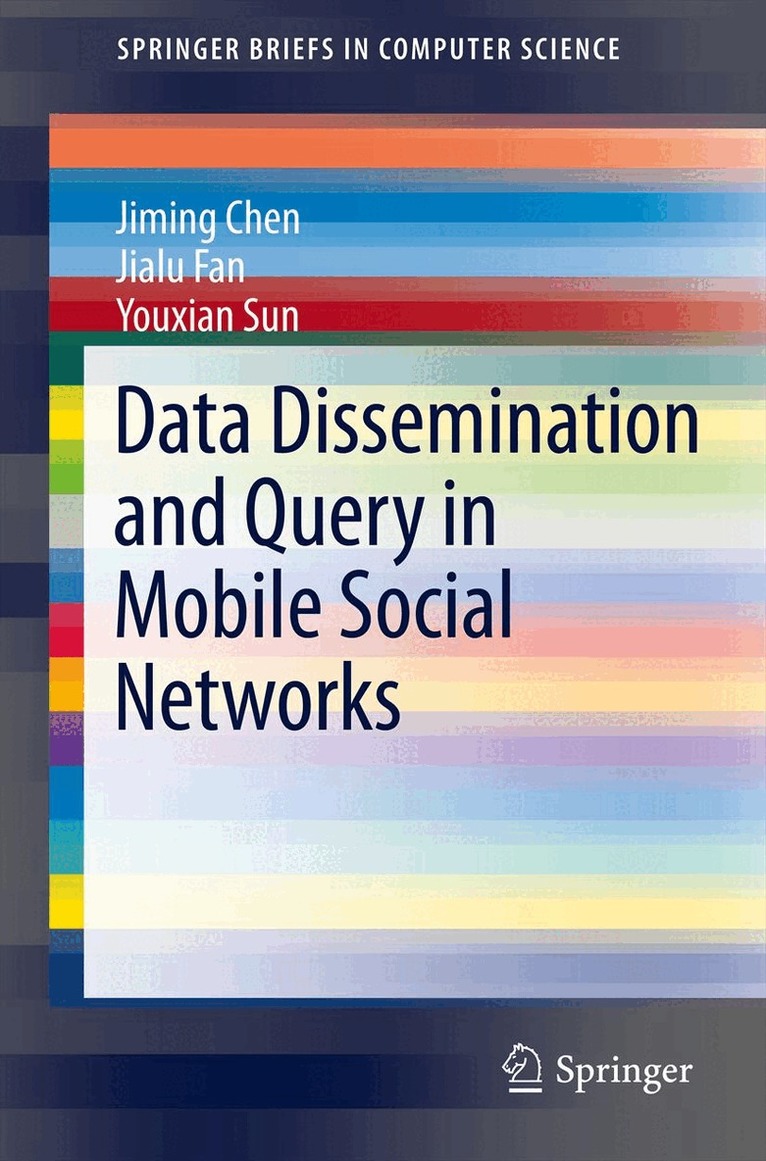
With the increasing popularization of personal hand-held mobile devices, more people use them to establish network connectivity and to query and share data among themselves in the absence of network infrastructure, creating mobile social networks (MSNet). Since users are only intermittently connected to MSNets, user mobility should be exploited to bridge network partitions and forward data. Currently, data route/forward approaches for such intermittently connected networks are commonly "store-carry-and-forward" schemes, which exploit the physical user movements to carry data around the network and overcome path disconnection. And since the source and destination may be far away from each other, the delay for the destination to receive the data from the source may be long. MSNets can be viewed as one type of socially-aware delay tolerant networks (DTNs). Observed from social networks, the contact frequencies are probably different between two friends and two strangers, and this difference should be taken into consideration when designing data dissemination and query schemes in MSNets. In this book, the fundamental concepts of MSNets are introduced including the background, key features and potential applications of MSNets, while also presenting research topics, such as, MSNets as realistic social contact traces and user mobility models. Because the ultimate goal is to establish networks that allow mobile users to quickly and efficiently access interesting information, particular attention is paid to data dissemination and query schemes in subsequent sections. Combined with geography information, the concepts of community and centrality are employed from a social network perspective to propose several data dissemination and query schemes, and further use real social contact traces to evaluate their performance, demonstrating that such schemes achieve better performance when exploiting more social relationships between users.
1 484 kr
Skickas inom 10-15 vardagar
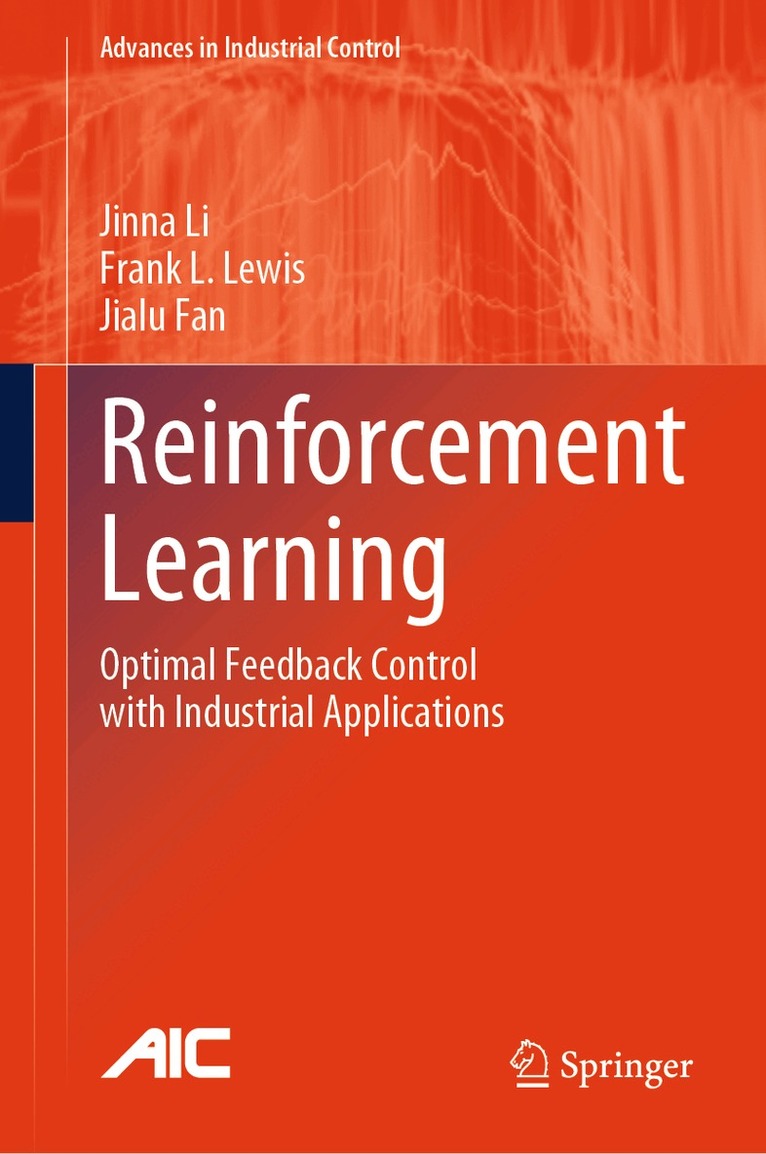
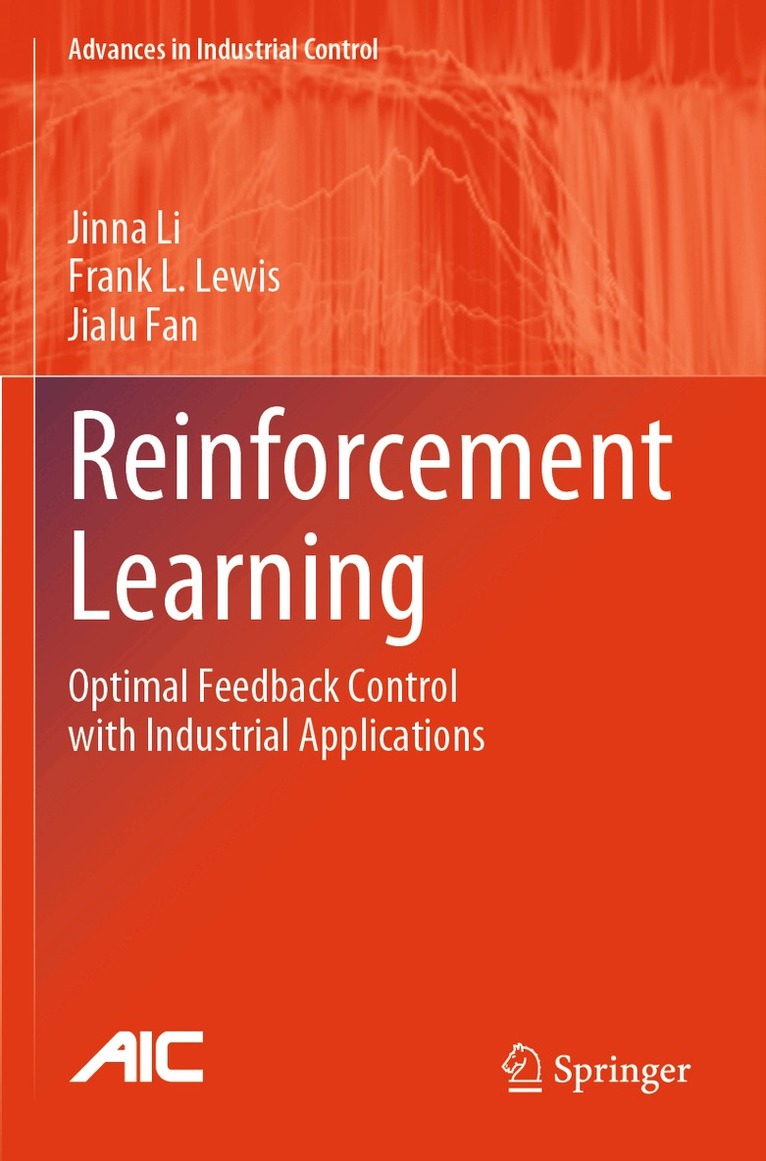
This book offers a thorough introduction to the basics and scientific and technological innovations involved in the modern study of reinforcement-learning-based feedback control. The authors address a wide variety of systems including work on nonlinear, networked, multi-agent and multi-player systems. A concise description of classical reinforcement learning (RL), the basics of optimal control with dynamic programming and network control architectures, and a brief introduction to typical algorithms build the foundation for the remainder of the book. Extensive research on data-driven robust control for nonlinear systems with unknown dynamics and multi-player systems follows. Data-driven optimal control of networked single- and multi-player systems leads readers into the development of novel RL algorithms with increased learning efficiency. The book concludes with a treatment of how these RL algorithms can achieve optimal synchronization policies for multi-agentsystems with unknown model parameters and how game RL can solve problems of optimal operation in various process industries. Illustrative numerical examples and complex process control applications emphasize the realistic usefulness of the algorithms discussed. The combination of practical algorithms, theoretical analysis and comprehensive examples presented in Reinforcement Learning will interest researchers and practitioners studying or using optimal and adaptive control, machine learning, artificial intelligence, and operations research, whether advancing the theory or applying it in mineral-process, chemical-process, power-supply or other industries.
1 484 kr
Skickas inom 10-15 vardagar
This book offers a thorough introduction to the basics and scientific and technological innovations involved in the modern study of reinforcement-learning-based feedback control. The authors address a wide variety of systems including work on nonlinear, networked, multi-agent and multi-player systems. A concise description of classical reinforcement learning (RL), the basics of optimal control with dynamic programming and network control architectures, and a brief introduction to typical algorithms build the foundation for the remainder of the book. Extensive research on data-driven robust control for nonlinear systems with unknown dynamics and multi-player systems follows. Data-driven optimal control of networked single- and multi-player systems leads readers into the development of novel RL algorithms with increased learning efficiency. The book concludes with a treatment of how these RL algorithms can achieve optimal synchronization policies for multi-agentsystems with unknown model parameters and how game RL can solve problems of optimal operation in various process industries. Illustrative numerical examples and complex process control applications emphasize the realistic usefulness of the algorithms discussed. The combination of practical algorithms, theoretical analysis and comprehensive examples presented in Reinforcement Learning will interest researchers and practitioners studying or using optimal and adaptive control, machine learning, artificial intelligence, and operations research, whether advancing the theory or applying it in mineral-process, chemical-process, power-supply or other industries.