Jill R. Ehnenn – Författare
Visar alla böcker från författaren Jill R. Ehnenn. Handla med fri frakt och snabb leverans.
4 produkter
4 produkter
1 829 kr
Tillfälligt slut
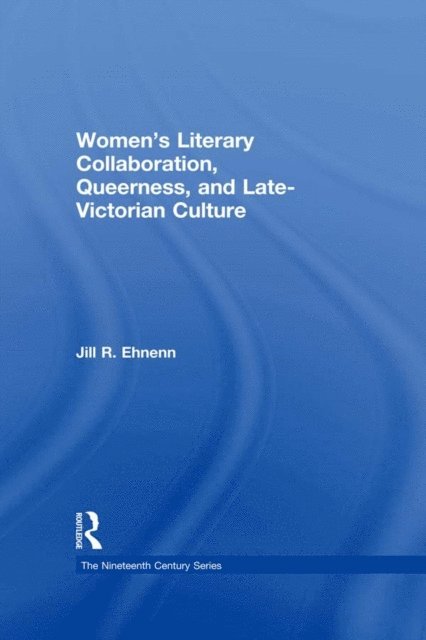
The first full-length study to focus exclusively on nineteenth-century British women while examining queer authorship and culture, Jill R. Ehnenn's book is a timely interrogation into the different histories and functions of women's literary partnerships. For Vernon Lee (Violet Paget) and 'Kit' Anstruther-Thomson; Somerville and Ross (Edith Somerville and Violet Martin); Elizabeth Robins and Florence Bell; and Katharine Bradley and Edith Cooper, the couple who wrote under the pseudonym of 'Michael Field', collaborative life and work functioned strategically, as sites of discursive resistance that critique Victorian culture in ways that would be characterized today as feminist, lesbian, and queer. Ehnenn's project shows that collaborative texts from such diverse genres as poetry, fiction, drama, the essay, and autobiography negotiate many limitations of post-Enlightenment patriarchy: Cartesian subjectivity and solitary creativity, industrial capitalism and alienated labor, and heterosexism. In so doing, these jointly authored texts employ a transgressive aesthetic and invoke the potentials of female spectatorship, refusals of representation, and the rewriting of history. Ehnenn's book will be a valuable resource for scholars and students of Victorian literature and culture, women's and gender studies, and collaborative writing.
727 kr
Skickas inom 10-15 vardagar
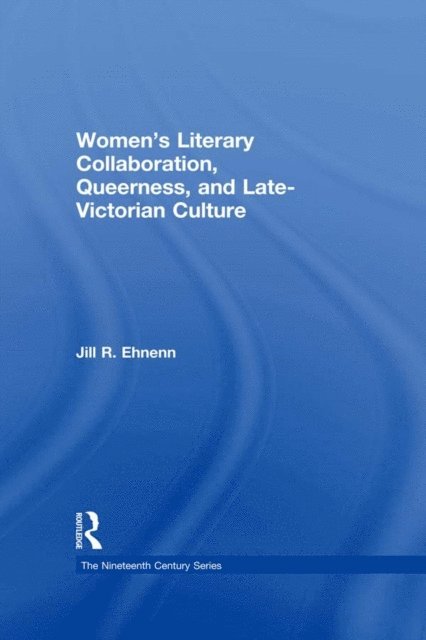
The first full-length study to focus exclusively on nineteenth-century British women while examining queer authorship and culture, Jill R. Ehnenn's book is a timely interrogation into the different histories and functions of women's literary partnerships. For Vernon Lee (Violet Paget) and 'Kit' Anstruther-Thomson; Somerville and Ross (Edith Somerville and Violet Martin); Elizabeth Robins and Florence Bell; and Katharine Bradley and Edith Cooper, the couple who wrote under the pseudonym of 'Michael Field', collaborative life and work functioned strategically, as sites of discursive resistance that critique Victorian culture in ways that would be characterized today as feminist, lesbian, and queer. Ehnenn's project shows that collaborative texts from such diverse genres as poetry, fiction, drama, the essay, and autobiography negotiate many limitations of post-Enlightenment patriarchy: Cartesian subjectivity and solitary creativity, industrial capitalism and alienated labor, and heterosexism. In so doing, these jointly authored texts employ a transgressive aesthetic and invoke the potentials of female spectatorship, refusals of representation, and the rewriting of history. Ehnenn's book will be a valuable resource for scholars and students of Victorian literature and culture, women's and gender studies, and collaborative writing.
1 455 kr
Skickas inom 7-10 vardagar
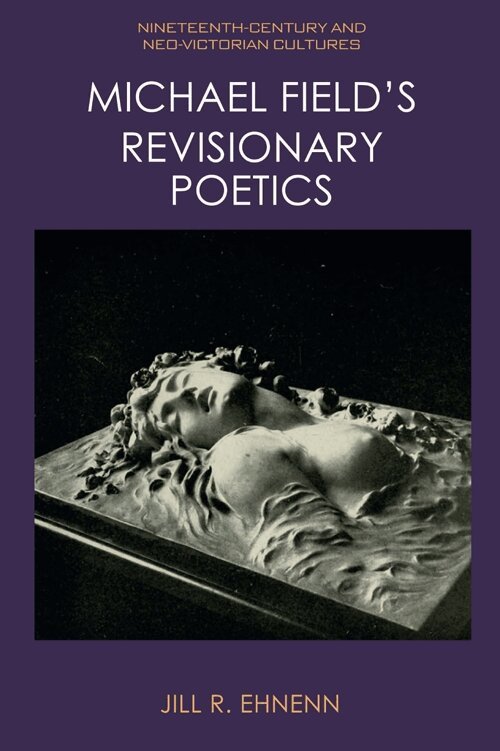
Examines history, modernity, gender, and sexuality through the literary innovations of two late-Victorian female co-authorsOffers new readings of a wide range of Michael Field texts (Callirrho , Fair Rosamund, Canute the Great, Long Ago, Sight and Song, Underneath the Bough, Wild Honey, Poems of Adoration, Mystic Trees, Whym Chow, the joint diary Works and Days and many unpublished poems)Uses interdisciplinary methods to bring Michael Field's life and work in conversation with queer and feminist approaches to literary form, art history, ecocriticism, disability studies and religious studiesIdentifies the literary, visual, and philosophical precursors of Michael Field's adaptations and proposes that we read their appropriations as a deliberate blend of objective and subjective epistemologiesTraces resonances between fin-de-si cle culture and today's theoretical debates about historicist vs. presentist approaches to the archive and Foucauldian vs. phenomenological understandings of subjectivity, gender and sexualitySituates Michael Field in relation to literary texts and philosophical thought of their contemporaries the late Victorians and Decadent Moderns with whom they bridge the nineteenth and twentieth centuriesAll authors try to do something new, or tell an old story in a new way; but for Katharine Bradley and Edith Cooper, who wrote as Michael Field and called themselves 'Poets and Lovers', rewriting old stories, history and traditional literary forms with extraordinary innovation was nothing short of high art. Offering new readings of a wide range of Michael Field texts, this book asks: how do ambitious experiments with a joint diary, closet drama, ekphrasis, elegy and nature, devotional and love poetry help these women navigate the paradox of looking backward in order to achieve their goal 'to make all things new'? How do their revisionary poetics help the co-authors, as queer, female Aesthetes, cope with late-Victorian modernity? Through an interdisciplinary approach to their passionate and sometimes eccentric life and work, this book provokes thought about the fin-de-si cle and invites readers, like Michael Field themselves, to engage the past in order to create transtemporal community and to make sense of the present.
342 kr
Skickas
All authors try to do something new, or tell an old story in a new way; but for Katharine Bradley and Edith Cooper, who wrote as Michael Field and called themselves 'Poets and Lovers', rewriting old stories, history and traditional literary forms with extraordinary innovation was nothing short of high art. Offering new readings of a wide range of Michael Field texts, this book asks: how do ambitious experiments with a joint diary, closet drama, ekphrasis, elegy and nature, devotional and love poetry help these women navigate the paradox of looking backward in order to achieve their goal 'to make all things new'? How do their revisionary poetics help the co-authors, as queer, female Aesthetes, cope with late-Victorian modernity? Through an interdisciplinary approach to their passionate and sometimes eccentric life and work, this book provokes thought about the fin-de-siecle and invites readers, like Michael Field themselves, to engage the past in order to create transtemporal community and to make sense of the present.