Jill Robbins - Böcker
Visar alla böcker från författaren Jill Robbins. Handla med fri frakt och snabb leverans.
7 produkter
7 produkter
818 kr
Tillfälligt slut
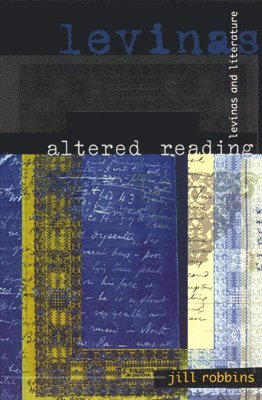
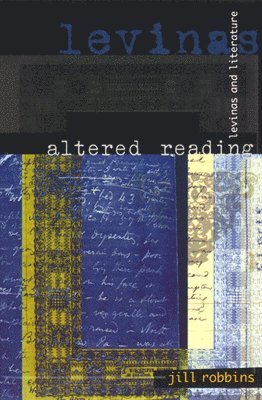
How might the ethical philosophy of the renowned French thinker Emmanuel Levinas relate to literature? Because his philosophy addresses the very opening of ethical experience, it cannot be applied readily as a critical method to literary texts. Yet Levinas's work, studded as it is with literary sources and quotations, demands a literary account. Examining Levinas's texts while in dialogue with readings by Derrida, Blanchot, and Bataille, this text shows how the thread of the literary leads directly to the internal tensions of Levinas's ethical discourse. Jill Robbins provides a comprehensive critical account of Levinas's early and mature philosophy as well as later key transitional essays. In an appendix, she includes her own translation of an essay by Bataille on Levinas.
315 kr
Skickas inom 7-10 vardagar
How might the ethical philosophy of the renowned French thinker Emmanuel Levinas relate to literature? Because his philosophy addresses the very opening of ethical experience, it cannot be applied readily as a critical method to literary texts. Yet Levinas's work, studded as it is with literary sources and quotations, demands a literary account. Examining Levinas's texts while in dialogue with readings by Derrida, Blanchot, and Bataille, this text shows how the thread of the literary leads directly to the internal tensions of Levinas's ethical discourse. Jill Robbins provides a comprehensive critical account of Levinas's early and mature philosophy as well as later key transitional essays. In an appendix, she includes her own translation of an essay by Bataille on Levinas.
1 492 kr
Skickas inom 10-15 vardagar
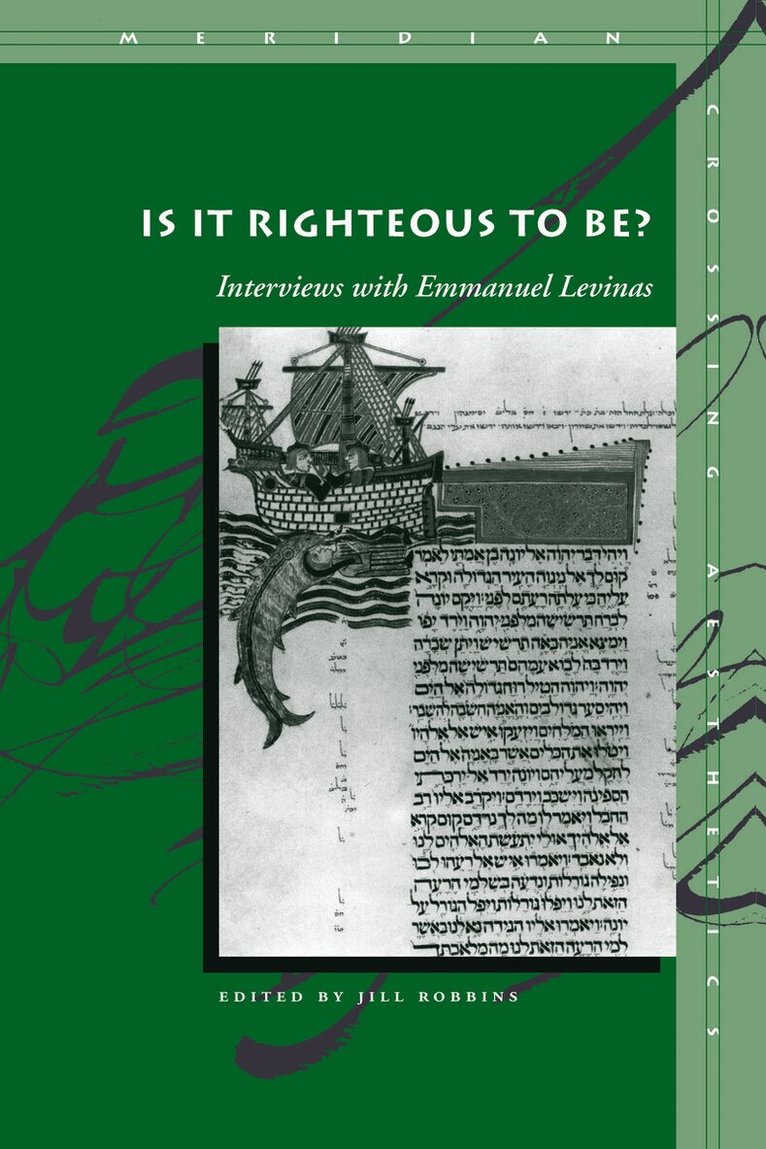
Recent debates within Continental philosophy have decisively renewed the question of the ethical, with the French philosopher Emmanuel Levinas (1905-1995) as its center. Coming from yet in contestation with the phenomenological traditions of Husserl and Heidegger, Levinas defines ethics as an originary response to the face of the other. For him, language is an exception to a habitual economy that represses alterity and maintains the asymmetry and distance constitutive of the nontotalizing relation to the other. Ethics occurs in the interlocutionary relation to the other, and interpellation—a kind of interruption by speaking—is the essential feature of ethical language.Between 1982 and 1992, Levinas gave numerous interviews, closing a distinguished sixty-year career. Of the twenty interviews collected in this volume, seventeen appear in English for the first time. In the interviews Levinas sets forth the central features of his ethical philosophy, previously enunciated in Totality and Infinity (1961), in a language that bridges to the idiom of his later work. He underlines his dedication to the phenomenological search for the concrete and the nonformal signification of alterity. He also elaborates issues that do not receive extensive treatment in his formal philosophical works, including the question of prephilosophical experiences and the ethical signification of money, justice, and the State.The informality of the interviews prompts Levinas to address matters about which he is reticent in his published works, notably the relation of his ethical philosophy to theological questions, the intrication of the Hebrew Bible in Greek philosophy, his substantial corpus of "nonphilosophical" or "confessional" writings on the Talmud, and recollections of his extraordinary talmudic teacher, Shoshani.The centerpiece of the volume is a previously untranslated 1986 interview with François Poirié. Containing Levinas's sole extended discussion of biographical matters with an interviewer, this text helps to situate Levinas in his contemporary intellectual world and to clarify his place in French thought.
360 kr
Skickas inom 7-10 vardagar
Recent debates within Continental philosophy have decisively renewed the question of the ethical, with the French philosopher Emmanuel Levinas (1905-1995) as its center. Coming from yet in contestation with the phenomenological traditions of Husserl and Heidegger, Levinas defines ethics as an originary response to the face of the other. For him, language is an exception to a habitual economy that represses alterity and maintains the asymmetry and distance constitutive of the nontotalizing relation to the other. Ethics occurs in the interlocutionary relation to the other, and interpellation—a kind of interruption by speaking—is the essential feature of ethical language.Between 1982 and 1992, Levinas gave numerous interviews, closing a distinguished sixty-year career. Of the twenty interviews collected in this volume, seventeen appear in English for the first time. In the interviews Levinas sets forth the central features of his ethical philosophy, previously enunciated in Totality and Infinity (1961), in a language that bridges to the idiom of his later work. He underlines his dedication to the phenomenological search for the concrete and the nonformal signification of alterity. He also elaborates issues that do not receive extensive treatment in his formal philosophical works, including the question of prephilosophical experiences and the ethical signification of money, justice, and the State.The informality of the interviews prompts Levinas to address matters about which he is reticent in his published works, notably the relation of his ethical philosophy to theological questions, the intrication of the Hebrew Bible in Greek philosophy, his substantial corpus of "nonphilosophical" or "confessional" writings on the Talmud, and recollections of his extraordinary talmudic teacher, Shoshani.The centerpiece of the volume is a previously untranslated 1986 interview with François Poirié. Containing Levinas's sole extended discussion of biographical matters with an interviewer, this text helps to situate Levinas in his contemporary intellectual world and to clarify his place in French thought.
294 kr
Skickas inom 7-10 vardagar
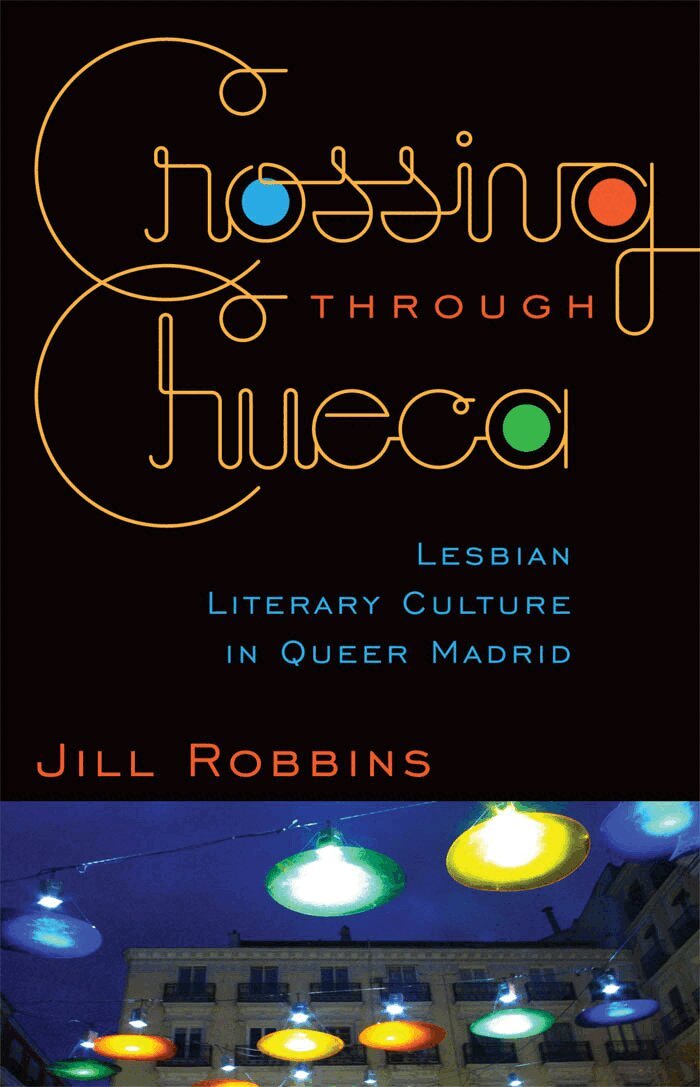
In the past two decades the city of Madrid has been marked by pride, feminism, and globalization-but also by the vestiges of the machismo nurtured during the long years of the Franco dictatorship. Crossing through Chueca examines how lesbian literary culture fares in this mix from the end of the countercultural movement la movida madrileÑa in 1988 until the gay marriage march in 2005.Jill Robbins traverses the various literary spaces of the city associated with queer culture, in particular the gay barrio of Chueca, revealing how it is a product of interrelations-a site crisscrossed by a multiplicity of subjects who constitute it as a queer space through the negotiation of their sexual, racial, gender, and class identities. Robbins recognizes Chueca as a political space as well, a refuge from homophobia. She also shows how the spatial and literary practices of Chueca relate to economic issues.In examining how women’s sexual identities have become visible in and through the Chueca phenomenon, this work is a revealing example of transnational queer studies within the broader Western discussion on gender and sexuality.
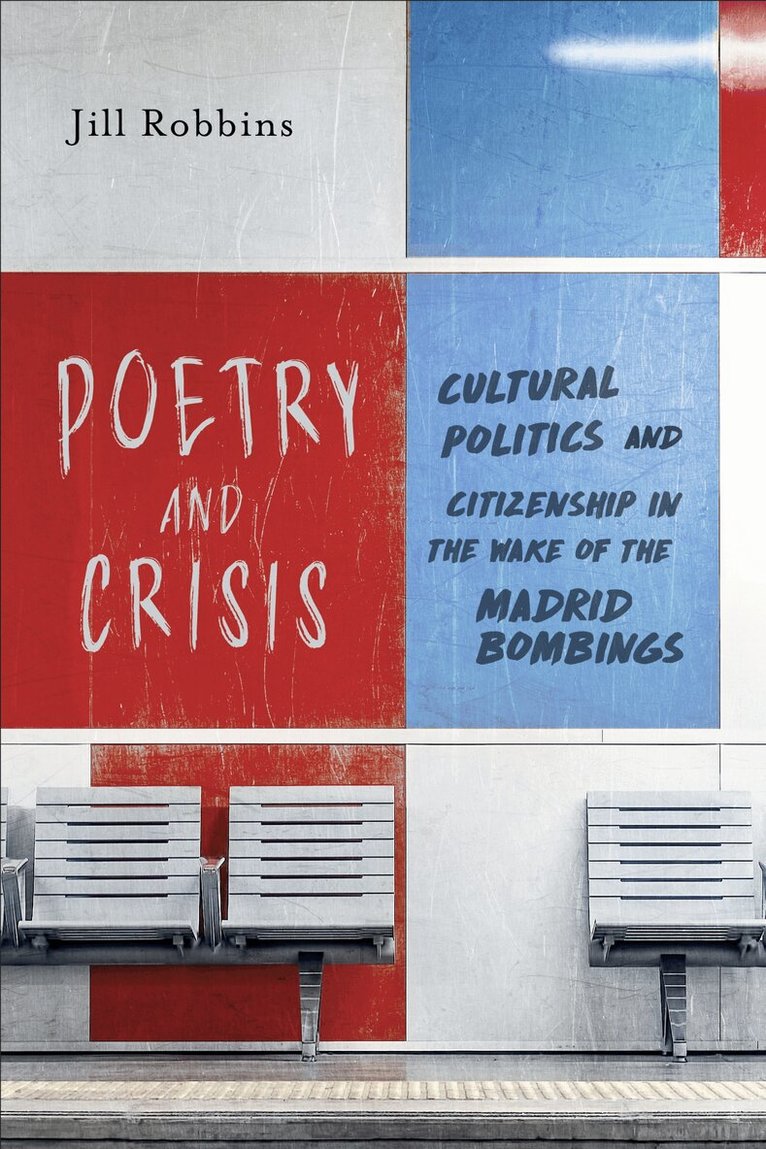
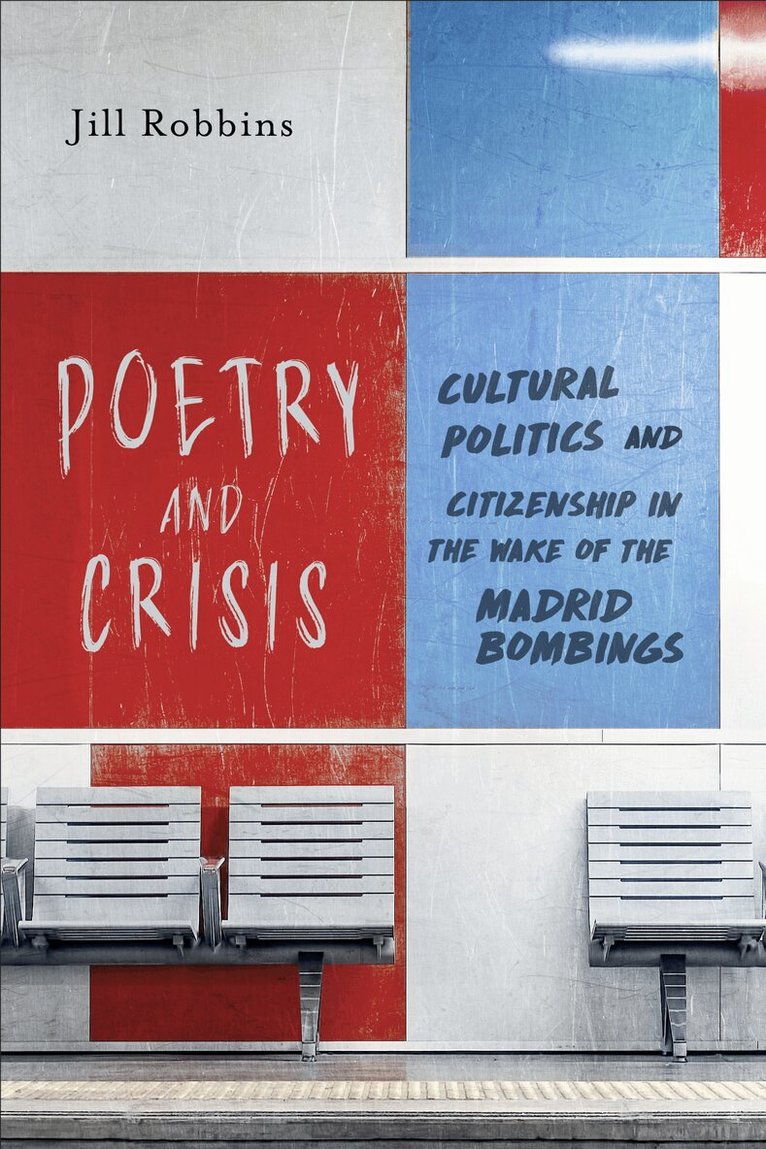
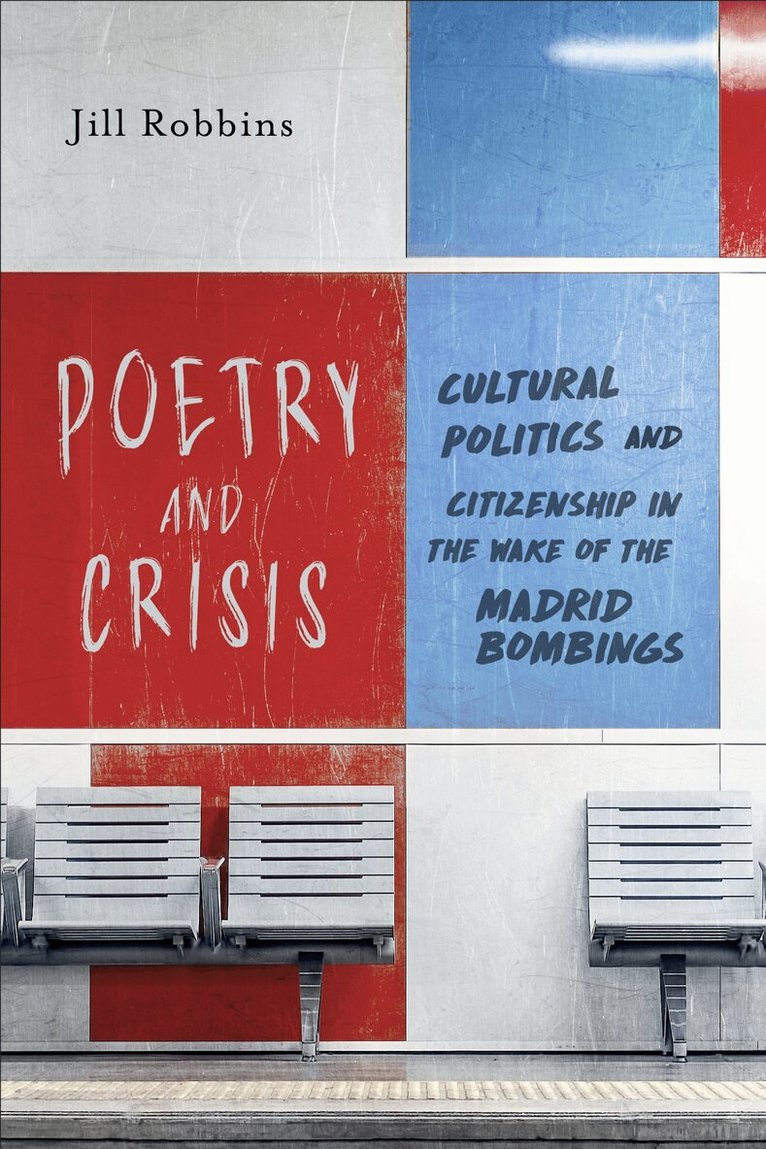
Poetry and Crisis
Cultural Politics and Citizenship in the Wake of the Madrid Bombings
Inbunden, Engelska, 2020
465 kr
Skickas inom 7-10 vardagar
On March 11, 2004, Islamist terrorists carried out a massive bombing on Madrid’s largely working-class commuter trains, leaving 191 people dead and more than 1,500 others wounded. This event, known in Spain as 11-M, was the second of three highly visible jihadist attacks on the West between 2001 and 2005, and the first in Europe, occurring just days before the national elections in Spain.Arguing that 11-M marked a critical turning point in Spanish society, this book reveals how poetry played a unique role and reflected a new political and cultural sensibility defined by informal and non-hierarchical networks of communication and memorialization. After the attacks, poems circulated in public spaces in unexpected ways, creating links and relationships that were binding: they were inscribed on banners and monuments; musicalized in anthems, protest songs, and hip-hop music; reproduced on manifestos and blogs; sent by email and text; scribbled on scraps of paper and posted on walls; performed publicly; and painted as graffiti. These forms of expression also resonated strongly with Spanish poets who had already been exploring the possibilities of ethical engagement and aesthetic creation. Poetry and Crisis explores how this essentially poetic sensibility emerged from tragedy, laying the groundwork for similar kinds of affective and grassroots mobilization that continue to grow in Europe today.
525 kr
Skickas inom 7-10 vardagar
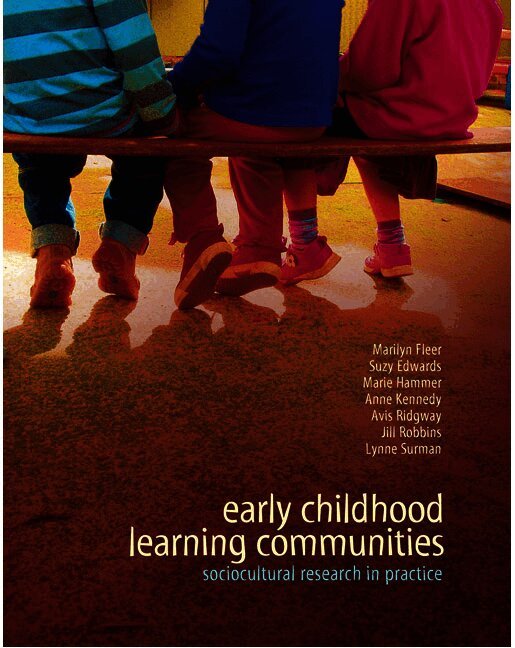
For undergraduate teachers studying early childhood education at the university level. Early Childhood Learning Communities aims to share research findings that are important in a evidence based approach to pedagogy practice. Paving the way for more accurate sorting and sifting of research and theoretical writings in early childhood education, this publication draws heavily upon the Australian research, sociocultural theory and the principles of Reggio Emilia, Italy. It invites students to act as researchers themselves, and seeks to create an early childhood learning community where the latest research and thinking generate the potential for future research and action. Offering insights gained through critical reviews of the literature that students will find make it engaging, accessible and thought provoking.