Jimena Márquez - Böcker
Visar alla böcker från författaren Jimena Márquez. Handla med fri frakt och snabb leverans.
3 produkter
3 produkter
357 kr
Skickas
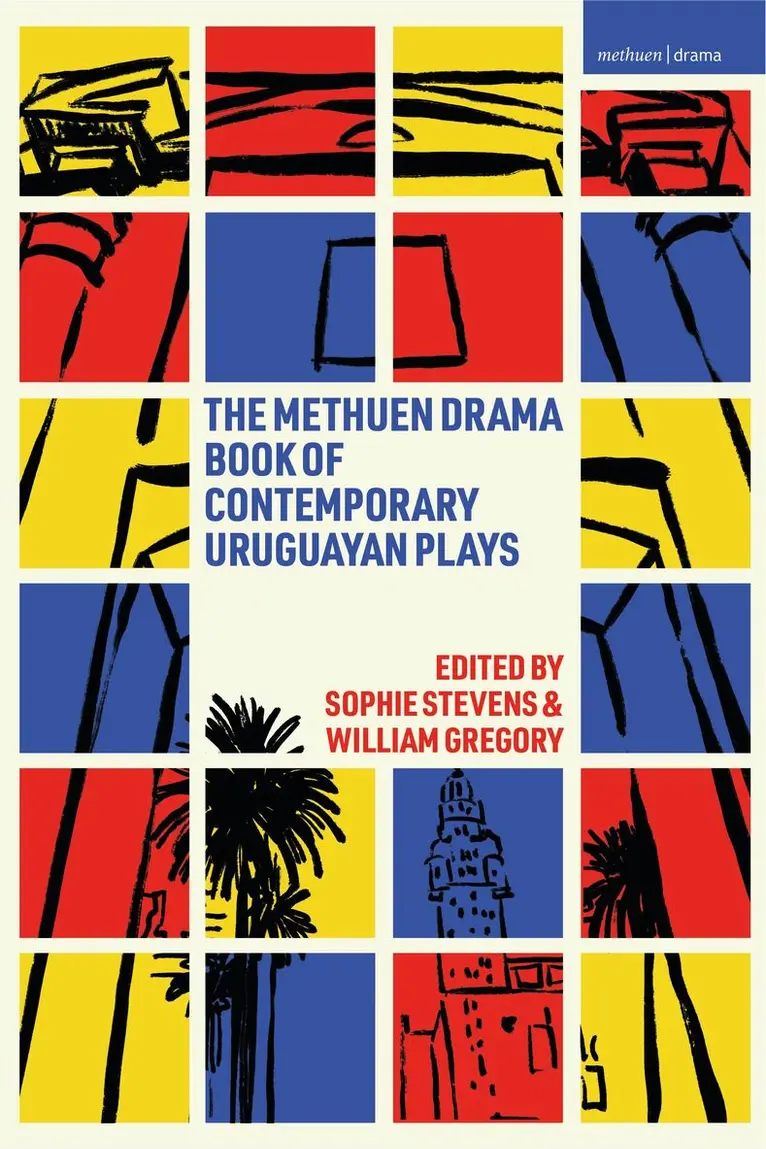
The rich and varied 21st-century playwriting scene of Uruguay is showcased in this eclectic and fascinating collection, bringing together the work of established figures with that of provocative emerging artists, all published in English for the first time.Spanning several generations, the six award-winning dramatists featured in this volume are leading figures in shaping Uruguay’s vibrant contemporary theatre landscape. Rooted in their experiences in Uruguay, while also looking out to the world beyond, their plays encompass styles ranging from realism to autofiction, and engage with themes including the challenges of parenthood, the search for identity, the legacies of Uruguay’s literary giants, the processes and risks of making art, the limits between fiction and reality, and violence against women in contemporary society.The result of extensive research by co-editors Sophie Stevens and William Gregory, and featuring a comprehensive introduction by Stevens and foreword by translator and academic Adam Versényi, The Methuen Drama Book of Contemporary Uruguayan Plays offers an insight into a new-writing ecology of extraordinary range and depth that resonates far beyond the Río de la Plata. In Ana Versus Death by Gabriel Calderón, translated by Stephen Brown, the eponymous protagonist embarks on a dangerous mission to save her son’s life when he is diagnosed with cancer; in They All Sleep at Siesta Time by Leonor Courtoisie, translated by William Gregory, three young friends take a road-trip across rural Uruguay to rescue a dying armadillo and, perhaps, themselves; in Basic Notions for the Construction of Bridges by Jimena Márquez, translated by Catherine Boyle, a group of actors struggles to devise a play in honour of the revered Uruguayan writer Mario Benedetti; in I Will Give You Verses, Not Children by Marianella Morena, translated by Kate Eaton, the life and death of pioneering poet Delmira Agustini is the starting-point for an exploration of ongoing misogyny; in Prelude to Anne by Sandra Massera, translated by Rachel Toogood, a playwright wrestles with the responsibility of writing a play about Anne Frank, and in Emotional Terror by Josefina Trías, translated by Sophie Stevens, a break-up leads a dramatist to delve into the writing process itself, and its capacity to heal.This anthology has been published within the framework of the IDA Translation Support Programme.
1 160 kr
Skickas inom 10-15 vardagar
The rich and varied 21st-century playwriting scene of Uruguay is showcased in this eclectic and fascinating collection, bringing together the work of established figures with that of provocative emerging artists, all published in English for the first time.Spanning several generations, the six award-winning dramatists featured in this volume are leading figures in shaping Uruguay’s vibrant contemporary theatre landscape. Rooted in their experiences in Uruguay, while also looking out to the world beyond, their plays encompass styles ranging from realism to autofiction, and engage with themes including the challenges of parenthood, the search for identity, the legacies of Uruguay’s literary giants, the processes and risks of making art, the limits between fiction and reality, and violence against women in contemporary society.The result of extensive research by co-editors Sophie Stevens and William Gregory, and featuring a comprehensive introduction by Stevens and foreword by translator and academic Adam Versényi, The Methuen Drama Book of Contemporary Uruguayan Plays offers an insight into a new-writing ecology of extraordinary range and depth that resonates far beyond the Río de la Plata. In Ana Versus Death by Gabriel Calderón, translated by Stephen Brown, the eponymous protagonist embarks on a dangerous mission to save her son’s life when he is diagnosed with cancer; in They All Sleep at Siesta Time by Leonor Courtoisie, translated by William Gregory, three young friends take a road-trip across rural Uruguay to rescue a dying armadillo and, perhaps, themselves; in Basic Notions for the Construction of Bridges by Jimena Márquez, translated by Catherine Boyle, a group of actors struggles to devise a play in honour of the revered Uruguayan writer Mario Benedetti; in I Will Give You Verses, Not Children by Marianella Morena, translated by Kate Eaton, the life and death of pioneering poet Delmira Agustini is the starting-point for an exploration of ongoing misogyny; in Prelude to Anne by Sandra Massera, translated by Rachel Toogood, a playwright wrestles with the responsibility of writing a play about Anne Frank, and in Emotional Terror by Josefina Trías, translated by Sophie Stevens, a break-up leads a dramatist to delve into the writing process itself, and its capacity to heal.This anthology has been published within the framework of the IDA Translation Support Programme.
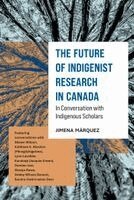
Future of Indigenist Research in Canada
In Conversation with Indigenous Scholars
Häftad, Engelska, 2026
544 kr
Kommande
This timely and engaging volume brings together eight remarkable, leading, and emerging Indigenous scholars from various fields in conversation with author Jimena Márquez to critically assess the state of Indigenist research in a post-Truth and Reconciliation Commission era. Through ten thematically organized chapters, Márquez uses a multigenerational dialogical lens to explore what work has been done over the last decade, what shifts are taking place now, what's in store for the future of the field, and who should take on this valuable work and how they can be held accountable to Indigenous communities.Topics include the core principles of Indigenist research, intellectual integrity, identity-shifting strategies still present in academia, and the consequences of misguided approaches. Through these candid conversations, students and researchers will get a rare view into the complexities of decolonial scholarship and the responsibilities it entails. Woven together and contextualized by Márquez, the discussions converge on a shared direction forward and offer a tool for critical reflexivity to support readers in decolonizing their own research practices.Designed to be accessible and thought-provoking, this is an ideal resource for students beginning their journey into Indigenous research methodologies, as well as for student researchers who might already have an Indigenist project in mind.