Jinsil Choi – författare
Visar alla böcker från författaren Jinsil Choi. Handla med fri frakt och snabb leverans.
6 produkter
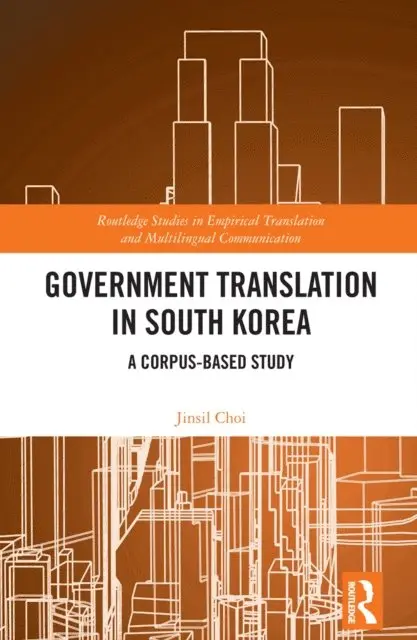
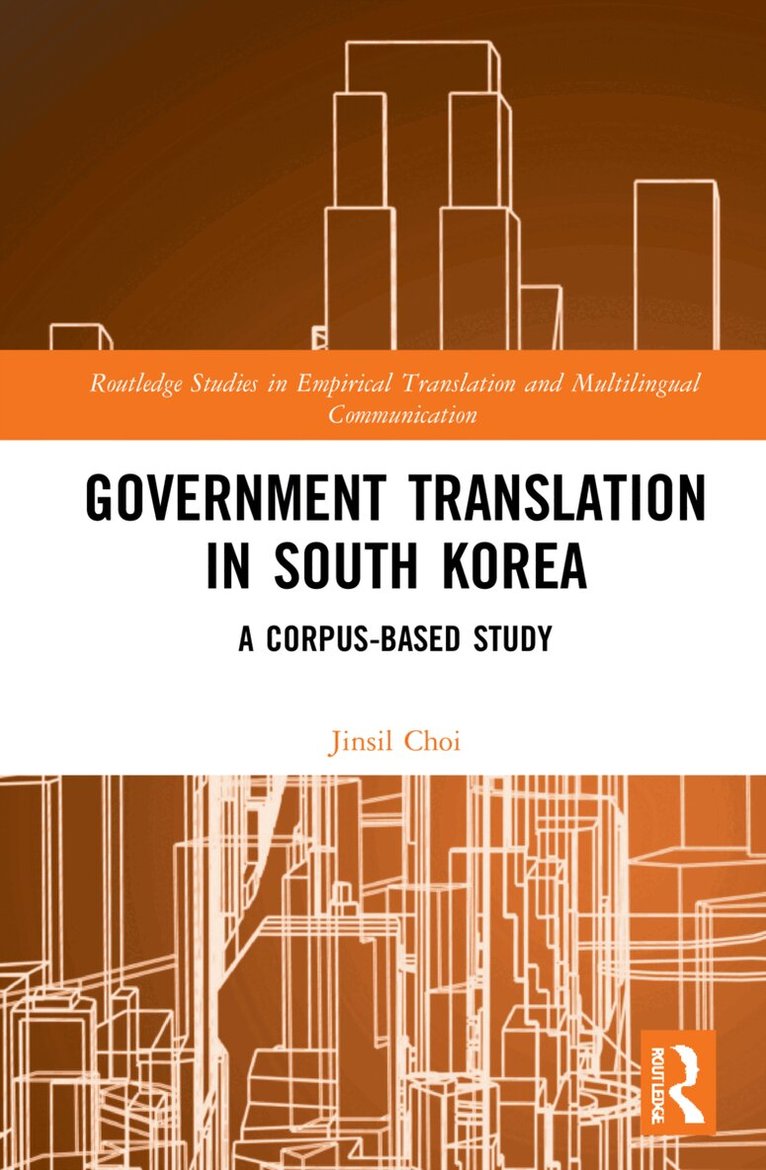
Government Translation in South Korea
A Corpus-based Study
Av Jinsil Choi
E-bok, 2022
762 kr
Lägg i varukorg
Government Translation in South Korea: A Corpus-based Study is the first book to investigate and discuss translation processes and translation products in South Korean government institutions, employing a parallel corpus-based approach. Choi identifies different agents and procedures involved in …
Government Translation in South Korea
A Corpus-based Study
Av Jinsil Choi
E-bok, 2022
762 kr
Lägg i varukorg
Government Translation in South Korea: A Corpus-based Study is the first book to investigate and discuss translation processes and translation products in South Korean government institutions, employing a parallel corpus-based approach. Choi identifies different agents and procedures involved in …
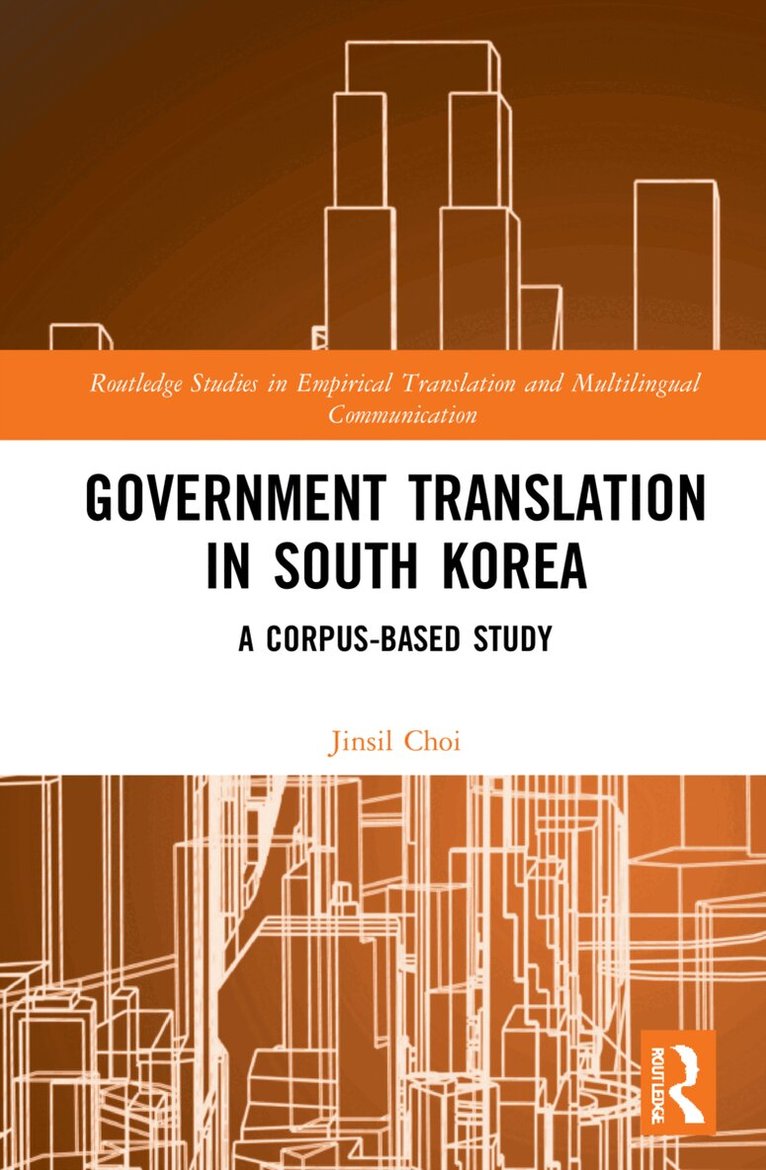
Government Translation in South Korea
A Corpus-based Study
Av Jinsil Choi
Häftad, 2024
668 kr
Lägg i varukorg
Government Translation in South Korea: A Corpus-based Study is the first book to investigate and discuss translation processes and translation products in South Korean government institutions, employing a parallel corpus-based approach. Choi identifies different agents and procedures involved in …
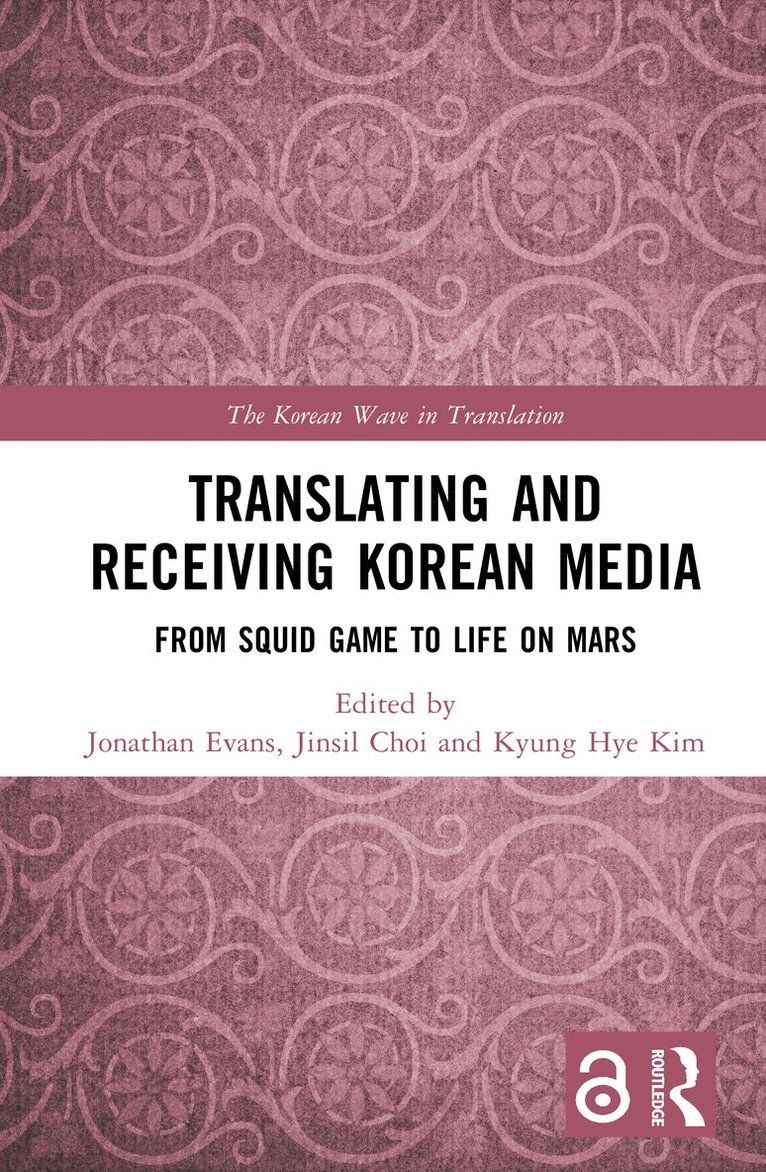
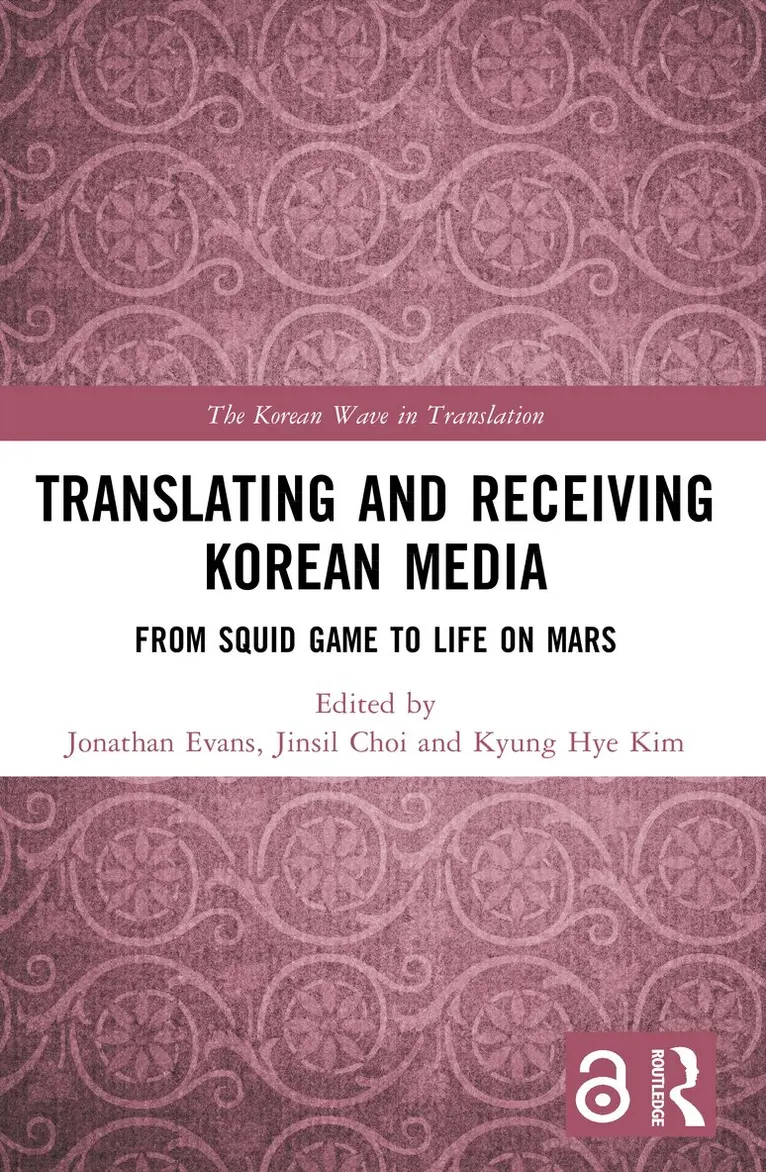
Translating and Receiving Korean Media
From Squid Game to Life on Mars
Av Jonathan Evans, Jinsil Choi m. fl.
Inbunden, 2025
2515 kr
Lägg i varukorg
In recent years, Korean culture has been incredibly successful internationally, from the films of auteur directors like Bong Joon-ho (Parasite) to shows like Squid Game and K-pop music. At the same time, media from the UK has also been successful in South Korea, with popular shows such as Killing …
Translating and Receiving Korean Media
From Squid Game to Life on Mars
Av Jonathan Evans, Jinsil Choi m. fl.
Häftad, 2026
707 kr
Lägg i varukorg
In recent years, Korean culture has been incredibly successful internationally, from the films of auteur directors like Bong Joon-ho (Parasite) to shows like Squid Game and K-pop music. At the same time, media from the UK has also been successful in South Korea, with popular shows such as Killing …
Government Translation in South Korea
A Corpus-based Study
Av Jinsil Choi
Inbunden, 2022
2515 kr
Lägg i varukorg
Government Translation in South Korea: A Corpus-based Study is the first book to investigate and discuss translation processes and translation products in South Korean government institutions, employing a parallel corpus-based approach. Choi identifies different agents and procedures involved in …